

 English
 中文简体
 Deutsch
 عربى
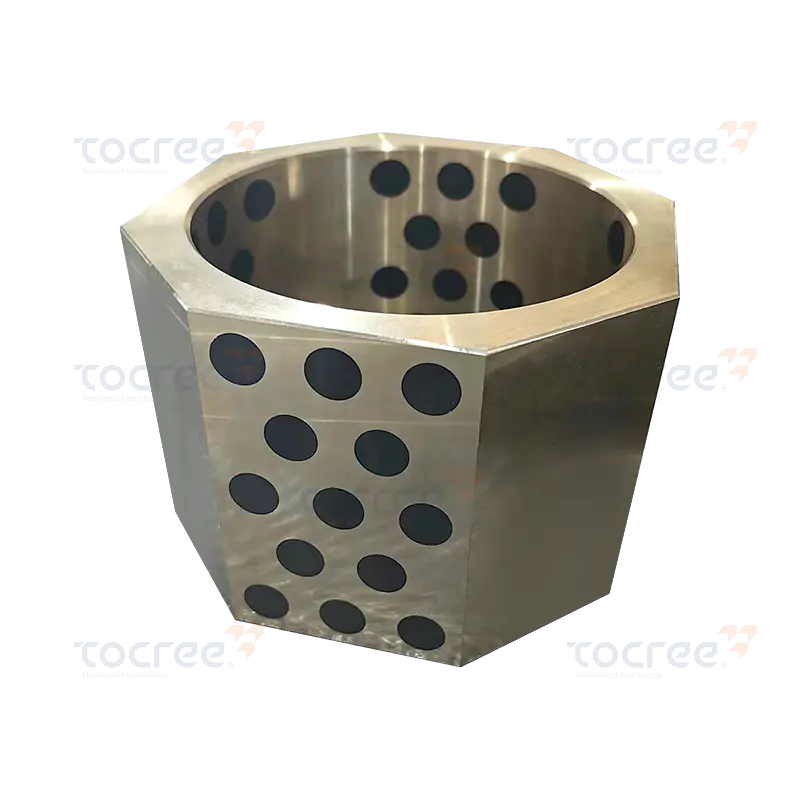
The octagonal bushing made of CuSn6Zn6Pb3 (tin bronze) and graphite precision machining is...
Copper Alloy Series
Aluminum Bronze Worm Gear
Product Overview
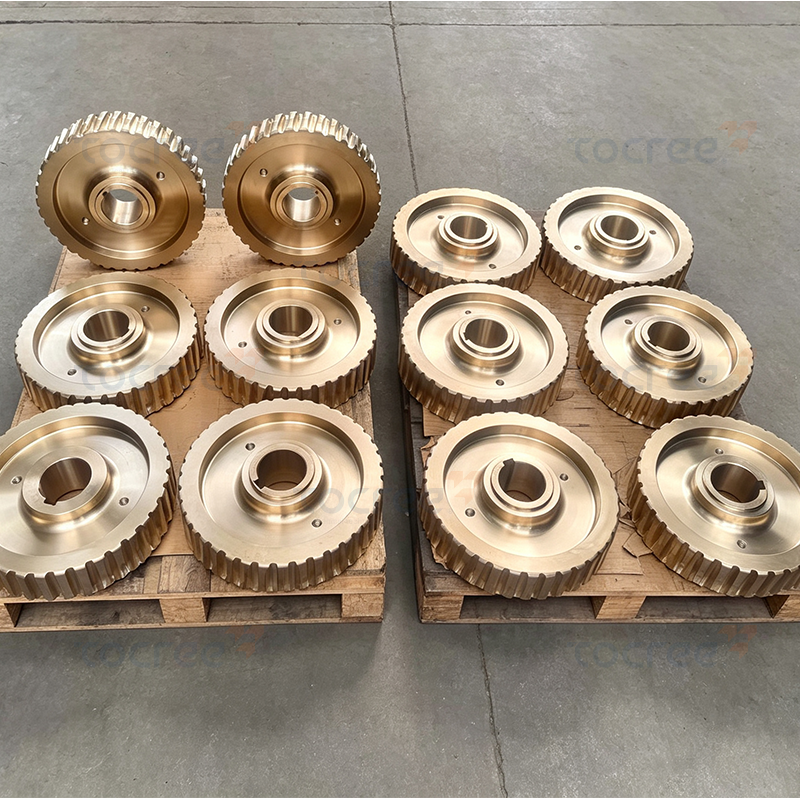
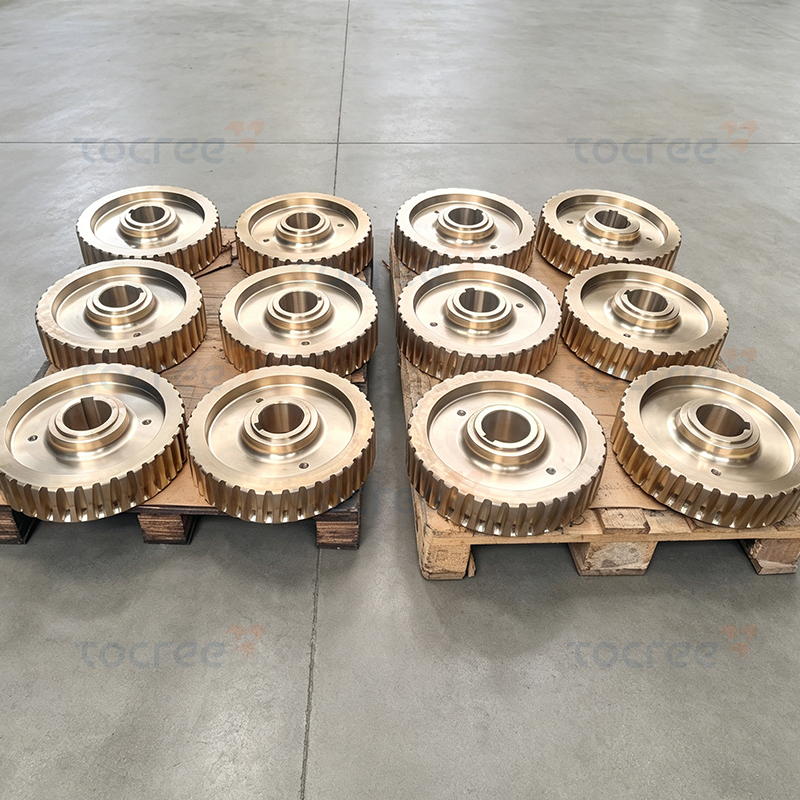
This product is an Aluminum Bronze Worm Gear, precision-manufactured from high-strength aluminum bronze alloy (grade 9-4-4-2, i.e., approximately 85% copper, 9% aluminum, 4% iron, 4% nickel, and 2% manganese). The gear undergoes multiple processing stages including overall turning, gear hobbing/milling, and precision grinding, resulting in accurate tooth profiles and a smooth surface finish. It offers excellent mechanical strength along with outstanding wear and corrosion resistance, making it widely used in reducers, transmission devices, and heavy-duty machinery.
Parameter Table
Material Properties (Aluminum Bronze 9-4-4-2)
High Strength & Hardness: As a complex aluminum bronze alloy, the addition of nickel and manganese refines the grain structure and enhances strength, achieving a tensile strength of 650–750 MPa or higher, with a hardness of HB160–220.
Excellent Wear Resistance: When paired with a steel worm shaft, aluminum bronze exhibits a low friction coefficient and strong anti-galling properties, making it a classic material combination for worm gears — particularly suited for medium-to-high-speed, heavy-load transmission applications.
Good Corrosion Resistance: Provides strong resistance to seawater, salt spray, and most chemical media, making it suitable for harsh environments such as marine, chemical, and metallurgical applications.
Superior Impact & Fatigue Resistance: Compared to conventional tin bronze, aluminum bronze offers better fatigue strength and impact toughness, making it well-suited for transmission applications subject to significant shock loads.
Good Castability & Machinability: Suitable for sand casting or centrifugal casting, with stable performance during subsequent machining processes such as turning, milling, and gear hobbing, ensuring reliable dimensional accuracy.
Manufacturing Process
Smelting & Casting: Strictly controlled melting according to the 9-4-4-2 composition ratio, using sand casting or centrifugal casting to ensure metallurgical quality and minimize defects such as porosity and inclusions.
Rough Turning: Rough machining of the raw casting to establish the basic outer dimensions.
Precision Hobbing/Milling: CNC hobbing machines or dedicated worm gear equipment are used to precisely machine the tooth profile, ensuring accurate meshing performance.
Precision Turning & Grinding: Precision turning and grinding of the bore, end faces, and mating surfaces to ensure assembly tolerances meet requirements.
Surface Treatment & Inspection: Deburring, cleaning, and quality inspection, including hardness testing, dimensional checks, and visual inspection according to relevant standards.
OUR PRODUCTS
Related products
-
-
 Bronze Cylindrical Bushing with Grease Groove
This straight sleeve is made of aluminum bronze alloy as the base material. According to c...
-
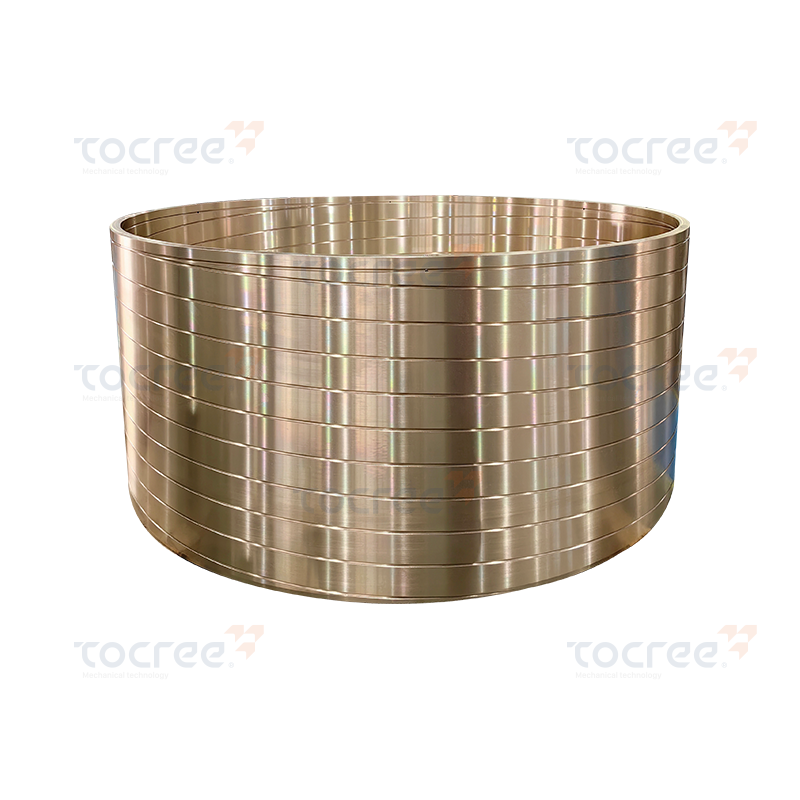 Bronze Bushing
This bronze sleeve is made of tin bronze as the base material. The blank piece is produced...
-
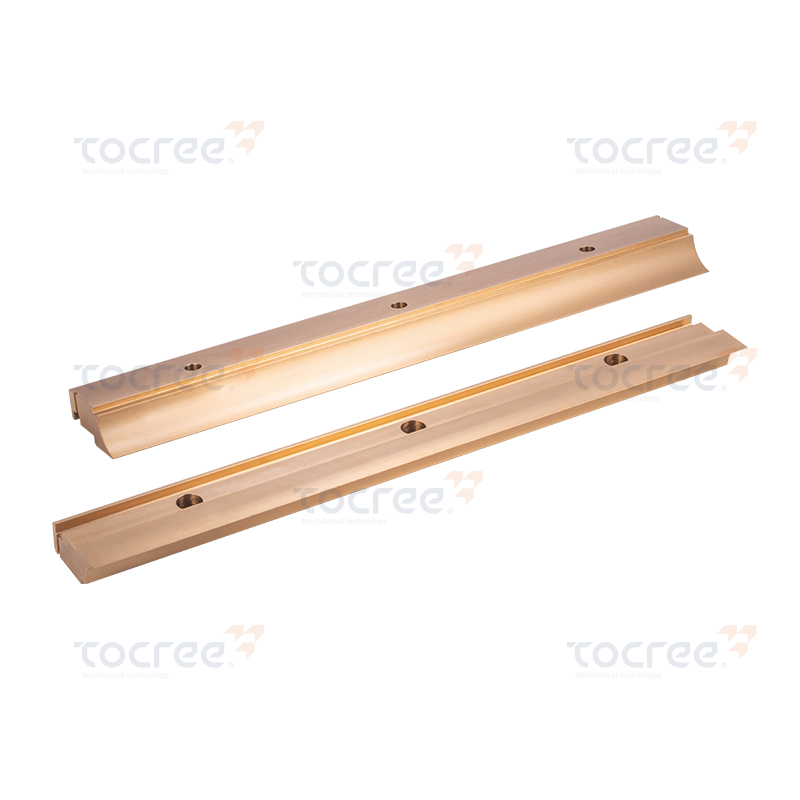 Bronze Linear Slide Block
This linear slide board is a high-performance sliding component, made of excellent tin bro...
-
-
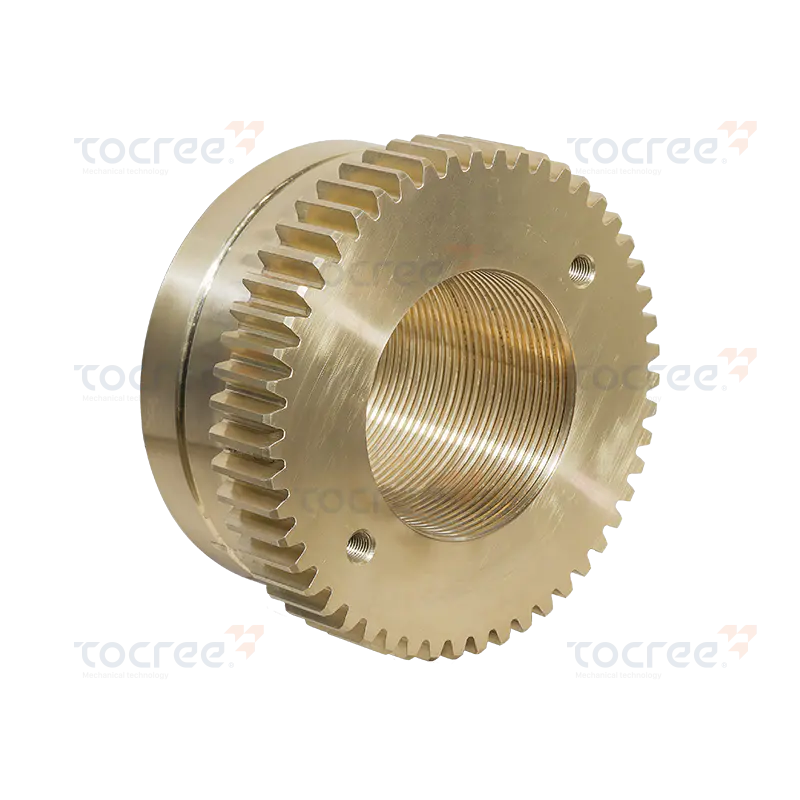 Bronze Hobbed Nut
This copper-based gear nut is a high-performance component. It is precisely machined from ...
WHO ARE WE
A Professional Copper Alloy Casting Company Integrating Casting And Precision Machining
+ contact us
Founded in 2007, Jiashan Tocree Machinery Co., Ltd. covers an area of about 30000 square meters and has a registered capital of 11 million yuan. It is located at No. 18, Zhensheng Road, Weitang Sub-district,Jiashan County Zhejiang Province, China, enjoying a superior geographical location and convenient transportation.
With rich experience in the production and processing of non-standard parts and precision machining, it is a research and development-oriented manufacturing enterprise integrating research and development, sales, design and processing. The company is well-equipped and has extensive experience, committed to producing finished steel sleeves, copper sleeve plates (including special-shaped parts) and copper products of various sizes, shapes and materials.
It specializes in the production of copper mining machinery parts made of various copper alloys (phosphor bronze, tin bronze, aluminum bronze, beryllium bronze). Custom Aluminum Bronze Worm Gear. The products are widely used in metallurgical machinery, ships, mining machinery, engineering machinery, agricultural machinery, large construction machinery, large packaging machinery and mold industries.
We have copper sleeves as large as 1.5-2 meters; copper sliding plates as long as 4 meters, 400mm wide and 100mm thick; and other mechanical copper parts, such as copper nuts, copper gears, copper sleeve worm wheels, rollers and other mechanical accessories. Aluminum Bronze Worm Gear Manufacturers and Aluminum Bronze Worm Gear Factory in China. The company is well-equipped, with its own copper smelting furnace and centrifuge, etc. It specializes in the production of copper materials of various types, with an annual output of 2300 tons. It provides copper raw material billets for our company and is a one-stop manufacturer from raw materials to finished products.
The company has a high-quality and strong technical team, sophisticated mechanical processing equipment, and is equipped with precise testing and experimental equipment. For a long time, the company has adhered to the market-oriented business policy, insisting on "providing high-quality services for customers, based on development and innovation, and strengthening is the last word". Guided by market-demanded products, on the road of continuous innovation and progress, good market demand is the foundation of the company's survival. With the company's current advantages, it serves customers' needs and achieves the goal of win-win cooperation and common development.

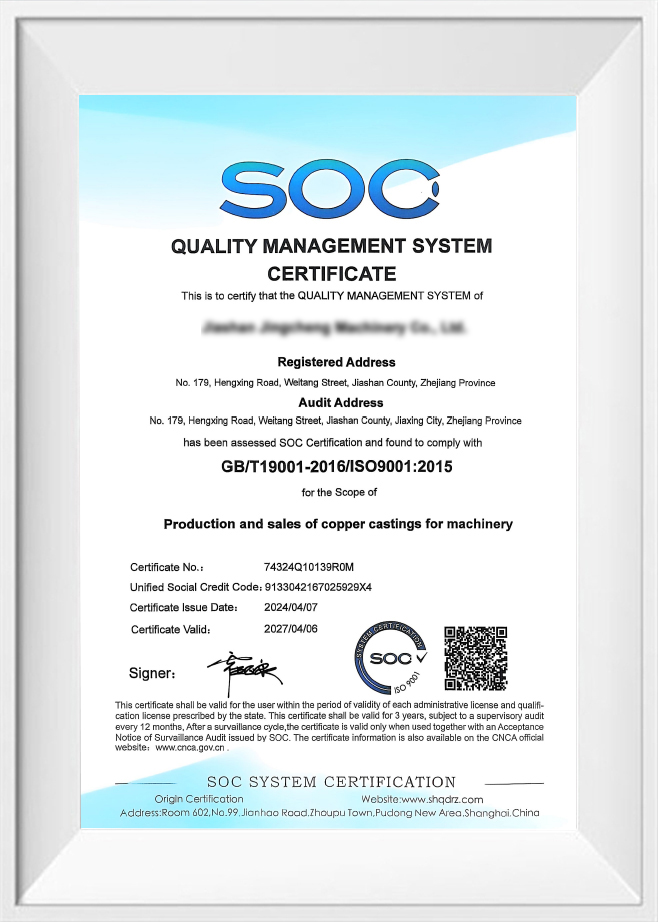
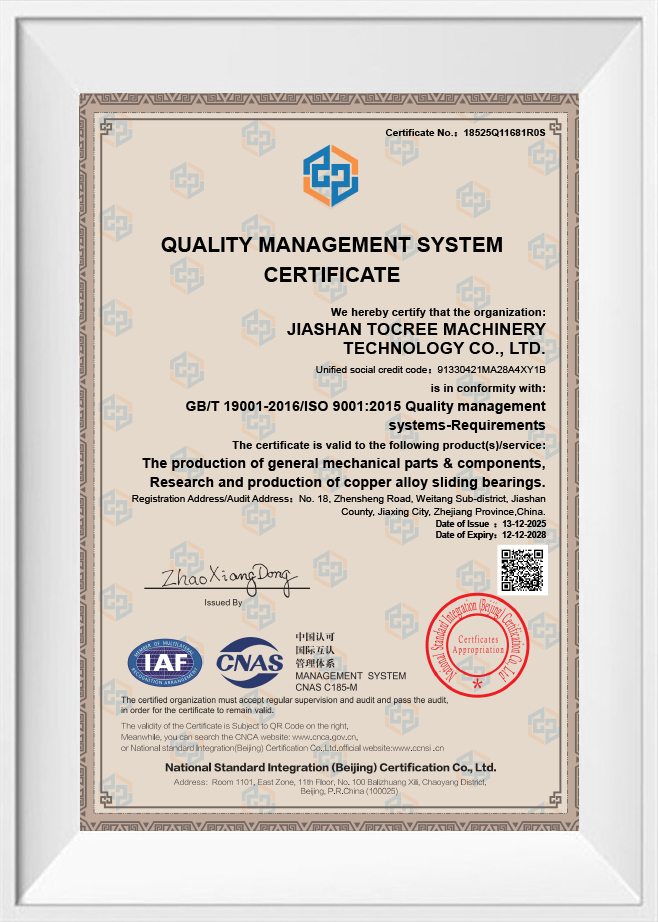
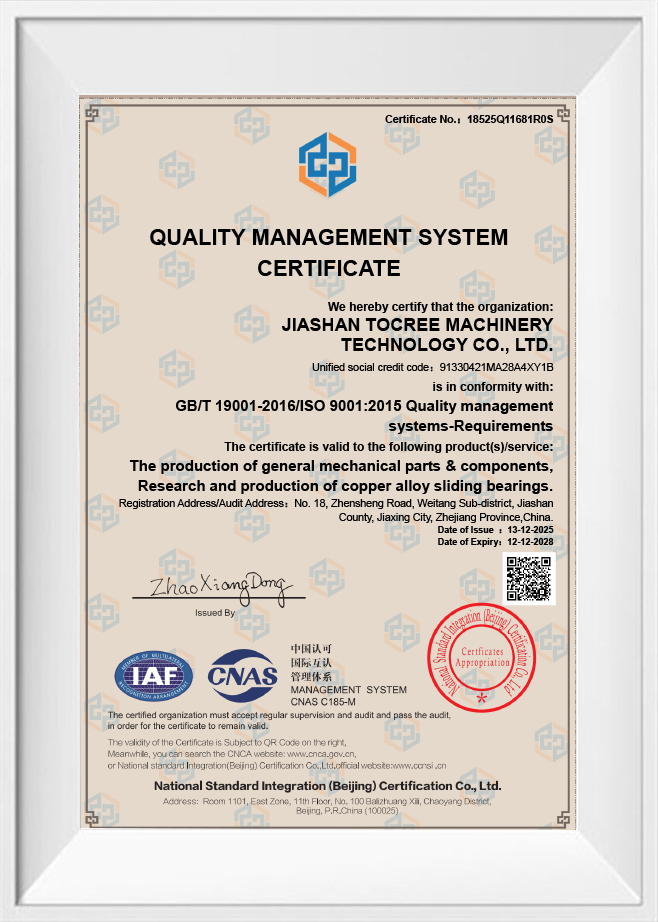
Certificate Of Honor
News
-
An oilless flanged guide bushing is one of those small components that rarely gets attention until it wears, squeals, or stops holding alignment. In simple terms, it is a plain sleeve with a flange that guides a shaft, pin, or leader pin while carrying side loads and setting axial position. The “oi...
READ MORE -
An oil-free shaft sleeve sounds like a simple idea: a bearing surface that runs without a grease gun or oil line. In practice, it is a carefully engineered component. The sleeve must carry the load, resist wear, handle heat, and form its own low-friction film while the shaft turns. When it is right...
READ MORE -
A guide bush is a small part with a large job: it keeps a sliding or moving member travelling on the line you designed. When that bush is bronze, it brings a set of properties that are hard to match — quiet running, tolerance of edge loading, resistance to seizure, and the option to re-machine rath...
READ MORE -
Graphite bronze wear plates look simple: a flat bronze plate with dark graphite plugs. In service, they do a serious job. They guide slides, carry load, absorb misalignment, and give expensive machinery a renewable wear surface that can be replaced before the main structure is damaged. The details,...
READ MORE
Copyright © 2025 Jiashan Tocree Machinery Co., Ltd. All Rights Reserved.
Custom Aluminum Bronze Worm Gear Factory
