

 English
 中文简体
 Deutsch
 عربى
For any questions and feedback from customers, we will reply patiently and meticulously.
Material structure: Cast aluminum brass CuZn25Al6Fe3Mn3, with graphite insert. Application features:...
An oil-free shaft sleeve sounds like a simple idea: a bearing surface that runs without a grease gun or oil line. In practice, it is a carefully engineered component. The sleeve must carry the load, resist wear, handle heat, and form its own low-friction film while the shaft turns. When it is right, maintenance intervals stretch out and the area around the equipment stays clean. When it is wrong, the sleeve can seize, wear the shaft, or fail earlier than a conventional bronze bushing.
We have seen both outcomes on real equipment. The difference usually comes down to matching the self-lubricating material and the sleeve geometry to the actual load, speed, temperature, and environment, not simply choosing a dry bushing from a catalog.
An oil-free shaft sleeve is a plain bearing designed to operate without a continuous supply of oil or grease. Instead of relying on an external lubricant, it uses a solid lubricant built into the bearing material. Common examples include graphite, PTFE, or graphene embedded in a cast bronze or brass body. The metal matrix carries the load; the solid lubricant reduces friction and helps prevent metal-to-metal contact.
People sometimes use oil-free and oilless interchangeably. That is fine in casual conversation, but the engineering details matter. A truly oil-free sleeve may still need a small amount of lubricant during initial running-in, or it may be designed for fully dry operation. Ask the manufacturer what running-in procedure is recommended, especially for high-load or low-speed shafts.
During operation, the solid lubricant forms a thin transfer film on the shaft surface. This film is the key. It separates the sliding surfaces just enough to reduce friction and wear, even when the shaft is moving slowly or stopping and starting. The bronze matrix provides compressive strength and heat dissipation, while the lubricant pockets act as a reservoir.
Because the film is thin, surface finish and clearance are important. A shaft that is too rough can wear the sleeve quickly; a shaft that is too smooth in the wrong application may not transfer the film well. Clearance must allow for thermal expansion without creating excessive play. These details are why an oil-free sleeve is not a drop-in replacement for every grease-lubricated bushing.
Most oil-free shaft sleeves fall into a few practical families. Cast bronze with embedded graphite is a common choice for moderate loads and higher temperatures. PTFE-embedded bronze offers low friction and smooth running, especially where stick-slip is a concern. Graphene-enhanced materials are newer and can offer a useful balance of strength and low friction. Bimetallic sleeves combine a steel backing with a bronze or self-lubricating layer for higher structural strength.
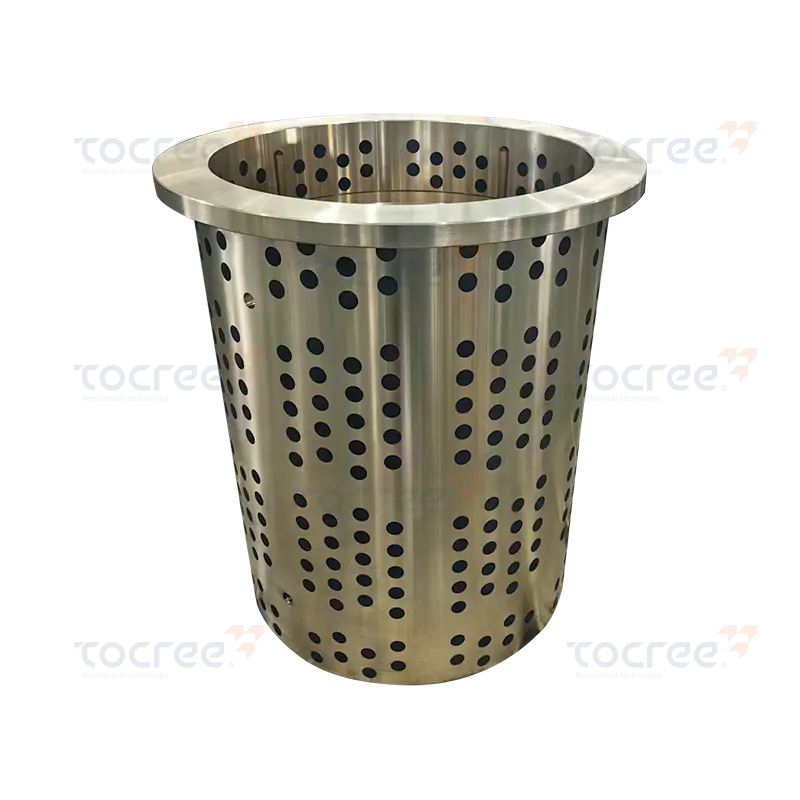 Graphite-Embedded Self-Lubricating Brass Bushing for General Industrial ShaftsA solid brass sleeve with graphite lubricant for moderate-load, higher-temperature general machinery where oil-free operation and machinable fit matter.View Product →
For many general-purpose industrial shafts, graphite-embedded brass or bronze bushings are a sensible starting point. They tolerate heat better than polymer-only bearings and can be machined to precise dimensions. The graphite pockets should be positioned in the loaded zone, not simply scattered at random. A good supplier will ask about the load direction before choosing the pocket pattern.
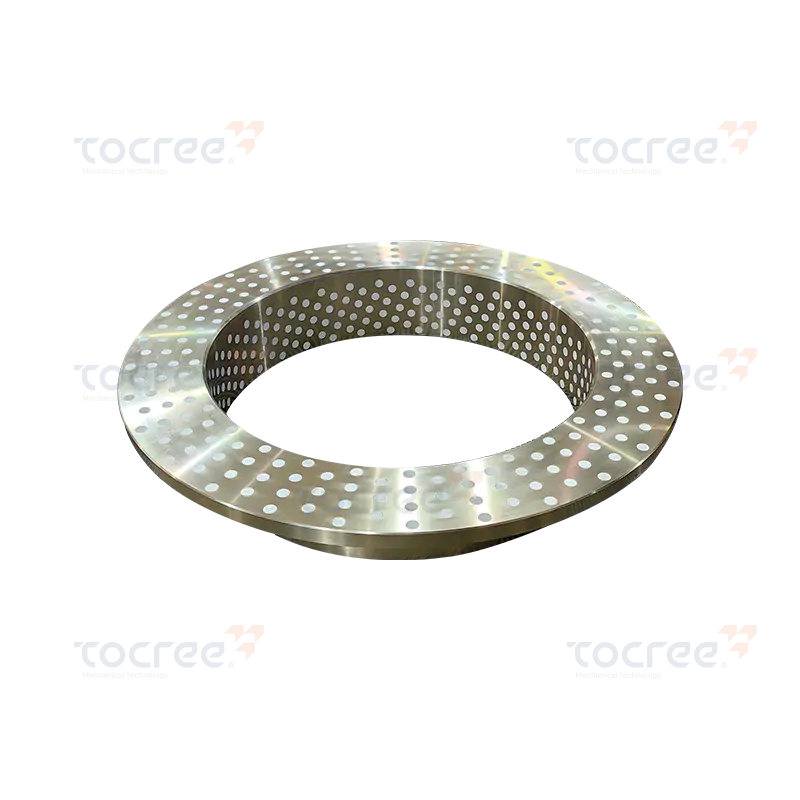 PTFE-Embedded Self-Lubricating Brass Bushing for Low-Friction and Water-Lubricated ApplicationsA solid brass sleeve with PTFE lubricant for low-friction, water-lubricated duties such as marine and water-control equipment; consider where stick-slip matters.View Product →
PTFE-embedded sleeves are often chosen where friction must be very low, or where the shaft runs at higher sliding speeds. They are not automatically better than graphite; they have different limits. PTFE may have lower temperature resistance and can be less forgiving under heavy static loads. The application decides.
| Material type | Solid lubricant | Load capacity | Speed tolerance | Typical use |
|---|---|---|---|---|
| Graphite-embedded bronze | Graphite | Medium to high | Low to medium | High-temperature, clean environments |
| PTFE-embedded bronze | PTFE | Medium | Medium to high | Low-friction, smooth running |
| Graphene-enhanced bronze | Graphene | Medium to high | Medium | Wear resistance and low friction |
| Bimetallic self-lubricating | Graphite or PTFE in bronze layer | High | Medium | Heavy loads, larger sizes |
Table values are qualitative; always confirm with the supplier for your specific shaft and duty cycle.
Oil-free sleeves are useful wherever lubricant loss is unacceptable, maintenance access is difficult, or the environment punishes grease. In metallurgical equipment, heat and scale make frequent greasing difficult. In marine machinery, water and salt exposure can wash out conventional lubricants. Die-casting machines, heavy machinery, and petroleum equipment often have sliding points that are hot, dirty, or hard to reach.
They also appear in medical machinery and packaging equipment where cleanliness matters. In each case, the sleeve must be matched to the environment. A self-lubricating bushing that works well in a clean, dry press may not survive abrasive dust or continuous immersion. For heavy machinery applications, load and shock are often the deciding factors.
If you need a deeper technical background, our complete guide to oil-free shaft sleeves walks through film formation, clearance, and installation in more detail.
The more information you can share upfront, the fewer surprises later. A useful inquiry includes:
Do not assume that an oil groove is helpful in an oil-free sleeve. In a self-lubricating bushing, a conventional grease groove can interrupt the transfer film or reduce the load-bearing area. If a groove is needed for assembly or retention, its shape and position should be discussed with the manufacturer.
Most failures do not come from the material alone. They come from installation and clearance. Pressing a sleeve in with too much force can distort the bore. A shaft with poor surface finish can act like a cutting tool. Misalignment concentrates load on one edge. Contamination, especially hard particles, can bridge the lubricant film and start abrasive wear.
Another common issue is thermal expansion. A bronze sleeve running at elevated temperature may need more initial clearance than the room-temperature drawing suggests. If the equipment runs hot, tell the supplier. A small change in clearance can make the difference between a long service life and a premature seizure.
Oil-free sleeves perform best when the material and the machining are controlled together. At our foundry in Jiashan, we melt copper alloys in-house and cast the bronze or brass blanks before machining them to the final bore, flange, and lubricant pattern. That gives us control over the alloy composition, the distribution of the solid lubricant, and the final fit.
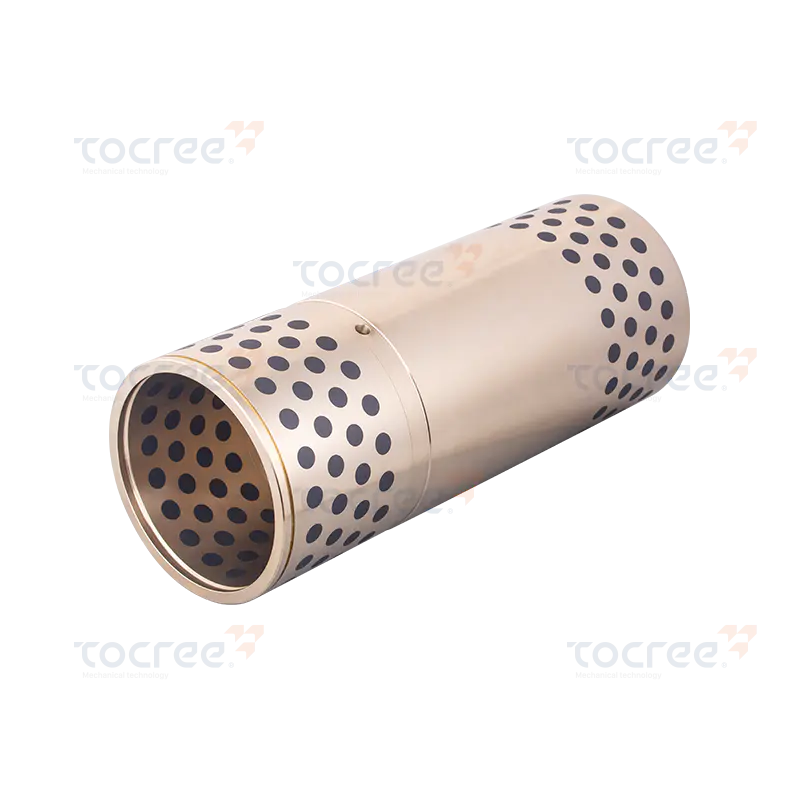 Solid Self-Lubricating Brass Bearing with Graphite InsertsA cast aluminum-brass bearing with graphite inserts for low-speed, high-load or frequent-restart machinery, including hard-to-access maintenance points where external oiling is impractical.View Product →
We also produce large and non-standard sizes, including sleeves up to 1.5 to 2 meters and wear plates up to 4 meters long. For equipment manufacturers, that means a self-lubricating solution can be matched to the actual housing rather than forced into a catalog size. Our temperature-controlled workshop supports the machining and inspection steps that keep these larger parts within tolerance.
Before you send a purchase order, confirm these points:
If any of these items are unknown, ask. A short technical conversation is cheaper than a failed start-up.
An oil-free shaft sleeve is not a universal upgrade, but it can be an excellent solution when the application is understood. It reduces lubrication demand, keeps surrounding equipment cleaner, and can simplify maintenance in remote or harsh locations. The key is to treat it as an engineered bearing, not just a piece of bronze with holes in it.
If you are unsure which self-lubricating material fits your shaft, send us the operating conditions and a simple sketch. We will help you narrow the options and point out where a standard bronze bushing might still be the better choice.
Material structure: Cast aluminum brass CuZn25Al6Fe3Mn3, with graphite insert. Application features:...
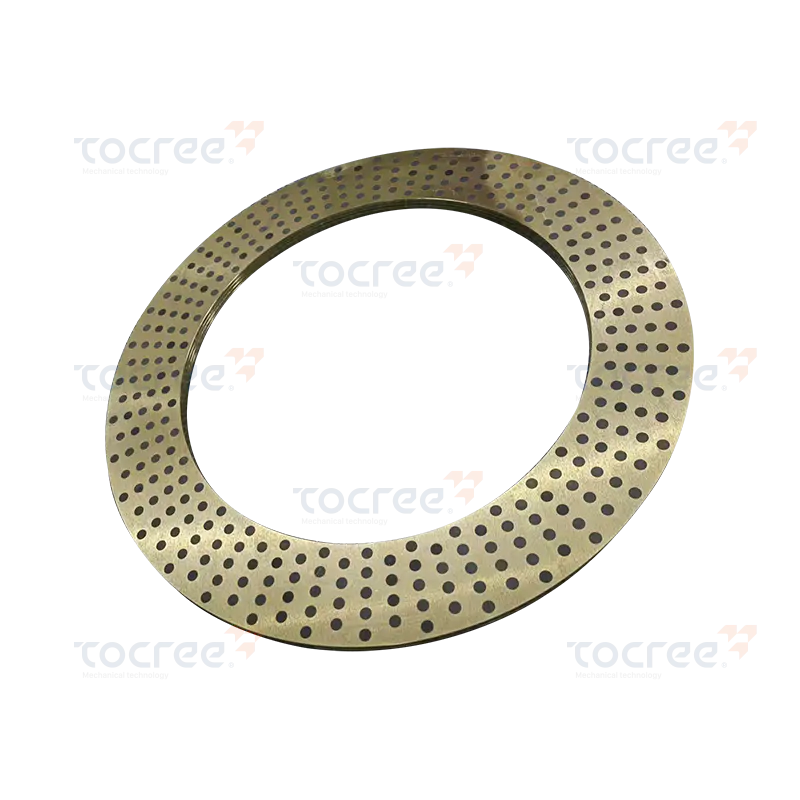
Solid self-lubricating copper rings are high-performance components, made by precision machining wit...
The PTFE single-flange solid self-lubricating copper sleeve is a high-performance mechanical compone...
Single-flange self-lubricating bearing (with graphite embedding) is a high-performance solid self-lu...
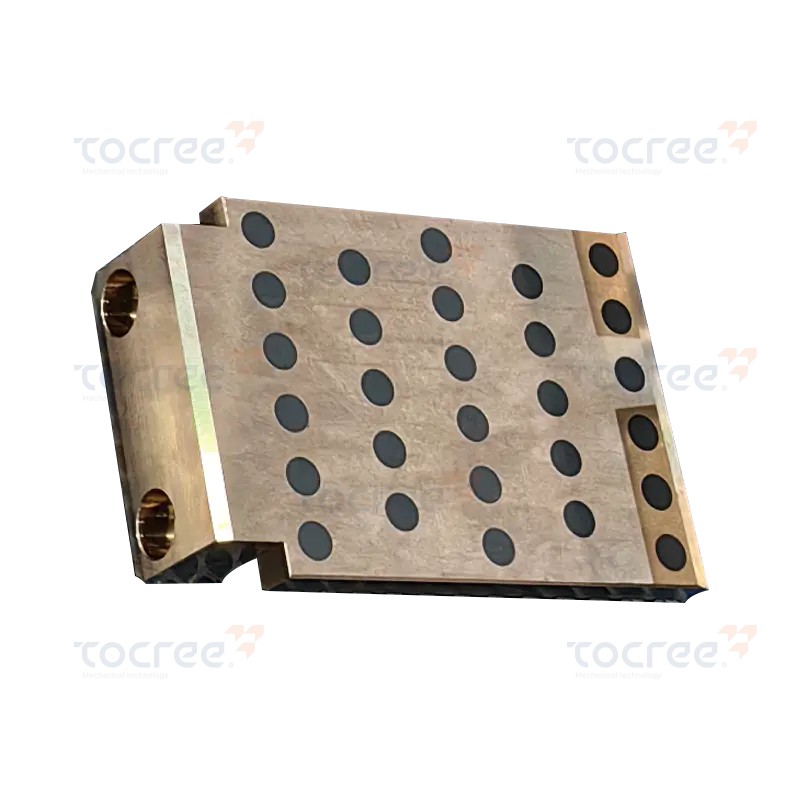
The L-shaped solid self-lubricating slider is made by embedding high-purity graphite solid lubricant...
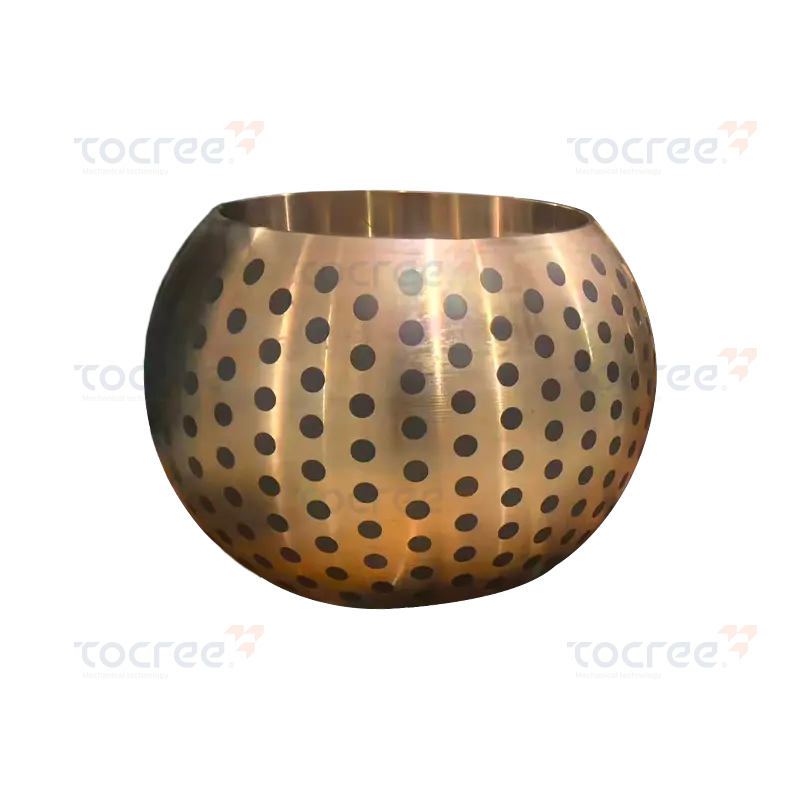
This spherical self-lubricating copper sleeve is made from high-strength high-strength brass as the ...
Copyright © 2025 Jiashan Tocree Machinery Co., Ltd. All Rights Reserved.
Customized Copper Alloys Machinery Parts
