

 English
 中文简体
中文简体 Deutsch
 عربى
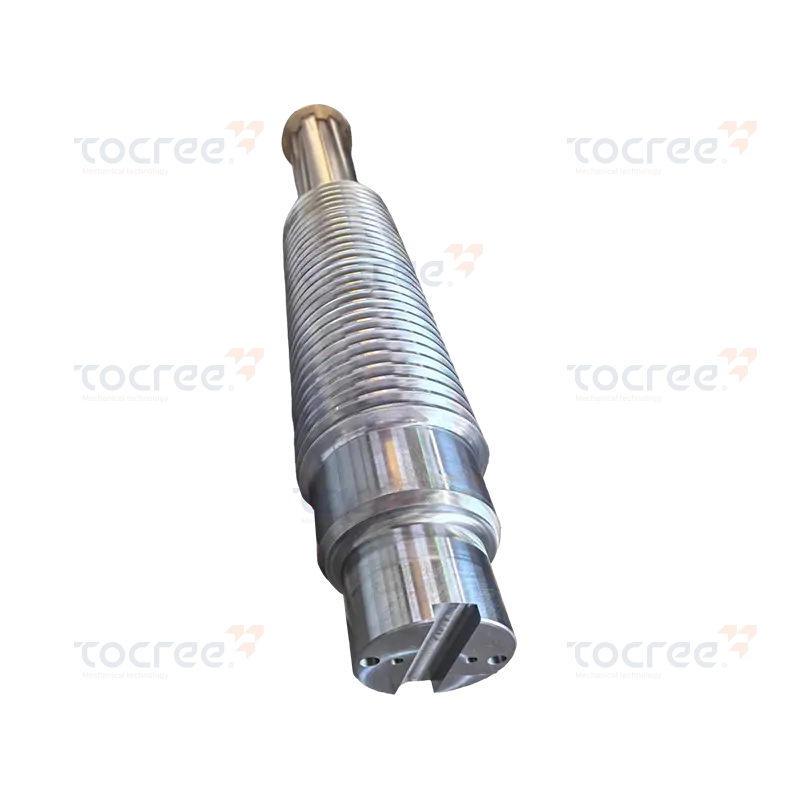
عربىThis type of screw is made from high-strength 42CrMo4 alloy steel, which is treated throug...
Steel & Aluminum Alloy Series
-
-
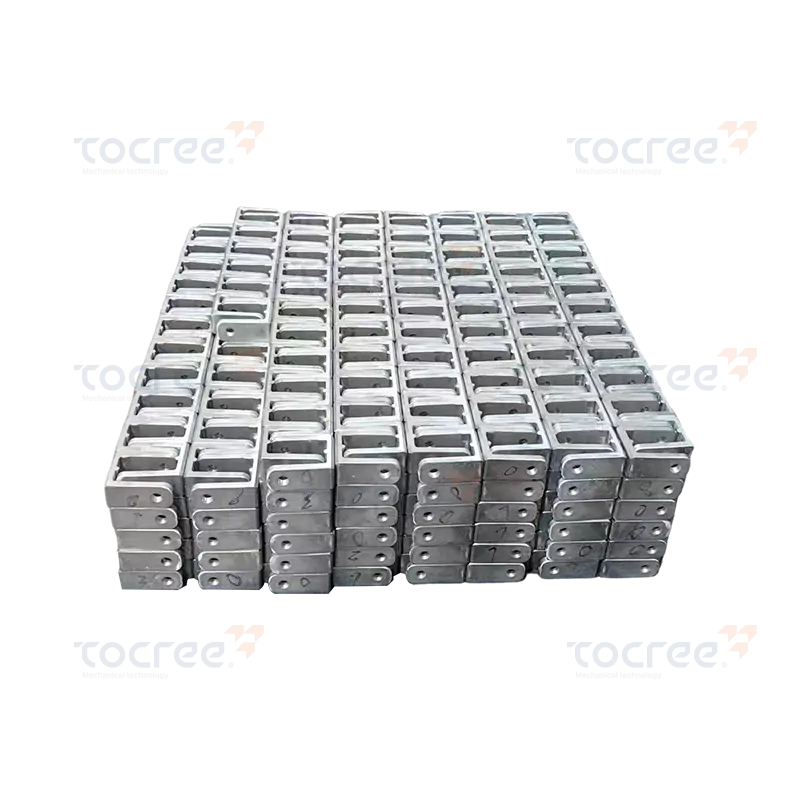 Aluminum Alloy Fixing Block
This aluminum alloy fixing block is made from 6063 aluminum alloy as the base material. Af...
-
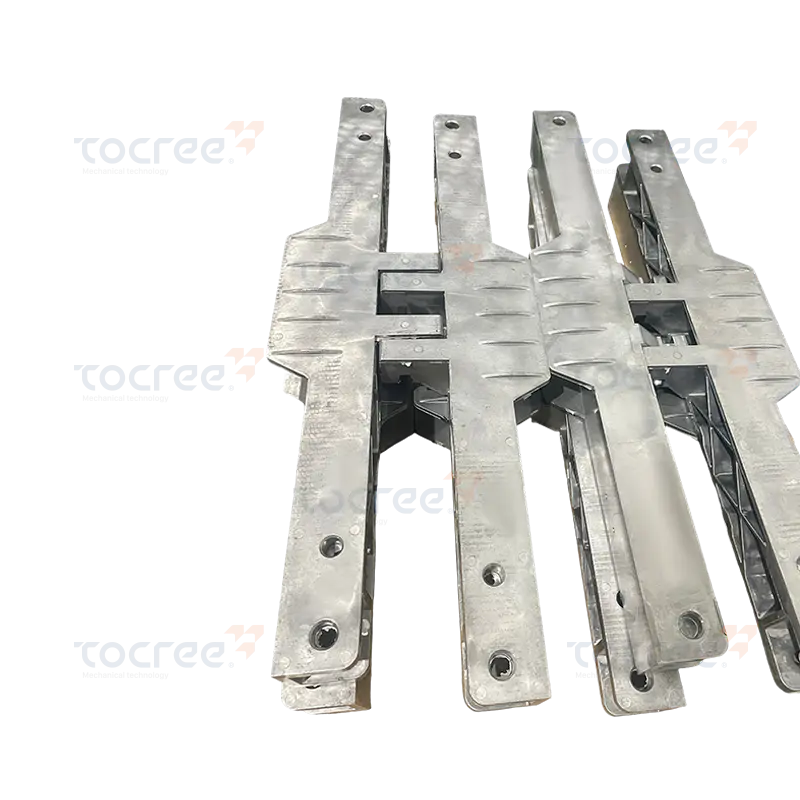 Aluminum Alloy Auto Frame Parts
This aluminum alloy frame is specially designed to meet the application requirements of th...
Our alloy steel product series are precision machined from high-quality 42CrMo4 quenched and tempered alloy steel, and after quenched and tempered treatment, the products have high strength and good hardenability, along with high fatigue strength and good low-temperature impact toughness. The aluminum alloy product series are precision machined from materials such as 6061 aluminum and A380 aluminum, according to different usage requirements. Each product is strictly manufactured as per customer specifications and technical drawings, ensuring structural integrity and consistency. The final components demonstrate excellent appearance, dimensional accuracy, and mechanical properties. Alloy steel products are widely used in manufacturing components that bear high-intensity loads, with applications covering mechanical engineering, automotive, mining, aerospace, and oil exploration fields. The 6061 aluminum alloy product series are commonly used as structural components, due to their good mechanical properties, heat treatment capabilities, and weldability, and are widely applied in warehouse & logistic equipments, automotive, and aerospace industries. The A380 aluminum alloy series is often used for manufacturing die-cast parts, such as car engine mounts, electrical enclosures, and furniture industries, due to its excellent casting properties and good heat resistance. They provide customers with reliable performance and long service life under various working conditions.
WHO ARE WE
A Professional Copper Alloy Casting Company Integrating Casting And Precision Machining
+ contact us
Founded in 2007, Jiashan Tocree Machinery Co., Ltd. covers an area of about 30000 square meters and has a registered capital of 11 million yuan. It is located at No. 18, Zhensheng Road, Weitang Sub-district,Jiashan County Zhejiang Province, China, enjoying a superior geographical location and convenient transportation.
With rich experience in the production and processing of non-standard parts and precision machining, it is a research and development-oriented manufacturing enterprise integrating research and development, sales, design and processing. As Aluminum Alloy Steel Mechanical Parts Suppliers and Aluminum Alloy Steel Mechanical Parts Company in China, The company is well-equipped and has extensive experience, committed to producing finished steel sleeves, copper sleeve plates (including special-shaped parts) and copper products of various sizes, shapes and materials.
It specializes in the production of copper mining machinery parts made of various copper alloys (phosphor bronze, tin bronze, aluminum bronze, beryllium bronze). The products are widely used in metallurgical machinery, ships, mining machinery, engineering machinery, agricultural machinery, large construction machinery, large packaging machinery and mold industries.
We have copper sleeves as large as 1.5-2 meters; copper sliding plates as long as 4 meters, 400mm wide and 100mm thick; and other mechanical copper parts, such as copper nuts, copper gears, copper sleeve worm wheels, rollers and other mechanical accessories. The company is well-equipped, with its own copper smelting furnace and centrifuge, etc. It specializes in the production of copper materials of various types, with an annual output of 2300 tons. It provides copper raw material billets for our company and is a one-stop manufacturer from raw materials to finished products. Provide Aluminum Alloy Steel Mechanical Parts.
The company has a high-quality and strong technical team, sophisticated mechanical processing equipment, and is equipped with precise testing and experimental equipment. For a long time, the company has adhered to the market-oriented business policy, insisting on "providing high-quality services for customers, based on development and innovation, and strengthening is the last word". Guided by market-demanded products, on the road of continuous innovation and progress, good market demand is the foundation of the company's survival. With the company's current advantages, it serves customers' needs and achieves the goal of win-win cooperation and common development.

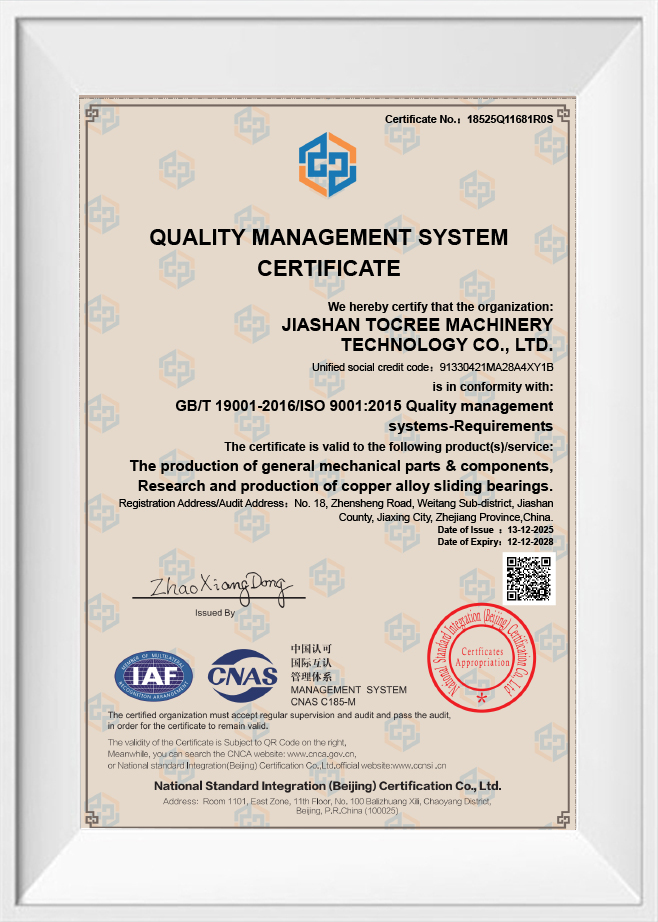
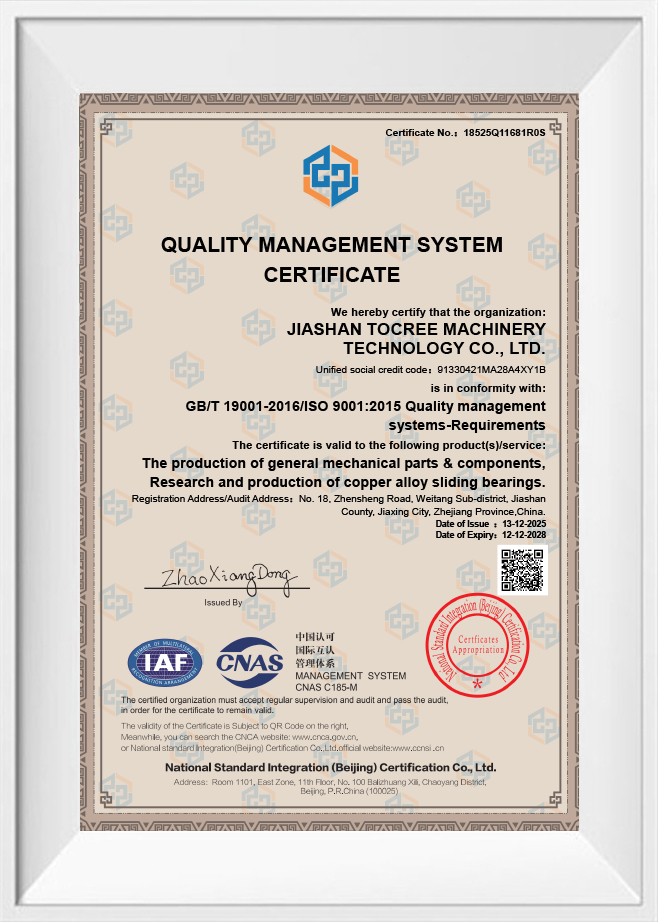
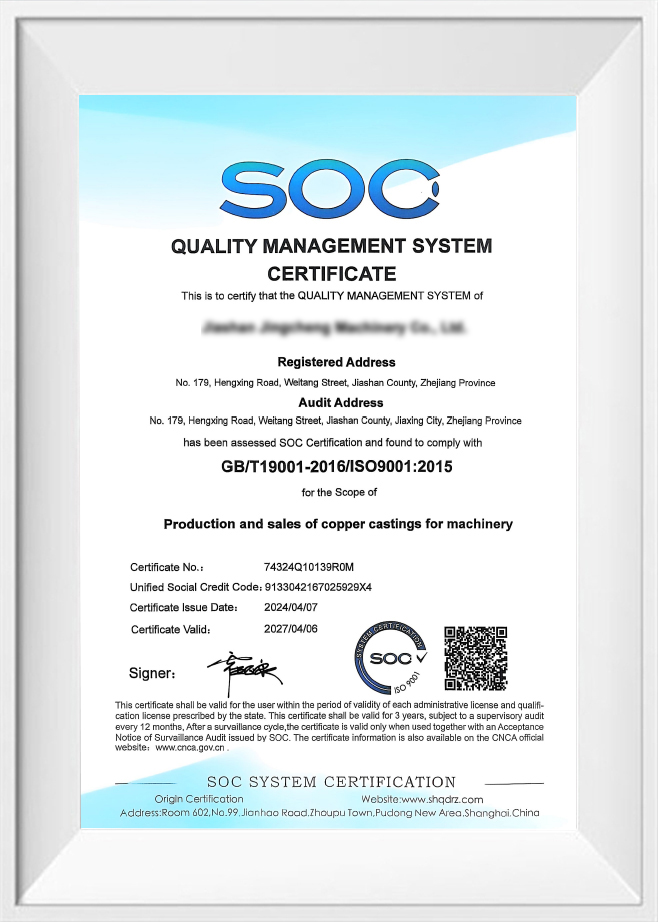
Certificate Of Honor
News
-
Anyone who has crawled under a machine with a grease gun knows the feeling: the fittings sit in the worst possible place, and the maintenance schedule never quite matches producti...
READ MORE -
Anyone who has spent time on a plant floor knows that wear rarely announces itself. It shows up as a machine that slowly stops holding tolerance, a guide that needs shimming every...
READ MORE -
Visit us at Booth AJ34, November 18–21, 2026 Jiashan, Zhejiang, China – October 2026 – Jiashan Tocree Machinery Co., Ltd. (Tocree Machinery) today announced that it will participat...
READ MORE -
Invitation to SHIPTEC China 2026 We are pleased to announce that Jiashan Tocree Machinery Co., Ltd. will exhibit at the 17th International Shipbuilding, Marine Equipment and Offsho...
READ MORE -
A copper alloy curved slider is a small part with a large job. It is the arc-shaped bronze or brass block that rides along a curved guideway, takes the load, and keeps two moving ...
READ MORE
Industry Knowledge
Material Selection Logic for Aluminum Alloy and Alloy Steel Mechanical Parts
During the design stage of non-standard mechanical parts, material selection often determines the subsequent processing technology, cost structure, and service life. Aluminum Alloy Mechanical Parts are widely used in transmission mechanisms, housing structures, and frequently disassembled connecting components where weight reduction is a clear requirement, thanks to their low density, good thermal conductivity, and ease of machining. Alloy Steel Mechanical Parts, on the other hand, rely on higher tensile strength, wear resistance, and fatigue resistance, making them the preferred choice for core load-transmitting components such as shafts, gears, and connecting rods under heavy-duty and high-impact conditions. In actual selection, engineers need to comprehensively consider the direction of force, operating temperature range, and corrosive environment, as well as whether subsequent heat treatment or surface strengthening is required, rather than judging solely based on material cost.
| Comparison | Aluminum Alloy Parts | Alloy Steel Parts |
| Density | Approx. 2.7 g/cm³ | Approx. 7.85 g/cm³ |
| Strength | Low to medium, improvable via aging treatment | High, suitable for heavy load transmission |
| Wear Resistance | Relatively weak, often needs anodizing | Relatively strong, can be quenched or carburized |
| Typical Applications | Housings, brackets, lightweight connectors | Shafts, gears, heavy-load connecting rods |
Key Points of Heat Treatment for Alloy Steel Parts
The performance of Alloy Steel Mechanical Parts largely depends on the precision of the heat treatment process, not just the chemical composition of the raw material itself. Steel of the same grade can show significant differences in hardness, toughness, and internal stress distribution depending on the heat treatment path applied, which is why heat treatment process cards are often customized individually for specific part geometries in non-standard machining.
Quenching and Tempering
Quenching and tempering combines quenching with high-temperature tempering to achieve good overall mechanical properties while maintaining a certain level of hardness. It is commonly used for shafts and connecting rods subjected to alternating loads. Even small deviations in tempering temperature can affect the impact toughness of the part, so furnace temperature uniformity and holding time control are critical to process stability.
Carburizing and Surface Quenching
For parts that require high surface wear resistance while retaining core toughness, such as gears and cams, carburizing quenching or high-frequency induction hardening is a more suitable option. This process forms a hardened layer on the surface while preserving the plasticity of the core material, thereby balancing wear resistance and impact resistance. At Jiashan Tocree Machinery, we have long undertaken precision machining orders for such non-standard steel parts and can coordinate corresponding heat treatment according to customer drawings.
Common Surface Treatment Methods for Aluminum Alloy Parts and Their Applications
The natural oxide film on aluminum alloy is relatively thin, offering limited wear and corrosion resistance. Therefore, in practical industrial applications, Aluminum Alloy Mechanical Parts often require secondary surface treatment to meet long-term usage requirements. Below are several common treatment methods and their applicable scenarios:
- Standard anodizing: suitable for structural parts with appearance and basic corrosion protection requirements, with a film thickness generally between 5-20 microns;
- Hard anodizing: film thickness can reach 50-100 microns, suitable for mechanical moving parts involving friction or sliding contact;
- Chromate conversion coating: often used as a base layer before painting, offering both conductivity and corrosion resistance, commonly applied to parts requiring grounding or electrical connection;
- Micro-arc oxidation: forms a ceramic-like film on the aluminum alloy surface with hardness and corrosion resistance notably superior to standard anodizing, though at a relatively higher process cost.
Tolerance and Machining Allowance Control in Non-Standard Parts Processing
Whether for aluminum alloy or alloy steel parts, reasonable tolerance band settings in non-standard customized machining directly affect assembly efficiency and service life. Tolerances that are too tight significantly increase machining time and tool wear, while tolerances that are too loose may result in unstable fit clearances. In actual production, machining allowances are typically determined separately based on the type of fit—clearance fit, transition fit, or interference fit.
Allowance Allocation for Rough and Finish Machining
The main purpose of rough machining is to quickly remove excess material, with allowances typically reserved between 0.5-2 millimeters. In the finishing stage, allowances need to be controlled within 0.1-0.3 millimeters based on final dimensional tolerance and surface roughness requirements, in order to reduce the impact of cutting force-induced deformation on final precision. For thin-walled or slender parts, additional consideration must be given to dimensional rebound after clamping stress release.
Compensation for Heat Treatment Deformation
Alloy steel parts often undergo a certain degree of dimensional deformation during quenching, so grinding allowances for post-heat-treatment correction should be considered during rough machining, generally recommended at 0.2-0.5 millimeters, to avoid scrapping parts due to deformation exceeding tolerance limits. Over the years, relying on comprehensive machining and testing equipment, we have continuously provided customers with one-stop non-standard parts solutions from raw materials to finished products.
Common Failure Modes of Mechanical Parts and Prevention Strategies
Understanding the typical failure modes of parts helps make targeted adjustments in advance during the design and material selection stages, thereby extending the overall service life of equipment and reducing maintenance costs.
- Fatigue fracture: mostly occurs at stress concentration points such as fillet transitions and keyway edges, and can be mitigated by optimizing the transition fillet radius or adding surface strengthening treatment;
- Wear failure: commonly seen on surfaces of parts with long-term sliding or rolling contact; selecting suitable wear-resistant alloys or adding lubrication design can effectively slow down wear;
- Corrosion failure: more prominent in humid or chemical media environments, requiring comprehensive consideration of the material's inherent corrosion resistance combined with appropriate surface protection layers;
- Overload deformation: mostly caused by insufficient estimation of actual operating conditions during the design stage; it is recommended to reserve an appropriate safety factor at key load-bearing points.
In actual projects, material properties, processing technology, and operating conditions often influence one another, and optimizing a single link rarely solves failure issues fundamentally. We have always adhered to a market-demand-oriented approach, leveraging years of precision machining experience to help customers avoid potential failure risks from the design stage onward.
Copyright © 2025 Jiashan Tocree Machinery Co., Ltd. All Rights Reserved.
Aluminum Alloy Steel Mechanical Parts Company
