

 English
 中文简体
 Deutsch
 عربى
For any questions and feedback from customers, we will reply patiently and meticulously.
The double-flange brass bushing is a high-performance metal bushing, widely used in mechanical equip...
An oilless flanged guide bushing is one of those small components that rarely gets attention until it wears, squeals, or stops holding alignment. In simple terms, it is a plain sleeve with a flange that guides a shaft, pin, or leader pin while carrying side loads and setting axial position. The “oilless” part means the sliding surface is designed to run with solid lubricants rather than a steady supply of grease or oil. That makes the part useful in places where lubrication is messy, difficult to reach, or simply not part of the maintenance plan.
If you have ever tried to keep a grease line alive on a hot die-casting machine or a dusty machine frame, you already understand why these bushings exist. They are not magic, and they are not all interchangeable. The right choice depends on load, speed, stroke, temperature, contamination, and how the flange is seated in the housing. The notes below are the practical points we usually walk through with engineers and maintenance teams before a custom bushing goes into production.
A guide bushing has a different job from a simple rotating bearing. It keeps a moving pin or shaft on a defined path, often with short strokes, oscillation, or reciprocating motion. The flange gives you a positive shoulder for axial location, makes mounting easier, and can act as a thrust face when the design allows it. In a guide application, the bushing may see repeated side loads and slight misalignment, so the wall section, bore tolerance, and flange seating all matter as much as the self-lubricating material.
“Oilless” does not mean the bushing can be ignored. It means the lubricant is built into the sliding surface, usually as graphite, PTFE, graphene, or another solid lubricant embedded in a brass or bronze base. During running, a thin transfer film forms on the counterface and helps reduce friction and wear. That film needs a reasonable mating surface and sensible operating conditions. A rough shaft, an overheated housing, or a load beyond the material’s capacity can still shorten life quickly.
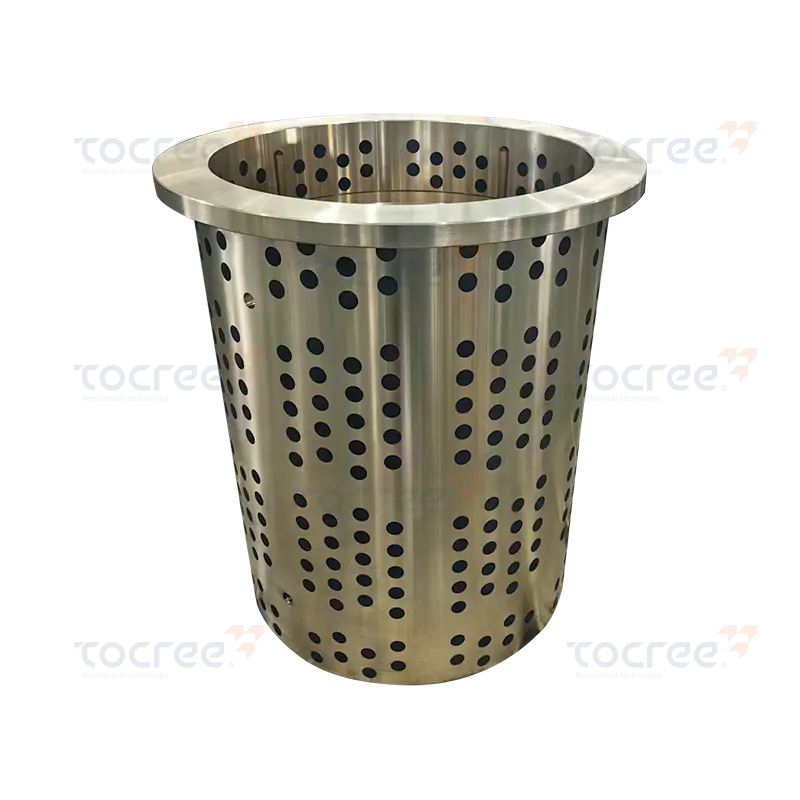 Graphite-Embedded Self-Lubricating Brass Bushing for General MachineryA solid CuZn25Al6Fe3Mn3 brass bushing with embedded graphite for medium-load oscillating duties and locations where grease lines are inconvenient.View Product →
For many guide duties, a graphite-embedded brass bushing is a good starting point because it handles medium loads and oscillating motion well. It is also at home in dirty or hot locations where a grease line would be inconvenient. The key is to confirm the running clearance and surface finish before assuming the bushing will behave like a catalog bearing.
Self-lubricating bushings work by transferring a small amount of solid lubricant to the shaft surface. Graphite is common in bronze and brass bushings because it can form a stable film under moderate conditions. PTFE provides low friction and smooth running, which is useful in clean equipment and lighter duty. Graphene is a newer option used in some custom compounds to improve wear resistance while keeping friction low. Each route has a different balance of load capacity, speed, temperature tolerance, and cost.
Guide duty often involves start-stop motion, short strokes, and reversing loads. Those conditions can be harder on a transfer film than steady rotation because the same contact zone is repeatedly loaded. A bushing that works well on a continuously rotating shaft may not perform the same way on a slow oscillating guide pin. Before selecting a material, it helps to know the actual load direction, the number of cycles per hour, and whether the machine runs dry, wet, or with coolant splash.
Most oilless flanged guide bushings in this family use a copper alloy base because it machines well, carries load, and accepts solid lubricant inserts. The table below is a practical starting point, not a final selection. A custom manufacturer should confirm the choice against your drawing, load calculation, and operating environment.
| Material route | Solid lubricant | Good starting point | Watch-outs |
|---|---|---|---|
| Graphite-embedded brass or bronze | Graphite | Medium loads, oscillating or reciprocating guide motion, hot or dirty locations where grease is hard to reach | Needs a sound counterface; very high speed or poor heat removal can still overheat the film |
| PTFE-embedded brass | PTFE | Low-friction running, smooth motion, light-to-medium loads, clean equipment | Lower load capacity than some graphite grades; check temperature limits and housing fit |
| Graphene-embedded brass | Graphene | Custom designs looking for low friction plus improved wear resistance | Validate with bench or field trials; not every “oilless” compound behaves the same |
| Solid self-lubricating bronze or brass sleeve | Graphite or mixed solid lubricants | General guide bushings, custom flanges, larger sizes, replacement parts | Confirm clearance, finish, and flange loading; material names alone are not enough |
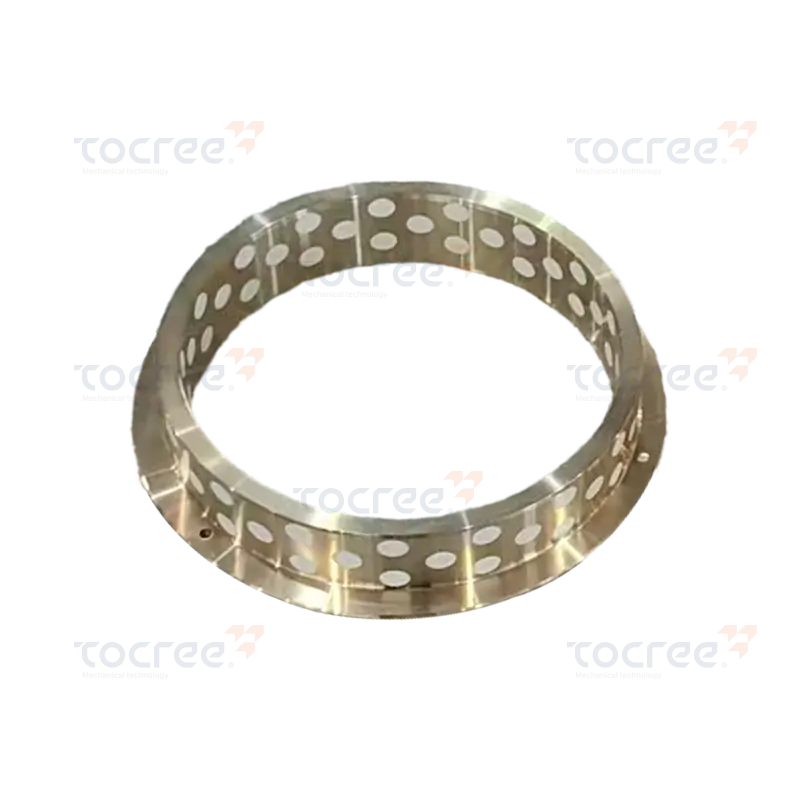 PTFE-Embedded Single-Flange Self-Lubricating Brass BushingA single-flange PTFE-embedded brass bushing for smooth guide-pin runs where low friction is needed without adding a lubrication point.View Product →
A single-flange PTFE-embedded bushing is often a sensible fit when the guide pin runs smoothly and the main goal is low friction without a lubrication point. If the machine sees heavier shock loads or a rougher environment, a graphite route may be the safer conversation.
The bore, outside diameter, length, flange diameter, and flange thickness all need to be defined together. A common starting point is an H7 bore for the guide pin and a housing fit chosen for either press or slip installation, but that choice depends on the machine, the housing material, and the amount of heat generated in service. A bushing that is too tight can close up after pressing; one that is too loose can move and wear the housing.
The flange should sit square against a clean, supported face. A thin flange with an unsupported overhang can distort under load, especially if the guide pin sees side thrust. The bore chamfer and the shaft lead-in also matter: a sharp corner can shave material during assembly, while a generous lead-in helps the pin enter without damaging the self-lubricating surface. For long guide pins, check the length-to-diameter ratio and the expected misalignment before specifying a tight clearance.
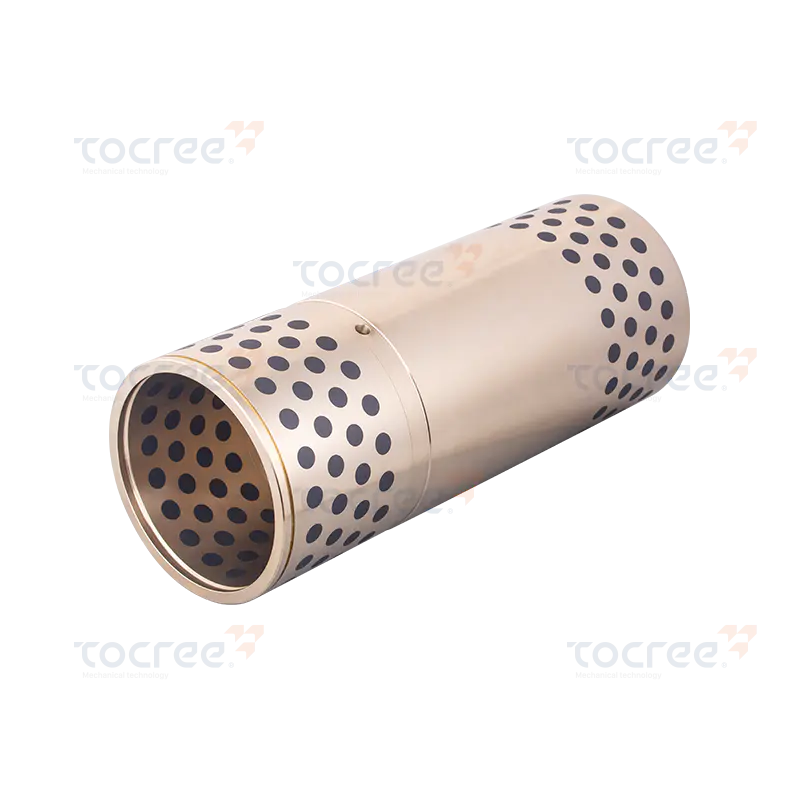 Solid Self-Lubricating Brass Bearing with Graphite InsertsA CuZn25Al6Fe3Mn3 brass sleeve with graphite inserts for low-speed, high-load duties and hard-to-access installations where external oiling is impractical.View Product →
On custom work, we often see drawings that give the bore and outside diameter but leave out the flange face finish, corner radii, or allowable press force. Those details are worth adding. They reduce the chance of a good material being blamed for a housing or assembly problem.
Press the bushing evenly and support the flange or the housing around the bore. Do not drive it in with a hammer, and do not apply force through an unsupported flange. After installation, check the bore for distortion and confirm that the guide pin enters without binding. Clean the housing and shaft before assembly, and avoid aggressive solvents that may attack the solid lubricant or leave a residue on the sliding surface.
A short running-in period is useful. Start with light load and slow movement where the machine allows it, then inspect for uneven contact or overheating. If the bushing runs hot, the cause is often too little clearance, too rough a shaft, or a load that is higher than the material was selected for. Replacing the bushing without changing those conditions usually repeats the same result.
If you are comparing flange styles, housing fits, and common selection mistakes, this flanged self-lubricating bearing guide is a useful next read. It pairs well with the dimensional checks above.
Oilless flanged guide bushings show up in die-casting machines, heavy machinery, metallurgical equipment, marine systems, petroleum equipment, and some medical machinery. The common thread is not the industry name but the operating condition: a guide pin or sliding member needs alignment, the lubrication point is inconvenient, and the maintenance team wants fewer grease-related problems. In die-casting machines, for example, heat and cycle loads can make a self-lubricating guide bushing attractive, provided the clearance and material are matched to the actual die height and motion.
In dirty or washdown environments, the bushing should not trap abrasive particles against the sliding surface. A flange can help shield the bore, but it is not a seal. If dust, scale, or coolant is present, consider a wiper, a protected housing, or a maintenance interval that includes inspection. In clean medical or packaging equipment, low-friction PTFE grades may be preferred, but the load and cleaning chemicals still need review.
Tocree is a copper alloy casting and precision machining company based in Jiashan, Zhejiang. Since 2007, we have built our work around copper alloy castings, self-lubricating components, bimetallic parts, and non-standard machined components. For oilless flanged guide bushings, that means we can discuss the material route, the flange geometry, the bore tolerance, and the housing fit as one manufacturing problem rather than as separate catalog selections.
We are a good fit when the part is non-standard, when the flange or bore needs custom machining, or when the quantity justifies a made-to-drawing approach. We are probably not the right supplier if you only need a low-cost commodity bushing from stock. The useful conversation starts with a drawing and the real operating conditions. Send the shaft diameter and tolerance, housing bore, flange seat, load direction, speed, stroke, temperature, contamination, and inspection requirements. With those details, the material and fit can be narrowed down without guesswork.
When these points are clear, an oilless flanged guide bushing becomes a straightforward engineering choice instead of a trial-and-error purchase. The best part is usually the one that matches the housing, the pin, and the real working environment, not simply the one with the longest material data sheet.
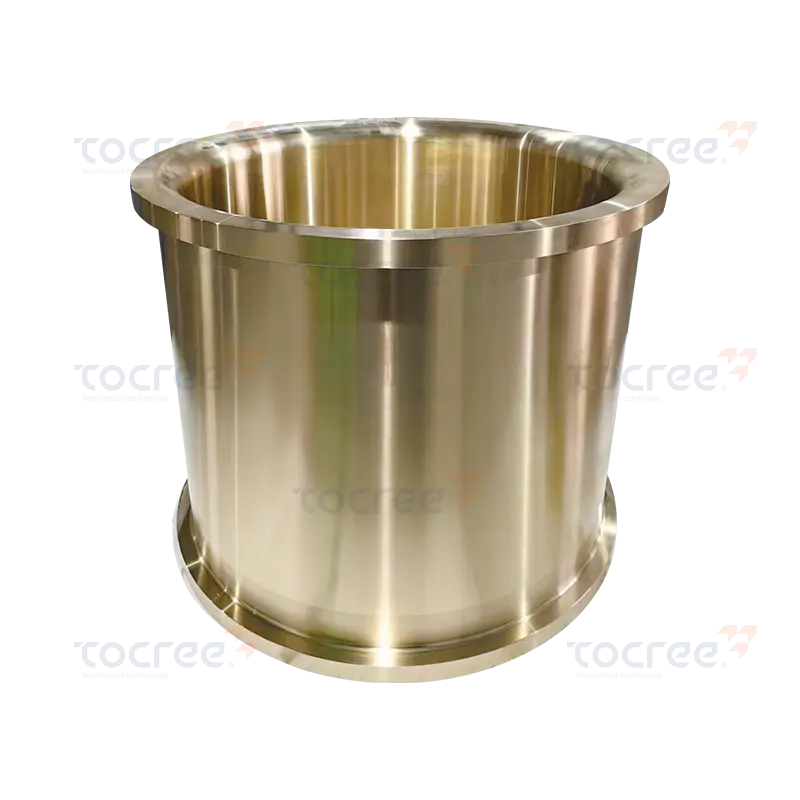
The double-flange brass bushing is a high-performance metal bushing, widely used in mechanical equip...
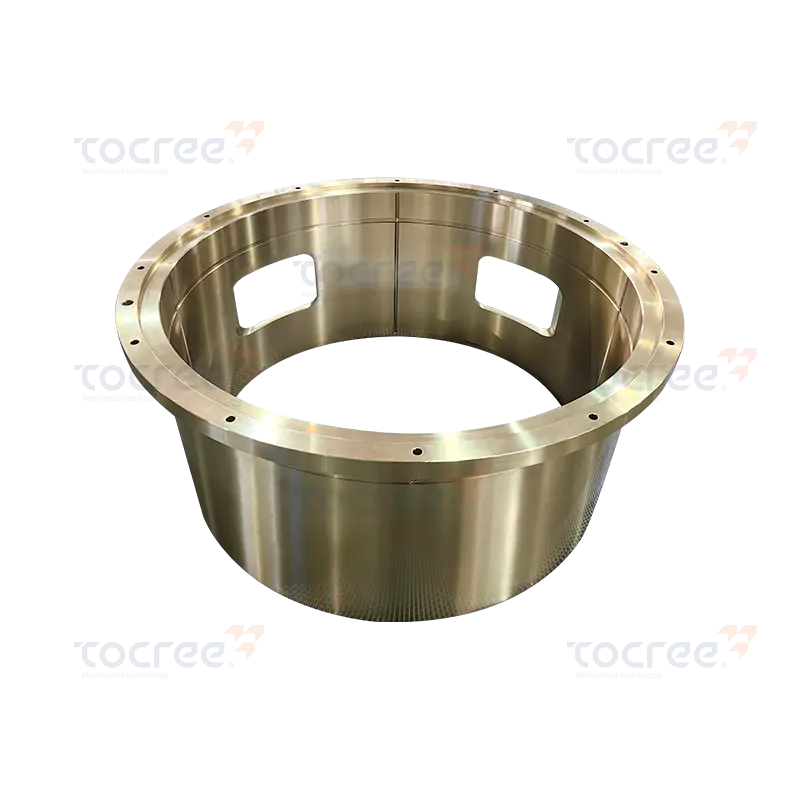
The single-sided flange copper sleeve is a high-performance brass alloy shaft sleeve with excellent ...
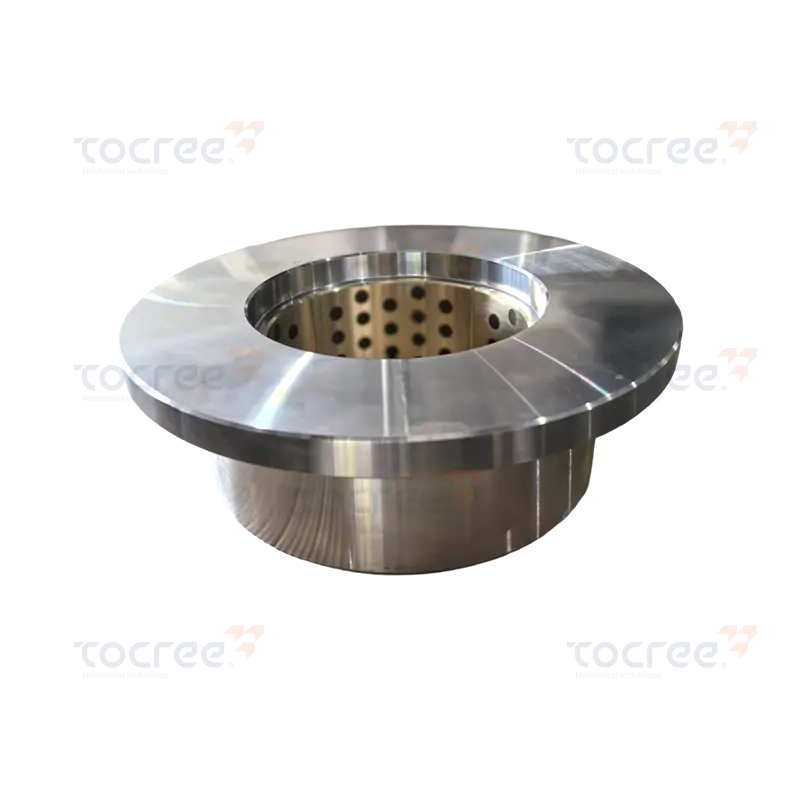
The Bronze-Steel Flanged Bushing combines the benefits of SCM435 alloy steel and high-strength brass...
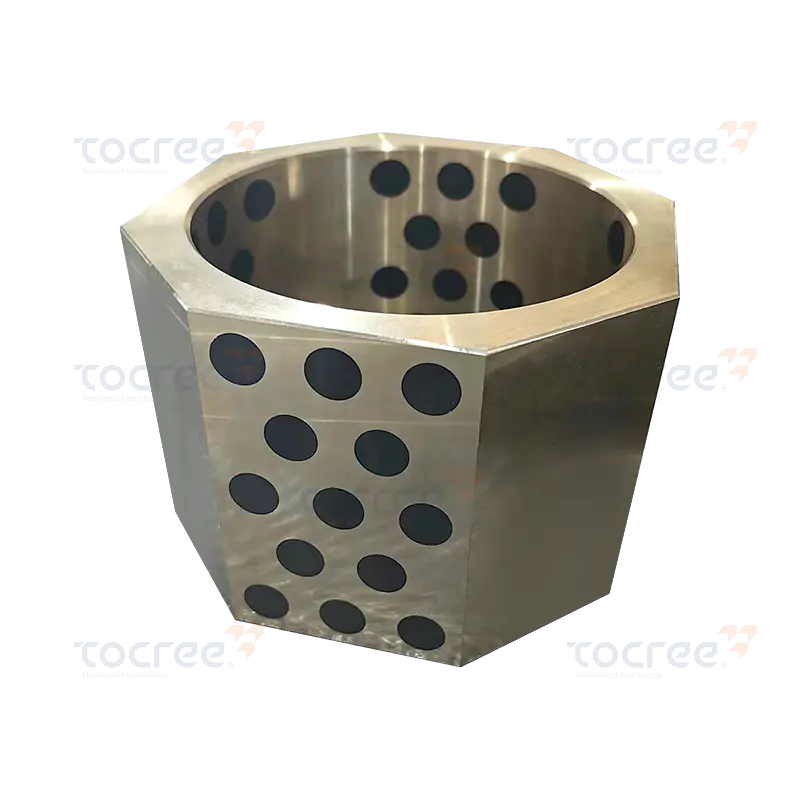
The octagonal bushing made of CuSn6Zn6Pb3 (tin bronze) and graphite precision machining is a self-lu...
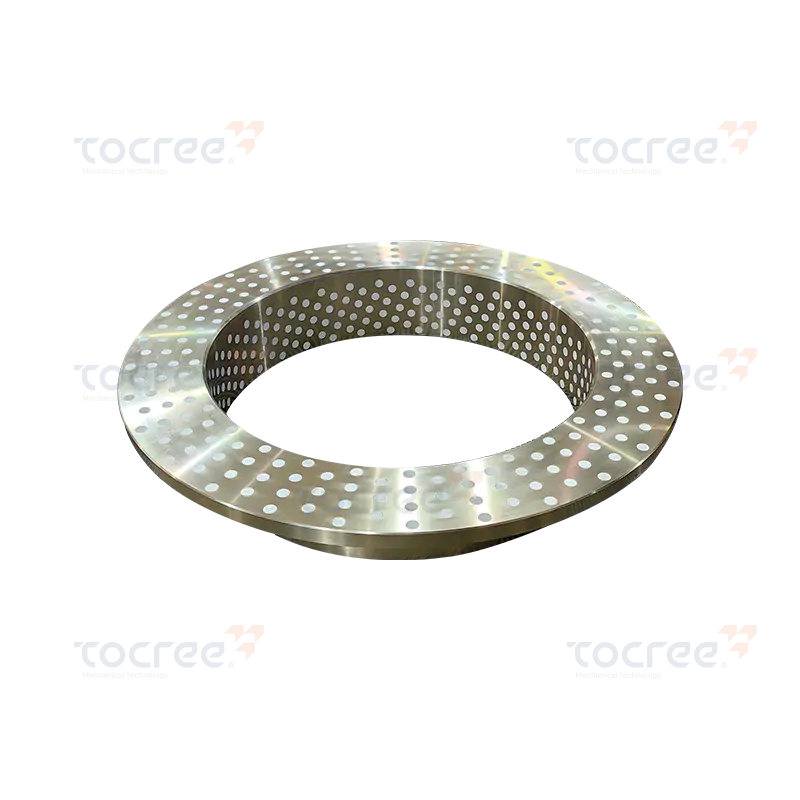
The PTFE single-flange solid self-lubricating copper sleeve is a high-performance mechanical compone...
Single-flange self-lubricating bearing (with graphite embedding) is a high-performance solid self-lu...
Copyright © 2025 Jiashan Tocree Machinery Co., Ltd. All Rights Reserved.
Customized Copper Alloys Machinery Parts
