

 English
 中文简体
 Deutsch
 عربى
For any questions and feedback from customers, we will reply patiently and meticulously.
The octagonal bushing made of CuSn6Zn6Pb3 (tin bronze) and graphite precision machining is a self-lu...
A guide bush is a small part with a large job: it keeps a sliding or moving member travelling on the line you designed. When that bush is bronze, it brings a set of properties that are hard to match — quiet running, tolerance of edge loading, resistance to seizure, and the option to re-machine rather than replace. What follows is what we have learned about bronze guide bushes on the shop floor: which alloy to pick, how clearance behaves once the machine is warm, and where lubrication stops being optional.
Guide bushes appear wherever a shaft, pillar, ejector or slide block has to stay aligned: die-casting dies and mould bases, press tools, ejector plates, machine-tool fixtures, and the guide columns of heavy equipment. Unlike a bearing in continuous rotation, a guide bush frequently works with short strokes, oscillating motion, or almost no movement at all under load. That duty cycle changes the material decision more than most drawings suggest.
In practice a guide bush has to handle four things at once:
Bronze suits this combination because it is softer than the hardened shaft it guides, it conducts heat away from the contact patch quickly, and it tolerates small amounts of misalignment and debris without seizing. A steel-on-steel guide pair, by contrast, has far less margin once lubrication thins out.
There is no single "guide bush bronze". The four families below cover most of the work we see, and the differences between them are practical rather than academic — they decide whether the bush runs quietly for years or scores in a month.
| Alloy family | Common grade | Hardness range | Where it earns its place |
|---|---|---|---|
| Tin bronze | CuSn8 | 70-90 HB | General guiding, good embeddability, quiet running |
| Tin bronze, higher alloy | CuSn12Ni2 | 90-120 HB | Heavier side loads, slower speeds, better wear resistance |
| Aluminium bronze | CuAl9Fe4 | 130-180 HB | High load, shock loading, marine and corrosive service |
| Brass with graphite or PTFE | Graphite-embedded brass | HB210-270 base | Oil-free guiding, hard-to-reach points, clean environments |
Tin bronze is the default for most guide duties. It machines cleanly, holds a fine bore finish, and its soft matrix lets small particles embed instead of dragging along the shaft. Step up to a nickel-bearing tin bronze when the side load is steady and heavy, or when the bush has to survive a long interval between overhauls.
Aluminium bronze is the answer when the guide sees shock, high surface pressure, or salt air. It is noticeably harder and less forgiving of a poorly aligned shaft, so it belongs where the geometry is controlled and the load path is known.
For points that cannot be greased — vertical guides deep inside a machine, food and packaging equipment, or anything where oil contamination is unacceptable — a solid self-lubricating bronze with graphite or PTFE plugs keeps the guide running dry without sacrificing the bronze body.
Most guide bush problems are clearance problems, not alloy problems. A housing bore of H7 with a bush pressed in by a light interference fit is the usual starting point, but the bore that matters is the one measured after pressing, not before. A thin-walled bush can close up by several microns simply from installation, and that alone can turn a comfortable running fit into a tight one.
Bronze expands at roughly 18 microns per metre per degree Celsius. On a short guide in a temperate workshop that is negligible. On a two-metre bush in a die-casting machine it is not: a twenty-degree rise in service moves the bore by around a third of a millimetre. Running clearance therefore has to be calculated for the working temperature, not the assembly temperature, and the shaft material has to be included in the same sum.
Two more points worth settling before the drawing is released. First, decide whether the guide needs a lead-in chamfer and a relief groove — both make assembly far kinder on the bore edge. Second, be explicit about surface finish: a bore around Ra 0.8 or better helps the lubricant film survive, while a rough bore will polish itself at the expense of the shaft.
Grease grooves are the cheapest reliability improvement available on a bronze guide bush. A helical or axial groove carries a reservoir of grease across the stroke, and the pattern matters more than the volume — a groove that stops short of the working zone does nothing. For reversing or oscillating guides, a cross-hatched or figure-eight pattern keeps lubricant distributed at both ends of travel.
 Bronze Cylindrical Bushing with Custom Grease GroovesAluminum bronze ZCuAl10Fe3 straight sleeve with machined grease grooves, suited to heavily loaded guide bushes needing an internal lubricant reservoir.View Product →
Where a groove is not enough because nobody will ever reach the grease nipple, graphite-embedded bronze does the work instead. The graphite plugs transfer a film onto the shaft during running-in and continue to feed it as the bush wears. These bushes are not maintenance-free in the sense of lasting forever — they are maintenance-free in the sense of not needing an external supply. Sealing the guide against coolant and grit still extends life significantly.
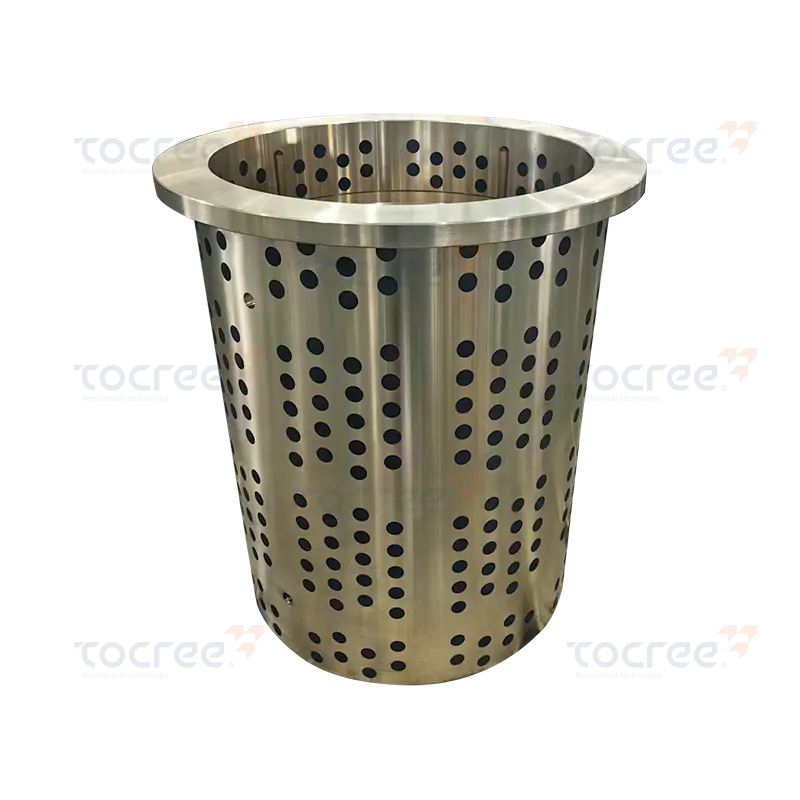 Graphite-Embedded Self-Lubricating Brass Flange BushingSingle-flange CuZn25Al6Fe3Mn3 bushing with embedded graphite plugs for long-lasting lubrication where external grease supply is impractical.View Product →
When a bronze guide bush comes back worn, the wear pattern usually names the cause before any measurement does.
Reading the pattern first saves the cost of replacing a good bush with an identical one that will fail the same way.
Most guide bushes we make are not catalogue items. They are drawn for one machine: a flange on one end, an oil hole in a specific clock position, a keyway, an odd wall thickness, or a length that no standard bush offers. The useful information on a drawing is the housing bore and tolerance, the shaft diameter and hardness, the running clearance at working temperature, the lubrication method, and the load direction relative to any groove.
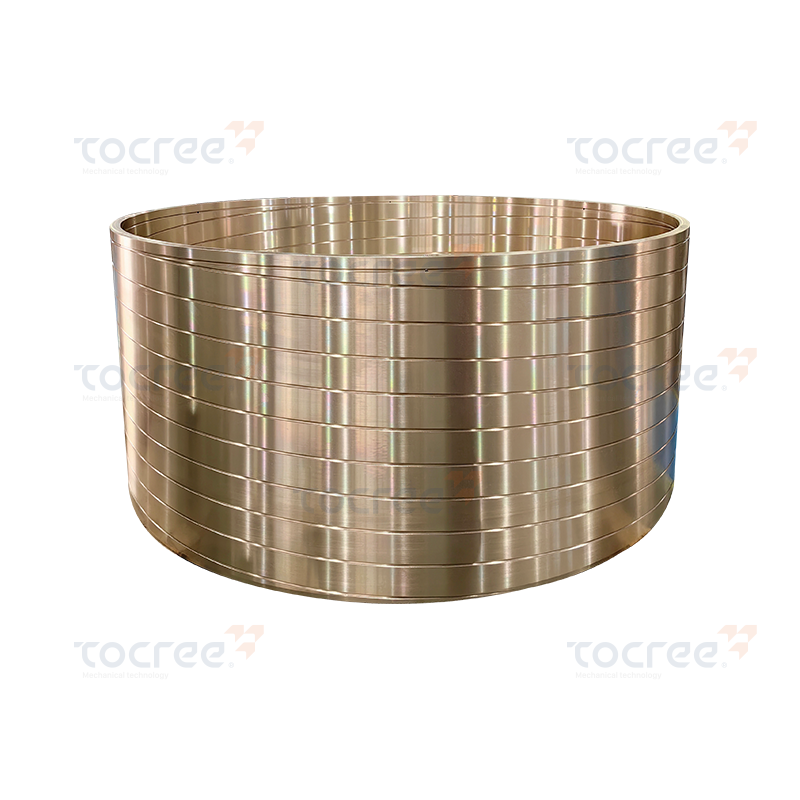 Custom Centrifugal-Cast Tin Bronze BushingTin bronze ZCuSn7Zn4Pb7 sleeve machined to drawing, with optional inner and outer oil grooves for durable industrial guide applications.View Product →
Because we melt our own copper alloys and cast the blanks in-house, the alloy choice is not limited to what happens to be on a shelf. Bushings are produced up to roughly 1.5 to 2 metres in diameter, and copper slide plates up to 4 metres long, 400 mm wide and 100 mm thick, so oversize guides for large presses, mill stands and ship equipment are within reach rather than a special enquiry. Finish machining takes place in a temperature-controlled workshop, which matters once tolerances tighten below a hundredth of a millimetre.
Die-casting machines are a good illustration: ejector plates, slide ways and core-pulling mechanisms all rely on guide elements that see heat, cycling load and very little opportunity for lubrication. The same logic applies in metallurgical plant, where scale, radiant heat and heavy side loads make a hard, graphited bronze far more sensible than a hardened steel guide.
Similar duties show up in marine deck machinery, heavy construction equipment, mining plant and hydraulic press tooling. If you want to see how these requirements translate into finished parts, the die-casting machine application notes and the metallurgical machinery pages walk through the components involved.
None of this is complicated, but each item on that list has caught somebody out at least once — usually at the point where a machine is already stripped down and the replacement is on the bench. Get the alloy, the clearance and the lubrication route agreed at the drawing stage, and a bronze guide bush will quietly do its job for years without asking for attention.
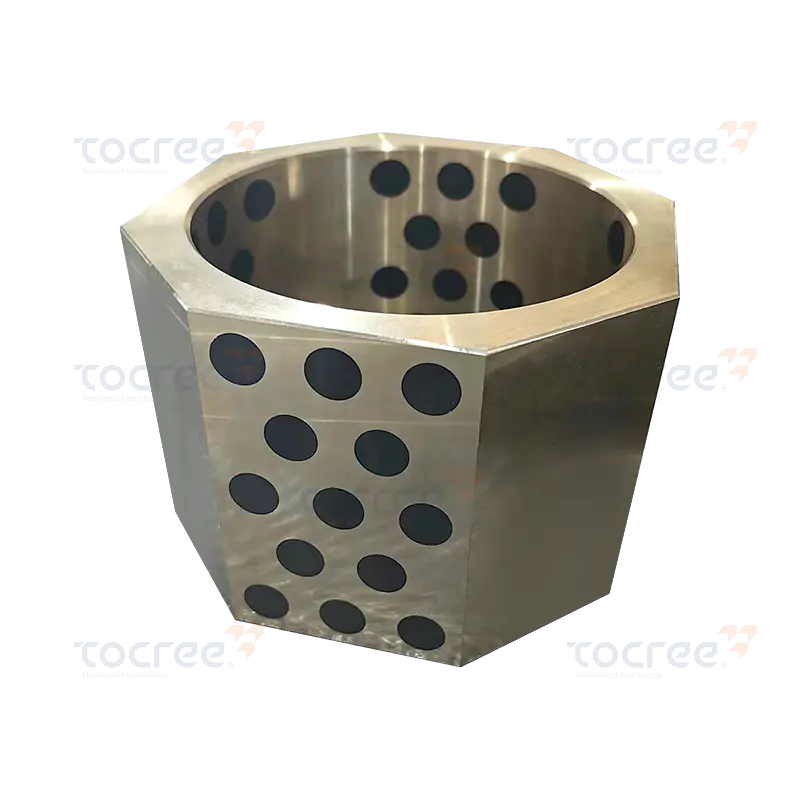
The octagonal bushing made of CuSn6Zn6Pb3 (tin bronze) and graphite precision machining is a self-lu...
This bronze sleeve is made of tin bronze as the base material. The blank piece is produced through c...
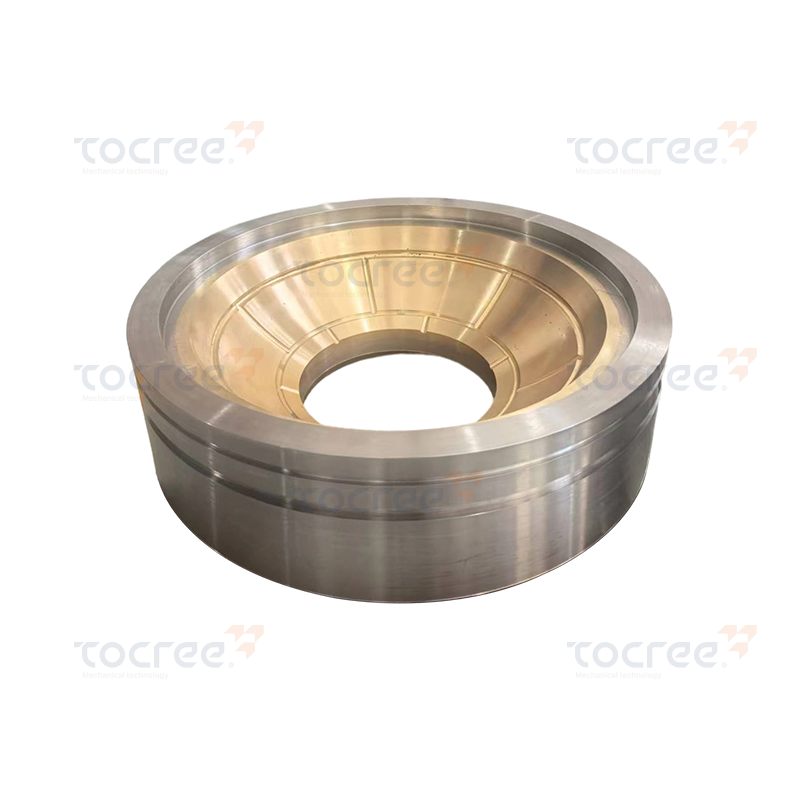
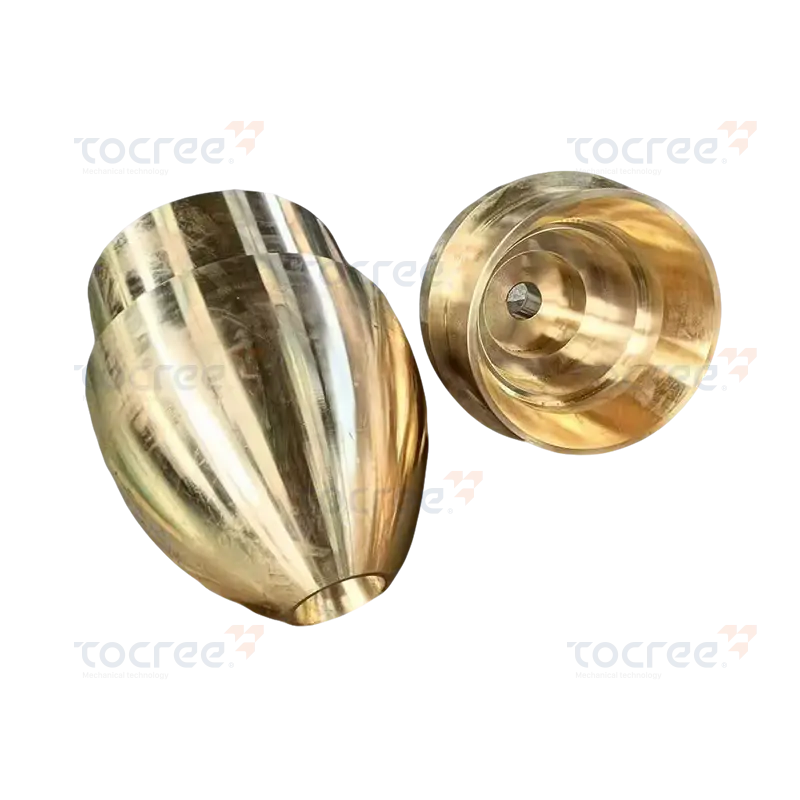
The Bronze-Steel Spherical Bushing is made of 42CrM04 alloy steel and high-strength brass, offering ...
This straight sleeve is made of aluminum bronze alloy as the base material. According to customer re...
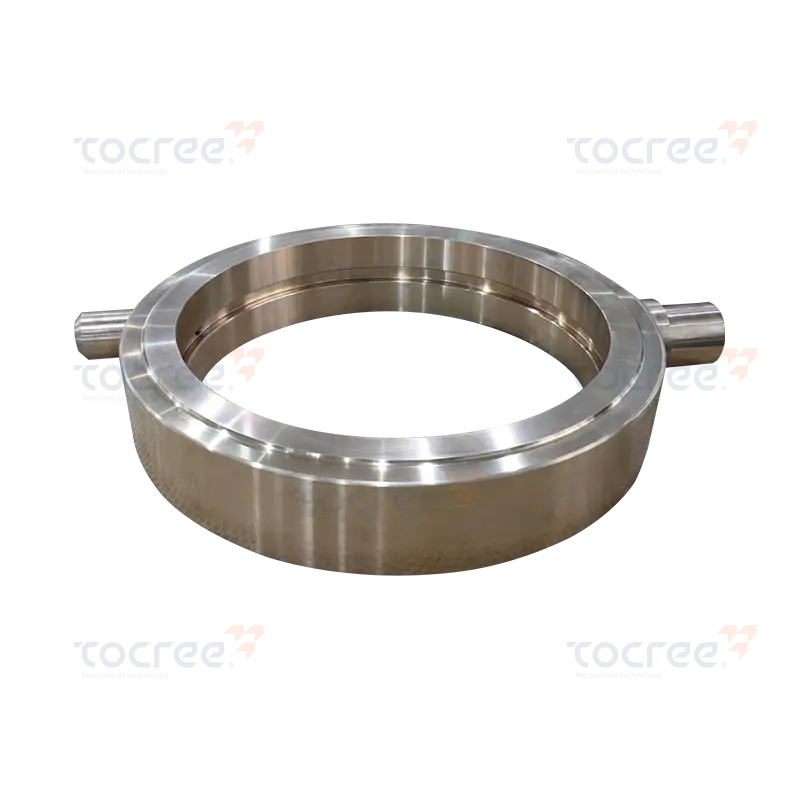
This copper-based oil drain ring is made from high-quality tin bronze through precise processing. It...
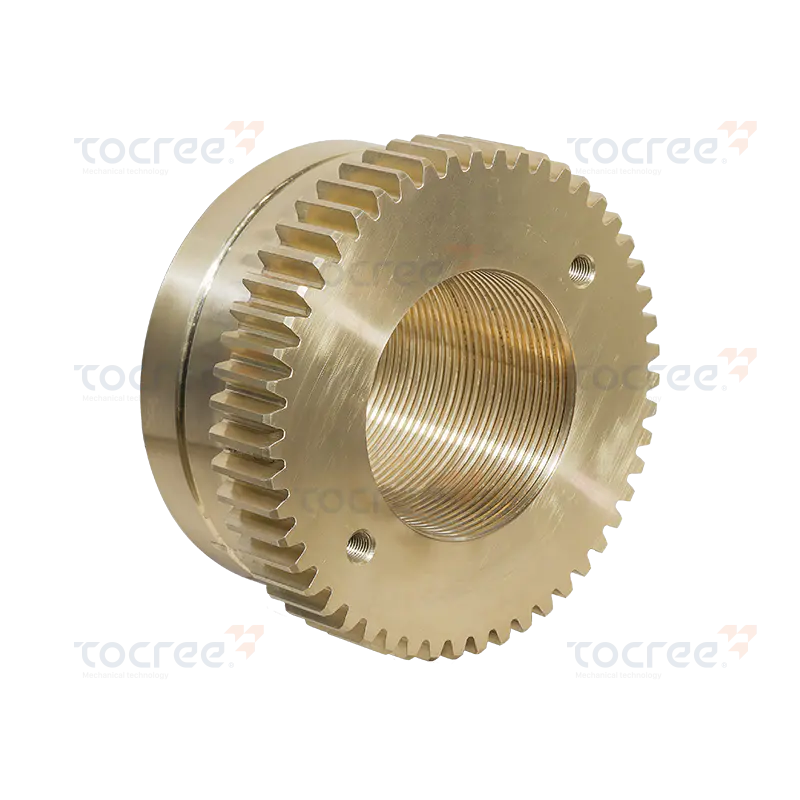
This copper-based gear nut is a high-performance component. It is precisely machined from high-quali...
Copyright © 2025 Jiashan Tocree Machinery Co., Ltd. All Rights Reserved.
Customized Copper Alloys Machinery Parts
