

 English
 中文简体
中文简体 Deutsch
 عربى
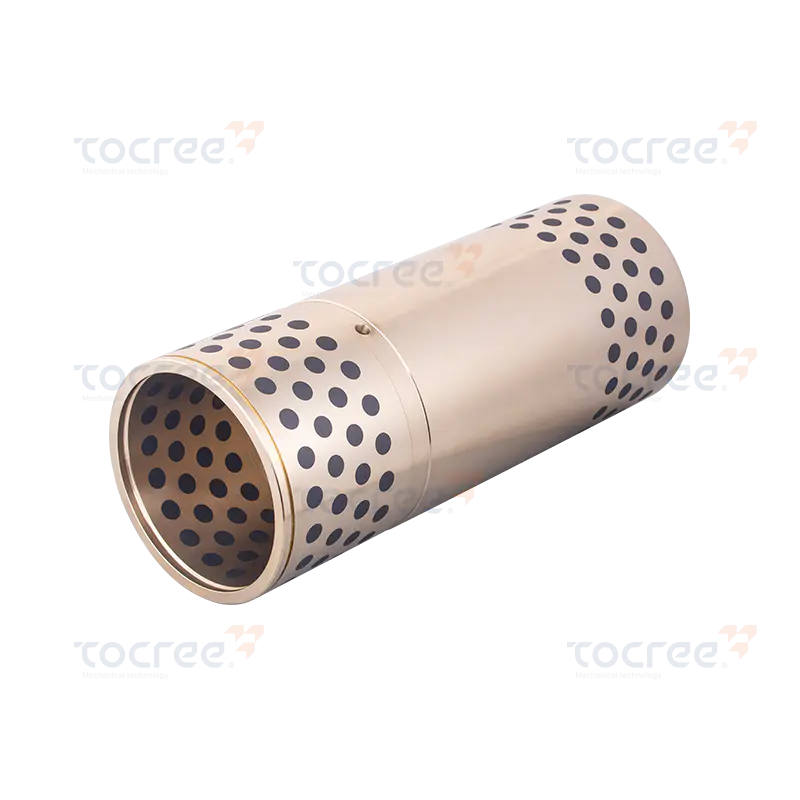
عربىMaterial structure: Cast aluminum brass CuZn25Al6Fe3Mn3, with graphite insert. Application...
Solid Self-Lubricating Series
-
-
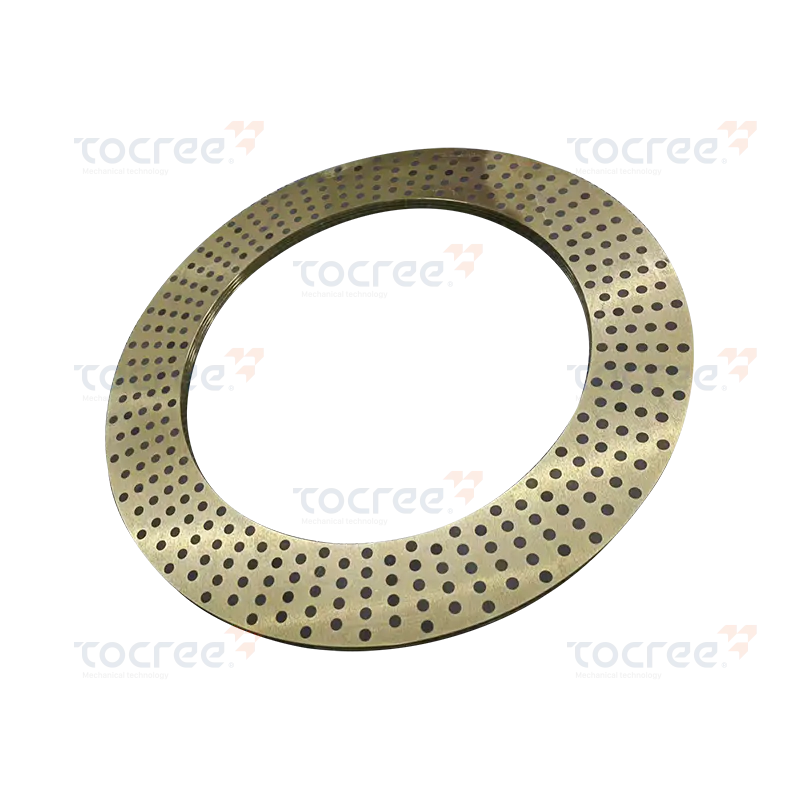 Solid Self-Lubricating Brass Ring
Solid self-lubricating copper rings are high-performance components, made by precision mac...
-
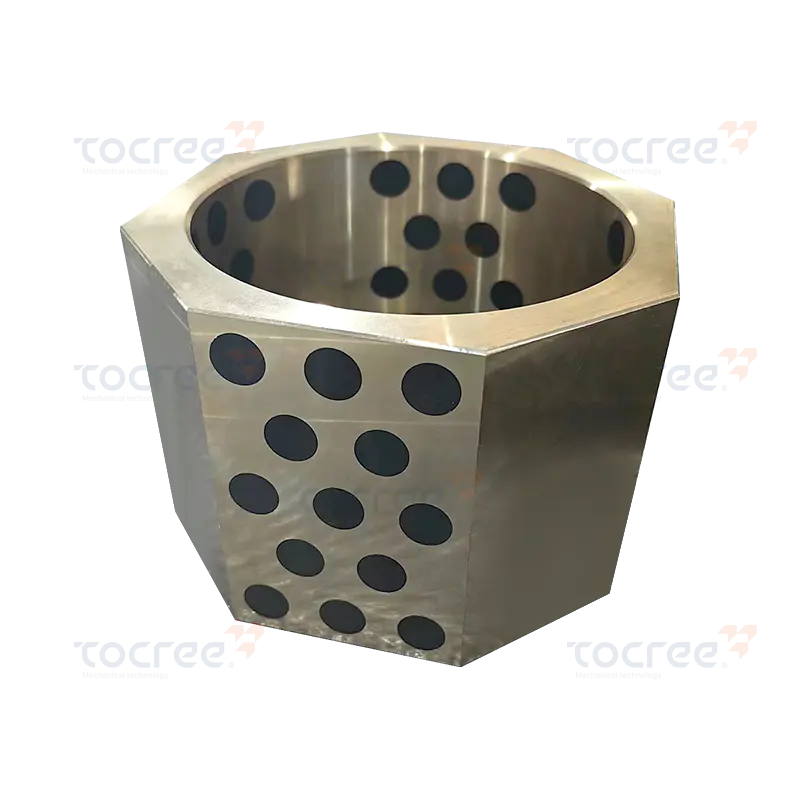 Bronze Octagonal Bushing
The octagonal bushing made of CuSn6Zn6Pb3 (tin bronze) and graphite precision machining is...
-
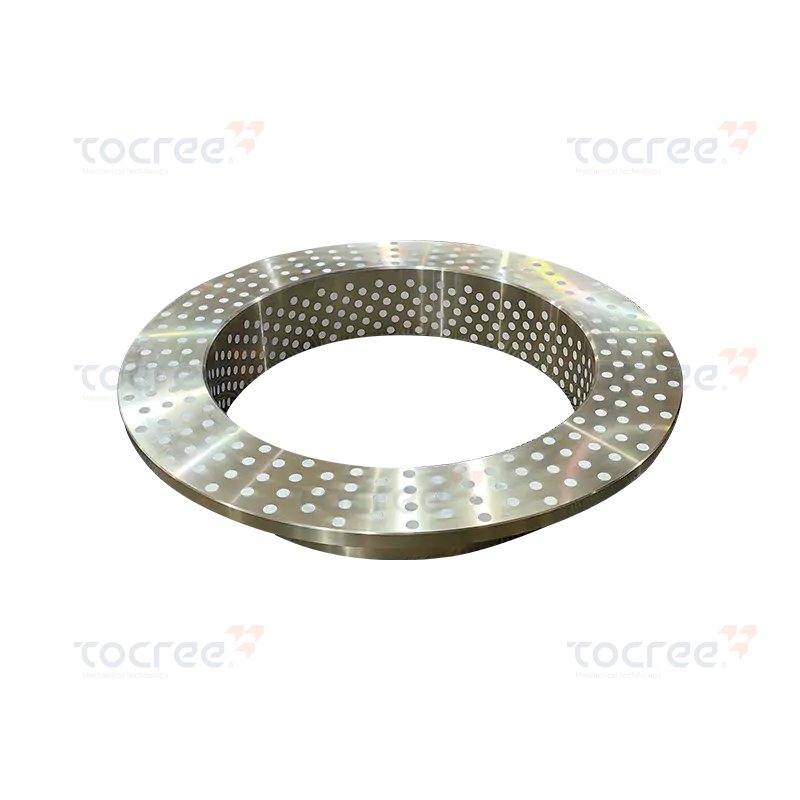 PTFE-Embedded Self-Lubricating Brass Bushing
The PTFE single-flange solid self-lubricating copper sleeve is a high-performance mechanic...
-
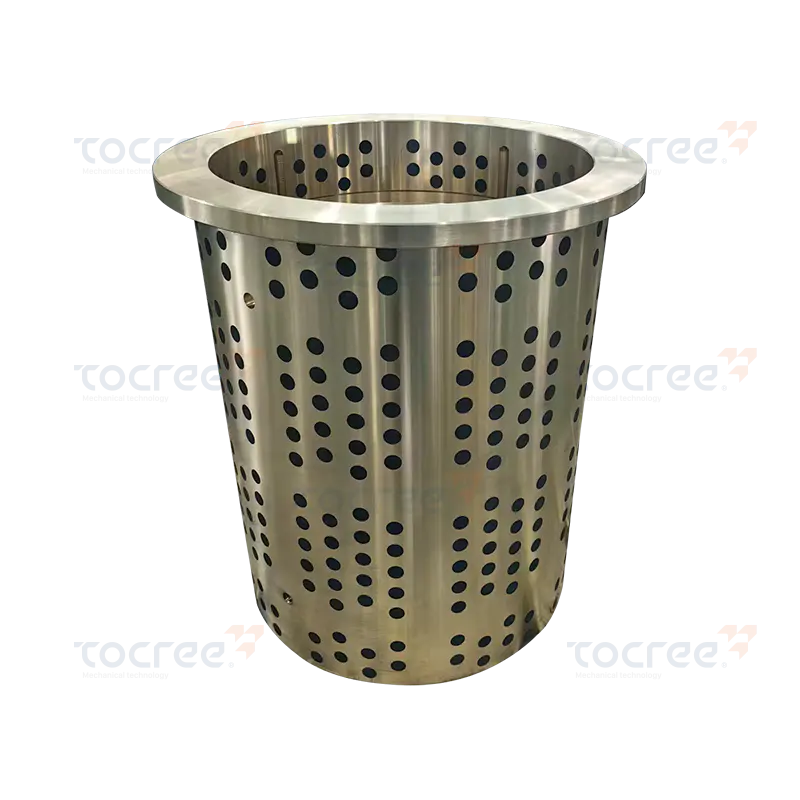 Graphite-Embedded Self-Lubricating Brass Bushing
Single-flange self-lubricating bearing (with graphite embedding) is a high-performance sol...
-
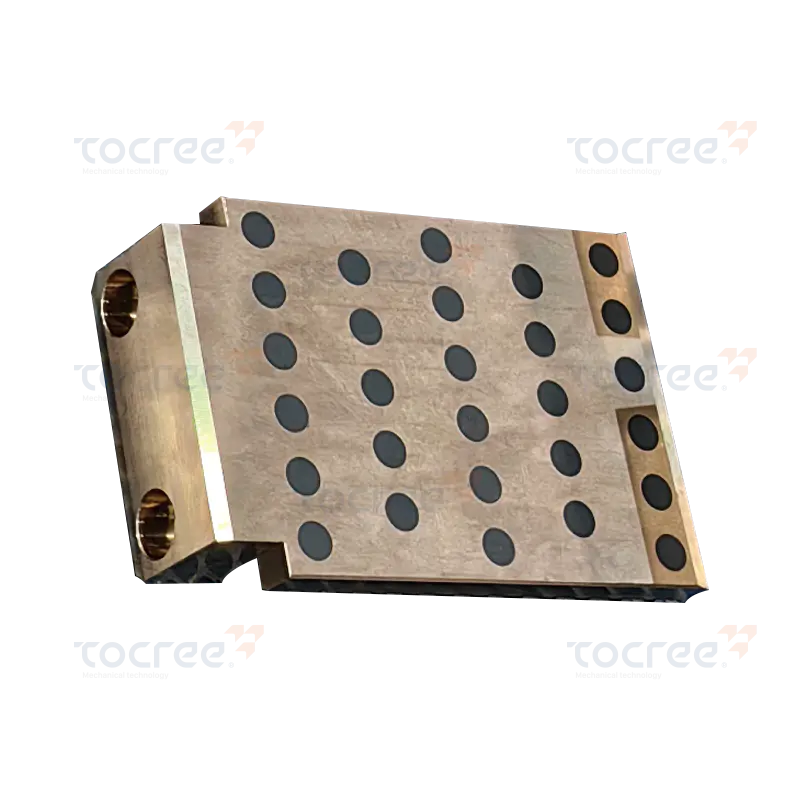 L-Type Solid Self-Lubricating Slider
The L-shaped solid self-lubricating slider is made by embedding high-purity graphite solid...
-
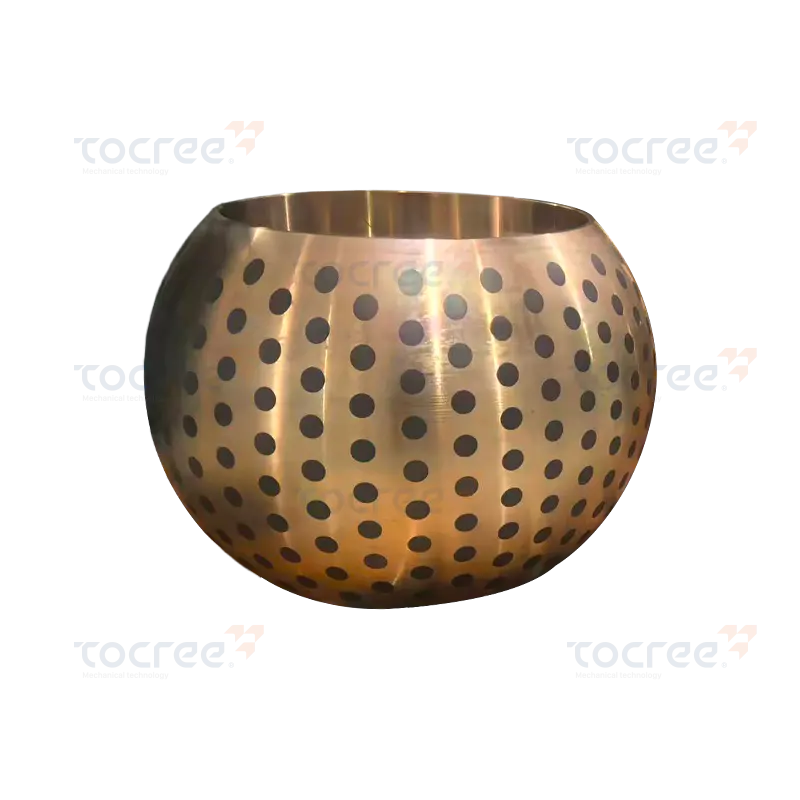 Graphene-Embedded Spherical Self-Lubricating Brass Bushing
This spherical self-lubricating copper sleeve is made from high-strength high-strength bra...
-
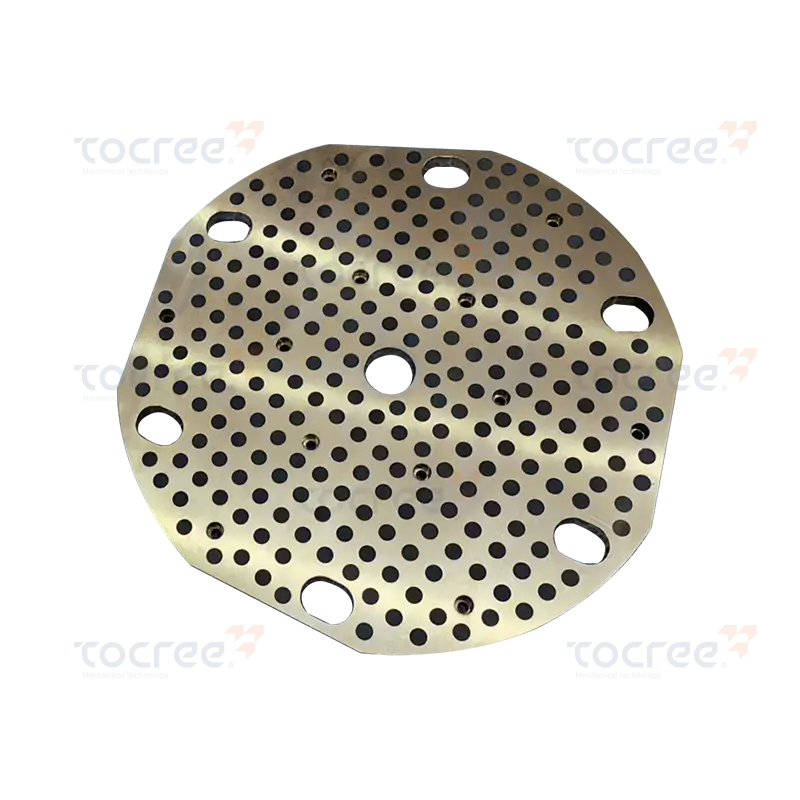 Graphite-Embedded Copper Lubricating Plate
The copper-based graphite gasket is made of high-quality copper-zinc alloy as the base mat...
-
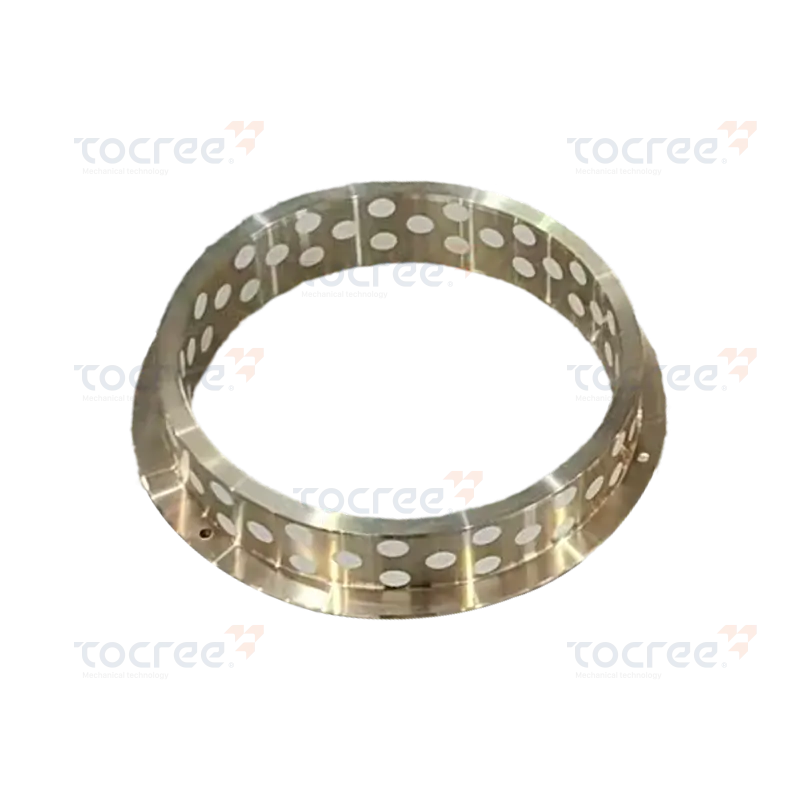 PTFE-Embedded Self-Lubricating Brass Bushing with Single Flange
High tensile strength: The tensile strength of this product reaches up to 750N/mm², ensuri...
-
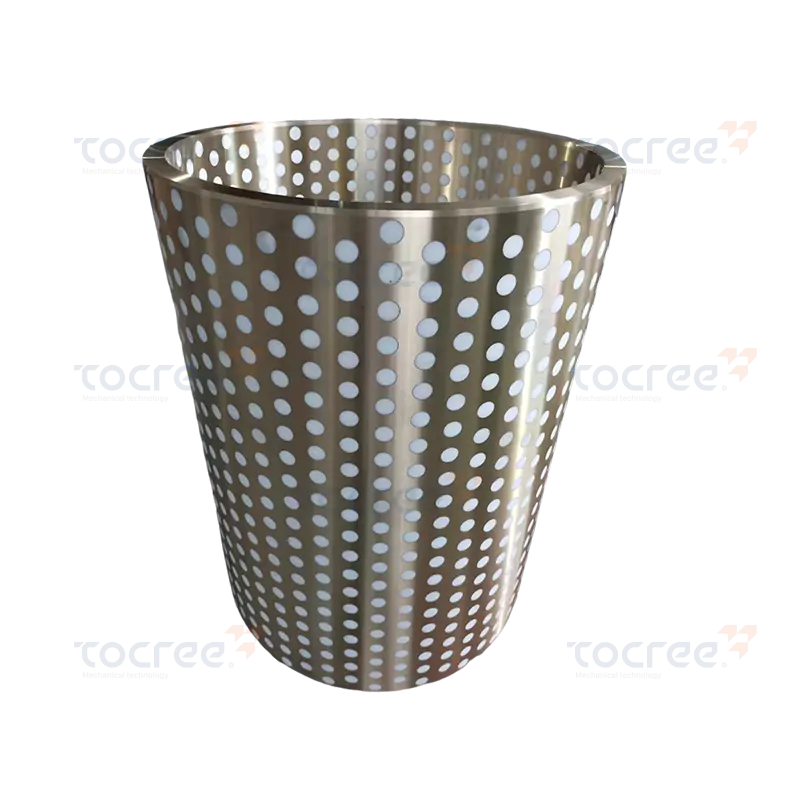 PTFE-Embedded Self-Lubricating Brass Bushing
This solid self-lubricating copper sleeve embedded with PTFE combines the wear resistance ...
Solid self-lubricating bearings, also known as oil-free sliding bearings, are sliding bearings that achieve oil-free or low-oil lubrication through solid lubricating materials. Their working principle is to use the metallic matrix to bear the load, while the embedded solid lubricant (such as graphite, molybdenum disulfide, or PTFE) forms a stable transfer film on the friction surface, thereby reducing friction and wear. Generally made of high-strength copper alloys, they break through the limitations of general bearings that rely on oil film lubrication. During use, through frictional heat, the solid lubricant interacts with the shaft friction, forming an excellent condition for the coexistence of oil and powder lubrication, which both protects the shaft from wear and maintains the characteristics of solid lubrication. Solid lubricating bearings are particularly suitable for oil-free, high-temperature, high-load, low-speed, anti-pollution, anti-corrosion, anti-radiation, and special conditions where it is impossible to apply a lubricating film, such as immersion in water or vacuum solutions, and they have the advantages of no maintenance, long service life, and good wear resistance.
Performance Characteristics:
1. It can work continuously under oil-free lubrication conditions.
2. More suitable for heavy load and low-speed conditions, with excellent wear resistance and extremely low friction coefficient.
3. Suitable for reciprocating, rotating, and intermittent motion where oil film is difficult to form.
4. Corrosion-resistant and chemically resistant.
5. Maintenance-free, with a long service life.
WHO ARE WE
A Professional Copper Alloy Casting Company Integrating Casting And Precision Machining
+ contact us
Founded in 2007, Jiashan Tocree Machinery Co., Ltd. covers an area of about 30000 square meters and has a registered capital of 11 million yuan. It is located at No. 18, Zhensheng Road, Weitang Sub-district,Jiashan County Zhejiang Province, China, enjoying a superior geographical location and convenient transportation.
With rich experience in the production and processing of non-standard parts and precision machining, it is a research and development-oriented manufacturing enterprise integrating research and development, sales, design and processing. As Self-Lubricating Bushing Manufacturers and Self-Lubricating Sleeve Manufacturer in China, The company is well-equipped and has extensive experience, committed to producing finished steel sleeves, copper sleeve plates (including special-shaped parts) and copper products of various sizes, shapes and materials.
It specializes in the production of copper mining machinery parts made of various copper alloys (phosphor bronze, tin bronze, aluminum bronze, beryllium bronze). The products are widely used in metallurgical machinery, ships, mining machinery, engineering machinery, agricultural machinery, large construction machinery, large packaging machinery and mold industries.
We have copper sleeves as large as 1.5-2 meters; copper sliding plates as long as 4 meters, 400mm wide and 100mm thick; and other mechanical copper parts, such as copper nuts, copper gears, copper sleeve worm wheels, rollers and other mechanical accessories. The company is well-equipped, with its own copper smelting furnace and centrifuge, etc. It specializes in the production of copper materials of various types, with an annual output of 2300 tons. It provides copper raw material billets for our company and is a one-stop manufacturer from raw materials to finished products. Provide Custom Cooper Alloy Self-Lubricating Sliding Bearing.
The company has a high-quality and strong technical team, sophisticated mechanical processing equipment, and is equipped with precise testing and experimental equipment. For a long time, the company has adhered to the market-oriented business policy, insisting on "providing high-quality services for customers, based on development and innovation, and strengthening is the last word". Guided by market-demanded products, on the road of continuous innovation and progress, good market demand is the foundation of the company's survival. With the company's current advantages, it serves customers' needs and achieves the goal of win-win cooperation and common development.

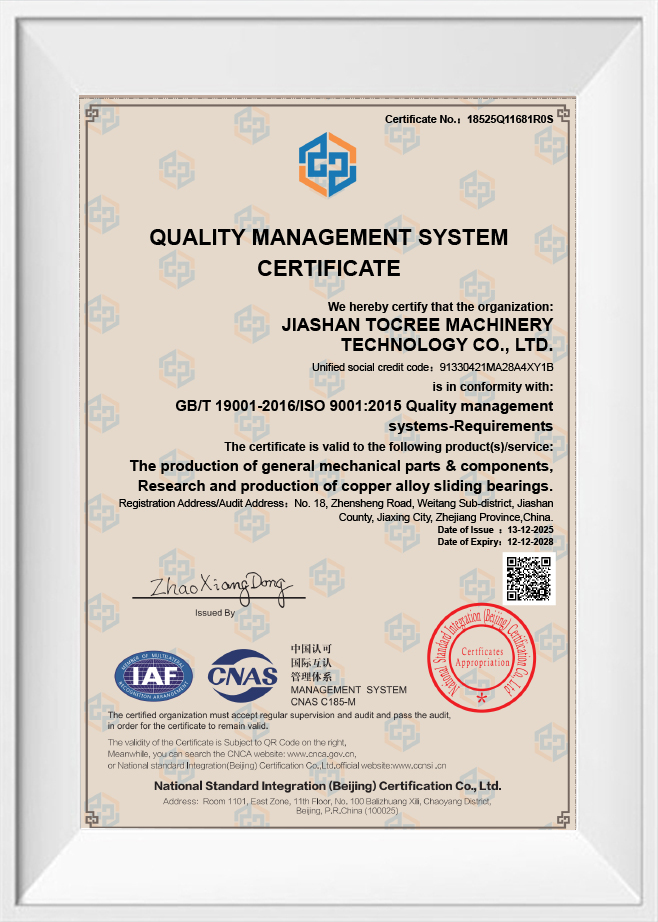
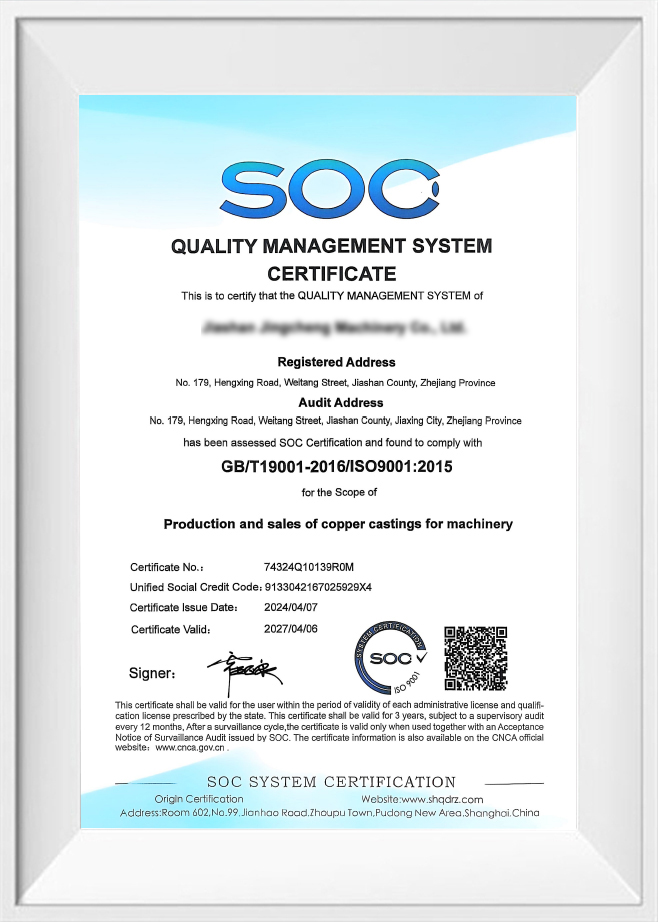
Certificate Of Honor
News
-
Anyone who has crawled under a machine with a grease gun knows the feeling: the fittings sit in the worst possible place, and the maintenance schedule never quite matches producti...
READ MORE -
Anyone who has spent time on a plant floor knows that wear rarely announces itself. It shows up as a machine that slowly stops holding tolerance, a guide that needs shimming every...
READ MORE -
Visit us at Booth AJ34, November 18–21, 2026 Jiashan, Zhejiang, China – October 2026 – Jiashan Tocree Machinery Co., Ltd. (Tocree Machinery) today announced that it will participat...
READ MORE -
Invitation to SHIPTEC China 2026 We are pleased to announce that Jiashan Tocree Machinery Co., Ltd. will exhibit at the 17th International Shipbuilding, Marine Equipment and Offsho...
READ MORE -
A copper alloy curved slider is a small part with a large job. It is the arc-shaped bronze or brass block that rides along a curved guideway, takes the load, and keeps two moving ...
READ MORE
Industry Knowledge
Why Alloy Composition Decides the PV Limit of a Self-Lubricating Bushing
The load-speed (PV) rating of a self-lubricating bushing is not a fixed number stamped on a catalog page — it shifts with the base alloy, the graphite or solid-lubricant plug ratio, and the surface finish of the mating shaft. Phosphor bronze bushings generally handle moderate PV values with excellent fatigue resistance, making them a common choice for reciprocating loads such as press guides and construction machinery pins. Aluminum bronze, by contrast, carries higher hardness and compressive strength, so it tolerates heavier static loads but is less forgiving of misalignment. Tin bronze sits between the two, offering a balance of toughness and machinability that suits general mining and metallurgical equipment. Beryllium bronze, though more expensive, is reserved for applications needing both high strength and corrosion resistance, such as marine winches or offshore engineering machinery.
Matching Alloy to Duty Cycle
- Continuous rotation at low speed favors tin bronze self-lubricating sleeve designs with fine graphite dispersion.
- Heavy shock loading with intermittent motion suits aluminum bronze for its higher yield strength.
- Corrosive or marine environments call for beryllium bronze or tin bronze with protective plating.
- High-temperature zones near furnaces or dryers require alloys with stable lubricant retention above 150°C.
Fit Tolerances That Determine Sliding Bearing Service Life
A cooper alloy self-lubricating sliding bearing performs only as well as the housing bore and shaft tolerance allow. Too loose a fit causes the bushing to rotate within its housing, generating fretting wear on the outer diameter; too tight a fit can close the internal clearance needed for thermal expansion, leading to seizure under sustained load. Most engineers reference interference fit classes for the housing bore and clearance fit classes for the shaft, but the exact values should be adjusted once wall thickness, operating temperature, and expected radial load are known.
| Application | Housing Bore Fit | Shaft Clearance |
| Low-speed heavy load (mining machinery) | H7 | f7 |
| Oscillating motion (packaging machinery) | H7 | g6 |
| High-temperature continuous rotation | H8 | e8 |
Why We Machine Oversized Blanks In-House
Because we cast and centrifuge our own copper billets before machining, we can hold tighter dimensional control on large-format parts than shops that buy standard-diameter stock and bore it out. This matters most on oversized components — our facility regularly produces sleeves up to 1.5–2 meters in diameter and sliding plates as long as 4 meters, 400mm wide, and 100mm thick, where even small deviations in the raw billet compound into significant tolerance drift after machining.
Recognizing Wear Patterns Before a Bearing Fails
Most self-lubricating sleeve failures give visual warning long before total seizure. Learning to read these patterns during routine inspection can save a shutdown. Adhesive wear shows as smeared or transferred copper on the shaft surface, usually from insufficient break-in or a mismatched shaft hardness. Abrasive wear appears as fine circumferential scratching, typically caused by contaminant ingress rather than the bushing material itself. Fatigue wear presents as surface pitting or flaking near the loaded zone, most common in bearings subjected to cyclic shock rather than steady rotation.
- Smeared or galled surface: check shaft hardness and initial running clearance.
- Fine scoring lines: inspect seals and add contaminant exclusion.
- Surface pitting near the load zone: reassess whether the alloy matches the shock load profile.
- Uneven wear across the bushing width: verify shaft alignment and housing squareness.
Solid Lubricant Distribution: Why Plug Pattern Matters
In a cast copper alloy self-lubricating bushing, the graphite or composite lubricant plugs are typically arranged in a staggered pattern across the bearing surface rather than in straight rows. This staggering ensures that as the shaft rotates, at least part of its contact path always crosses a lubricant zone, which keeps the friction film continuous instead of intermittent. Plug density is usually expressed as a percentage of total bearing surface area, and this percentage is adjusted based on load: higher-load applications use a slightly lower plug density to preserve structural strength in the surrounding bronze matrix, while lighter-load, higher-speed applications can tolerate a higher lubricant ratio for smoother running.
Practical Guidance for Custom Specification
When a project calls for a non-standard bushing size, it helps to provide the actual operating radial load, shaft rotational speed, and ambient temperature range rather than only the bore diameter. With that data, plug density and alloy grade can be matched to the duty cycle instead of defaulting to a generic mid-range specification. Our team works from raw billet through finished machining on-site, so custom plug patterns and non-standard outer profiles can be produced without waiting on outsourced casting.
Storage and Handling Before Installation
A finished self-lubricating sliding bearing can be damaged before it ever sees service if stored incorrectly. Stacking sleeves without separators risks surface scoring from bore-to-bore contact. Humid storage environments can leave oxidation on the sliding surface, which subtly increases initial friction until it wears away — a break-in period that shortens the effective service life if the oxide layer was thick to begin with. Keeping bushings in their original packaging until just before installation, and wiping the bore lightly before fitting, avoids introducing grit that the lubricant plugs then have to work around.
Copyright © 2025 Jiashan Tocree Machinery Co., Ltd. All Rights Reserved.
Self-Lubricating Sleeve Manufacturer
