

 English
 中文简体
 Deutsch
 عربى
For any questions and feedback from customers, we will reply patiently and meticulously.
This copper-based oil drain ring is made from high-quality tin bronze through precise processing. It...
Graphite bronze wear plates look simple: a flat bronze plate with dark graphite plugs. In service, they do a serious job. They guide slides, carry load, absorb misalignment, and give expensive machinery a renewable wear surface that can be replaced before the main structure is damaged. The details, including alloy, graphite pattern, flatness, and machining, decide whether the plate lasts for years or becomes a maintenance headache.
This guide is written from the shop floor perspective: what the plate does, where it fits, and what to confirm before ordering.
At its simplest, a graphite bronze wear plate is a copper alloy plate containing graphite as a solid lubricant. The graphite may be pressed into drilled holes as plugs, or distributed through a composite layer. The bronze carries compressive load and conducts heat; the graphite leaves a thin film on the mating surface. That film lowers friction during starts, stops, and slow reciprocating motion, when a full oil film is hard to maintain.
These plates are often used as replaceable slideways, wear strips, guide liners, and pressure plates. They are not a substitute for good machine design. Alignment, surface finish, clearance, and contamination control still matter. A plate that is overloaded at one edge or asked to run against a rough mating surface will wear quickly, whatever the alloy.
Graphite works best when it can transfer a film to a smooth, hard mating surface. As the plate moves, graphite from the plugs smears across the bronze and counterface. The result is a boundary lubrication layer that reduces metal-to-metal contact. In many machines this means less stick-slip, quieter operation, and a wider margin if grease or oil is delayed.
The plug layout matters. Too few plugs, or plugs placed only in the centre of a long plate, can leave dry bands at the ends of the stroke. A good pattern follows the actual contact path. Plug fit and depth also need control; loose plugs can work out, while proud plugs may carry load before the bronze does.
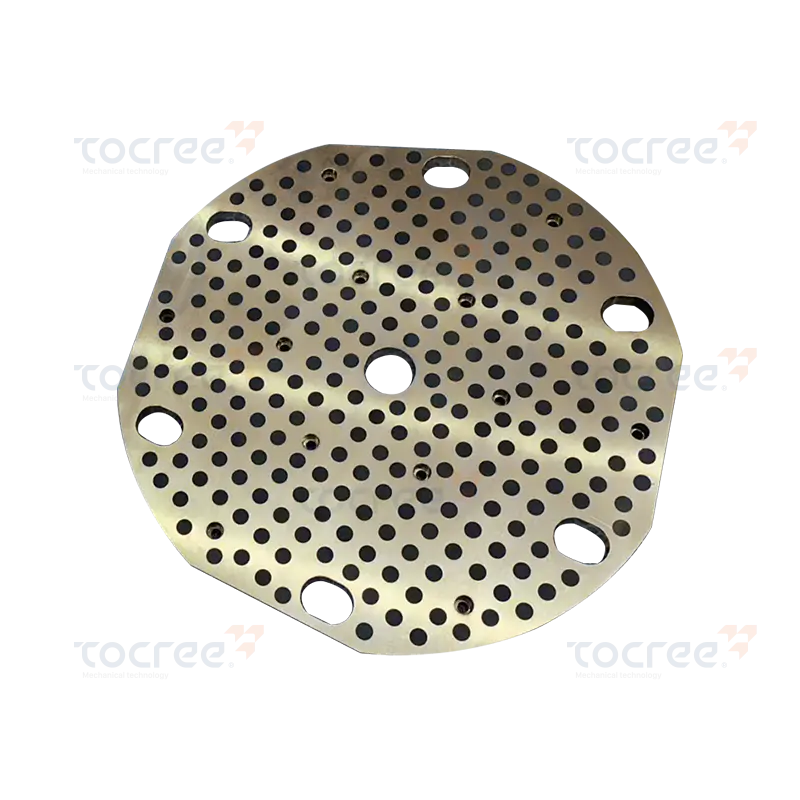 Graphite-Embedded Copper Lubricating Plate for Sliding SystemsCopper-alloy self-lubricating plate with graphite-filled holes for high-load, high-temperature sliding systems; consider plug pattern and maintenance access.View Product →
Graphite bronze is not “fit and forget.” It is maintenance-friendly, not maintenance-free in every case. In dirty or abrasive conditions, the plate still needs wipers, guards, or a clean lubricant path. Where oil is used, graphite can complement it rather than replace it.
Alloy choice starts with the job. Tin bronze, such as CuSn8 or CuSn12Ni2, is a common base for wear plates because it offers good conformability and wear resistance. Aluminum bronze, such as CuAl9Fe4, brings higher strength and better resistance to some corrosive environments, but it can be less forgiving of poor alignment. Leaded bronzes are valued for embeddability where regulations allow them. High-tensile brass may suit less severe duties where cost and machinability matter.
Hardness alone is a poor selector. A hard bronze running against a soft or poorly finished counterface can polish or score it. The pair matters: plate material, mating surface hardness, roughness, and lubrication should be chosen together. For large plates, casting quality and stress control are just as important as the nominal grade.
| Option | Lubrication style | Typical use | Watch point |
|---|---|---|---|
| Solid cast, graphite plugged | Dry or minimal oil; graphite film | Large guideways, dies, wear strips | Needs flat mounting and controlled plug pattern |
| Steel-backed bimetal with bronze layer | Oil, grease, or graphite in bronze layer | Space-limited slides and thrust faces | Bond quality and edge loading |
| Graphite or PTFE-filled bronze | Low-friction dry running | Lighter loads and smooth motion | Temperature and load limits |
| Bronze with oil grooves | Circulating or manual oil | Higher-speed or oil-friendly machines | Oil path must reach the contact zone |
Within these families, the shape of the plate often decides the detail. A long, narrow wear strip needs a different plug pattern from a wide die plate. A plate with counterbored mounting holes needs enough bronze around each hole to avoid cracking. A curved or angled plate may be cast near-net shape and then machined, rather than cut from flat stock.
For engineers, the practical question is not “which bronze is best?” but “which plate can I install, adjust, and replace without reworking the machine?” Thickness allowance for future machining, chamfers on leading edges, and a sensible lifting or handling feature often save more downtime than a small gain in alloy hardness.
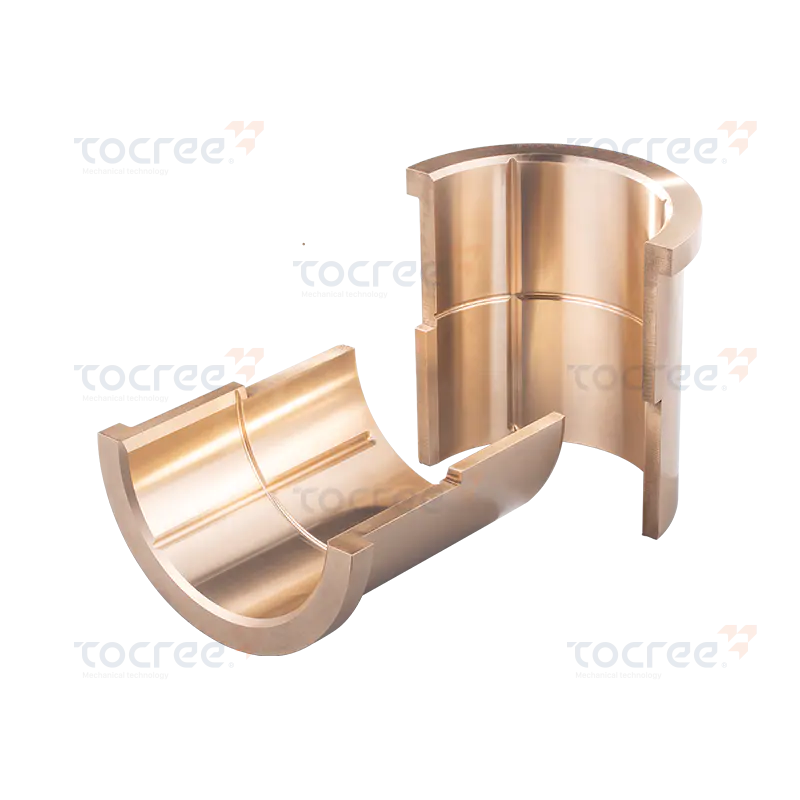 Tin Bronze Copper Bearing Pads for Industrial Bearing SystemsPrecision CuSn12 tin bronze pads for high-load, high-temperature bearing systems, offering wear and corrosion resistance with custom size options.View Product →
When the contact area is a pad rather than a full-length plate, the same selection logic still applies: load, motion, mating surface, and access for maintenance. The form can change; the engineering questions do not.
Good wear plates begin before machining. In our foundry, copper alloys are melted and cast in-house, then sawed, milled, drilled, and ground. That sequence lets us control the bronze structure, keep the graphite pattern aligned with the drawing, and machine the plate flat after any stress relief. For large parts, we can handle plates up to 4 metres long, 400 mm wide, and 100 mm thick, which suits heavy guideways and die applications.
The final operations deserve attention. Flatness and parallelism set the contact pattern. Surface roughness affects run-in. Counterbores and mounting holes must not create thin walls or stress risers. If the plate is to be re-machined later, leave enough bronze thickness and mark the datum clearly. A useful rule from our workshop: agree on the inspection method before the first chip is cut. That avoids arguments about a surface that looks flat but does not seat. For a closer look at how these plates behave in service, our technical notes cover the basics in more detail.
Graphite bronze wear plates turn up wherever sliding contact is heavy, slow, and awkward to lubricate. Die-casting machines use them on guideways and slide mechanisms where heat and metal splash are present. Presses and stamping tools use them to guide slides and protect die structures. Heavy machinery, mining equipment, and metallurgical machinery rely on them for wear strips, pivot pads, and replaceable liners. Marine and petroleum equipment use bronze sliding surfaces where corrosion and load come together.
The common thread is not industry, but motion: reciprocating, oscillating, or slow rotary contact under load. If the application runs at high speed with a generous oil supply, a different bearing type may be more efficient. If the application is dirty, dry, and difficult to reach, a graphite bronze plate often earns its place.
Before requesting a quotation, gather the details that change the design:
Also state whether the plate will be re-machined in service. A little extra thickness can extend life; too little can turn a wear part into a scrap part. For critical slides, ask for a plug pattern drawing and a flatness report, not just a material certificate.
Graphite bronze wear plates are a practical answer to a common problem: how to keep heavy sliding surfaces moving with less friction, less maintenance, and less risk to the machine structure. Choose the alloy for the load and environment, design the graphite pattern for the stroke, and machine the plate for the way it will actually be mounted. When those details are right, the plate does its quiet job, and the maintenance team notices.
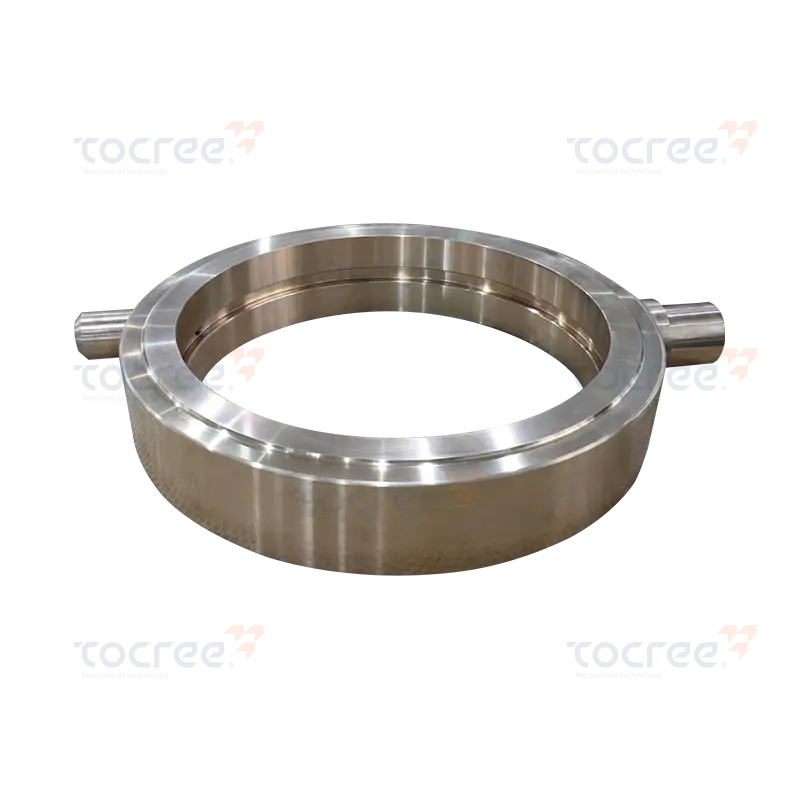
This copper-based oil drain ring is made from high-quality tin bronze through precise processing. It...
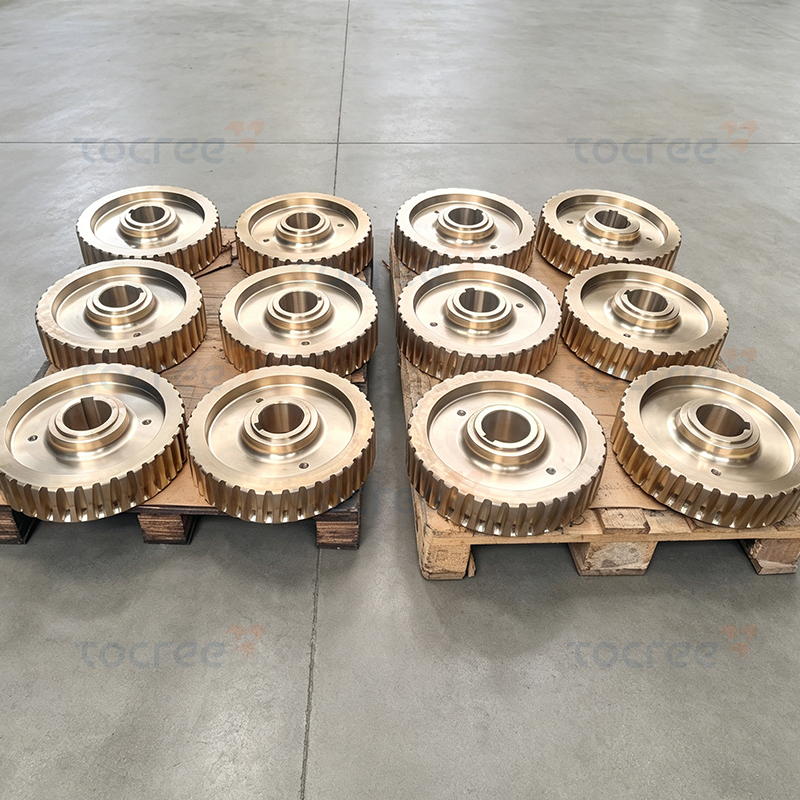
Product Overview This product is an Aluminum Bronze Worm Gear, precision-manufactured from high-stre...
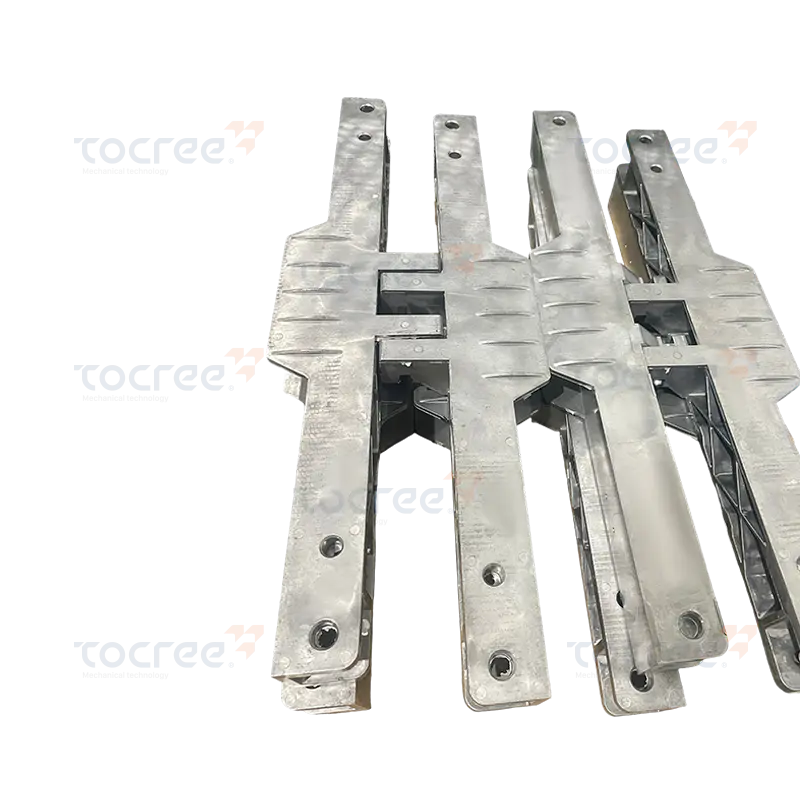
This aluminum alloy frame is specially designed to meet the application requirements of the vehicle....
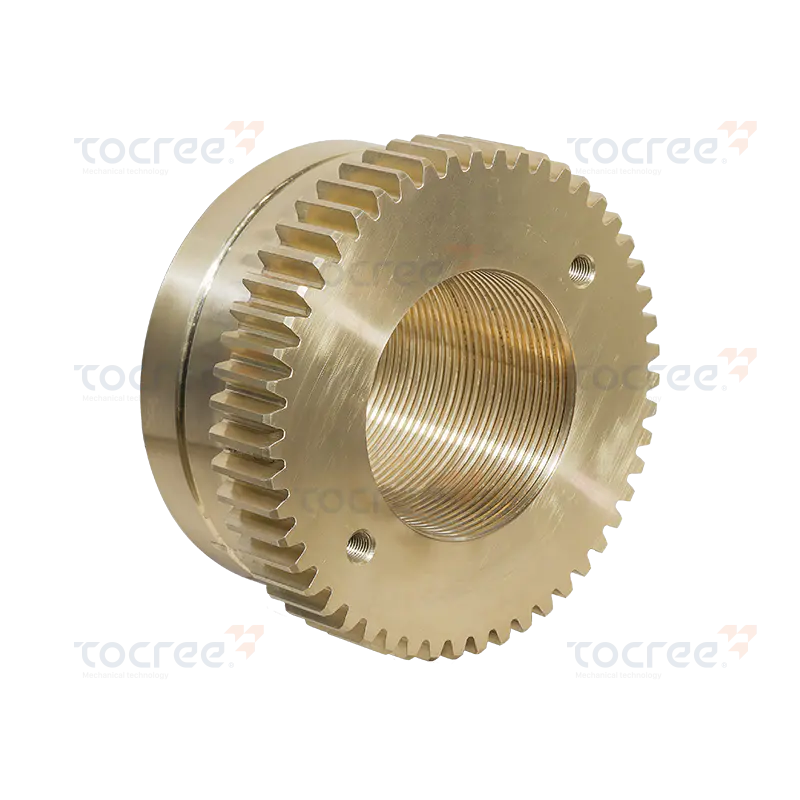
This copper-based gear nut is a high-performance component. It is precisely machined from high-quali...
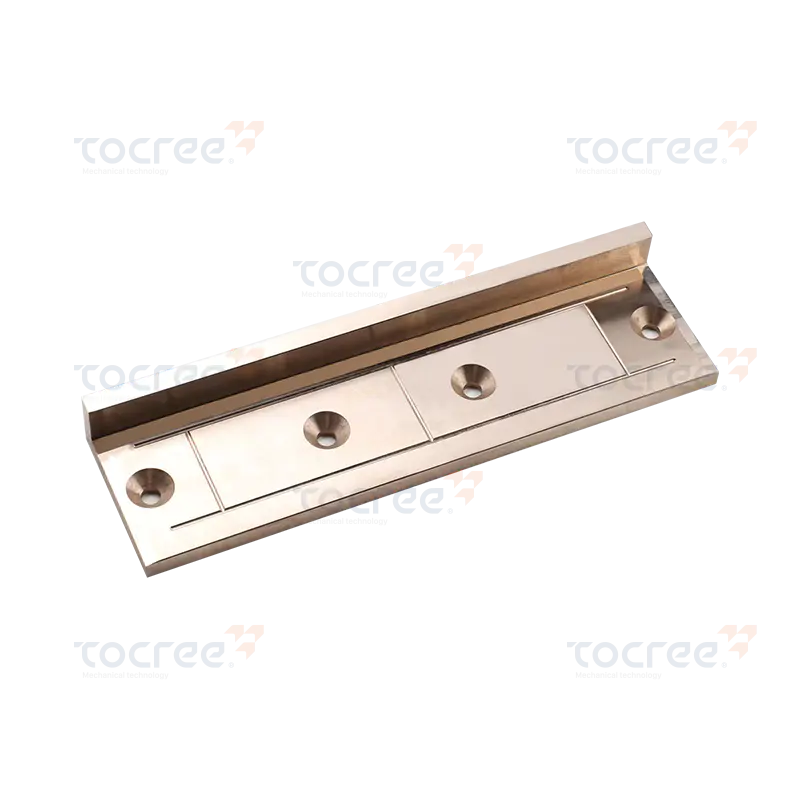
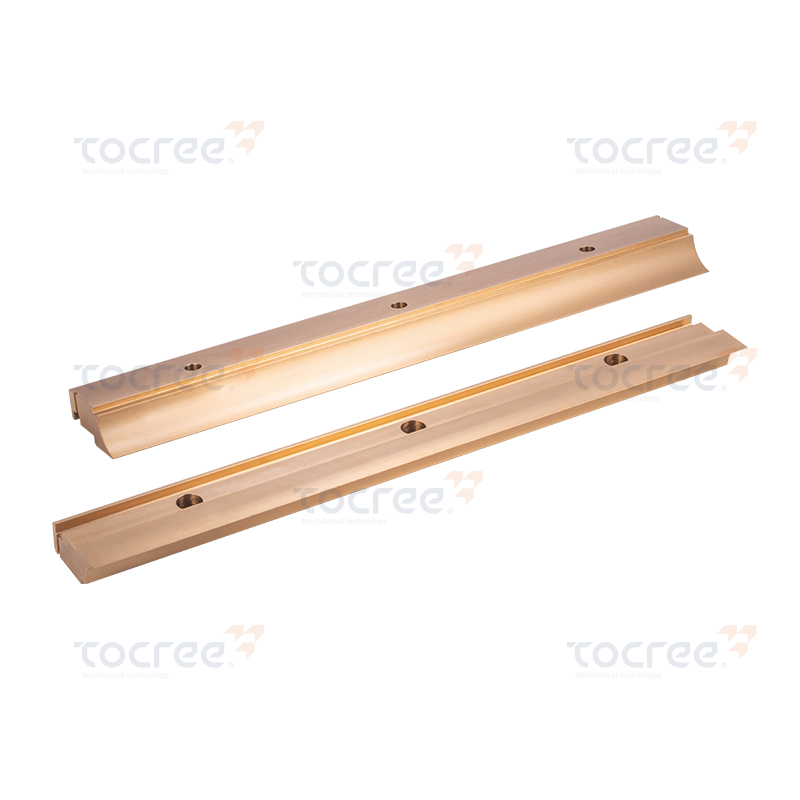
This linear slide board is a high-performance sliding component, made of excellent tin bronze alloy ...
Copyright © 2025 Jiashan Tocree Machinery Co., Ltd. All Rights Reserved.
Customized Copper Alloys Machinery Parts
