

 English
 中文简体
中文简体 Deutsch
 عربى
عربىFor any questions and feedback from customers, we will reply patiently and meticulously.
The octagonal bushing made of CuSn6Zn6Pb3 (tin bronze) and graphite precision machining is a self-lu...
When a shaft scores inside a bushing long before the warranty period ends, the failure often gets blamed on the material itself. In my experience with cast bronze parts, the real cause is usually a combination of wrong alloy grade, insufficient lubrication, or a casting process that leaves residual stress and porosity. For aluminum bronze bushings, the practical answer is to treat the bushing as a system: define the load and environment first, then select the composition, groove layout, and machining route.
Aluminum bronze is a copper alloy where aluminum is the principal addition, typically 8–12% by weight. Iron, nickel, and manganese are added to refine the grain and raise strength. The result is a bearing material that keeps its load capacity at elevated temperatures and stands up to seawater, brackish water, and many chemical process fluids. Unlike tin bronze, which resists wear mainly by softness and embedded particles, aluminum bronze carries load through its own hard, work-hardened surface. That is why a bushing made from this alloy can survive in a rolling mill guide or a marine gearbox where a brass bushing would deform in a few weeks.
You should not think of aluminum bronze as a drop-in replacement for every bronze bushing. It is not the cheapest option, and it favors slow, heavy, reciprocating motion more than high-speed rotation. When the design calls for high surface speed and continuous film lubrication, a leaded bronze or a graphite-embedded bronze may actually be better. But when the shaft is slow, the load is high, and water or steam keeps washing away the grease, aluminum bronze is the reliable default.
There is no single "aluminum bronze" recipe. The workhorse grades are centered on 9–10% aluminum with a small amount of iron. C95400, for example, is a cast aluminum bronze with about 10.5% aluminum, 4% iron, and less than 1% nickel. A similar European designation is CuAl9Fe4, which appears in our own copper alloy production. The iron content forms hard intermetallic particles that improve wear resistance without needing a separate heat treatment. If the environment is very corrosive, nickel aluminum bronze like C95800 adds several percent nickel and more manganese, giving better resistance to cavitation and impingement attack.
The differences matter for procurement. A buyer who only specifies "aluminum bronze bushing" may receive a low-aluminum grade that looks the same after machining but fails quickly under high shock loads. Ask for the exact standard, the measured hardness after machining, and the supplier's actual casting practice. The table below shows the broad differences between common bushing alloys.
| Property | Aluminum Bronze | Tin Bronze | Leaded Brass |
|---|---|---|---|
| Tensile strength | High (600–750 MPa) | Medium (250–350 MPa) | Low–medium (200–300 MPa) |
| Hardness (HB) | 170–220 | 70–120 | 60–120 |
| Corrosion resistance | Excellent | Good | Fair |
| Machinability | Fair–good | Fair | Excellent |
| Typical use | Heavy load, wet or acid environments | General bearing, moderate load | Low-load, high-speed applications |
When a drawing says "CuAl9Fe4," do not let it be substituted with a general bronze bushing without approval. The cost difference is small compared with the process downtime caused by a premature replacement.
The biggest hidden variable in aluminum bronze bushings is how the blank was made. Sand casting is inexpensive but often produces coarse grains and internal shrinkage. Continuous cast rod is fine for simple cylindrical bushings but cannot easily produce large flanges or complex oil grooves. Centrifugal casting is ideal for heavy-walled, large-diameter bushings because the spinning mold pushes gas and impurities toward the bore, where they are removed by subsequent machining. The best foundries use a combination of sand, centrifugal, and continuous processes and cover the full route from raw copper melting to final turning.
This matters because aluminum bronze has a narrow solidification range. If the pouring temperature is too high or the cooling rate is uneven, you get dross inclusions that appear as pits on the machined bore. Those pits become crack starters under cyclic load. So when you evaluate a supplier, ask about their metal chemistry control, the size and type of their melt furnace, and the inspection they perform before turning. A supplier who melts and casts their own alloy can keep the composition within a tight window; a machine shop that only buys off-the-shelf blanks has less control.
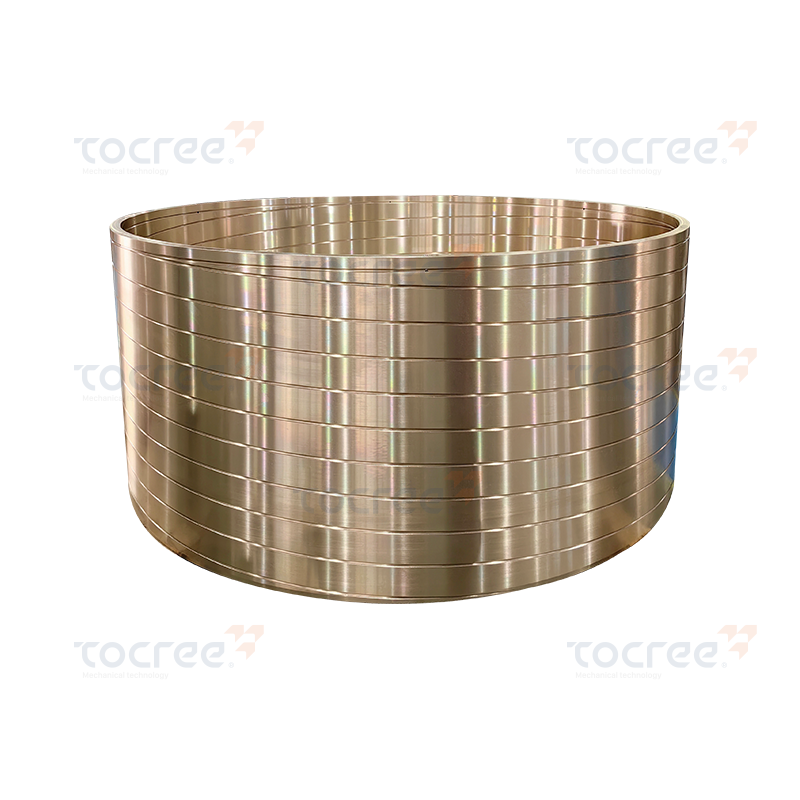 Tin Bronze Bushing with Custom Oil GroovesThis tin bronze bushing is made by centrifugal casting and machined with customized oil grooves. It offers high strength, good wear resistance, and corrosion resistance, making it suitable for heavy-duty industrial applications.View Product →
Lubrication geometry can turn a marginal bushing into a reliable one. For grease-lubricated aluminum bronze bushings, the classic spiral groove on the bore helps distribute grease across the full length of the contact zone. It is not a decoration. The groove width and depth have to match the grease viscosity and the shaft speed. Too shallow and the grease stays in the center; too deep and the contact area drops, raising pressure and accelerating wear.
For equipment that runs dry or where oil is undesirable, a graphite-embedded aluminum bronze bushing is a practical option. The graphite plugs act as solid lubricant reservoirs, so the bushing only needs minimal initial smear and can operate at slow speeds for months without re-lubrication. The graphite orientation matters too: larger plugs work better on dirty or dusty environments, while smaller, denser plugs run quieter in a tight-fit assembly.
If the machine is subject to water washdown or steam, you need either a non-graphite groove design or a corrosion-resistant grade, because water can leach out some graphite. In that case, a spiral groove with a compatible water barrier grease is often safer than relying on solid lubricant alone.
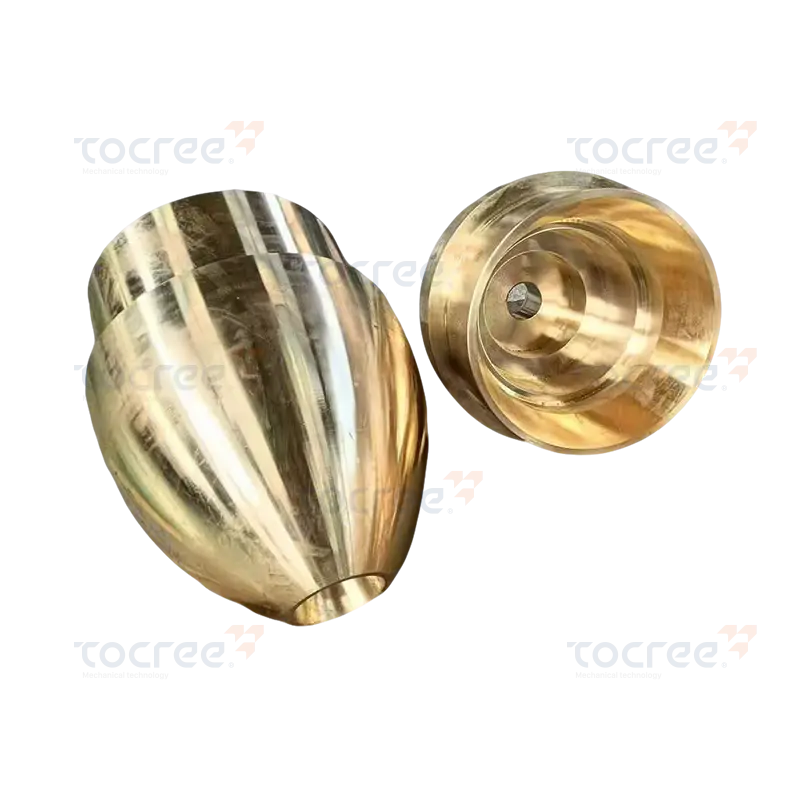 Aluminum Bronze Bushing with Spiral Grease GrooveThis aluminum bronze bushing features a machined grease groove and high strength. Its excellent thermal conductivity and corrosion resistance make it suitable for high-temperature and wet environments.View Product →
The strongest case for aluminum bronze bushings is in industries where the load is high, the motion is slow, and the environment is not friendly. Metallurgical equipment, such as rolling mill bearing housings and furnace conveyor rolls, is an obvious candidate. The same applies to ship machinery: rudder shafts, stern glands, and deck cranes all work in seawater, and aluminum bronze's corrosion resistance is a direct benefit.
In heavy machinery, the typical application is a pivot or oscillating joint where the angle of movement is small and the reaction force is huge. Mining equipment, crawlers, and large presses fit this profile. For die casting machines, the tie-bar bushings and injection carriage guides are loaded with impact and heat; aluminum bronze maintains its geometry far better than a standard tin bronze. Even in medical equipment, where corrosion and cleanliness matter, aluminum bronze appears in some high-load, slow-speed drive components. The practical list below is not exhaustive but covers the most common uses:
If you are designing for one of these sectors, the right starting point is a detailed load calculation. Many local suppliers and engineering teams have experience with these exact industries; for example, our metallurgical machinery application page outlines how our custom parts are used in that environment. It is worth reading before you specify the alloy.
Metallurgical machinery application examples show the type of aluminum bronze parts that hold up in continuous operation.
No material wins every application. Aluminum bronze has a moderately high friction coefficient when dry, so it is not the best choice for high-speed journals that need a continuous oil film. For a shaft turning at several thousand RPM, a leaded bronze or a babbitt lining will produce less heat. Aluminum bronze is also more expensive to machine than brass, so for low-load parts where cost drives the design, a brass bushing may be perfectly adequate.
Another common failure is edge loading caused by shaft deflection. Aluminum bronze can carry high static load, but it still needs enough bearing length to spread the load. A short, small-diameter bushing running against a bent shaft will fail regardless of alloy. In those cases, the fix is a spherical outer surface on the bushing or a self-aligning design, not a different material.
Finally, check the shaft hardness and surface finish. Aluminum bronze works harder during running, and if the shaft is soft or rough, the bushing surface may wear down the journal instead of vice versa. A chromium-plated or hardened shaft is often recommended for long service.
The most practical way to avoid hidden quality problems is to buy from a company that controls both the casting and the precision machining. When the same factory melts the copper alloy, pours the blank, and then turns, drills, and hones the bore, the process steps are not hidden behind separate shipping schedules. This shortens the quality feedback loop. If a dimensional check fails, the machine shop can tell the foundry team immediately, and the next pour is adjusted before another hundred blanks are made.
In our own factory, the copper melting furnace and centrifuges are in the same building as the CNC turning and milling units. We produce many non-standard parts—from a small threaded bushing to a 2-meter-diameter copper sleeve—and we can make long slide plates up to 4 meters. This scale requires careful gating and casting design. When a customer supplies a drawing with CuAl9Fe4 or a similar aluminum bronze grade, we can trace the heat number and the associated chemical analysis for every delivered part.
Before you place a repeat order, ask the supplier for an example of their quality records on a similar aluminum bronze part. You want to see the material certificate, the dimensional report, and the surface finish measurement. If they cannot provide all three from a single in-house process, you are likely dealing with a trader, not a manufacturer. For a deeper look at the differences between aluminum bronze bushings and bearings, you can read our technical guide on the subject. It covers property tables and selection logic that we use in daily work.
Our complete guide to aluminum bronze bushings and bearings explains the property tables and selection criteria in more detail.
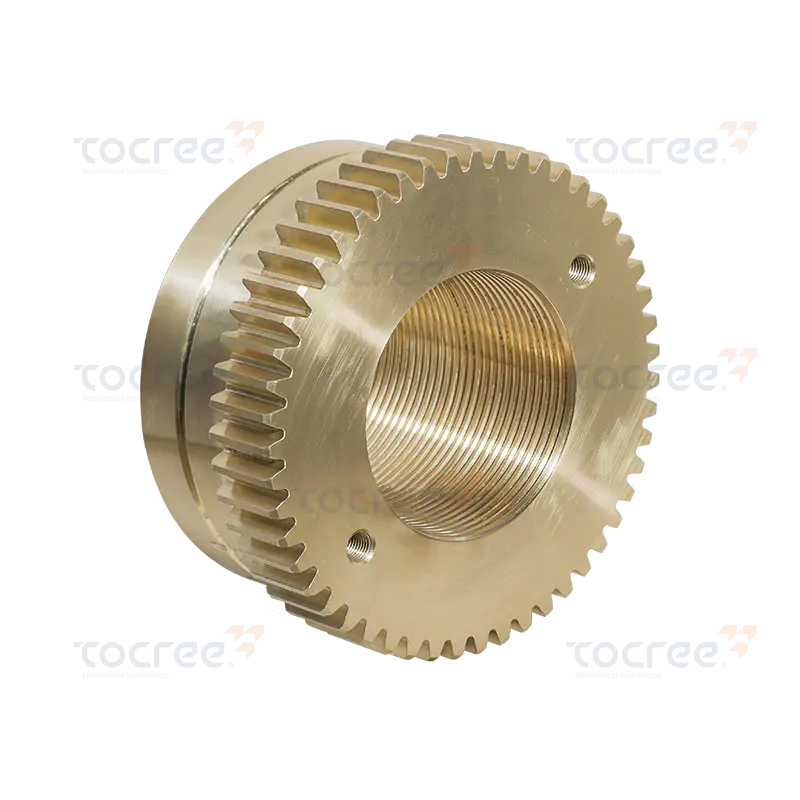 Aluminum Bronze Hobbed Nut for Corrosive EnvironmentsThis aluminum bronze hobbed nut provides high tensile strength and hardness. Its excellent corrosion resistance makes it ideal for marine and chemical applications where durability is critical.View Product →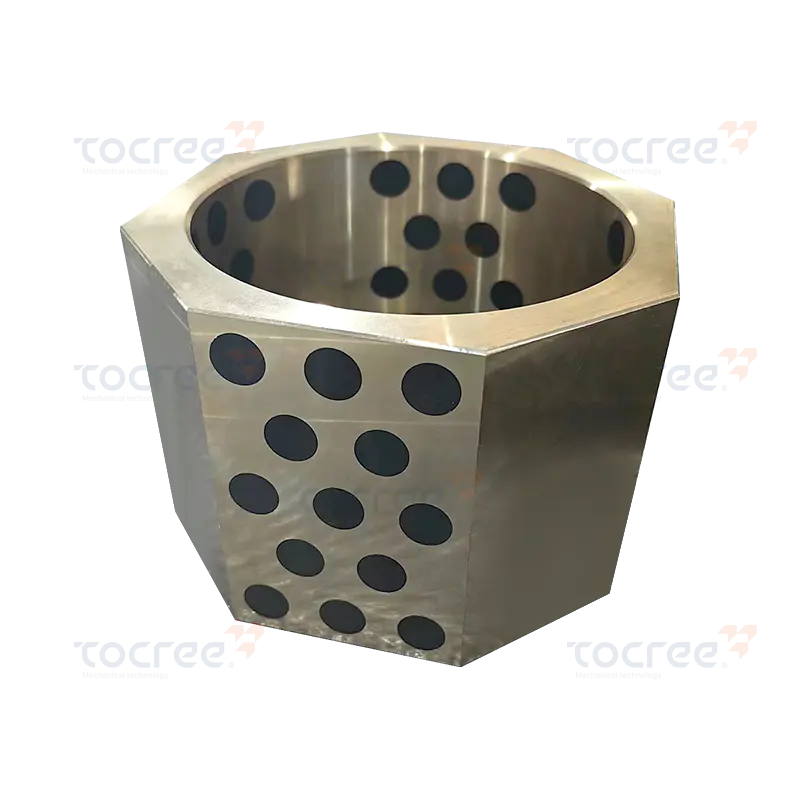
The octagonal bushing made of CuSn6Zn6Pb3 (tin bronze) and graphite precision machining is a self-lu...
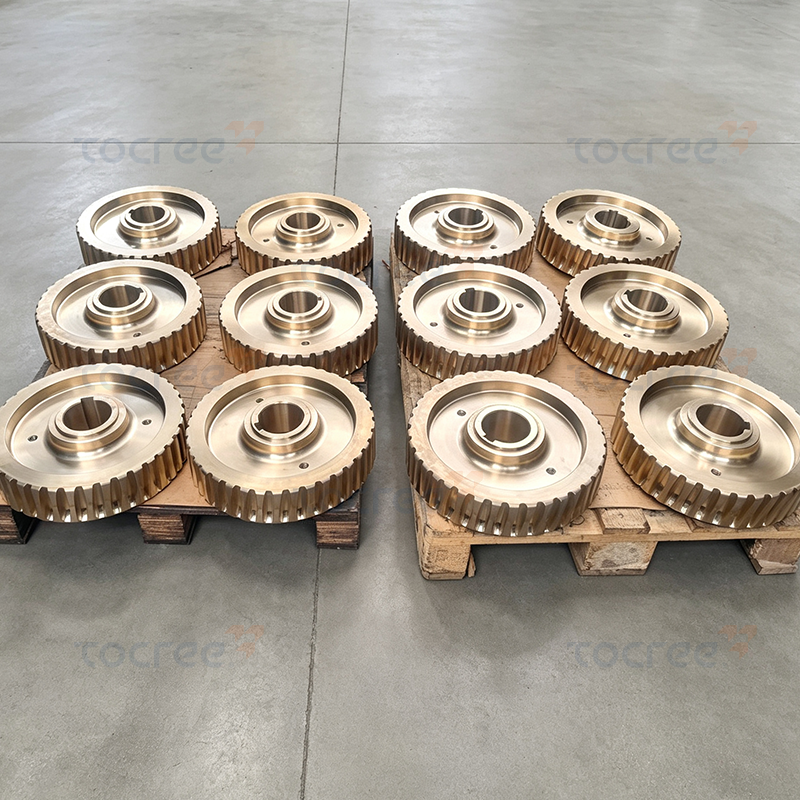
Product Overview This product is an Aluminum Bronze Worm Gear, precision-manufactured from high-stre...
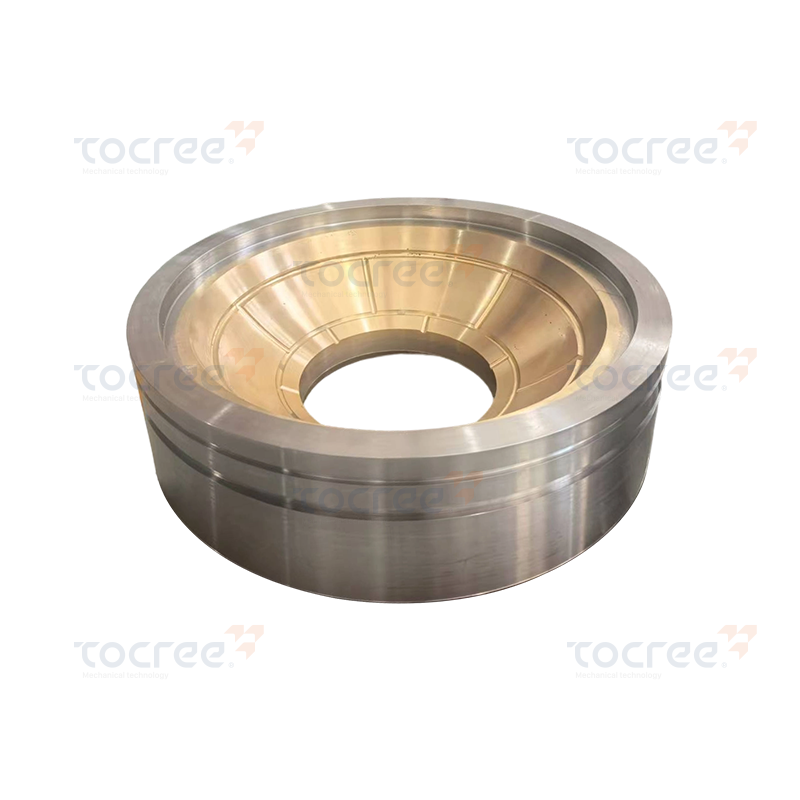
The Bronze-Steel Spherical Bushing is made of 42CrM04 alloy steel and high-strength brass, offering ...

This straight sleeve is made of aluminum bronze alloy as the base material. According to customer re...

This bronze sleeve is made of tin bronze as the base material. The blank piece is produced through c...
Copyright © 2025 Jiashan Tocree Machinery Co., Ltd. All Rights Reserved.
Customized Copper Alloys Machinery Parts
