

 English
 中文简体
中文简体 Deutsch
 عربى
عربىFor any questions and feedback from customers, we will reply patiently and meticulously.
This aluminum alloy frame is specially designed to meet the application requirements of the vehicle....
An aluminum bronze bushing — also referred to as an aluminum bronze sleeve bearing or aluminum bronze sliding bearing — is a cylindrical plain bearing component manufactured from copper-aluminum alloys, typically containing 8%–12% aluminum along with small amounts of iron, nickel, or manganese. These bearings are pressed or machined into housings to provide a low-friction, wear-resistant interface between rotating or sliding shafts and their supporting structures.
Unlike rolling element bearings, aluminum bronze bushings rely on a thin film of lubricant — or in the case of graphite-embedded variants, solid lubricant — to reduce friction between mating surfaces. Their dense, fine-grained microstructure gives them superior mechanical strength compared to tin bronze or brass alternatives, making them a preferred choice in high-load, moderate-speed applications across heavy industry, marine engineering, and construction equipment.
Aluminum bronze bearings are not a single material — they span a family of copper-based alloys standardized under designations such as CuAl10Fe3, CuAl10Ni5Fe4, and C95400/C95500 (ASTM). Each grade is engineered to balance hardness, corrosion resistance, and machinability for specific service conditions.
| Alloy Grade | Al % | Fe / Ni % | Tensile Strength (MPa) | Hardness (HB) | Typical Use |
| C95400 (CuAl10Fe3) | 10–11.5 | 3–5 Fe | 620 | 170–210 | General industrial bushings |
| C95500 (CuAl10Ni5Fe4) | 10–11.5 | 4–5 Fe, 4–5.5 Ni | 760 | 200–240 | Marine, offshore, heavy machinery |
| CuAl8Fe3 (lower Al) | 7–9 | 2–4 Fe | 500 | 120–160 | Lighter-duty sliding bearings |
| Graphite-Embedded Al Bronze | 9–11 | Varies | 550–700 | 160–200 | Self-lubricating applications |
Nickel additions in grades like C95500 significantly improve corrosion resistance in seawater and acidic environments, while iron refines the grain structure and boosts wear resistance. Selecting the right grade from the outset prevents premature bearing failure and reduces maintenance costs over the service life of the machine.
The aluminum bronze graphite bushing is a specialized variant where cylindrical or diamond-shaped plugs of high-purity graphite — sometimes combined with molybdenum disulfide (MoS₂) — are pressed into precisely machined holes distributed across the bearing surface. As the shaft rotates or reciprocates, it shears micro-thin layers of graphite from these plugs, depositing a continuous dry lubricant film on both the bore surface and the shaft.
In many demanding environments, conventional oil or grease lubrication is impractical or insufficient. Graphite-filled aluminum bronze bearings are the engineering answer to several real-world constraints:
The pattern, size, and depth of graphite plugs are engineered based on the bearing's PV (pressure × velocity) value. A higher PV rating demands greater graphite coverage — typically 20%–30% of the bearing bore surface. Plug diameters commonly range from 6 mm to 12 mm, and they are inserted with a slight interference fit to remain permanently anchored during service. Some premium designs use a herringbone or helix arrangement to ensure complete lubrication film distribution along the full shaft length.
Understanding the property profile of aluminum bronze sliding bearings helps engineers make accurate predictions about service life and select appropriate safety margins in design calculations.
| Property | Typical Value (C95400–C95500) |
| Density | 7.45–7.65 g/cm³ |
| Tensile Strength | 620–760 MPa |
| Yield Strength | 250–380 MPa |
| Hardness | 170–240 HB |
| Max Static Load (MPa) | Up to 80 MPa (graphite type: 60 MPa) |
| Max Operating Temperature | 250°C (graphite type: up to 400°C) |
| Thermal Conductivity | ~50 W/m·K |
| Coefficient of Friction (dry, graphite) | 0.08–0.20 |
| Corrosion Resistance | Excellent in seawater, acids, alkalis |
The relatively high thermal conductivity of aluminum bronze is a significant advantage in sliding bearing applications: heat generated at the tribological interface is efficiently conducted away through the bushing body and into the housing, preventing thermal runaway that can cause scoring or seizure on steel shafts.
Aluminum bronze bushings and sleeve bearings can be produced by several routes depending on size, quantity, and performance requirements:
The most common method for producing cylindrical bushings. Molten aluminum bronze is poured into a rapidly spinning mold, and centrifugal force drives denser material outward, creating a near-net-shape tube with a dense, porosity-free outer wall ideal for press-fit housing installation. The inner bore is then finish-machined to tight tolerances (typically H7/h6 or H8/f7 fit pairs).
Used for large, complex-geometry bushings, flanged sleeves, or low-volume custom parts. Sand casting allows for thick-wall sections and integrated flanges, while investment casting achieves tighter dimensional accuracy on near-net-shape profiles, reducing machining allowance. Porosity is a greater concern with these methods; post-cast inspection using ultrasonic or dye-penetrant testing is standard practice for critical applications.
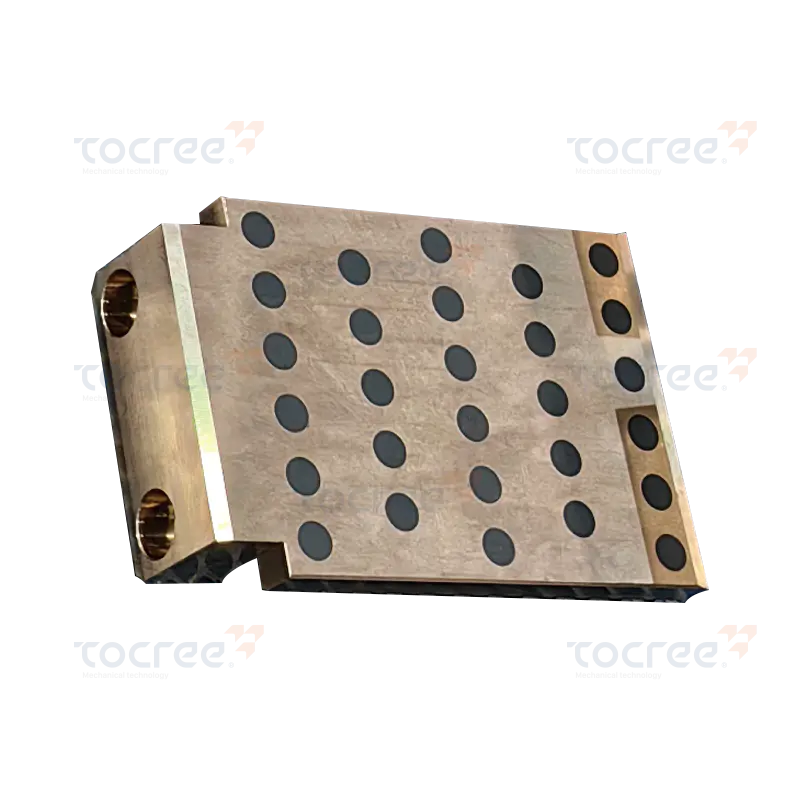
Continuously cast aluminum bronze rod or tube provides highly uniform mechanical properties throughout the cross-section. This is the preferred raw material for CNC-machined bushing production in medium to high volumes, offering excellent dimensional repeatability and material consistency from batch to batch.
For applications demanding the highest mechanical strength — such as heavy hydraulic cylinder rod guides or press-fit pivot pins — hot-forged aluminum bronze achieves superior tensile strength and impact resistance by working the microstructure. Forged blanks are subsequently CNC-machined to final dimensions and graphite-plug-filled if required.
The combination of high load capacity, corrosion resistance, and lubrication versatility makes aluminum bronze bushings and sleeve bearings the standard solution across a wide range of sectors:
Choosing the correct bearing involves evaluating several interdependent parameters. Rushing this step leads to undersized bearings, accelerated wear, or catastrophic failure. Use the following decision framework:
The PV value (bearing pressure P in MPa multiplied by sliding velocity V in m/s) is the primary design parameter for any sliding bearing. Aluminum bronze bushings are rated for maximum PV values typically in the range of 0.5–2.0 MPa·m/s under dry/graphite lubrication, and up to 5–10 MPa·m/s with continuous oil lubrication. Exceeding the PV limit generates excess frictional heat that accelerates wear exponentially.
If grease or oil can be reliably supplied and the operating temperature stays below 150°C, a standard aluminum bronze sleeve bearing with oil-groove or grease-nipple provision is appropriate. If the bearing will see temperatures above 200°C, water or chemical exposure, inaccessible locations, or very slow oscillating motion, specify a graphite-plug aluminum bronze bushing. Always confirm graphite plug coverage (%) with the supplier based on your calculated PV value.
Aluminum bronze bushings are normally press-fitted into the housing with an interference fit (H7/p6 is common), which causes the bore to close slightly. Always specify the finished bore diameter after pressing — not the free-state bore. Shaft surface finish should be Ra 0.4–0.8 µm for oil-lubricated bearings and Ra 0.8–1.6 µm for graphite-lubricated variants. Harder shaft materials (minimum 45 HRC for heavily loaded applications) reduce wear rates significantly.
For general industrial applications in clean or mildly corrosive environments, C95400 (CuAl10Fe3) is cost-effective and widely available. For marine, offshore, or chemically aggressive environments, specify C95500 (CuAl10Ni5Fe4) for its superior corrosion resistance. For applications involving simultaneous high load and elevated temperature, consider heat-treated or forged C95500 with graphite plugs for optimal combined performance.
Even self-lubricating aluminum bronze graphite bushings benefit from periodic inspection. Monitoring wear allows early identification of misalignment, overloading, or contamination problems before they escalate to shaft damage — which is always more expensive to repair than replacing a worn bushing.
Under correct operating conditions — appropriate PV loading, adequate lubrication, proper fit, and a compatible shaft material — aluminum bronze sliding bearings routinely deliver service lives of 10,000 to 50,000+ operating hours. Graphite-embedded variants in well-designed low-speed pivot applications can exceed 20 years of maintenance-free service, which explains their widespread adoption in infrastructure and heavy machinery where total cost of ownership over decades is the primary engineering metric.
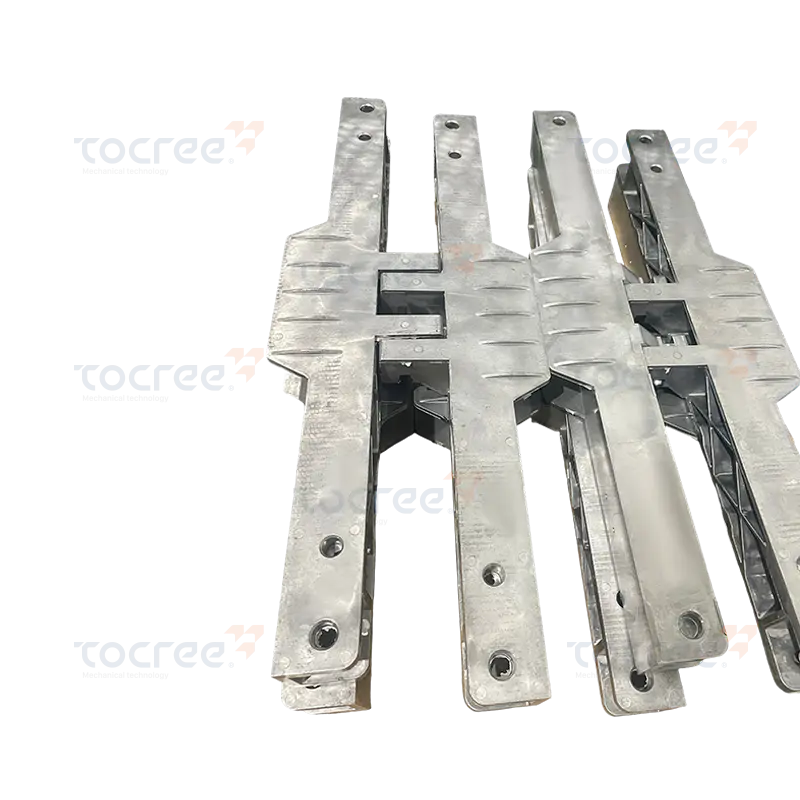
This aluminum alloy frame is specially designed to meet the application requirements of the vehicle....
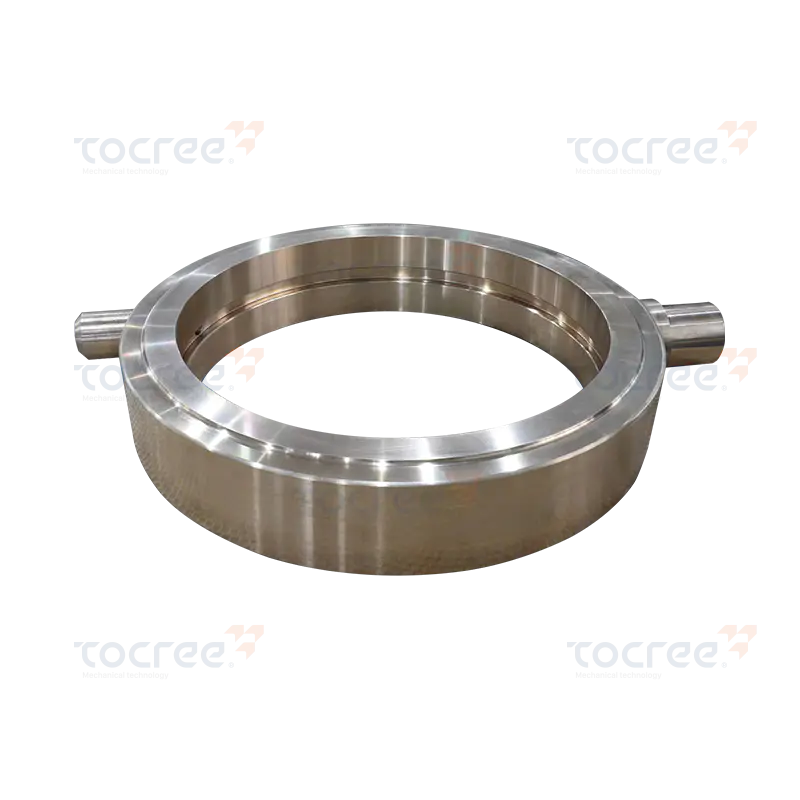
This copper-based oil drain ring is made from high-quality tin bronze through precise processing. It...
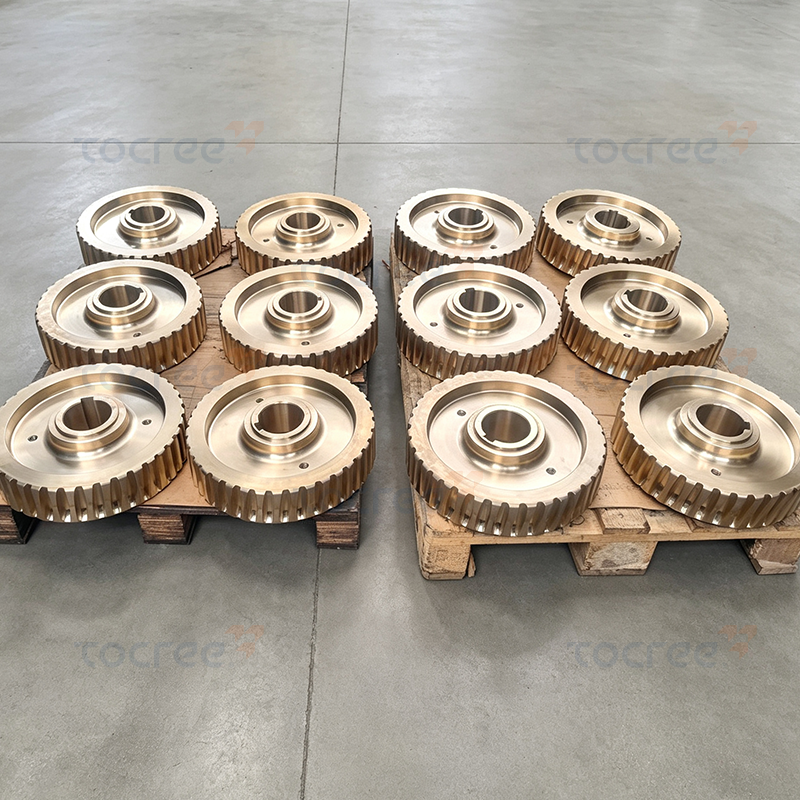
Product Overview This product is an Aluminum Bronze Worm Gear, precision-manufactured from high-stre...
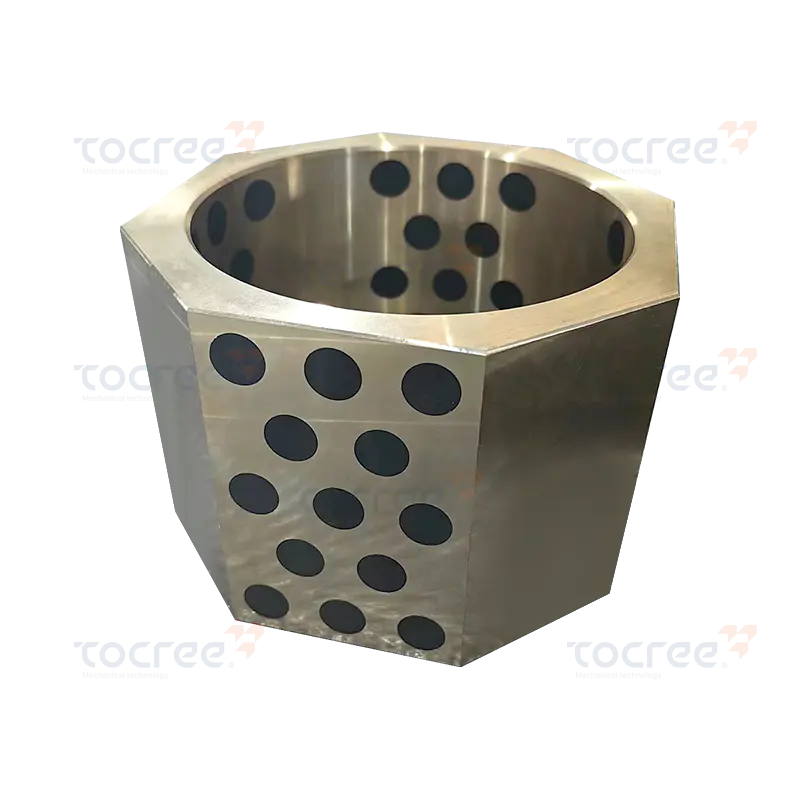
The octagonal bushing made of CuSn6Zn6Pb3 (tin bronze) and graphite precision machining is a self-lu...
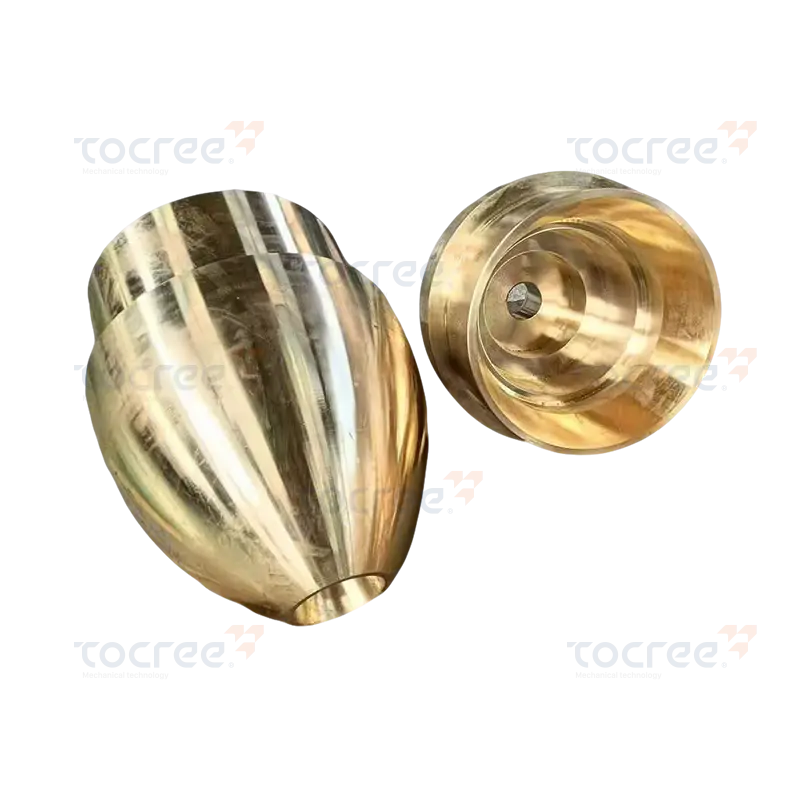
This straight sleeve is made of aluminum bronze alloy as the base material. According to customer re...
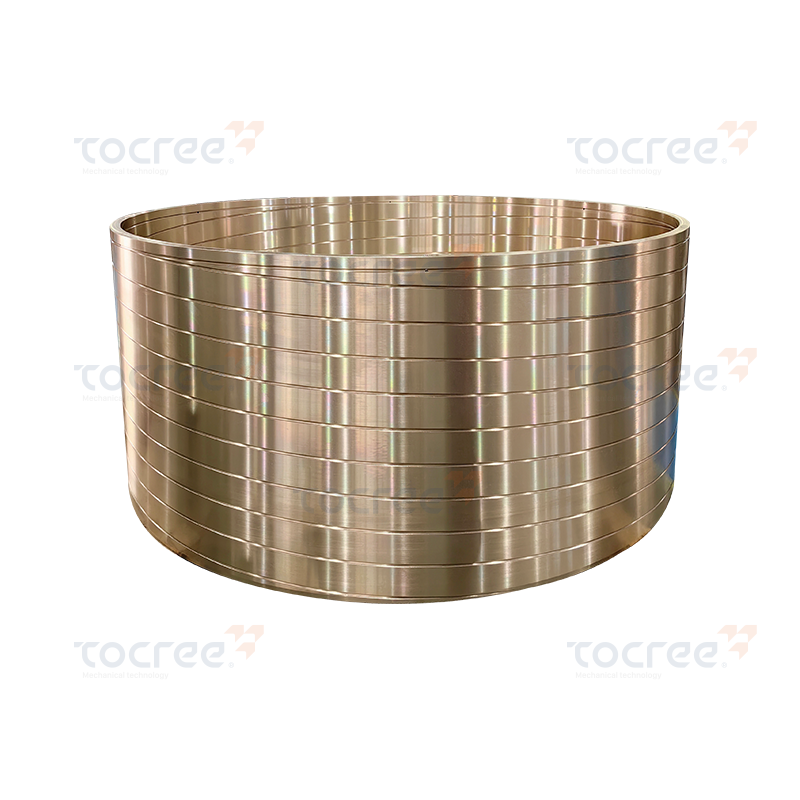
This bronze sleeve is made of tin bronze as the base material. The blank piece is produced through c...
Copyright © 2025 Jiashan Tocree Machinery Co., Ltd. All Rights Reserved.
Customized Copper Alloys Machinery Parts
