

 English
 中文简体
中文简体 Deutsch
 عربى
عربىFor any questions and feedback from customers, we will reply patiently and meticulously.
Product Overview This product is an Aluminum Bronze Worm Gear, precision-manufactured from high-stre...
Imagine a die-casting machine that runs for three shifts, six days a week. The guide bushings in the toggle mechanism need grease every few hours, but the heat softens the lubricant and the oil drips onto freshly cast parts. Over time, the bushing wears unevenly and the whole linkage gets loose. An aluminum bronze graphite bushing solves this by building a solid lubricant directly into the bearing wall. The conclusion is straightforward: if you have a heavy, slow-moving joint that nobody can reach with a grease gun, this material combination is one of the most reliable ways to extend service life.
The base material matters more than most buyers realize. Aluminum bronze contains between 9% and 14% aluminum, usually with iron and nickel additions. This gives the alloy higher tensile strength, better impact resistance, and superior corrosion resistance compared to ordinary tin or phosphor bronze. In seawater, chemical plant atmospheres, or hot rolling environments, the aluminum bronze surface forms a stable, protective oxide layer that resists pitting and erosion.
Graphite is then inserted into drilled holes in the bushing wall, arranged in a grid or spiral pattern. When the shaft rotates, the soft graphite is smeared onto the counterface, creating a thin, dry lubricating film. The film follows the shaft surface and keeps the friction coefficient low even when the machine has been idle for weeks. Unlike grease or oil, the graphite does not oxidize quickly at high temperature and does not wash away when water or steam is present.
Compared to a plain bronze bushing that depends on external oil supply, the aluminum bronze graphite bushing offers three practical benefits: it eliminates daily lubrication tasks, it protects the shaft from metal-to-metal contact during startup, and it tolerates momentary overload better because the graphite film remains in place.
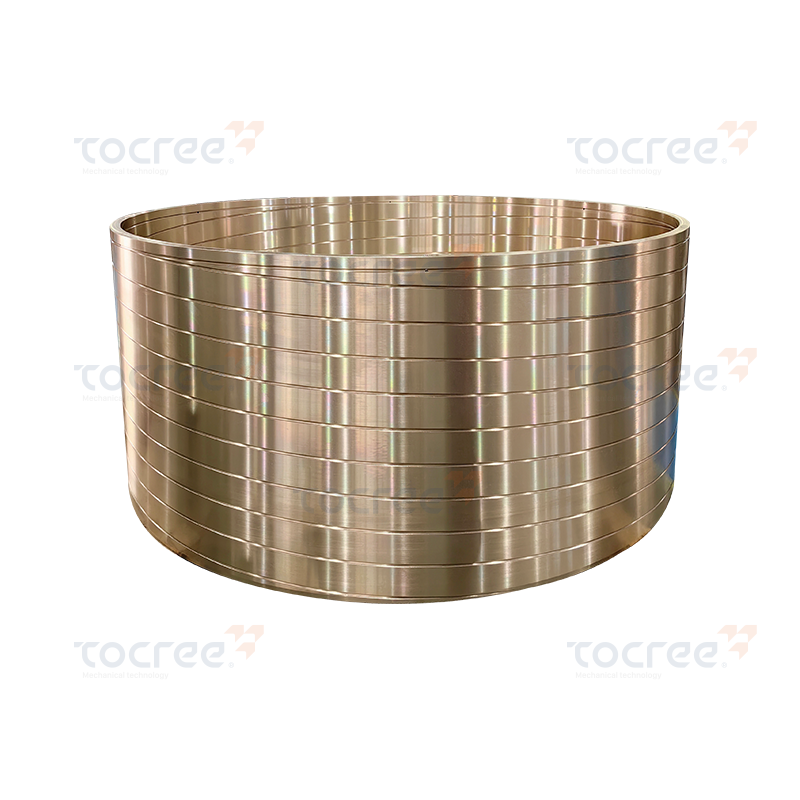 Tin Bronze Bushing with Custom Oil Grooves for Heavy-Duty Industrial UseThis centrifugal-cast tin bronze sleeve offers high tensile strength, wear resistance, and corrosion resistance. Customizable oil grooves and good elongation make it suitable for demanding industrial applications requiring durability and load-bearing capacity.View Product →
| Performance Area | Aluminum Bronze Graphite Bushing | Plain Bronze Bushing |
|---|---|---|
| Lubrication method | Embedded graphite as solid lubricant | Requires external grease or oil |
| Typical hardness range | HB 200–280, depending on grade | HB 60–120, depending on grade |
| Maintenance interval | Months or years without relubrication | Daily or weekly relubrication |
| Corrosion resistance | Excellent in water, salts, and acids | Good in dry air, poor in aggressive media |
| Best speed range | Low to moderate, high-load applications | Low to high, with oil supply |
The strongest evidence comes from applications where downtime is expensive and access for maintenance is difficult. In metallurgical machinery, guide bushes in furnace doors and rolling mill adjusters operate in dust and radiant heat. In marine machinery, rudder stock bearings and deck winch housings face saltwater spray and long periods without operation. Similar conditions appear in petroleum drilling equipment, hopper gates, container spreaders, and die-casting machine toggle linkages.
You should consider this type of bushing when several conditions exist at the same time:
When these criteria are met, the graphite bush does not just last longer; it also improves the overall reliability of the assembly. A Chinese manufacturer with a full copper casting foundry can produce these bushings with close tolerances and consistent graphite plug density, which is essential for dependable performance.
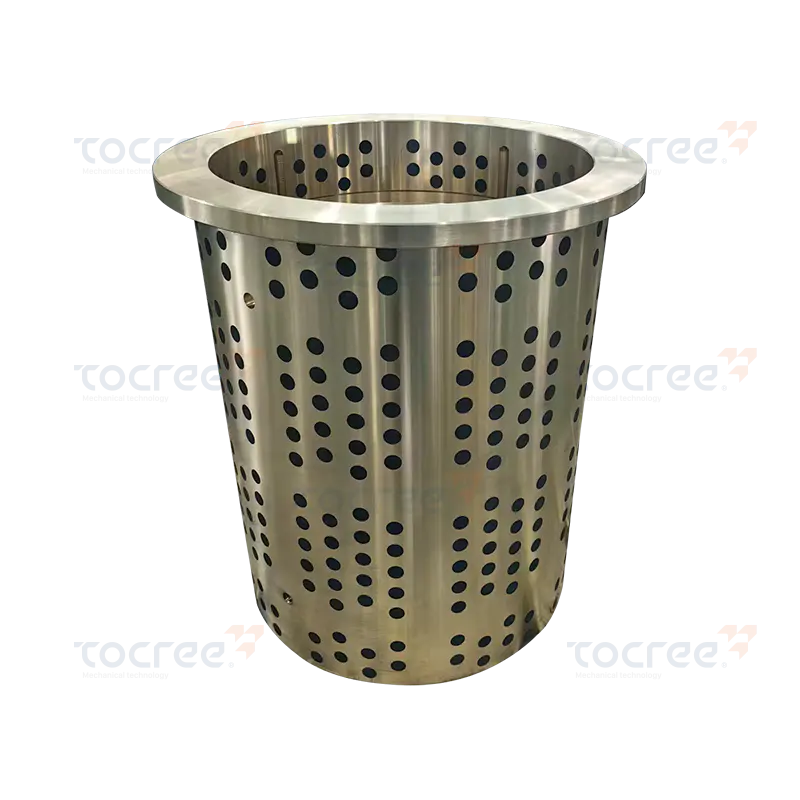 Graphite-Embedded Self-Lubricating Brass Bushing for Maintenance-Free OperationThis single-flange brass bushing with embedded graphite provides continuous lubrication without external oil, reducing maintenance and downtime. It is ideal for low-speed, high-load applications in hard-to-reach or harsh environments.View Product →
Choosing the right bushing starts with the alloy grade. For an aluminum bronze graphite bushing, the most common industrial grades are C95400 (cast), C95500, and C95900 in North American practice, or Chinese grades such as ZCuAl9Fe4 and ZCuAl9Fe4Ni4Mn2. Each grade offers a different balance of strength, wear resistance, and corrosion resistance. For heavy shock loads, the nickel-bearing grades are safer. For seawater service, high aluminum content gives better protection against dealloying.
Hardness matters because it determines how well the bushing resists abrasive wear and edge loading. The hardness should be specified together with the shaft hardness and the running clearance. In many equipment redesigns, engineers ask for a bushing hardness of HB 220–260 when the shaft is 45–55 HRC. If the shaft is softer, the bushing may need to be softer as well to avoid aggressive wear of the shaft surface.
Graphite layout is not decorative. It has a direct influence on load capacity. More plugs mean more solid lubricant reserve, but they also reduce the effective bearing area. As a rule, the total graphite area should not exceed 30–40% of the bearing surface. For very dirty environments, a coarse grid with fewer but larger plugs tends to work better, because the graphite film is thicker and more capable of pushing contaminants aside.
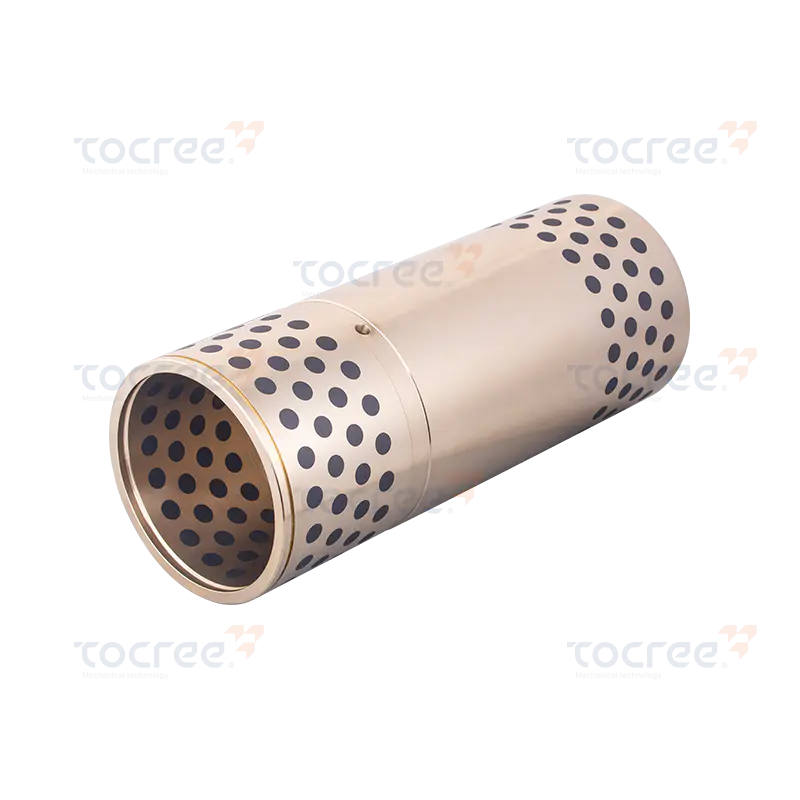 Aluminum Brass Bushing with Graphite Inserts for Contaminant ResistanceThis solid self-lubricating bushing combines high-strength aluminum brass with graphite plugs, offering reliable lubrication and resistance to contaminants. Suitable for high-temperature, heavy-load, and frequent restart conditions in demanding industries.View Product →
Most aluminum bronze graphite bushings are not bought from a catalog. They are made to drawings because machine builders need specific hole patterns, flanges, oil grooves, or even split bushings. A reliable supplier should be able to handle both the casting and the precision machining.
Jiashan Tocree Machinery Co., Ltd. controls the whole process from its own copper melting furnace and centrifugal casting machines. That means the base alloy is produced in-house, the graphite plugs are inserted, and the final bore and outer diameter are machined with tight tolerances. The company has made bushings up to 1.5–2 meters in diameter and copper slide plates up to 4 meters long, so large and unusual parts are not a problem. The constant-temperature workshop is used for high-accuracy finishing and measurement.
When contacting the manufacturer, share the complete drawing with critical dimensions, the alloy grade you expect, and the operating conditions. Mention the expected radial load, shaft speed, ambient temperature, and whether lubrication is completely absent. The supplier can then suggest the best graphite plug size and pattern, as well as recommend a suitable clearance to avoid seizing during thermal expansion.
Because the company focuses on non-standard parts, it can cast and machine special shapes such as L-shaped sliders, threaded lobes, and curved wear plates. This flexibility matters when you are retrofitting an existing machine where the standard catalog bushing does not match the housing geometry.
An aluminum bronze graphite bushing still needs a careful fit. Before pressing it in, clean the bushing bore and the shaft. Use a slight interference fit on the outer diameter, typically H7/p6 or similar, depending on the housing. Chamfer the leading edge of the bushing to prevent scraping during assembly. Do not hammer directly on the graphite plugs; use a sleeve or a press to apply force evenly.
After installation, an initial run-in helps the graphite transfer film form on the shaft. If the shaft is new and the surface roughness is above Ra 0.8 µm, smoother is not better. Actually, a moderate roughness of around Ra 0.4–0.8 µm gives the graphite something to embed into. Do not apply heavy grease on the graphite surface; grease can block the release of graphite and reduce the self-lubricating effect.
Inspect the bushing after the first month of operation. Look for dark gray bands on the shaft, which indicate that graphite is transferring correctly. Any scoring or bright, polished spots on the shaft may mean the graphite plugs are worn out or the clearance is too tight. In normal service, the bushing should run quietly without external lubrication.
Aluminum bronze graphite bushings are not a universal solution for every bearing, but for heavy, slow-moving joints in harsh environments, they are hard to beat. They remove the most common cause of premature failure: human forgetting to lubricate. By pairing a corrosion-resistant aluminum bronze matrix with an engineered graphite plug layout, you get a component that survives years of hard work with almost no attention.
If you are replacing a bushing, measure the failed part, confirm the alloy and hardness, and ask your supplier to machine a replacement with the same graphite pattern. When the fit is correct and the graphite is properly embedded, the new bushing will pay for itself by reducing planned maintenance hours.
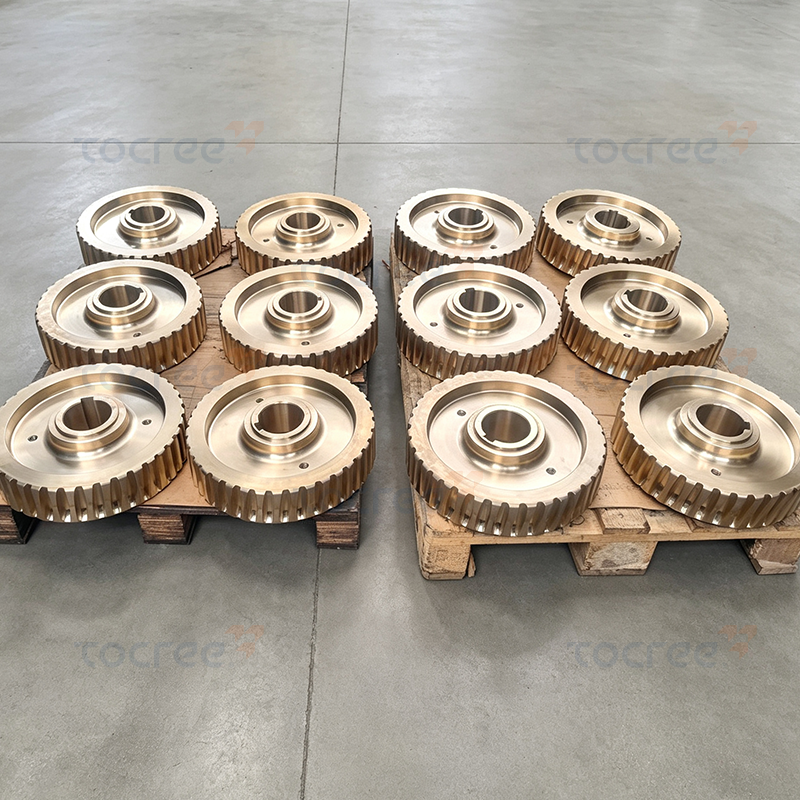
Product Overview This product is an Aluminum Bronze Worm Gear, precision-manufactured from high-stre...
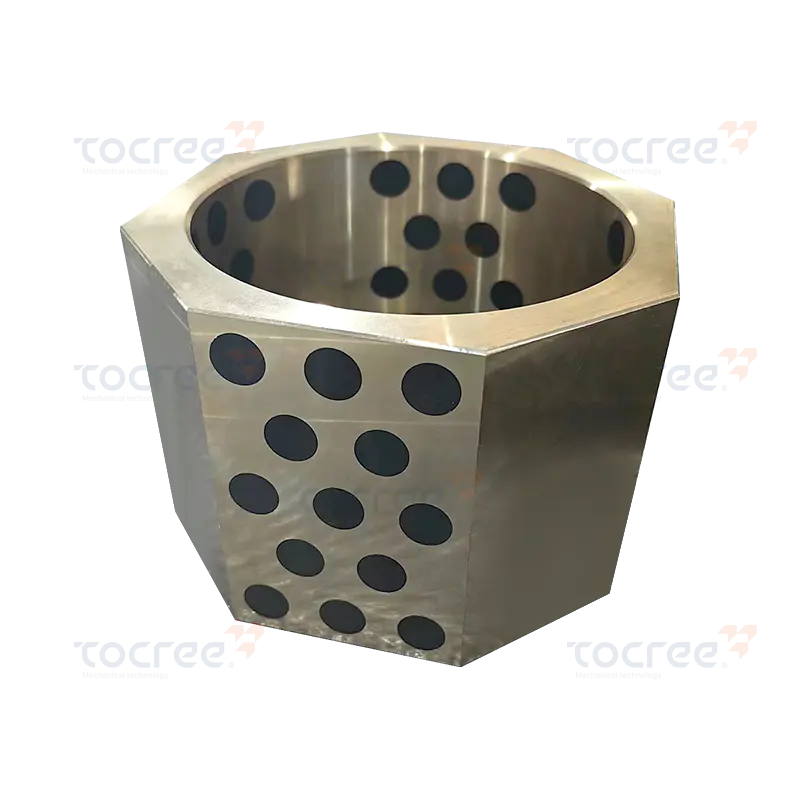
The octagonal bushing made of CuSn6Zn6Pb3 (tin bronze) and graphite precision machining is a self-lu...

Single-flange self-lubricating bearing (with graphite embedding) is a high-performance solid self-lu...
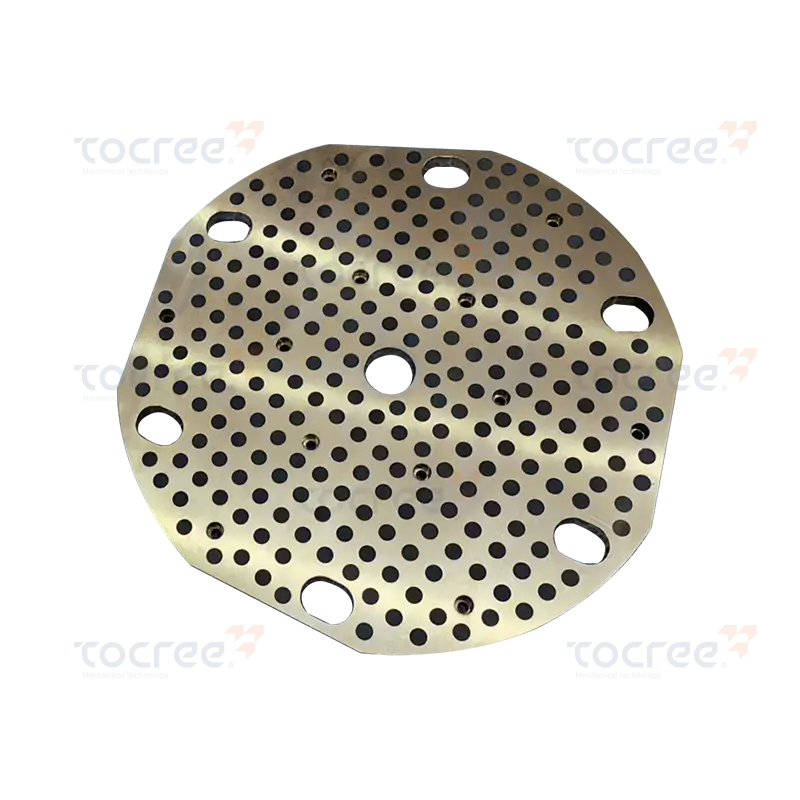
The copper-based graphite gasket is made of high-quality copper-zinc alloy as the base material. Its...
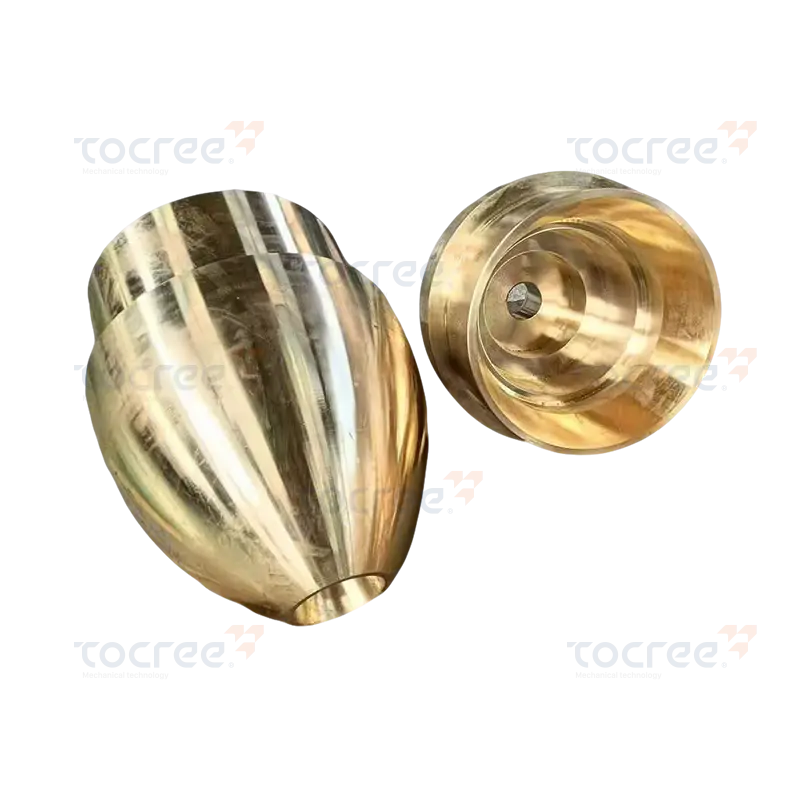
This straight sleeve is made of aluminum bronze alloy as the base material. According to customer re...

This bronze sleeve is made of tin bronze as the base material. The blank piece is produced through c...
Copyright © 2025 Jiashan Tocree Machinery Co., Ltd. All Rights Reserved.
Customized Copper Alloys Machinery Parts
