

 English
 中文简体
中文简体 Deutsch
 عربى
عربىFor any questions and feedback from customers, we will reply patiently and meticulously.
Material structure: Cast aluminum brass CuZn25Al6Fe3Mn3, with graphite insert. Application features:...
Anyone who has crawled under a machine with a grease gun knows the feeling: the fittings sit in the worst possible place, and the maintenance schedule never quite matches production. Flanged self-lubricating bearings exist because that fight is often unnecessary. They carry their own lubricant inside the bearing wall, so the joint keeps running long after the lubrication calendar has been quietly ignored.
A flanged self-lubricating bearing is a plain bearing with two defining features: a solid lubricant built into the bearing material, and a flange at one end that seats against the housing face. That combination solves two problems at once. It removes the need for routine greasing, and it gives the assembly a built-in axial stop. This guide walks through how these bearings work, what the flange actually does, which materials and lubricants suit which duty, and how to choose the right one for your machine.
In a conventional bushing, a film of oil or grease separates the shaft from the bearing surface. That film has to be fed, replaced, and kept clean. A self-lubricating bearing replaces the external film with lubricant that is already part of the bearing itself, so the sliding surface maintains its own protection.
During running, microscopic amounts of the solid lubricant transfer from the bearing onto the shaft and into the clearance. A thin, stable transfer film forms, and the shaft ends up sliding against that film rather than against bare metal. Wear settles into a slow, predictable rate instead of accelerating the way a starved bronze bushing does. Because the film is replenished from the bearing body itself, the part keeps working in dusty, wet, or hot places where grease would have dried out or washed away.
A plain cylindrical bushing only handles radial load. The moment a shaft tries to move along its axis, something else has to stop it, usually a separate thrust washer, a machined shoulder in the housing, or a retaining ring. The flange removes that extra component from the design.
That is the practical reason flanged versions dominate in pivot points, linkage joints, and smaller gearboxes. The flange is doing real engineering work, not just holding the part in place.
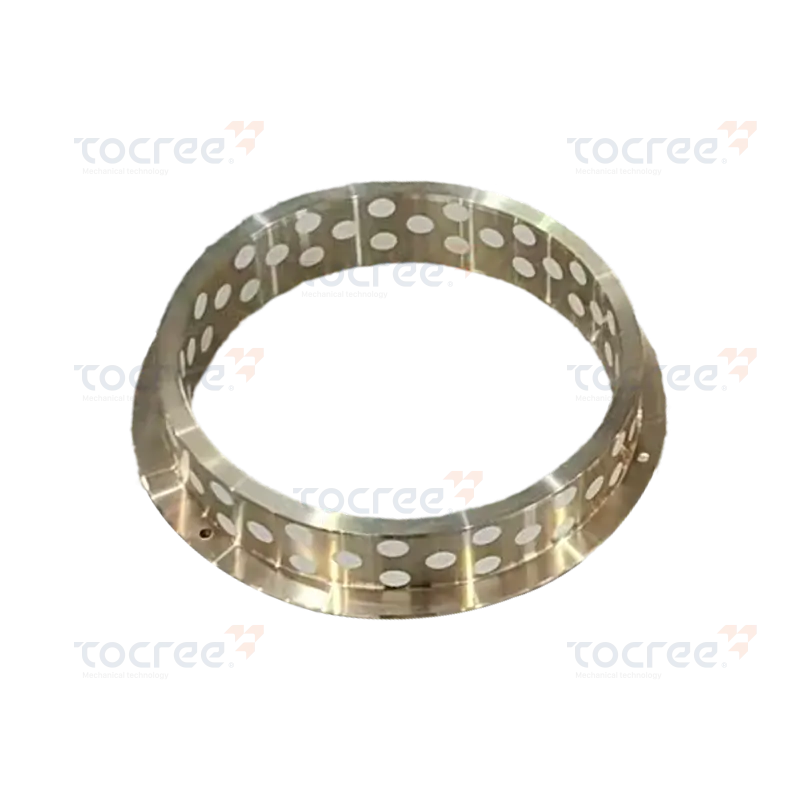 PTFE-Embedded Single-Flange Self-Lubricating Brass BushingPTFE-embedded single-flange construction suits pivot points and linkage joints, with a high-strength copper alloy body for demanding self-lubricating bearing applications.View Product →
Two choices decide how well a flanged self-lubricating bearing will perform: the base alloy and the solid lubricant. Get them wrong and the bearing will either wear quickly or run hot. The table below is a rough map of where each lubricant family tends to fit.
| Lubricant | Typical base material | Load and speed | Working environment |
|---|---|---|---|
| Graphite | Cast bronze or brass | High load, low to moderate speed | Hot, dusty, dry conditions |
| PTFE | Brass or bronze | Moderate load, higher speed | Clean, continuous running |
| Graphene | Brass or bronze | High load with shock | Hard-to-service machinery |
| Graphite and PTFE | Tin bronze | Balanced load and speed | Mixed duty cycles |
Tin bronze, aluminium bronze, and high-hardness brass all appear in self-lubricating work, and each behaves differently under load. Cast bronze generally tolerates higher temperatures and heavier loads, while brass grades in the HB210 to HB270 range machine cleanly and hold tight tolerances, which matters when the flange has to seat flat against a machined housing face.
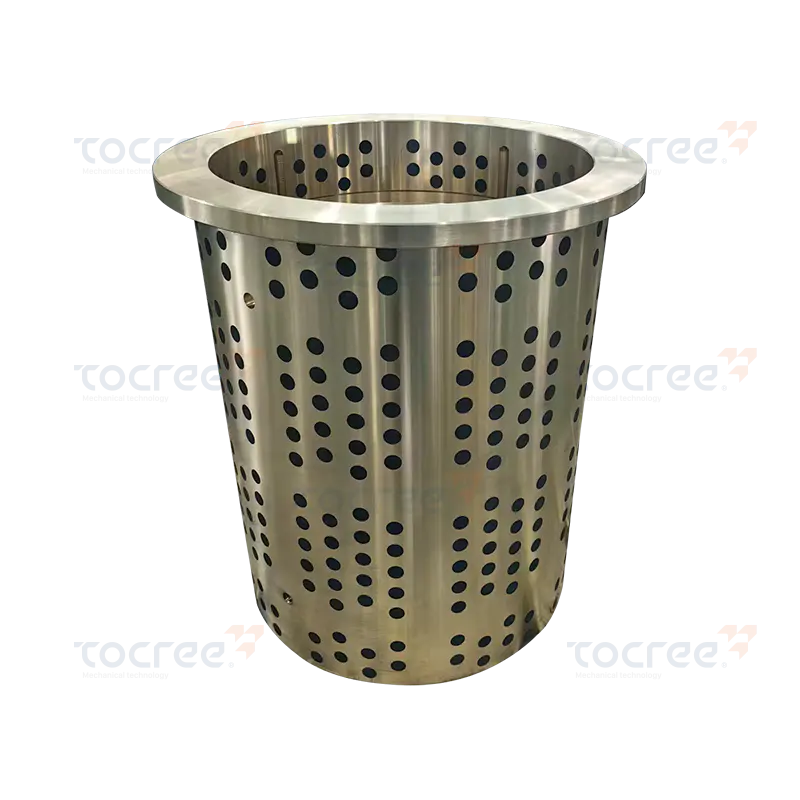 Graphite-Embedded Single-Flange Self-Lubricating Brass BushingSingle-flange graphite-embedded brass bushing supports general machinery with long-lasting self-lubrication where conventional oil films are impractical.View Product →
If you want the deeper dimensional detail, our engineering note on flanged self-lubricating bearing types, materials, and tolerances covers flange thickness, bore fits, and the checks worth doing before a drawing is released.
Selection is mostly a matter of asking the right questions in the right order. Working through this list usually narrows the field to one or two candidates.
Most premature failures we see come from installation rather than from the bearing itself. A few habits prevent the majority of them.
These bearings show up wherever access is difficult and downtime is expensive. Mining and heavy machinery use them in pivot pins and bucket linkages that see abrasion and shock. Metallurgical equipment relies on graphite-bearing versions in areas of radiant heat, while marine and offshore machinery favors them because salt water ruins grease films quickly. Die-casting machines, packaging lines, and large forming presses all use flanged versions to simplify housing design and cut the number of components in the assembly.
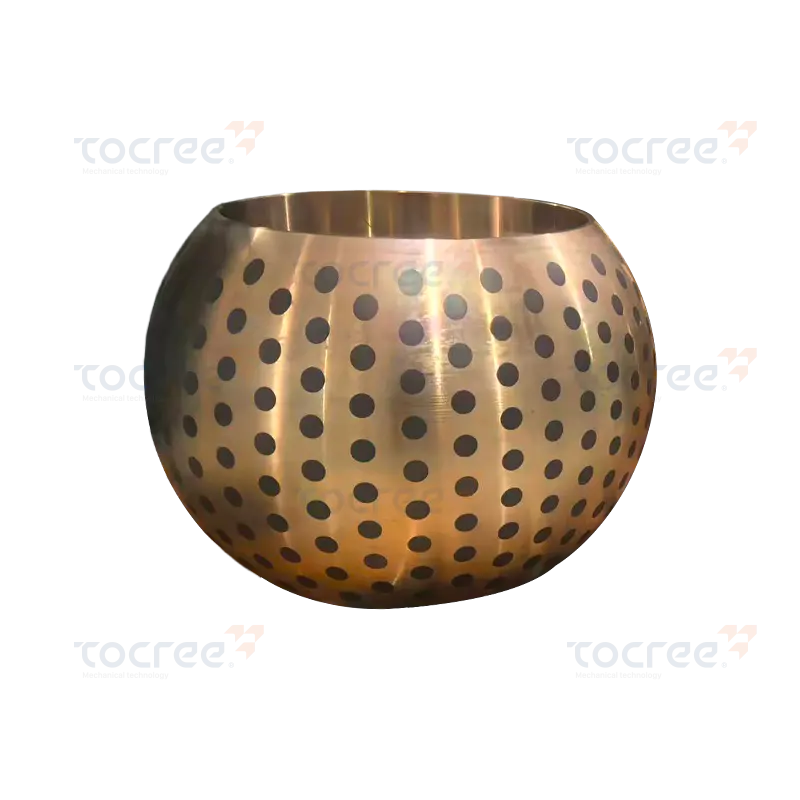 Graphene-Embedded Spherical Self-Lubricating Brass BushingSpherical self-lubricating brass bushing offers maintenance-free operation in high-temperature, high-load, frequent start-stop applications where oil films are difficult to maintain.View Product →
For equipment that runs around the clock, the combination of a flanged seat and a graphene-enhanced bearing surface is often the practical answer, because it holds up under cycling load without asking anyone to climb inside the frame with a grease gun.
At Jiashan Tocree Machinery, we have been casting and machining copper alloy parts since 2007, and self-lubricating bearings are one of the areas where that experience pays off. Because we run our own melting furnaces and centrifugal casting equipment, we control the alloy from the melt onward instead of buying in blanks and hoping the chemistry is right. That matters for self-lubricating parts, where the graphite or PTFE distribution depends on how the material is produced in the first place.
We regularly produce non-standard bushings, flanged sleeves, sliders, and wear plates from customer drawings, including copper sleeves up to about two metres and slide plates up to four metres long. If you are working through a bearing selection and want a second opinion on material, flange proportions, or clearances, send over the drawing and the working conditions. An honest recommendation costs nothing, and it is usually faster than testing three versions on the machine.
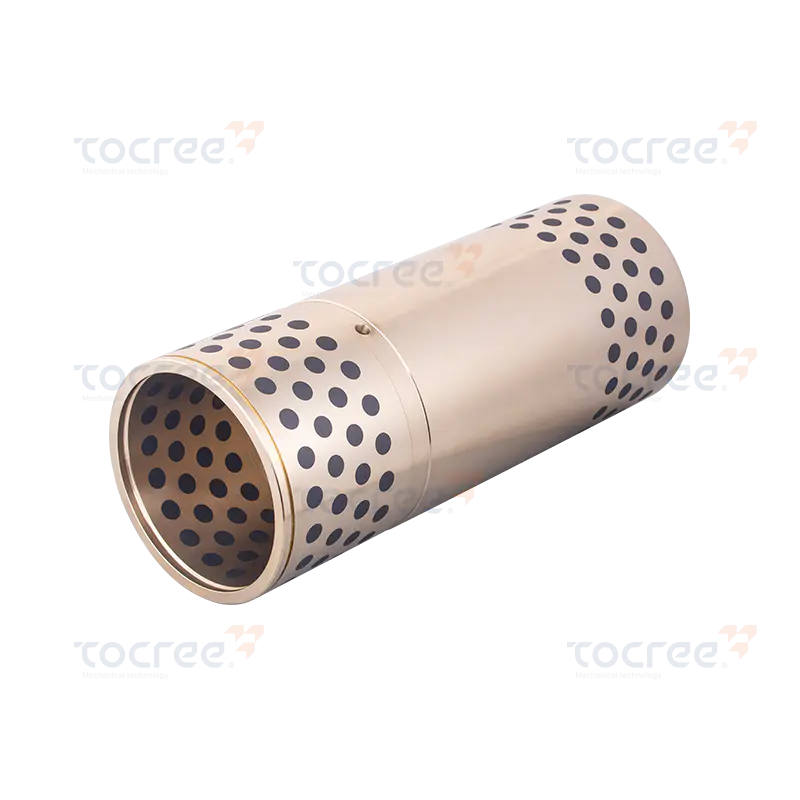
Material structure: Cast aluminum brass CuZn25Al6Fe3Mn3, with graphite insert. Application features:...
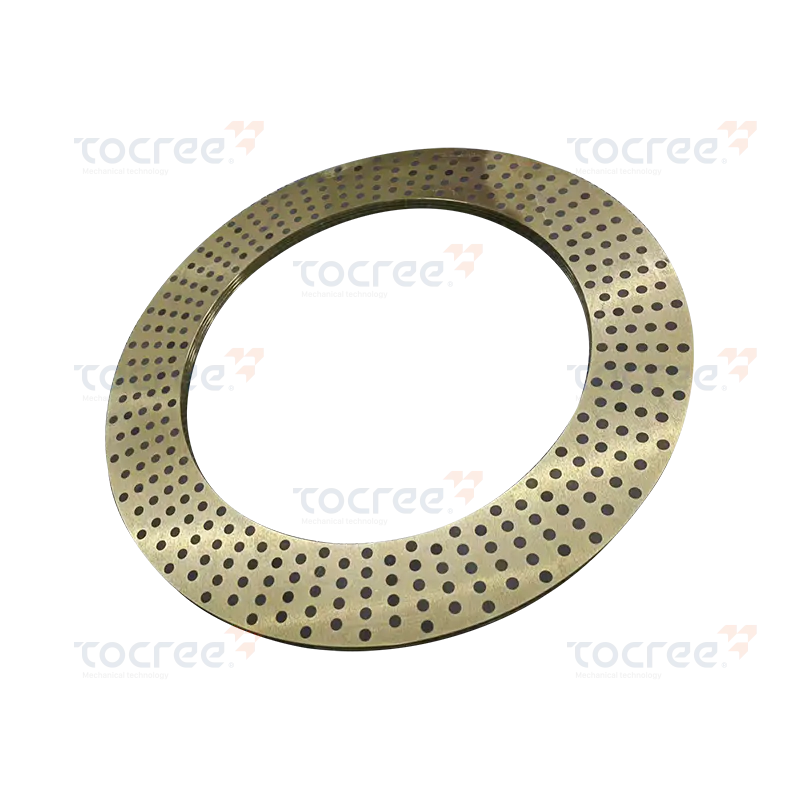
Solid self-lubricating copper rings are high-performance components, made by precision machining wit...
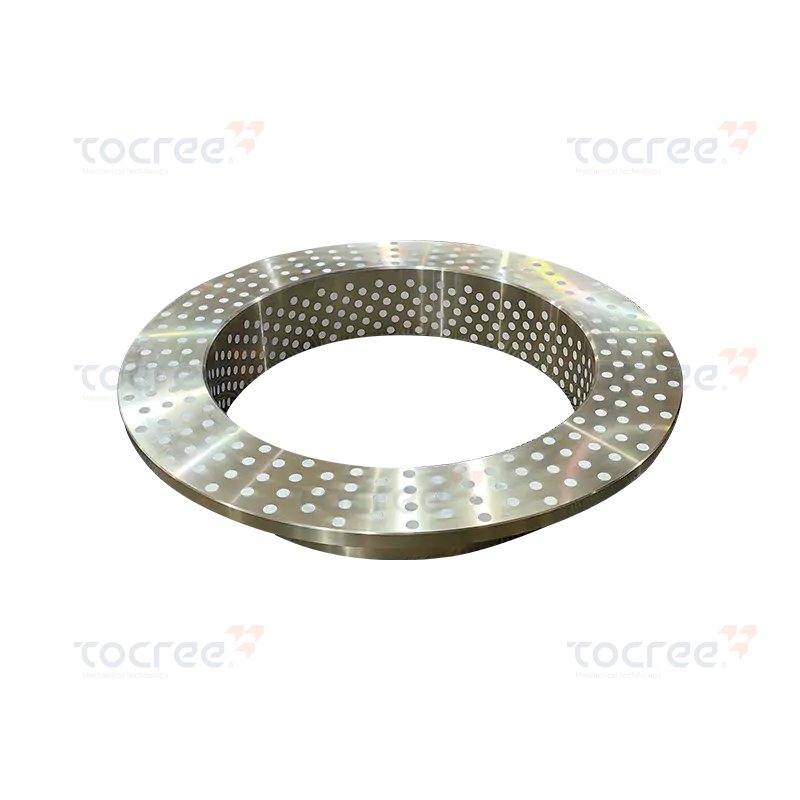
The PTFE single-flange solid self-lubricating copper sleeve is a high-performance mechanical compone...

Single-flange self-lubricating bearing (with graphite embedding) is a high-performance solid self-lu...
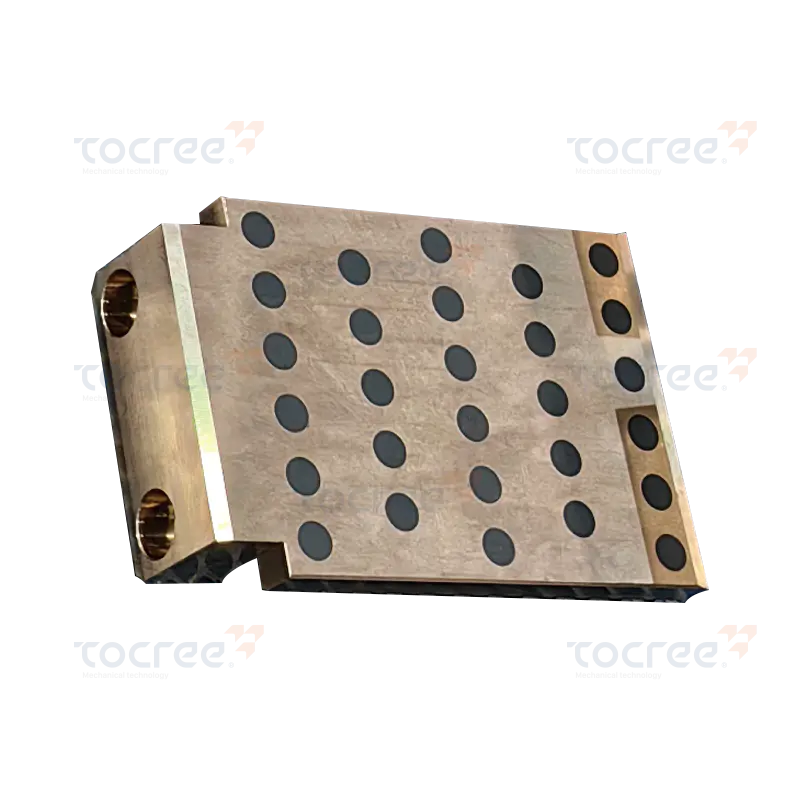
The L-shaped solid self-lubricating slider is made by embedding high-purity graphite solid lubricant...

This spherical self-lubricating copper sleeve is made from high-strength high-strength brass as the ...
Copyright © 2025 Jiashan Tocree Machinery Co., Ltd. All Rights Reserved.
Customized Copper Alloys Machinery Parts
