

 English
 中文简体
中文简体 Deutsch
 عربى
عربىFor any questions and feedback from customers, we will reply patiently and meticulously.
This copper slider is precisely machined from high-performance copper alloy tin bronze as the base ...
A copper alloy curved slider is a small part with a large job. It is the arc-shaped bronze or brass block that rides along a curved guideway, takes the load, and keeps two moving surfaces in the right relationship while the machine strokes, tilts, or rocks. When it works well, nobody notices it. When it wears out, the whole machine tells you.
Jiashan Tocree Machinery has been casting and machining copper alloy components since 2007 from our foundry and machine shop in Jiashan, Zhejiang. Curved sliders reach us in many forms: a hand sketch, a worn sample pulled from a press, a CAD file with the arc radius marked "confirm on site." Our job is to turn each of them into a part that fits the first time and keeps fitting for years.
This guide explains what curved sliders do, how the curved geometry changes load and wear behavior, which copper alloy suits which duty, and what to put on a drawing so the quote you receive matches the part you actually need.
A curved slider is a solid copper alloy component whose working face is not flat but formed to an arc. The arc may be concave, wrapping around a curved guide rail, or convex, riding inside a curved seat. In service it supports a moving assembly, guides it along a defined path, and carries sliding load while resisting wear.
Unlike a plain flat slide plate, a curved slider is usually matched to one specific radius. That radius, together with the chord length, the face width, and the thickness, defines how the part sits in the housing and how the load spreads across its face. Most curved sliders are cast close to final shape and then machined, so the arc, mounting holes, oil grooves, and any L-shaped or dovetail backing are all produced in one controlled sequence.
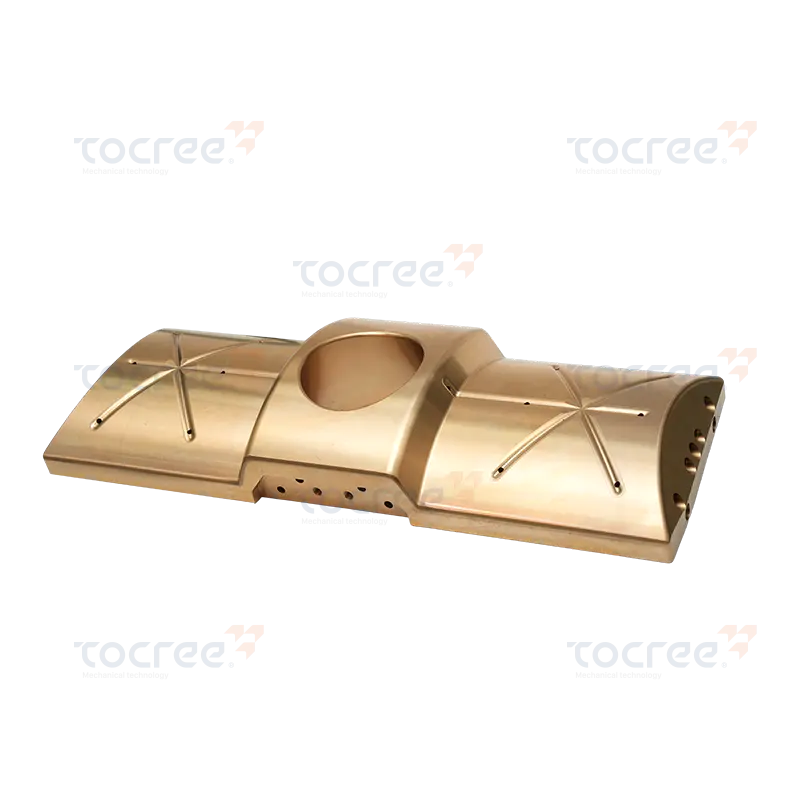 Copper alloy curved sliderThe Copper alloy curved slider is made of high-performance tin bronze as the base material and is cast through the casting process. It features excellent wear resistan...View Product →
Because the shape is application-specific, curved sliders are almost always made to order. That is good news for designers: the arc does not have to be a compromise. It can be built around the real motion of the machine.
Switching from a flat wear surface to a curved one changes more than the drawing. It changes how load travels through the material.
Copper alloy is a family, not a single material. The choice between tin bronze, aluminum bronze, phosphor bronze, and brass decides how the slider behaves under load, heat, water, and imperfect lubrication. The table below summarizes how we usually match alloys to duty in our own foundry.
| Alloy family | Representative grades | Strengths | Where we usually see it |
|---|---|---|---|
| Tin bronze | CuSn8, CuSn12Ni2 | Good load capacity, corrosion resistance, tolerant of intermittent lubrication | Marine and metallurgical equipment, general curved guideways |
| Phosphor bronze | Custom bronze grades | Fine grain, dependable wear resistance at moderate loads | Pump and valve gear, precision guides |
| Aluminum bronze | CuAl9Fe4 | High strength, strong resistance to shock, erosion and seawater | Heavy machinery, die casting machines, high-load curved ways |
| Brass | HB210 to 270 grade | Easy to machine, economical, runs smoothly on softer mating surfaces | General slides, wear pads, retrofit and replacement parts |
Load, sliding speed, temperature, lubrication, and the material of the mating surface all shift the answer. A part that runs dry in a dusty plant is a different problem from one submerged in oil. Send us the working conditions along with the drawing, and we can point to the grade that will give the longest life rather than the one that is easiest to quote.
Curved and straight sliders are not rivals. They solve different motion problems. If the movement is a rocking, tilting, or pivoting stroke, the curved form follows the path naturally. If the movement is long and linear, a flat slider or a linear slide block is usually simpler and cheaper.
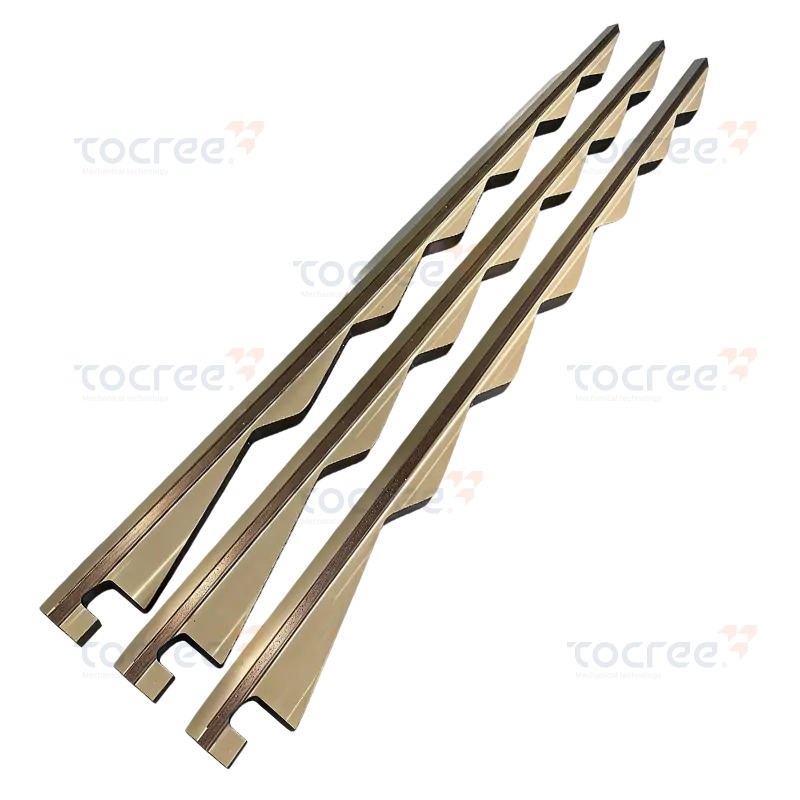 Copper SliderThis copper slider is precisely machined from high-performance copper alloy tin bronze as the base material. It is widely used in high-demanding sliding friction compo...View Product →
The only wrong choice is forcing a flat part into an arcing motion, which concentrates load on two edges and shortens the life of both the slider and the way it runs on.
Some curved sliding points cannot be lubricated after assembly. They may sit inside a sealed housing, run at temperatures that cook ordinary grease, or work where oil and graphite dust are unwelcome. For these cases we cast solid self-lubricating curved sliders in which graphite, PTFE, or graphene plugs are embedded directly into the bronze or brass body.
As the slider moves, a thin transfer film forms on the mating surface and the part keeps running with little or no external lubrication. The trade-offs are real: a self-lubricating slider generally runs at lower sliding speeds than a well-oiled bronze part, and the wall thickness has to accommodate the plugs. For maintenance-free operation in an awkward location, that trade is usually worth making.
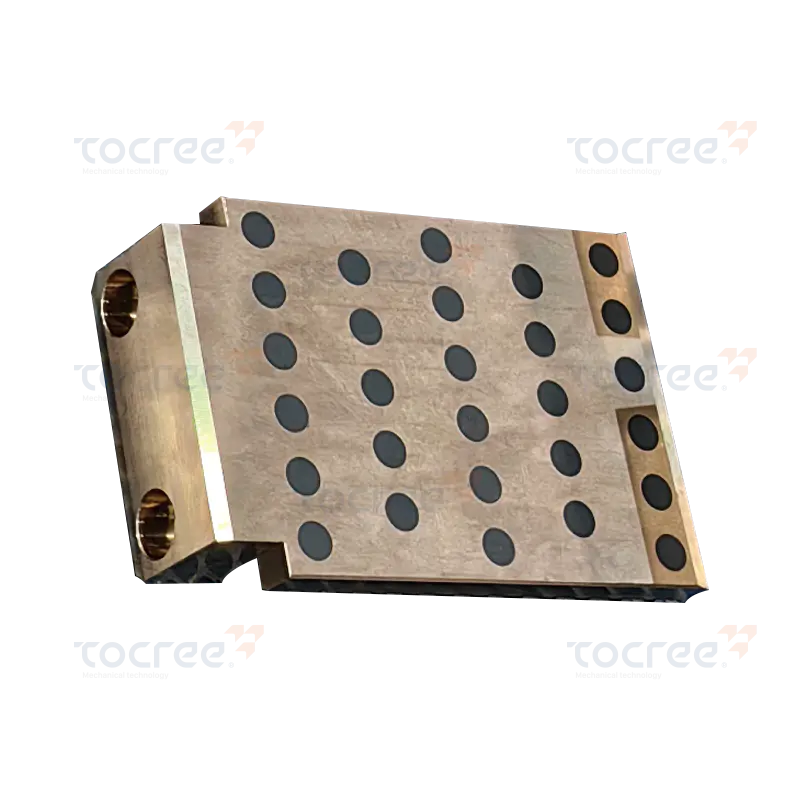 L-Type Solid Self-Lubricating SliderThe L-shaped solid self-lubricating slider is made by embedding high-purity graphite solid lubricant into a base material of high-standard tin bronze alloy. This slide...View Product →
We can work from a worn sample or a sketch, but a complete specification saves a revision cycle. This is the short list we ask for.
Curved sliders appear mostly in heavy equipment where a large mass has to be guided along an arc. In die casting machines they help manage the closing, locking, and ejecting motion, where heat and shock punish weaker wear parts. In heavy machinery they carry the weight of booms, tilting frames, and rotating drums.
Similar duties turn up in metallurgical lines, shipboard machinery, mining and crushing equipment, and petroleum service rigs, where heat, corrosion, or abrasive dust make a flat bearing a poor choice. The common thread is a slow, heavily loaded arcing movement that has to stay accurate for years.
Because we melt our own copper alloys, we control the material long before it becomes a part. On-site furnaces and centrifugal casting equipment feed our machine shop with billet and near-net shapes, and annual capacity reaches roughly 2,300 tons. That vertical setup matters for curved sliders, since the casting and the machining of the arc have to agree with each other.
Our size range covers large work as well as small parts: copper sleeves up to 1.5 to 2 meters, and copper slide plates up to 4 meters long, 400 millimeters wide, and 100 millimeters thick. Curved slider dimensions depend on the arc and the housing, but the same large-part capability applies. Machining runs in a temperature-controlled workshop, and parts pass dimensional inspection before shipment.
Send us a drawing, a photo, or the worn part itself, and tell us how it moves and what it carries. We will come back with an alloy recommendation, a feasible arc geometry, and a realistic price and lead time. If you are still at the design stage, we are glad to talk through radius, width, and lubrication before anything is cut. That conversation is usually the cheapest way to make a curved slider last.

This copper slider is precisely machined from high-performance copper alloy tin bronze as the base ...
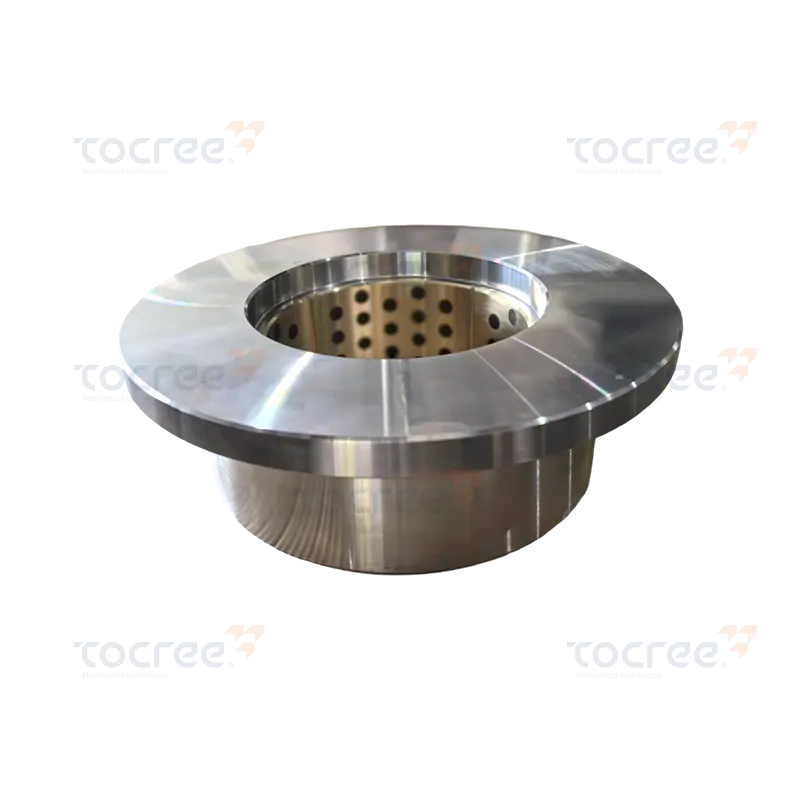
The Bronze-Steel Flanged Bushing combines the benefits of SCM435 alloy steel and high-strength brass...
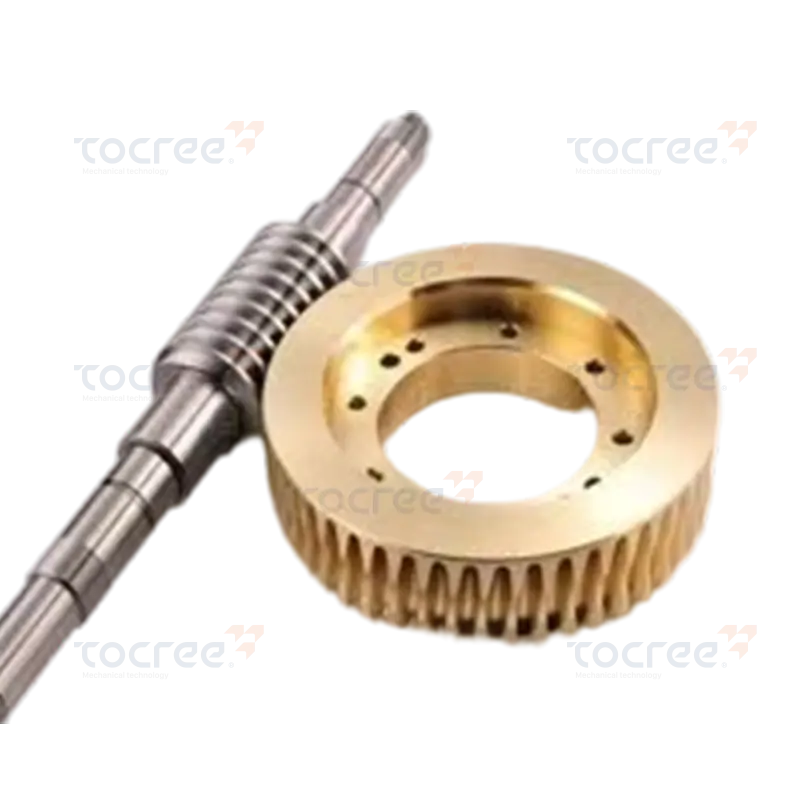
Copper alloy turbines are indispensable components in modern mechanical and energy systems. The matc...
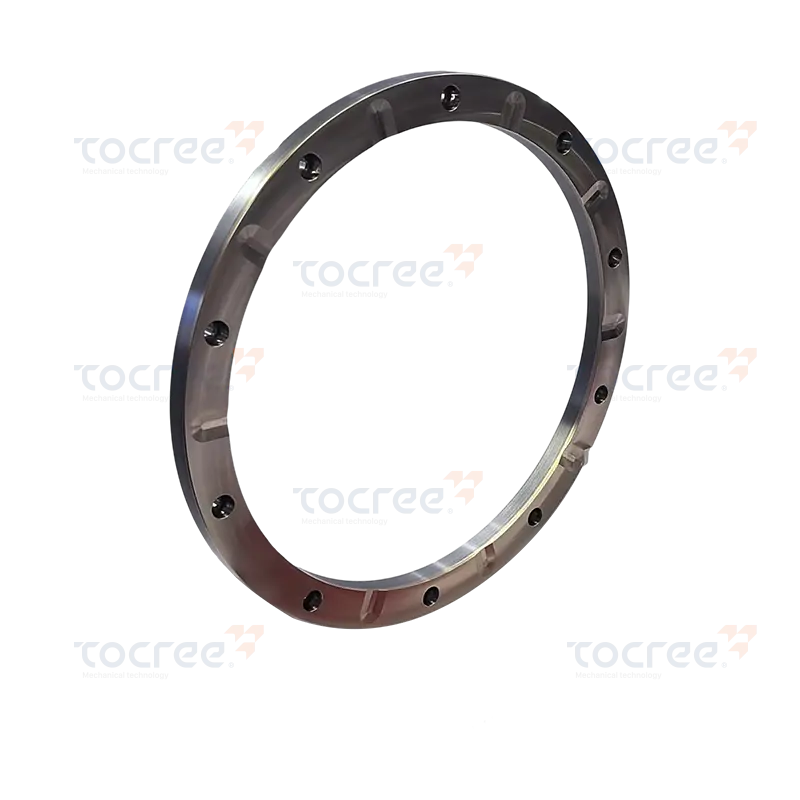
The Copper-Steel Bimetal Thrust Plate is a high-performance component designed for demanding mechani...

The Copper alloy curved slider is made of high-performance tin bronze as the base material and is ca...
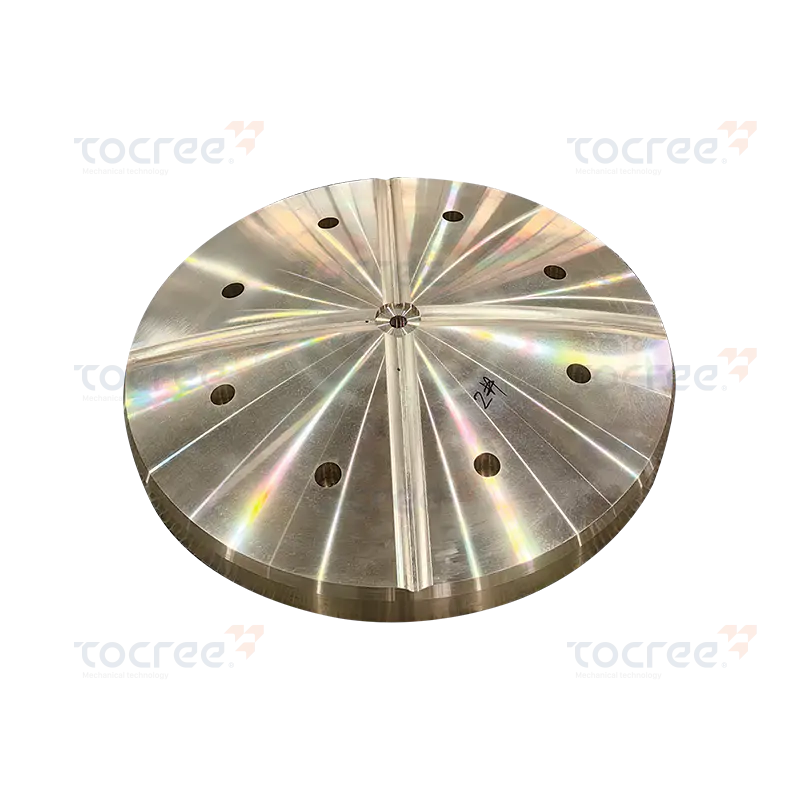
The copper-based spherical thrust plate is a high-performance copper alloy component, made from tin ...
Copyright © 2025 Jiashan Tocree Machinery Co., Ltd. All Rights Reserved.
Customized Copper Alloys Machinery Parts
