

 English
 中文简体
中文简体 Deutsch
 عربى
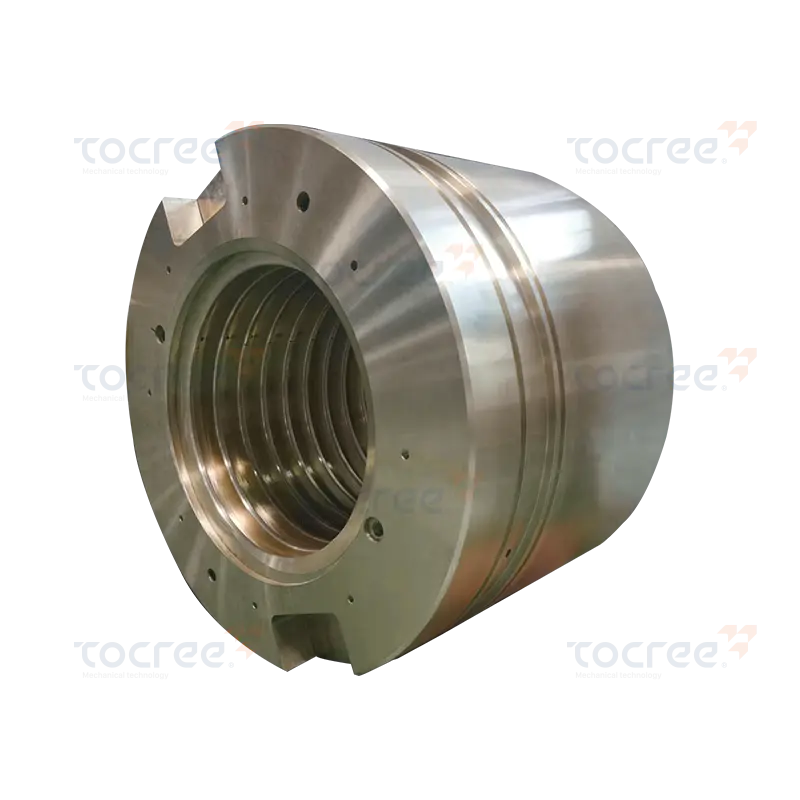
عربىThis product is a high-quality copper nut, made from tin bronze as the base material throu...
Copper Alloy Series
-
-
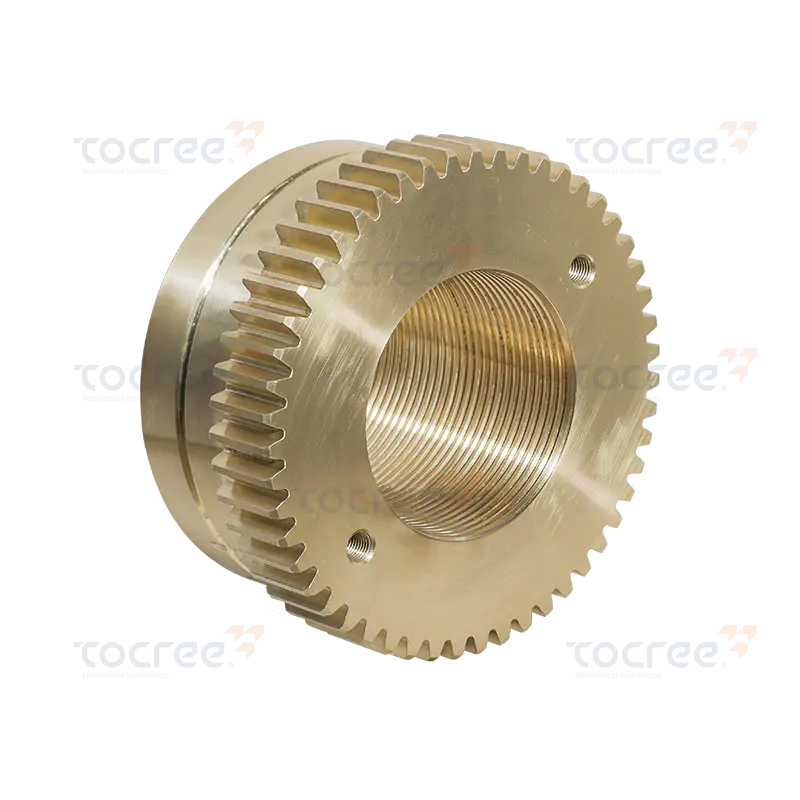 Bronze Hobbed Nut
This copper-based gear nut is a high-performance component. It is precisely machined from ...
-
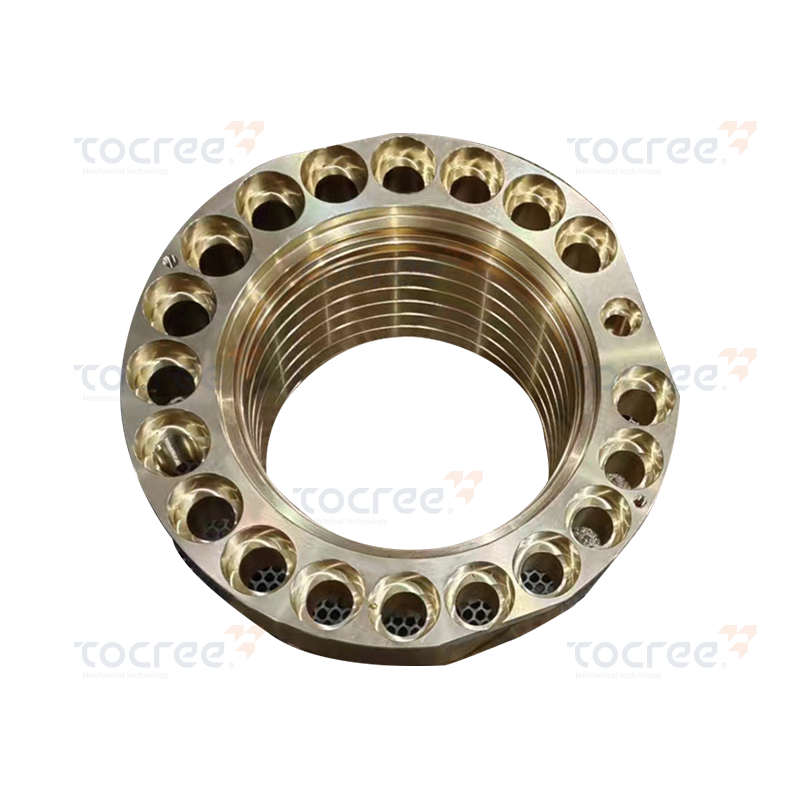 Special-Shaped Copper Nut
This special-shaped copper nut is precisely manufactured from high-quality aluminum bronze...
-
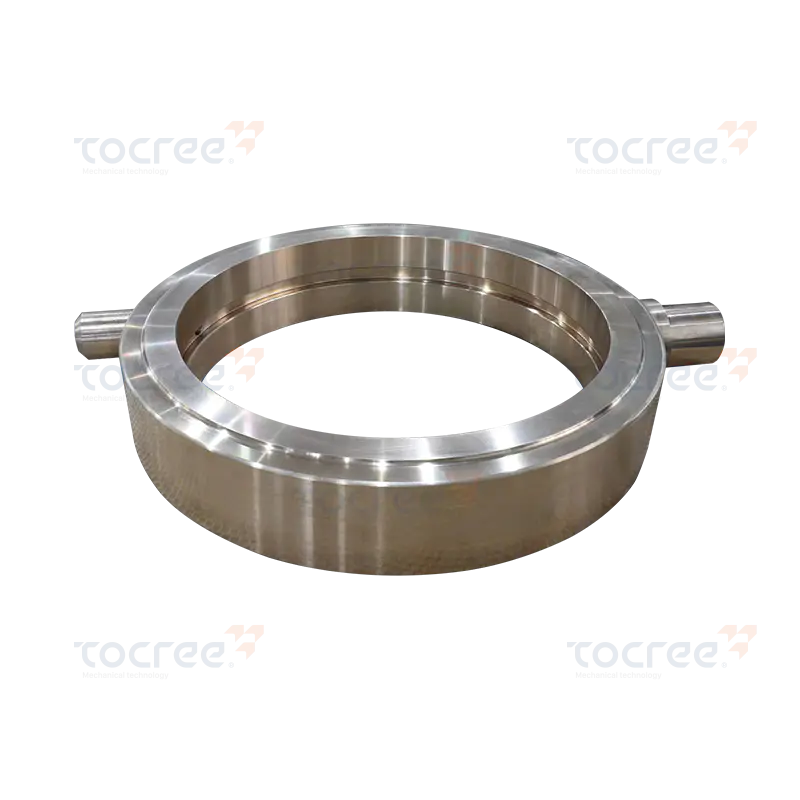 Bronze Piston Oil Ring
This copper-based oil drain ring is made from high-quality tin bronze through precise proc...
-
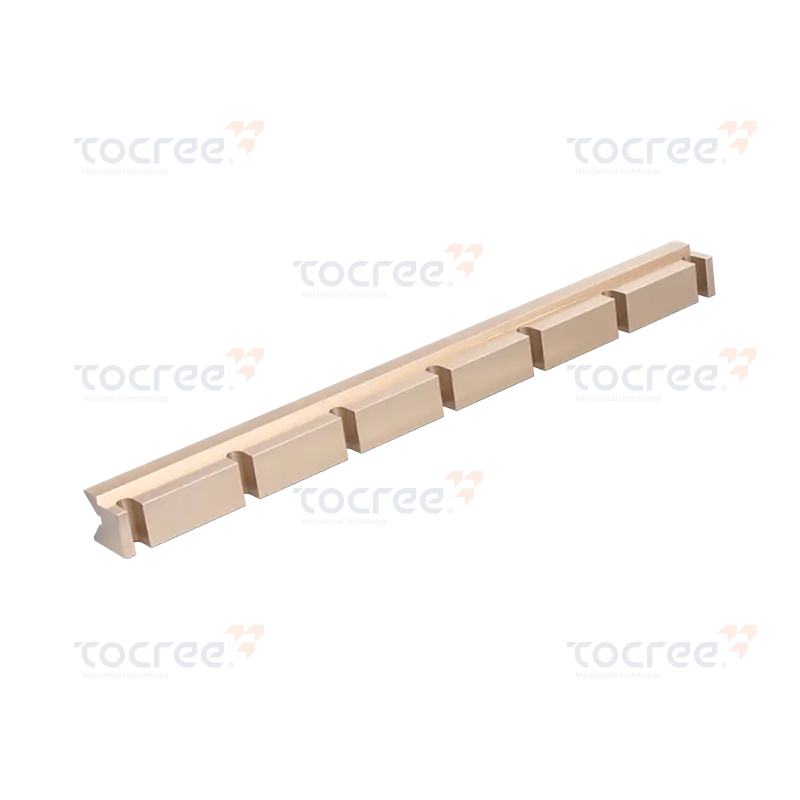 Brass Special-Shaped Slider
This copper-based special-shaped slider is specially designed for high-performance industr...
-
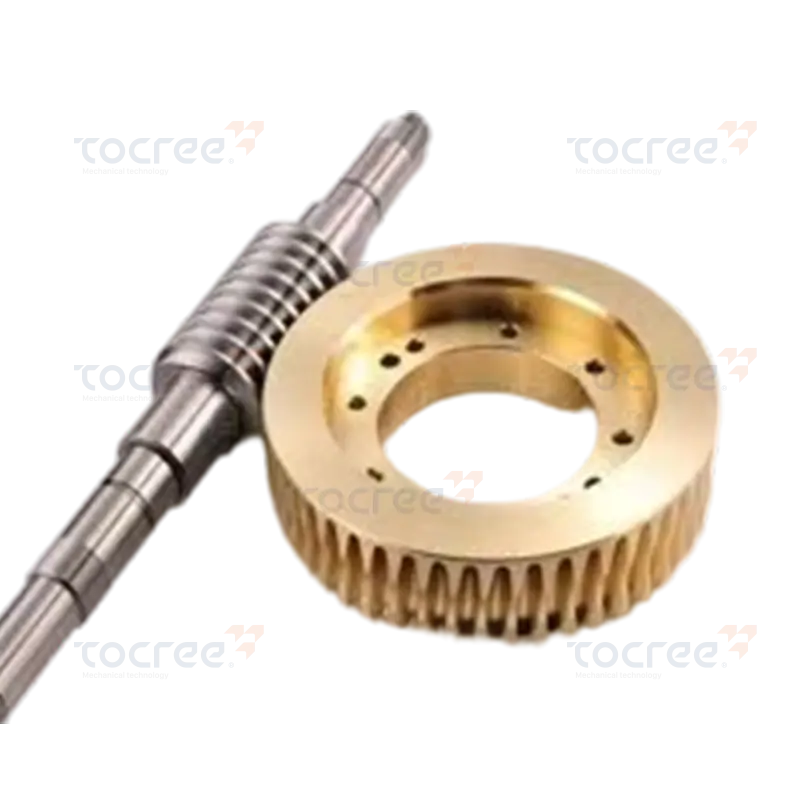 Copper alloy Turbine
Copper alloy turbines are indispensable components in modern mechanical and energy systems...
-
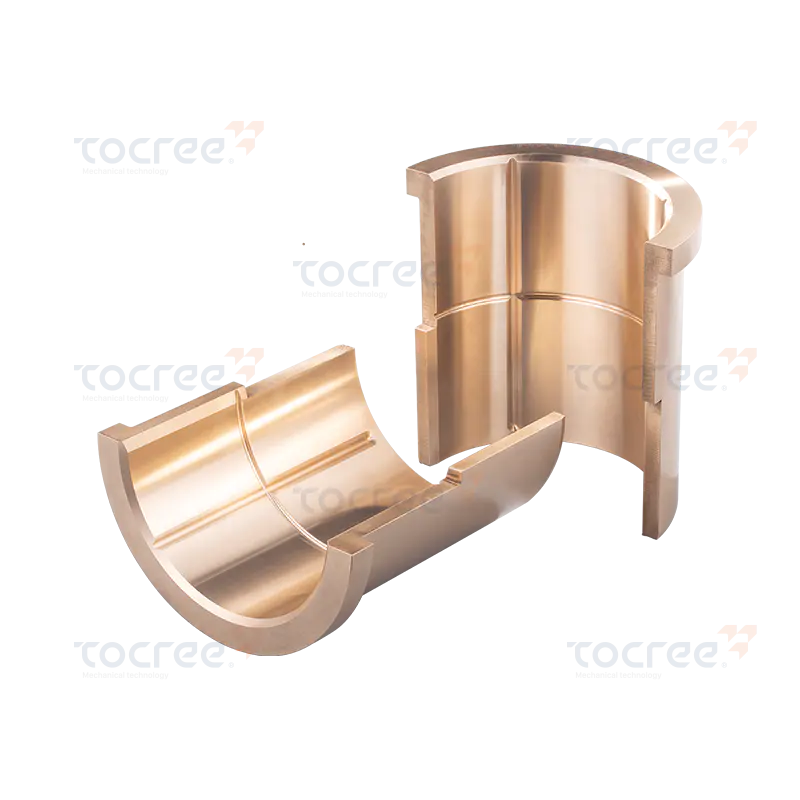 Copper bearing pads
This copper bushing is precisely manufactured from high-quality tin bronze as the base mat...
-
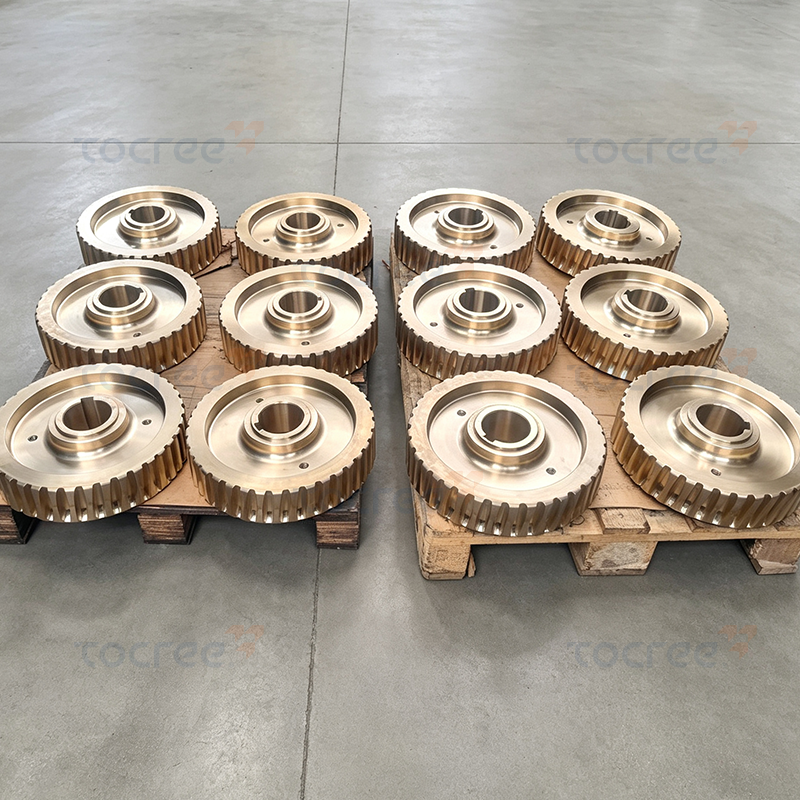 Aluminum Bronze Worm Gear
Product Overview This product is an Aluminum Bronze Worm Gear, precision-manufactured from...
-
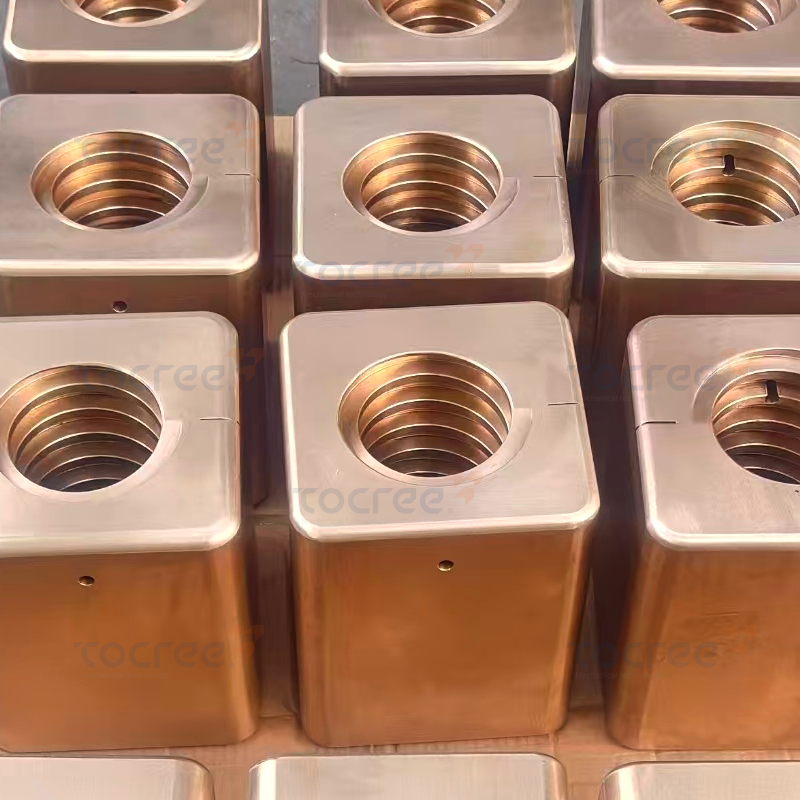 Square Tin-Bronze Nut for Heavy-duty Equipment
Product Overview The Square Tin-Bronze Nut is a critical wear-resistant component engineer...
-
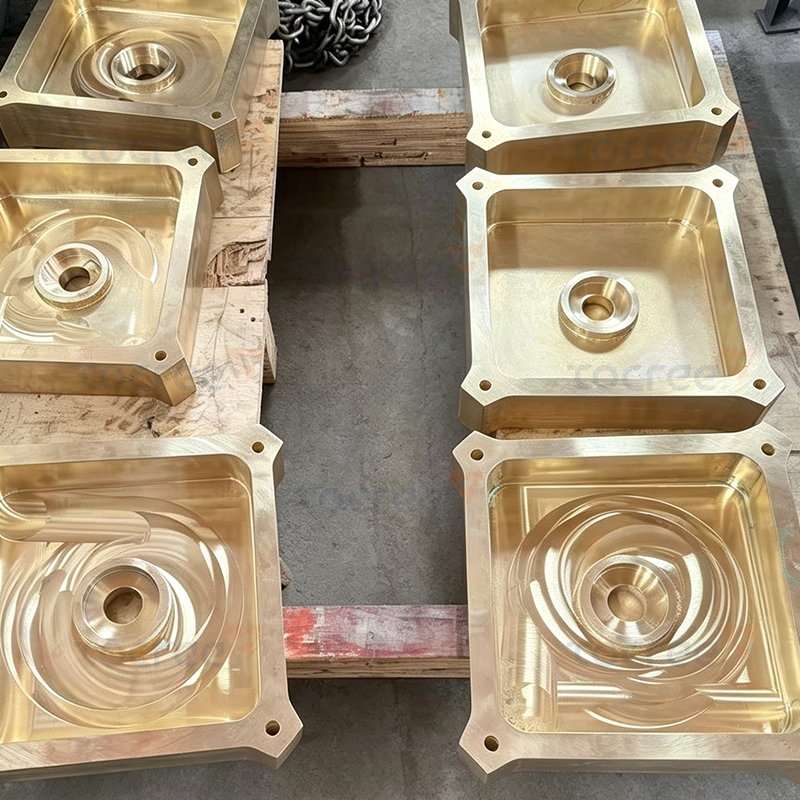 Square Brass Forming Mold
Product Overview This Square Brass Forming Mold is precision-machined from premium brass, ...
The copper alloy series machining products are the company's core offerings. with a self-owned raw material casting factory, we use high-standard electrolytic copper as the base material, combined with centrifugal casting or continuous casting processes for rough material production. The finished products mainly use over 50 grades of copper alloys such as high-strength brass, tin bronze, aluminum bronze, phosphor bronze, and silicon-manganese copper as the substrate. Available forms include straight bushings, flanged bushings, washers, slide plates and various non-standard customized parts. As per working condition requirements, oil grooves and oil holes can be designed on the surface of copper alloys to improve lubrication performance. Special properties of specific copper alloy grades can meet different operating conditions requirements.Common high lead brass has high strength, high hardness, wear resistance, good corrosion resistance, and excellent machinability, can withstand cold and hot working, and has strong load-bearing capacity, making it suitable for heavy load, high temperature, or poor lubrication conditions. Tin bronze has high strength, good wear resistance and corrosion resistance, and also has excellent machining, welding, and casting properties. It is a non-sparking, non-magnetic alloy with a small coefficient of contraction, suitable for manufacturing elastic components, wear-resistant parts, and parts with complex shapes.
This series of products is widely used in the fields such as metallurgical machinery, oil and gas field equipment, medical equipment, ship machinery, forging and pressing machinery, mining machinery, construction machinery, agricultural machinery, large-scale construction machinery, injection molding machinery, packaging machinery, automation equipment, and mold manufacturing industries.
WHO ARE WE
A Professional Copper Alloy Casting Company Integrating Casting And Precision Machining
+ contact us
Founded in 2007, Jiashan Tocree Machinery Co., Ltd. covers an area of about 30000 square meters and has a registered capital of 11 million yuan. It is located at No. 18, Zhensheng Road, Weitang Sub-district,Jiashan County Zhejiang Province, China, enjoying a superior geographical location and convenient transportation.
With rich experience in the production and processing of non-standard parts and precision machining, it is a research and development-oriented manufacturing enterprise integrating research and development, sales, design and processing. As Copper Alloy Bushings Suppliers and Copper Alloy Slide Plates Company in China, The company is well-equipped and has extensive experience, committed to producing finished steel sleeves, copper sleeve plates (including special-shaped parts) and copper products of various sizes, shapes and materials.
It specializes in the production of copper mining machinery parts made of various copper alloys (phosphor bronze, tin bronze, aluminum bronze, beryllium bronze). The products are widely used in metallurgical machinery, ships, mining machinery, engineering machinery, agricultural machinery, large construction machinery, large packaging machinery and mold industries.
We have copper sleeves as large as 1.5-2 meters; copper sliding plates as long as 4 meters, 400mm wide and 100mm thick; and other mechanical copper parts, such as copper nuts, copper gears, copper sleeve worm wheels, rollers and other mechanical accessories. The company is well-equipped, with its own copper smelting furnace and centrifuge, etc. It specializes in the production of copper materials of various types, with an annual output of 2300 tons. It provides copper raw material billets for our company and is a one-stop manufacturer from raw materials to finished products. Provide Custom Copper Alloy Bushings, Washers, Slide Plates.
The company has a high-quality and strong technical team, sophisticated mechanical processing equipment, and is equipped with precise testing and experimental equipment. For a long time, the company has adhered to the market-oriented business policy, insisting on "providing high-quality services for customers, based on development and innovation, and strengthening is the last word". Guided by market-demanded products, on the road of continuous innovation and progress, good market demand is the foundation of the company's survival. With the company's current advantages, it serves customers' needs and achieves the goal of win-win cooperation and common development.

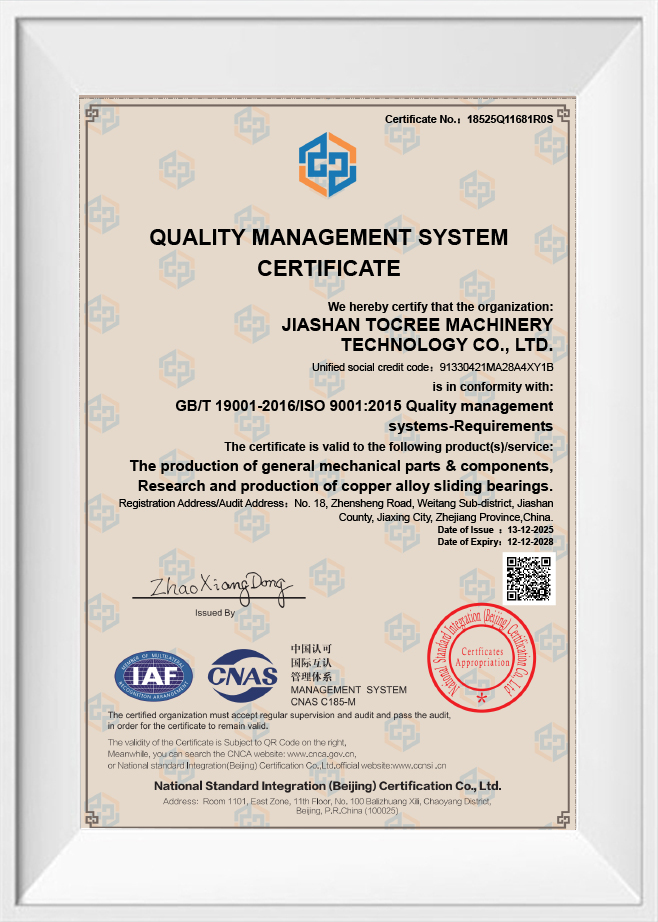
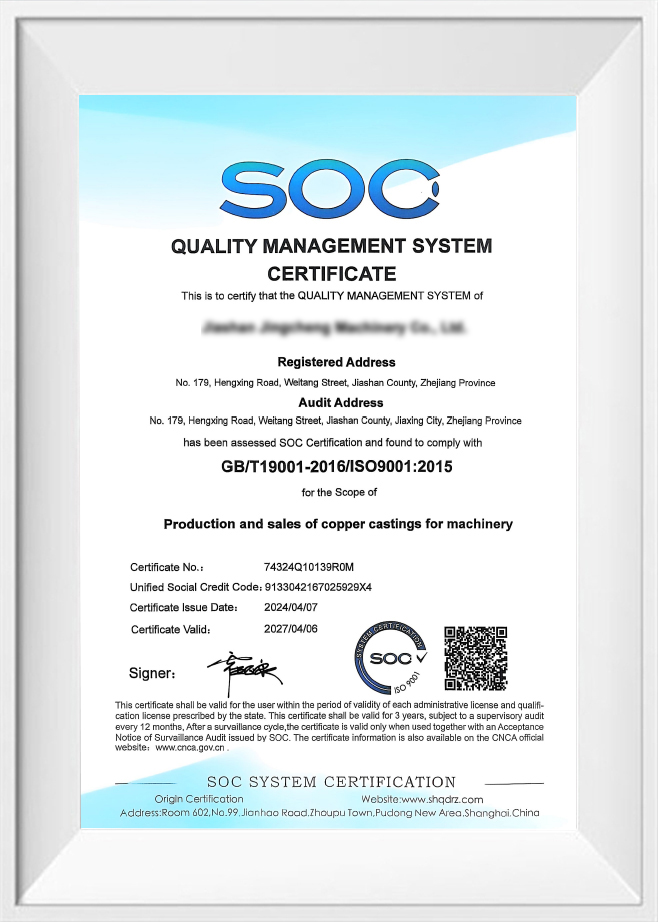
Certificate Of Honor
News
-
Anyone who has crawled under a machine with a grease gun knows the feeling: the fittings sit in the worst possible place, and the maintenance schedule never quite matches producti...
READ MORE -
Anyone who has spent time on a plant floor knows that wear rarely announces itself. It shows up as a machine that slowly stops holding tolerance, a guide that needs shimming every...
READ MORE -
Visit us at Booth AJ34, November 18–21, 2026 Jiashan, Zhejiang, China – October 2026 – Jiashan Tocree Machinery Co., Ltd. (Tocree Machinery) today announced that it will participat...
READ MORE -
Invitation to SHIPTEC China 2026 We are pleased to announce that Jiashan Tocree Machinery Co., Ltd. will exhibit at the 17th International Shipbuilding, Marine Equipment and Offsho...
READ MORE -
A copper alloy curved slider is a small part with a large job. It is the arc-shaped bronze or brass block that rides along a curved guideway, takes the load, and keeps two moving ...
READ MORE
Industry Knowledge
Choosing the Right Copper Alloy: Phosphor Bronze vs. Aluminum Bronze vs. Beryllium Bronze
The performance gap between a properly matched copper alloy and a "close enough" substitute often shows up within the first few thousand operating hours. Phosphor bronze offers excellent conformability and embeddability, which makes it forgiving when lubrication is intermittent or contaminated with fine particulates — a common condition in mining and construction equipment. Aluminum bronze trades some of that softness for much higher hardness and compressive strength, making it the better choice for heavy shock loading such as excavator pivot points or crusher linkages. Tin bronze sits between the two, offering a balance of load capacity and machinability that suits general industrial bushings. Beryllium bronze is reserved for applications demanding high strength combined with fatigue resistance, such as high-cycle stamping dies or specialized mold components, though its higher cost usually limits use to critical wear points rather than entire assemblies.
| Alloy | Typical Hardness | Best Suited Load Type | Common Application |
| Phosphor Bronze | HB 80-100 | Moderate, continuous | General machinery bushings |
| Tin Bronze | HB 90-110 | Moderate to high | Agricultural, packaging equipment |
| Aluminum Bronze | HB 140-180 | High, shock loading | Mining, construction machinery |
| Beryllium Bronze | HB 200-250 | High-cycle fatigue | Molds, precision dies |
Because we operate our own smelting furnace and centrifugal casting line, we control alloy composition from raw billet through to the finished bushing, which lets us adjust tin, aluminum, or phosphorus content within tighter bands than buying pre-cast stock allows.
Setting Diametral Clearance for Copper Alloy Bushings
Clearance between a bushing bore and its mating shaft is not a fixed number — it scales with shaft diameter, operating temperature, and lubrication method. Running clearance too tight risks seizure once thermal expansion takes effect; too loose accelerates edge loading and premature wear. A commonly applied guideline is to allow roughly 0.001 to 0.0015 inches of diametral clearance per inch of shaft diameter for oil-lubricated bushings, with slightly more allowance where grease lubrication or intermittent duty cycles are involved.
- Shafts under 50mm: typically 0.05-0.08mm clearance
- Shafts 50-150mm: typically 0.08-0.15mm clearance
- Shafts above 150mm: clearance calculated individually based on thermal cycle and housing material
For large-diameter bushings — we regularly machine finished copper sleeves in the 1.5 to 2 meter range — clearance calculations also need to account for the housing's coefficient of thermal expansion relative to the copper alloy, since a mismatch of even a few thousandths across a two-meter diameter can translate into measurable interference or looseness once equipment reaches operating temperature.
Oil Groove Geometry and Its Effect on Lubricant Retention
Straight vs. Spiral Grooves
Straight axial grooves are simple to machine and work well for unidirectional rotation, channeling lubricant along the length of the bushing without interrupting the load-bearing contact zone. Spiral or helical grooves, by contrast, actively pump lubricant along the bore as the shaft rotates, which improves oil distribution in bushings that see intermittent starts and stops — a frequent condition in construction and packaging machinery where motion is cyclical rather than continuous.
Groove Sizing Considerations
Groove width and depth should stay proportional to bushing wall thickness; oversized grooves reduce the effective bearing area and can create stress concentration points under heavy load. As a general rule, groove depth is kept to roughly 10-15% of wall thickness, and grooves are positioned away from the primary load zone so lubricant reservoirs are not compressed out during peak loading.
Reading Wear Patterns on Copper Alloy Slide Plates
Slide plates wear differently than round bushings because the contact geometry is flat and often subject to uneven load distribution across the plate's length. Inspecting a worn plate can tell you a great deal about upstream problems in the machine, not just about the plate itself.
| Wear Pattern Observed | Likely Root Cause |
| Wear concentrated at one edge | Misalignment of mating rail or frame |
| Uniform thinning across full surface | Normal service wear, within expected life |
| Localized pitting or galling | Lubrication breakdown or contamination ingress |
| Raised or smeared material at edges | Overloading beyond alloy's compressive limit |
For long slide plates, even a small deviation in flatness during manufacturing can turn into an uneven wear pattern once installed. We machine copper sliding plates up to 4 meters long, 400mm wide, and 100mm thick, and flatness control across that span is one of the more demanding parts of the process — a plate that is not held flat during machining will not seat evenly against its mating rail no matter how precise the surface finish is.
Installation Practices That Extend Service Life
Even a well-manufactured bushing or slide plate can fail early if installation introduces stress or misalignment that the alloy was never designed to absorb. A few practices consistently make a measurable difference in service life:
- Chamfer or deburr mating shaft and housing edges before press-fitting to avoid shaving copper material into the bore
- Apply press-fit force evenly and axially, never at an angle, to prevent bore distortion
- Re-check bore diameter after press-fitting, since interference fits can close clearance by several thousandths
- Flush lubrication channels of any machining residue before first startup
- Verify alignment under no-load conditions before applying full working load
Why Alloy Traceability Matters for Repeat Orders
When a customer needs a replacement part years after the original installation, matching the exact alloy composition matters more than matching the drawing dimensions. Slight variances in tin, phosphorus, or aluminum content between casting batches can change wear behavior and compatibility with existing lubrication systems, even if the part looks identical on paper. Because we cast our own copper billets in-house at roughly 2,300 tons of annual output, we can trace composition back to a specific melt and reproduce it for replacement parts rather than sourcing from whatever alloy happens to be available on the open market at the time.
Inspection Intervals for Heavy-Duty Copper Components
Bushings and slide plates in metallurgical or mining machinery rarely fail without warning; the wear is progressive and measurable if inspection is scheduled proactively rather than reactively. A practical approach ties inspection frequency to duty severity rather than a flat calendar interval.
- Continuous heavy-load service: measure bore or plate thickness every 500-800 operating hours
- Intermittent or light-duty service: measure every 1,500-2,000 operating hours
- After any abnormal vibration, noise, or temperature rise event: inspect immediately regardless of scheduled interval
Tracking wear rate over several inspection cycles, rather than relying on a single measurement, gives a much clearer picture of remaining service life and helps plan replacement part orders before a failure forces unscheduled downtime.
Copyright © 2025 Jiashan Tocree Machinery Co., Ltd. All Rights Reserved.
Copper Alloy Slide Plates Company
