

 English
 中文简体
 Deutsch
 عربى
For any questions and feedback from customers, we will reply patiently and meticulously.
This straight sleeve is made of aluminum bronze alloy as the base material. According to customer re...
Graphite bronze bushings are the quiet problem-solvers of industrial machinery. They rarely get noticed until a bearing starts to squeal, a grease line gets missed, or a maintenance team cannot reach a lubrication point. In our foundry and machine shop in Jiashan, we have seen these bushings work beautifully in dirty, hot, and hard-to-service places, and we have also seen them fail when they were selected like ordinary bronze sleeves. The difference is usually not the graphite itself. It is how the whole friction pair is understood.
This guide walks through what graphite bronze bushings are, where they fit, how to choose them, and what to check before you press one into a housing. We will keep the language practical because that is how these parts are actually bought and installed.
A graphite bronze bushing is a copper-alloy sleeve with solid graphite inserted into its sliding surface. The graphite may appear as plugs, pins, or larger inserts, depending on the design. The bronze body carries the load, while the graphite provides a dry lubricating film between the bushing and the shaft. This is why they are often called self-lubricating bushings or oilless bushings.
The idea is simple, but the execution matters. Graphite is not a grease replacement in every sense. It works best when the motion, load, speed, and environment allow a thin transfer film to form and stay on the shaft. In low-speed, high-load, reciprocating, or difficult-to-lubricate applications, that film can be extremely valuable. In high-speed continuous rotation with poor heat dissipation, a graphite bronze bushing may not be the right first choice.
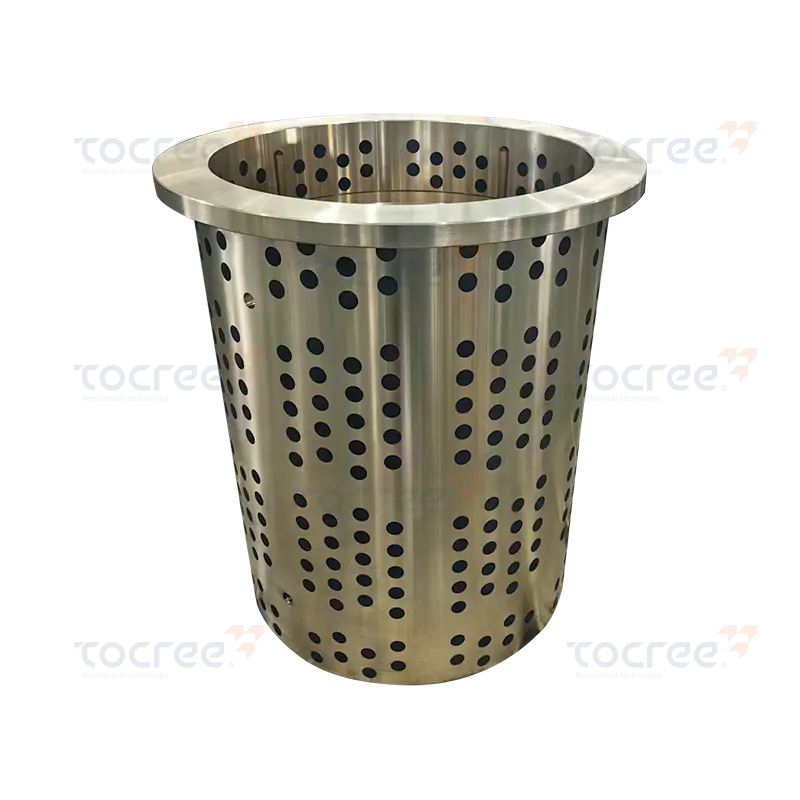 Graphite-Embedded Self-Lubricating Brass Flanged BushingSingle-flange brass sleeve with embedded graphite, suited to low-speed, high-load sliding contacts where conventional oil-film lubrication is difficult.View Product →
Bronze is a dependable bearing material because it has good compressive strength, decent thermal conductivity, and a long history in sliding contacts. The copper-alloy family gives designers room to tune hardness, corrosion resistance, and machinability. Tin bronze, aluminum bronze, leaded bronze, and high-strength brass all appear in graphite bronze bushing work, each with a different balance of properties.
Graphite adds the dry-running capability. It is stable, does not melt like grease, and can remain effective when oil would be washed away, burned off, or simply forgotten. The trade-off is that graphite bronze bushings are not magic. They need proper interference fit, a suitable shaft surface, and realistic surface pressure. They also need a design that keeps the graphite inserts in the loaded area rather than in a decorative pattern.
| Alloy family | General character | Common use in bushings |
|---|---|---|
| Tin bronze | Good wear resistance and familiar bearing behavior | General bushings, flanged sleeves, and medium-load applications |
| Aluminum bronze | High strength and good resistance to heavier loads | Heavy machinery, dies, and demanding sliding contacts |
| Leaded bronze | Good machinability and conformability | Custom sleeves where tolerance and finish matter |
| High-strength brass | Good machinability with useful strength | Wear plates, sliders, and custom copper-alloy parts |
The alloy choice should follow the load, speed, shaft material, and environment, not a habit. A bushing that works in a clean workshop press may behave very differently in a foundry, a marine deck, or a mine site.
As the shaft turns or slides, graphite from the inserts rubs onto the shaft and forms a thin film. That film lowers friction and helps prevent metal-to-metal contact. The bronze body still supports the load, so the bushing needs enough wall thickness and a housing that keeps it round. The graphite pattern should be arranged around the loaded zone, with enough inserts to maintain the film without weakening the bronze structure.
Grooves and plug layout are part of the design, not an afterthought. Common arrangements include axial grooves, circumferential grooves, spiral patterns, drilled holes, and counterbored inserts. A groove can help distribute graphite or retain a small amount of initial lubricant, but a badly placed groove can also create a weak spot or a path for contamination. For oscillating motion, the plug pattern should cover the actual arc of travel. For rotating motion, it should account for the direction of rotation and the location of maximum pressure.
This is also why drawings matter. A simple sketch with bore, length, flange size, and plug pattern is helpful, but a good bushing review also asks how the part moves, how it is loaded, and what keeps dirt out.
Selecting a graphite bronze bushing is a small engineering exercise. The goal is to match the bushing to the shaft and the housing, then confirm that the application can live with the self-lubricating behavior.
Flanged bushings, thrust washers, and wear plates follow the same logic, but the load direction and mounting method change the details. It is worth reviewing the whole assembly rather than the bushing alone.
Press the bushing squarely. Hammering on one edge distorts the bore and can crack graphite inserts before the machine ever runs. Use a proper driver, support the housing, and check alignment after installation. If the bore closes slightly after pressing, a light reaming or sizing pass may be needed, but the graphite pattern should not be cut away.
Even a maintenance-free bushing benefits from a clean start. Remove burrs from the shaft, protect the bushing from paint and grit, and use a compatible initial lubricant only if the application allows it. During service, watch for uneven wear, graphite pull-out, overheating, and contamination. A simple inspection at planned shutdowns is usually enough to catch a problem before it becomes downtime.
The phrase maintenance-free should be read as low-maintenance in the real world. A sealed, clean, well-aligned application can run for a long time. A gritty, misaligned one will punish any bearing, graphite or not.
These bushings show up in equipment where lubrication is difficult, contamination is likely, or access is limited. That includes heavy machinery, metallurgical equipment, marine deck gear, die-casting mechanisms, mining equipment, construction joints, agricultural linkages, and pump or valve linkages. They are also used in wear plates and sliders where a dry sliding surface is more practical than a greased one.
In metallurgical and heavy equipment, the appeal is often heat and load. In marine and outdoor equipment, it is reduced dependence on grease in wet or dusty conditions. In packaging, medical, and other lighter machinery, the appeal may be cleanliness and quiet operation. The common thread is that the application has a sliding or slow-rotating contact that cannot be reliably lubricated by conventional means.
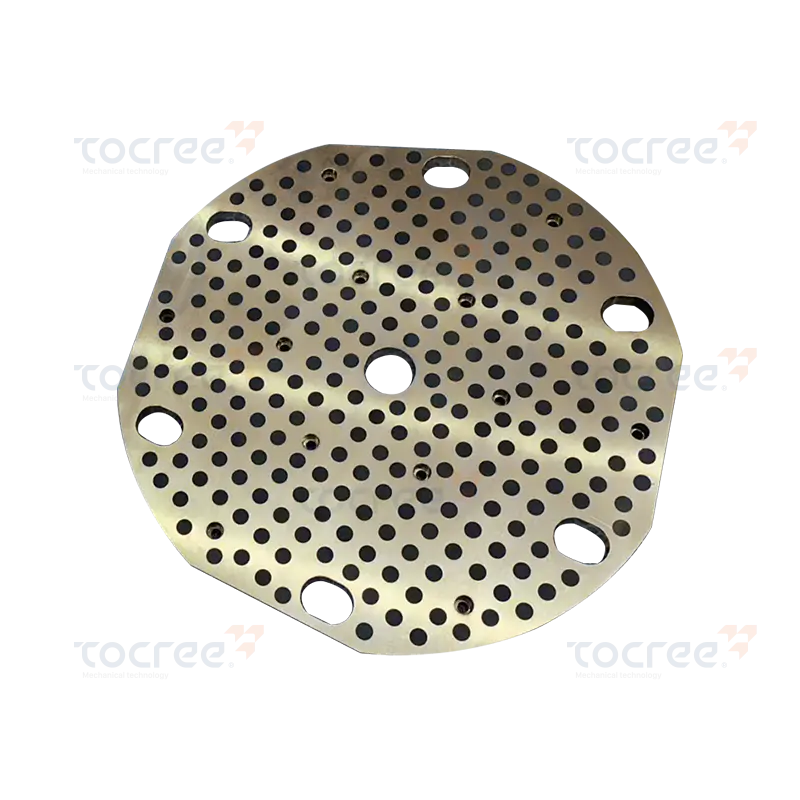 Graphite-Embedded Copper Lubricating Plate for High-Load Sliding SystemsCopper-zinc alloy plate with graphite-filled holes for high-load, high-temperature sliding systems where reliable conventional lubrication is difficult.View Product →
Most graphite bronze bushings are not catalog items in the usual sense. They are made to a drawing, with a specific bore, length, flange, groove pattern, and graphite layout. That is where a foundry and machine shop working together saves time. The alloy can be cast, the graphite pockets machined, and the finished part checked before shipment.
Our own work at Jiashan Tocree Machinery covers graphite-embedded brass and bronze bushings, copper lubricating plates, solid self-lubricating sleeves, and related non-standard copper-alloy parts. We cast copper alloys in-house, machine them, and handle sizes from compact sleeves to large industrial components. That does not mean every part should be custom. It does mean the conversation can start with the application rather than with a limited stock list.
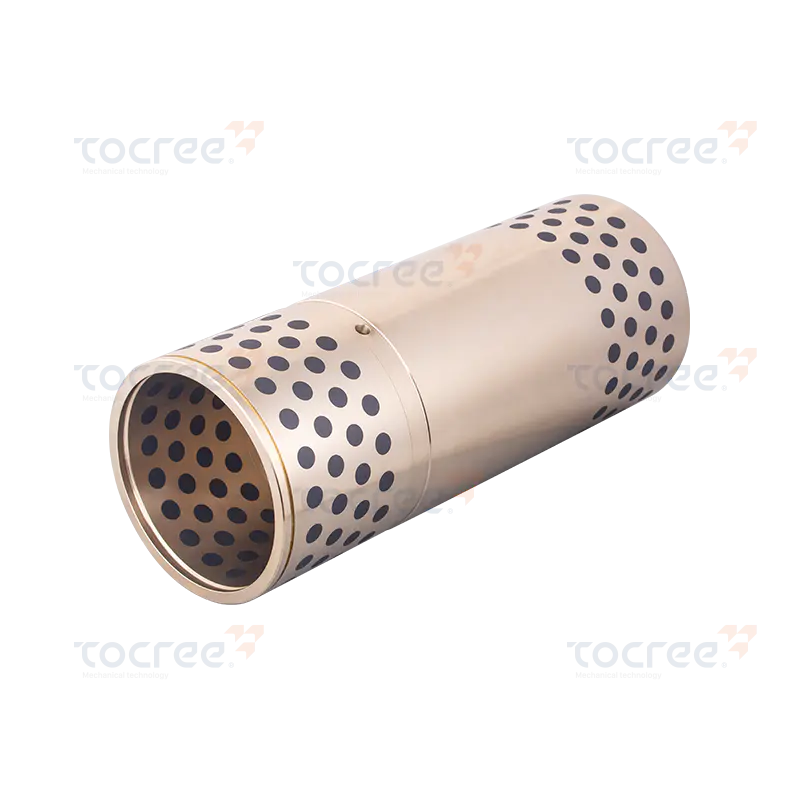 Solid Self-Lubricating Brass Sleeve Bearing with GraphiteCast aluminum brass sleeve with graphite insert for low-speed, high-load or frequent-restart equipment, reducing external oiling and maintenance in harsh locations.View Product →
If you are reviewing a drawing, include the motion, load, shaft material, housing material, ambient conditions, and expected service life. Those details help the supplier recommend a bronze grade, graphite pattern, clearance, and groove design that have a better chance of working in the field.
None of these points is exotic. They are the normal details that separate a reliable graphite bronze bushing from a short-lived one. Get those details right, and the bushing will do exactly what it was chosen to do: carry the load, slide smoothly, and ask very little in return.
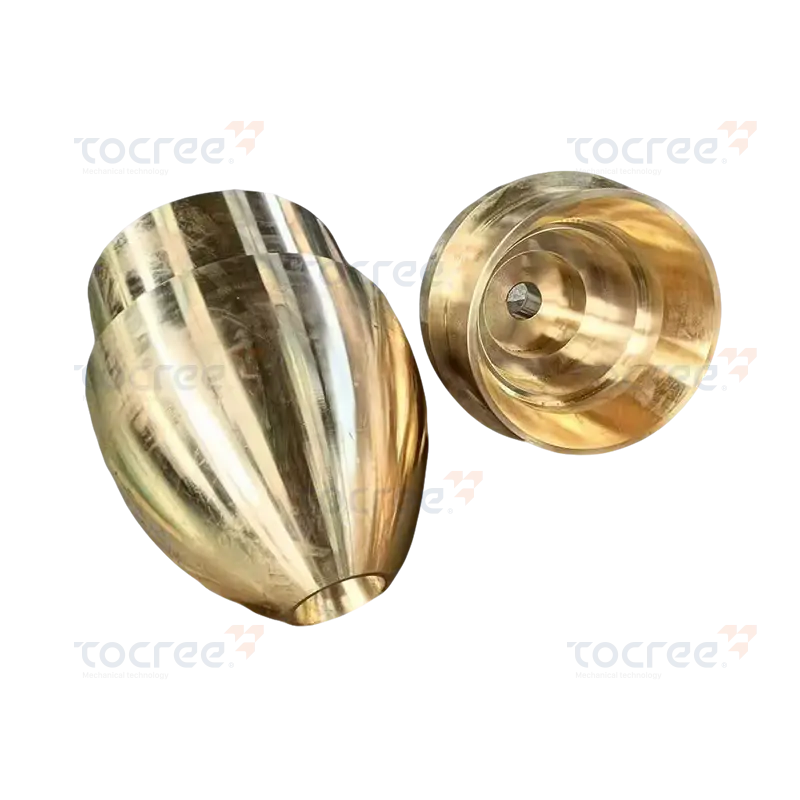
This straight sleeve is made of aluminum bronze alloy as the base material. According to customer re...
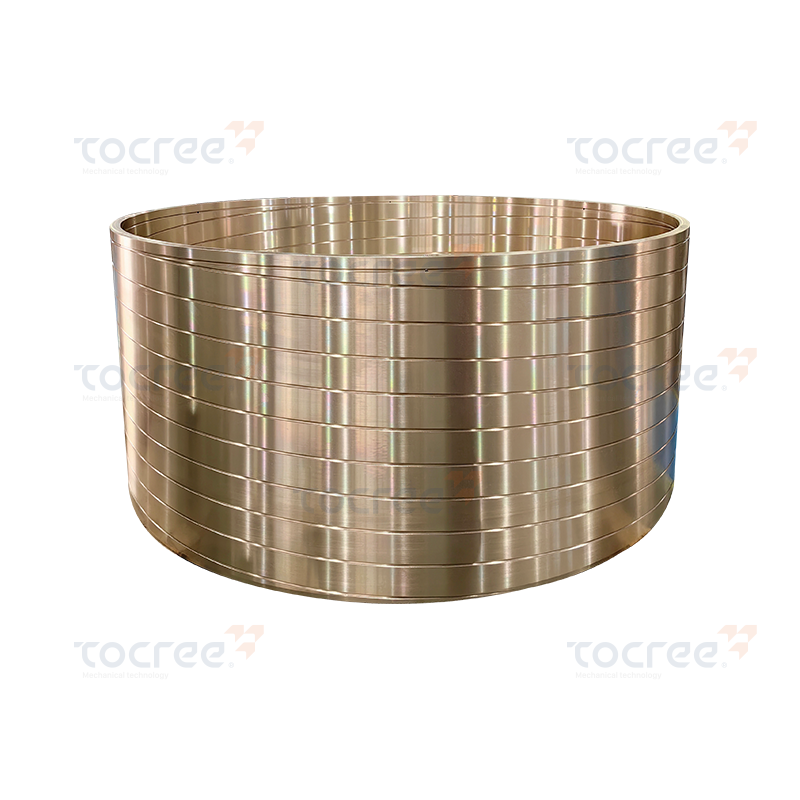
This bronze sleeve is made of tin bronze as the base material. The blank piece is produced through c...
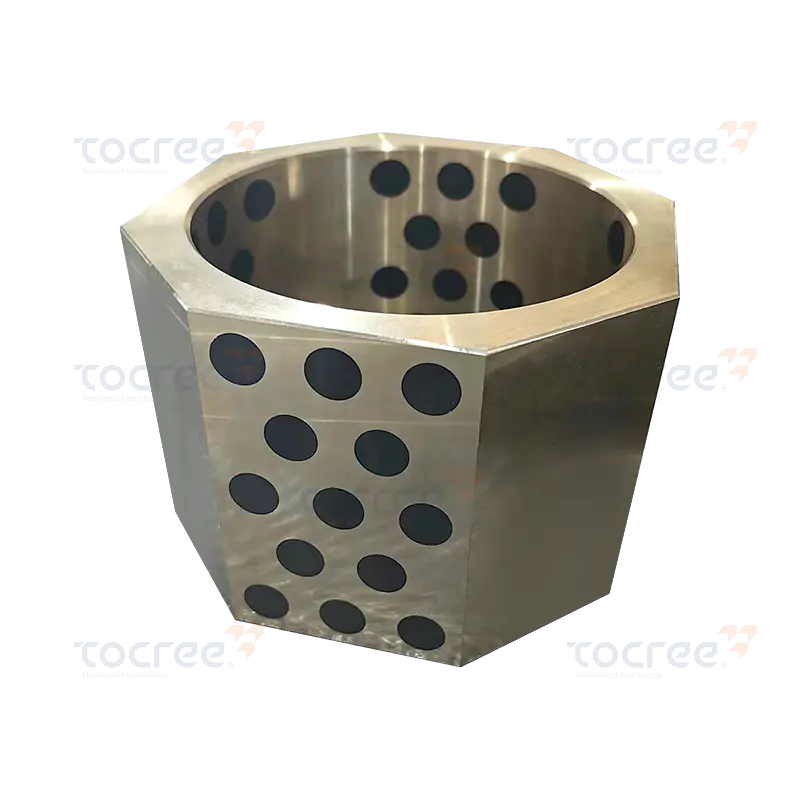
The octagonal bushing made of CuSn6Zn6Pb3 (tin bronze) and graphite precision machining is a self-lu...
Single-flange self-lubricating bearing (with graphite embedding) is a high-performance solid self-lu...
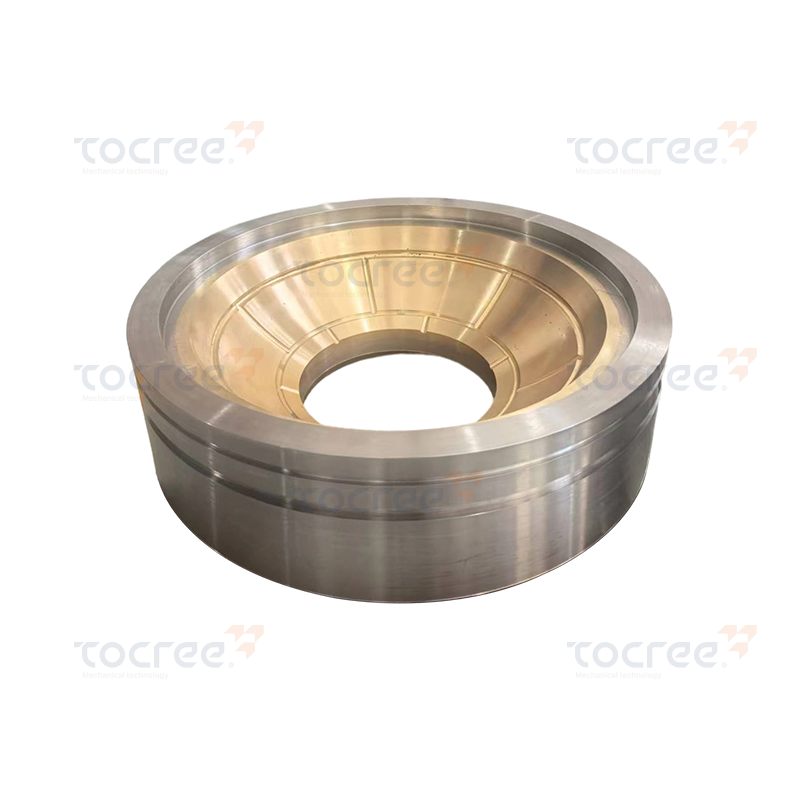
The Bronze-Steel Spherical Bushing is made of 42CrM04 alloy steel and high-strength brass, offering ...
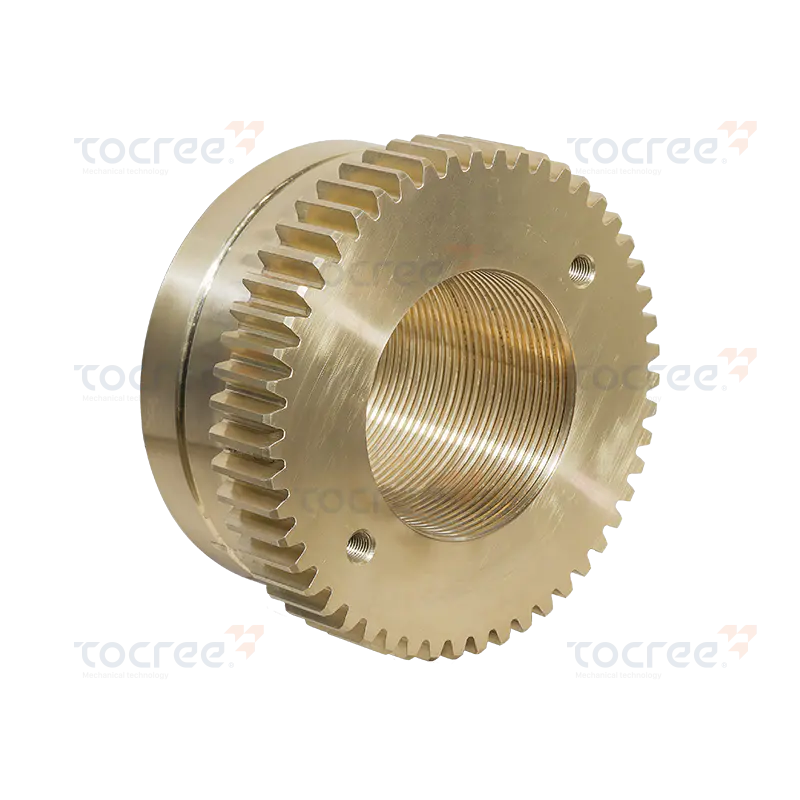
This copper-based gear nut is a high-performance component. It is precisely machined from high-quali...
Copyright © 2025 Jiashan Tocree Machinery Co., Ltd. All Rights Reserved.
Customized Copper Alloys Machinery Parts
