

 English
 中文简体
中文简体 Deutsch
 عربى
عربىFor any questions and feedback from customers, we will reply patiently and meticulously.
Material structure: Cast aluminum brass CuZn25Al6Fe3Mn3, with graphite insert. Application features:...
A flanged self-lubricating bearing is a type of plain bearing that combines two practical design features in one component: a flange — a protruding collar or rim at one end of the bearing — and a self-lubricating inner surface that eliminates the need for external grease or oil during operation. The flange acts as a built-in shoulder that positions the bearing axially within a housing, prevents it from being pushed through the bore, and simplifies installation without additional retaining hardware. The self-lubricating property comes from solid lubricants embedded directly into the bearing material, such as PTFE, graphite, or molybdenum disulfide, which transfer a thin lubricating film onto the shaft as it rotates or slides.
These bearings go by several names depending on the industry and manufacturer — flanged bushings, flange sleeve bearings, flanged plain bearings, or flanged bronze bushings — but they all refer to the same fundamental design. They are used wherever rotational or oscillating motion occurs under load, and where maintenance-free or low-maintenance operation is a priority.
The self-lubricating function of these bearings is not a coating that wears off over time — it is built into the bulk material or embedded as discrete solid lubricant pockets throughout the bearing wall. When the shaft begins to move against the bearing surface, frictional heat and mechanical contact cause the solid lubricant to migrate to the interface, forming a thin, stable transfer film that reduces friction and wear.
The most common self-lubricating mechanisms found in flanged bearings include:
The material of a flanged self-lubricating bushing directly determines its load capacity, speed rating, temperature range, chemical resistance, and overall service life. Choosing the wrong material for the operating environment is one of the most common causes of premature bearing failure.
| Material | Max Load | Temp Range | Best For | Weakness |
| PTFE Composite (Steel-backed) | Up to 250 MPa | -200°C to +280°C | High load, low speed, dry running | Poor performance at high speed |
| Sintered Bronze (Oil-impregnated) | Up to 60 MPa | -40°C to +150°C | Medium load, moderate speed | Oil can leach out at high temp |
| Graphite-Plugged Bronze | Up to 100 MPa | Up to +400°C | High temp, heavy industry | Higher friction than PTFE types |
| Cast Iron with Graphite | Up to 80 MPa | Up to +450°C | Furnace equipment, heavy machinery | Brittle, heavy, limited corrosion resistance |
| Acetal / Nylon Polymer | Up to 20 MPa | -40°C to +100°C | Light loads, food/pharma, wet environments | Low load and temp limits |
| PEEK Composite | Up to 100 MPa | Up to +250°C | Chemical resistance, high performance | High material cost |
Flanged self-lubricating bearings are used across a remarkably broad range of industries, precisely because they remove the dependency on external lubrication — something that is impractical, contaminating, or simply impossible in many real-world environments.
In automotive manufacturing and vehicle assemblies, flanged sleeve bearings are used in suspension components, steering linkages, seat adjustment mechanisms, and door hinges. The sealed nature of modern vehicles and the long service intervals demanded by consumers make grease-free flanged plain bearings ideal — they simply run dry for the life of the component without requiring any maintenance.
Equipment operating outdoors in dirt, mud, and water cannot rely on grease fittings that need frequent repacking. Flanged bronze self-lubricating bearings in pivot joints, linkage arms, and hydraulic cylinder pins are exposed to constant contamination. Their solid lubricant systems are not washed out by water or displaced by dirt particles the way liquid grease can be.
In food-grade environments, any lubricant that contacts product lines can cause contamination issues and regulatory failures. FDA-compliant polymer flanged self-lubricating bushings — often made from acetal, UHMWPE, or specially formulated PTFE composites — allow machinery to run without any lubricant that could migrate into the product stream. They are also easy to clean and resistant to the caustic washdown chemicals used in these facilities.
Weight, reliability, and maintenance-free performance are paramount in aerospace applications. Flanged PTFE composite bearings are used in control surface linkages, landing gear components, and access panel hinges. Their wide operating temperature range and ability to function in vacuum or extreme atmospheric conditions make them one of the few bearing types suitable for this environment.
Robotic joints, actuator pivot points, and conveyor systems benefit from the compact form factor and maintenance-free operation of flanged self-lubricating plain bearings. In high-cycle automation where millions of oscillations occur per year, bearings that require periodic re-lubrication create costly downtime. Self-lubricating designs eliminate this maintenance window entirely.
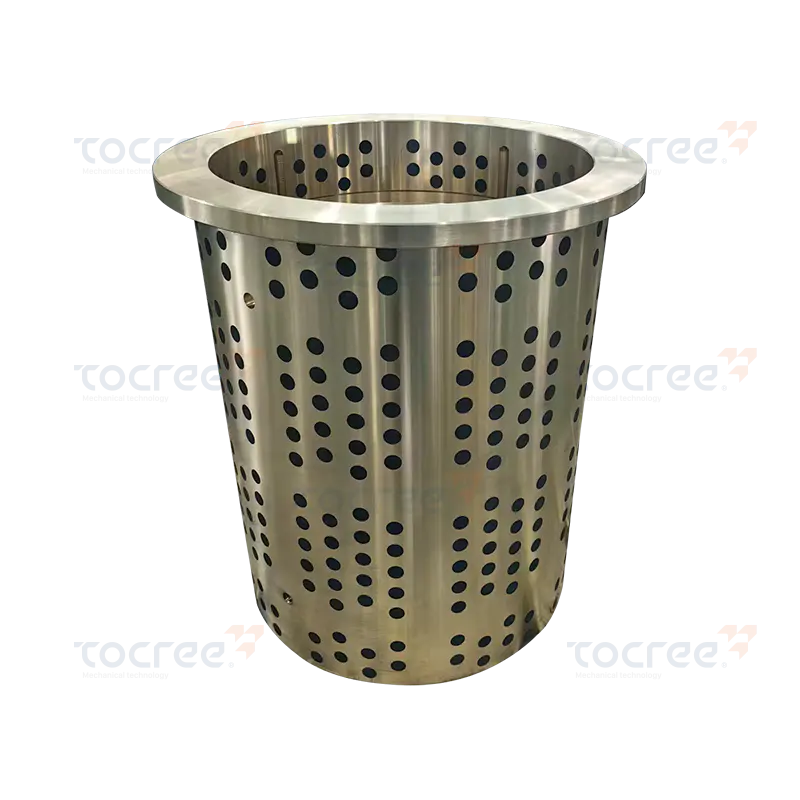
The flange on a flanged bushing is not just a convenience feature — it fundamentally changes how the bearing can be used and what loads it can handle. Without the flange, a plain sleeve bearing can only support radial loads (forces perpendicular to the shaft axis). The flange adds the ability to handle axial thrust loads as well, since the flange face bears against the housing or mating component and resists forces along the shaft axis.
The flange also serves the following practical functions:
Flanged self-lubricating bearings are defined by a set of standard dimensions that must be matched precisely to the application. Getting any of these wrong — even by a fraction of a millimeter — can result in incorrect fit, premature failure, or dangerous looseness in the assembly.
Most manufacturers offer flanged self-lubricating bearings in standard metric and inch sizes conforming to ISO 3547 or other relevant standards, making cross-supplier replacement straightforward in most cases.
Even a correctly specified flanged self-lubricating bushing can fail quickly if installed improperly. The following practices are critical for achieving the expected service life.
Flanged bushings with an interference fit must be pressed into the housing using a dedicated press tool that applies force evenly across the entire end face — never on the flange rim alone. Pressing on the flange causes it to deform or crack, particularly in brittle bronze materials. The press tool should contact the cylindrical body of the bearing. For polymer bearings, chilling the part briefly before installation can help by slightly reducing its outer diameter, making press-fitting easier and reducing the risk of cracking.
After pressing in a flanged self-lubricating bearing, always check the inner bore diameter with a plug gauge or bore gauge. Press-fitting causes the bore to contract slightly due to the interference, and this contraction must be accounted for in the original specification. If the bore is now too tight for the shaft, use a burnishing tool or broach to restore the correct clearance — never use abrasive tools, which will damage the lubricating surface or liner.
The shaft surface that runs inside the flanged bearing should have a surface roughness of Ra 0.4 to Ra 0.8 µm for optimal performance. Too rough and the shaft will abrade the bearing surface rapidly; too smooth and the lubricating transfer film may not adhere properly. The housing bore should be machined to a similar surface finish to ensure a proper interference fit without damaging the bearing outer surface during installation.
Engineers sometimes face the choice between a flanged plain bearing and a rolling element bearing such as a ball bearing or needle roller bearing with a flange. Each has genuine advantages, and the right choice depends on the specific operating conditions.
| Factor | Flanged Self-Lubricating Plain Bearing | Flanged Rolling Element Bearing |
| Shock load tolerance | Excellent — distributes load over full surface | Poor — point contact damages raceways |
| Oscillating / slow motion | Excellent | Poor — false brinelling risk |
| High continuous speed | Limited by PV value | Excellent |
| Maintenance requirement | None (self-lubricating) | Periodic re-lubrication often needed |
| Contamination resistance | Good — no rolling elements to jam | Poor without sealed variants |
| Radial space requirement | Very compact | Larger outer diameter needed |
| Cost | Generally lower | Generally higher |
| Noise level | Very quiet | Can generate noise at high speed |
For applications involving oscillating motion, heavy shock loads, contaminated environments, or where maintenance access is difficult or impossible, the flanged self-lubricating plain bearing is typically the superior choice. For high-speed continuous rotation with light loads, a rolling element bearing will generally outperform it.
The flanged self-lubricating bearing market includes a wide range of quality levels, and the difference is not always visible to the naked eye. A substandard bearing may look identical to a premium one but fail in a fraction of the expected service life. When sourcing these components — especially for critical applications — consider the following quality indicators:
Established manufacturers such as SKF, Igus, Oilite (Beemer Precision), GGB, and Miba offer flanged self-lubricating bearings with full technical documentation and engineering support. For volume production applications, always request sample parts for evaluation before committing to a full order from a new supplier.
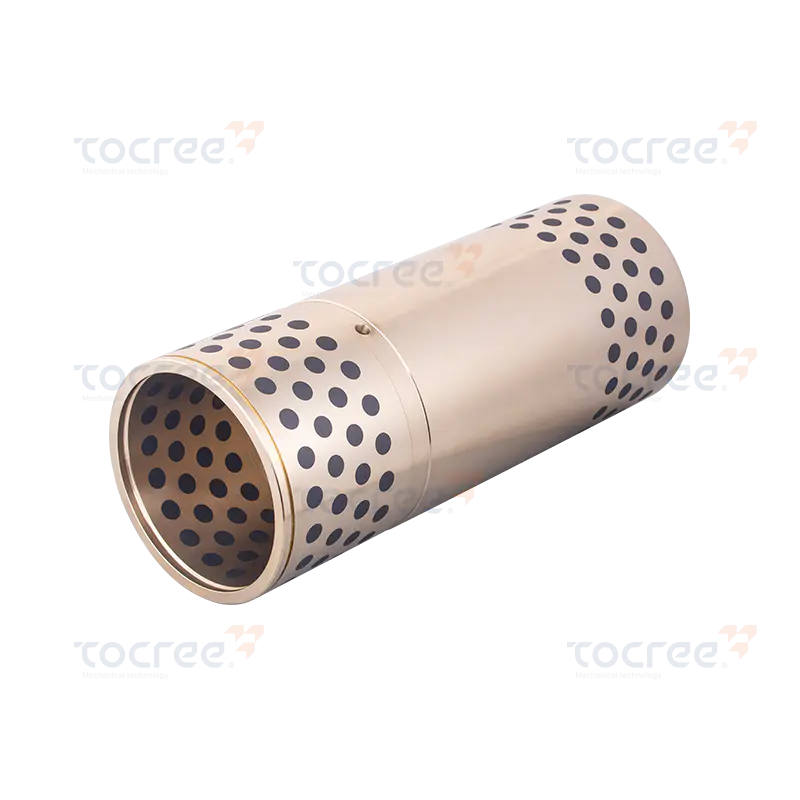
Material structure: Cast aluminum brass CuZn25Al6Fe3Mn3, with graphite insert. Application features:...
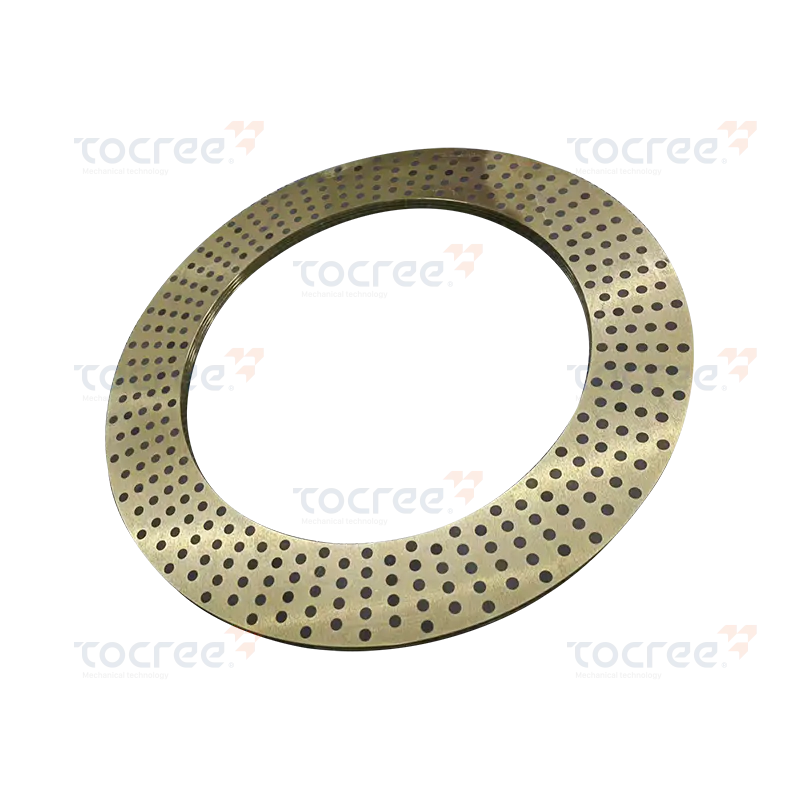
Solid self-lubricating copper rings are high-performance components, made by precision machining wit...
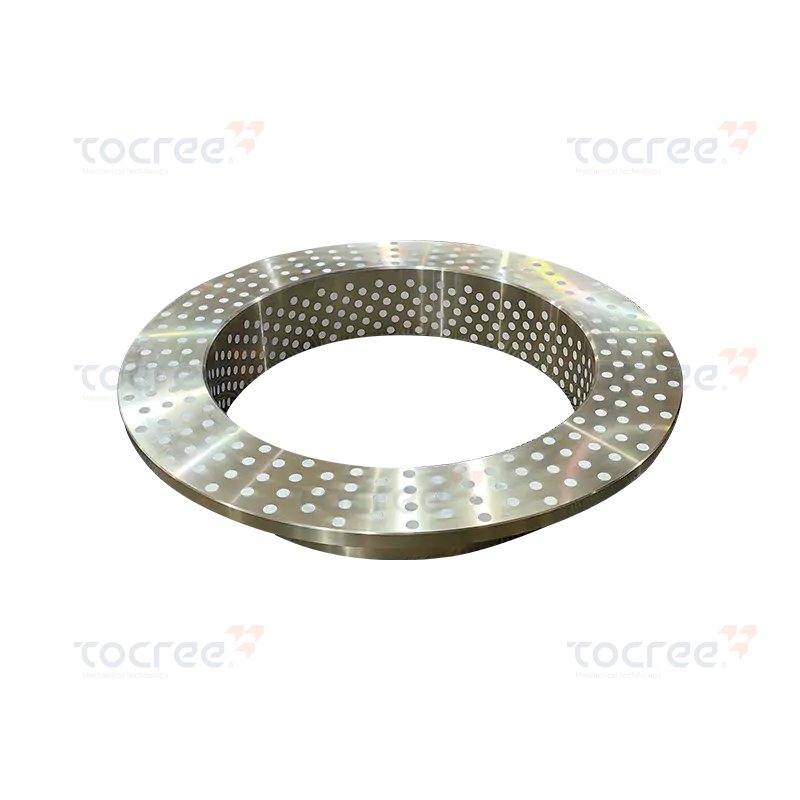
The PTFE single-flange solid self-lubricating copper sleeve is a high-performance mechanical compone...

Single-flange self-lubricating bearing (with graphite embedding) is a high-performance solid self-lu...
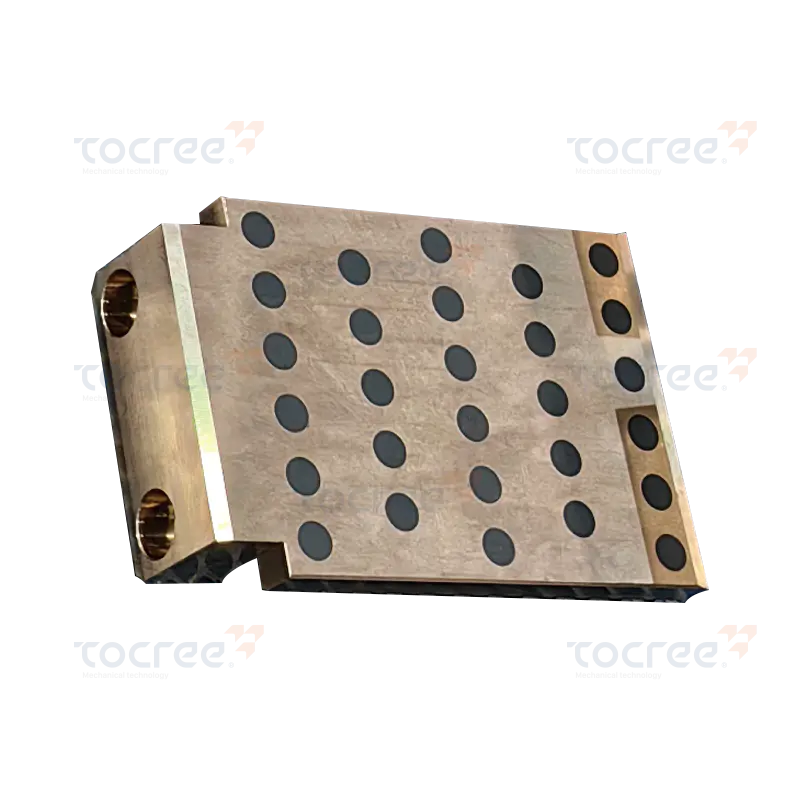
The L-shaped solid self-lubricating slider is made by embedding high-purity graphite solid lubricant...
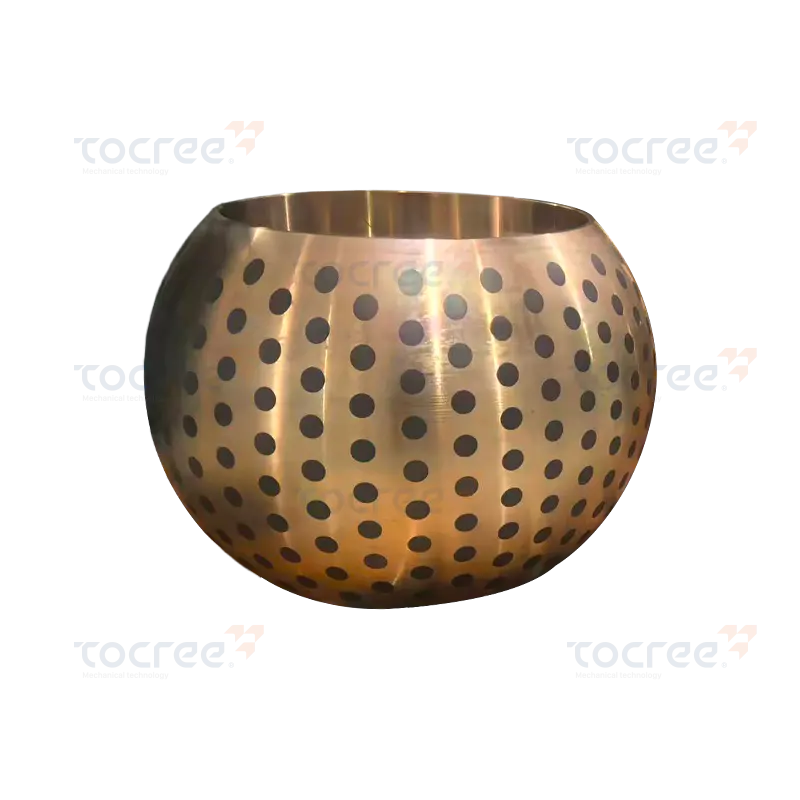
This spherical self-lubricating copper sleeve is made from high-strength high-strength brass as the ...
Copyright © 2025 Jiashan Tocree Machinery Co., Ltd. All Rights Reserved.
Customized Copper Alloys Machinery Parts
