

 English
 中文简体
 Deutsch
 عربى
For any questions and feedback from customers, we will reply patiently and meticulously.
Material structure: Cast aluminum brass CuZn25Al6Fe3Mn3, with graphite insert. Application features:...
A graphite bronze bearing is one of those quiet components that only gets attention when it stops working. It sits inside a press, a caster or a marine winch, carries a load against a shaft, and does it without a grease line. The idea is simple: instead of relying on lubricant that may never arrive, the bearing carries its own in the form of graphite plugs set into a bronze or brass body.
We have been casting and machining copper alloys at Jiashan Tocree Machinery since 2007, and graphite-embedded bushings, sleeves and wear plates are among the parts customers ask about most. This guide covers what these bearings are, how they behave in service, and which details decide whether a design runs for years or fails in months.
The name covers a family of plain bearings rather than one product. A cast bronze or brass body is machined to its final bore, flange or plate shape, then a pattern of graphite columns is set into the working surface. The graphite sits flush with, or slightly proud of, the metal, and covers roughly 20% to 40% of the sliding face depending on load and motion.
The base alloy is chosen for strength and wear resistance. Tin bronze offers good conformability for general bushings, aluminum bronze and harder brasses take higher loads and rougher service, and free-machining brasses help where cost and cycle time matter. The graphite grade counts too — fine, high-purity graphite transfers a film more readily than a coarse filler grade.
Graphite is a layered solid lubricant. As the shaft moves, a thin film is drawn across the metal and fills the asperities that would otherwise rub metal on metal. The film is replenished from the plugs as the bearing runs, which is why it survives long dry spells, intermittent motion and the slow oscillation that never builds a hydrodynamic oil film.
It is not a miracle part. A graphite bronze bearing is still a plain bearing and still needs a sound shaft, sensible clearance and realistic pressure. Where those exist, it removes the maintenance task behind most premature failures: missed lubrication.
A healthy bearing shows a dull, dark sheen on the bore — the transfer film at work. Once it forms, friction stays low and stable, and short periods of higher load or lower speed pass without damage. Because graphite is stable at high temperature and does not evaporate, the same bearing keeps working near furnaces and in hot process equipment where grease would carbonize.
The failure modes are just as predictable. Overload comes first: above the pressure the bronze can carry, the metal smears and the graphite cannot keep up. Speed second: at high sliding velocity the film generates more heat than the surrounding structure can remove. Contamination third: abrasive dust trapped in the clearance acts like lapping compound on bore and shaft, and water or solvents can wash the film away faster than it re-forms.
If a joint has a reliable oil supply, high speed and a well-sealed housing, a conventional bronze bushing with a grease groove may be cheaper and longer-lived. Graphite bearings earn their place where lubrication is difficult, undesirable or simply forgotten: remote equipment, food and pharmaceutical machinery, clean rooms, high-temperature zones and machines that sit idle for months.
Most specification errors come from looking at one number instead of the whole duty. These are the checks we walk through with customers before a drawing is released.
| Factor | What to Check | Why It Matters |
|---|---|---|
| Load | Projected pressure = load ÷ (bore × length) | Keeps the bronze below its safe compressive and wear limit |
| Speed and PV | Sliding velocity, duty cycle, pressure × velocity | Sets heat generation and the quality of the transfer film |
| Temperature | Continuous and peak temperature at the bearing | Graphite tolerates heat, but the bronze and housing grow |
| Environment | Dust, water, steam, chemicals, vacuum, washdown | Decides whether the film survives and which alloy is suitable |
| Shaft | Hardness, roughness, material, surface finish | A smooth, hard shaft supports the film; a rough one wears it away |
| Fit and clearance | Press interference, installed clearance, expansion | Too tight seizes; too loose pounds the bore and loses alignment |
Two deserve a longer conversation. Shaft finish is often overlooked: a ground shaft at Ra 0.4–0.8 µm gives the graphite something to work with, while deep tool marks wear the bore from the first hour. Clearance is the other. A press-fitted bushing closes down slightly, so the bore must be measured in the housing, not on the bench.
Graphite bronze bearings turn up wherever heat, contamination or access makes lubrication painful. In metallurgical machinery they handle furnace-adjacent guides, roll necks and conveyor parts that see radiant heat and scale. In heavy machinery they sit in pivot points, boom joints and linkage bushings that are greased rarely and punished constantly.
Other familiar homes include die-casting machines, marine deck equipment, turbine linkages, packaging and printing lines, agricultural implements and food-processing equipment where a grease line would be a contamination risk. In most of these the bearing is not the most expensive part of the machine, but it is often the reason a maintenance team gets called out at night.
A graphite bronze bearing is only as good as the metal beneath the graphite. We melt and cast our own copper alloys in-house with a melting furnace and centrifugal casting line, producing around 2,300 tonnes a year, so chemistry and density are controlled before a part reaches the machining centre. Bushings, flanged sleeves, thrust plates and long wear plates are then machined, drilled for the graphite pattern, plugged and finished to the specified bore.
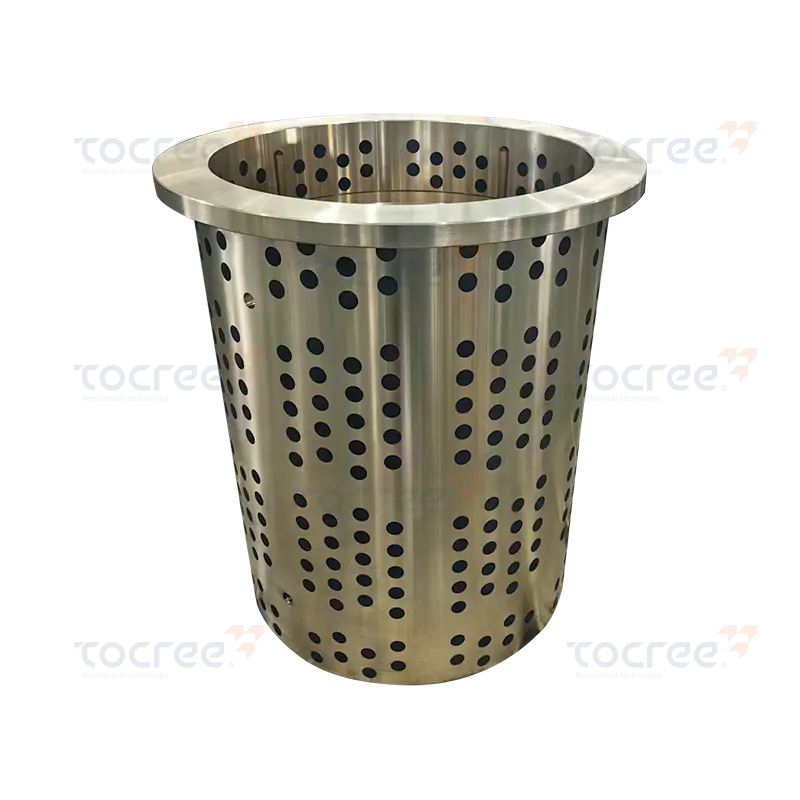 Graphite-Embedded Self-Lubricating Brass Flanged BushingSingle-flange brass bushing with embedded graphite for oil-free lubrication; the preceding casting and finishing steps highlight its controlled plug fit and bore geometry.View Product →
Two details separate a bearing that lasts from one that does not. Plug fit comes first: graphite columns need consistent interference so they neither fall out nor sit loose. Bore geometry after plugging comes second. The graphite must finish flush with, or a hair above, the bronze — proud enough to transfer film, not so proud that it chips during installation.
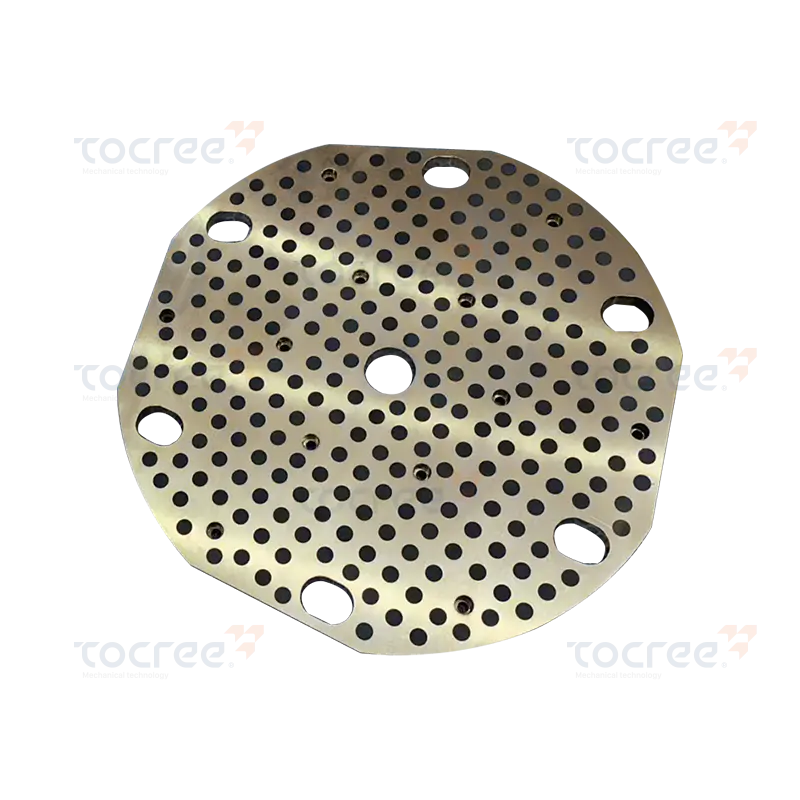 Graphite-Embedded Copper Lubricating Plate for Sliding SurfacesCopper-based wear plate with graphite-filled lubrication holes for flat sliding joints; large formats suit press guides, machine tool ways and other non-round applications.View Product →
The same principle applies to flat sliding surfaces. A graphite-embedded copper lubricating plate suits press guides, machine tool ways and other non-round joints, and large formats are no obstacle — our copper slide plates run to 4 metres long, 400 mm wide and 100 mm thick, with bushings up to 1.5–2 metres in diameter.
A well-made bearing can still be ruined in the first ten minutes. These steps cover most of the risk:
Replacing a greased bushing with a graphite bronze bearing is rarely just a material swap. Load, speed, temperature, shaft hardness, clearance and expected service life all feed into the choice of alloy and graphite pattern, and sharing the application details — even roughly — saves a prototype round.
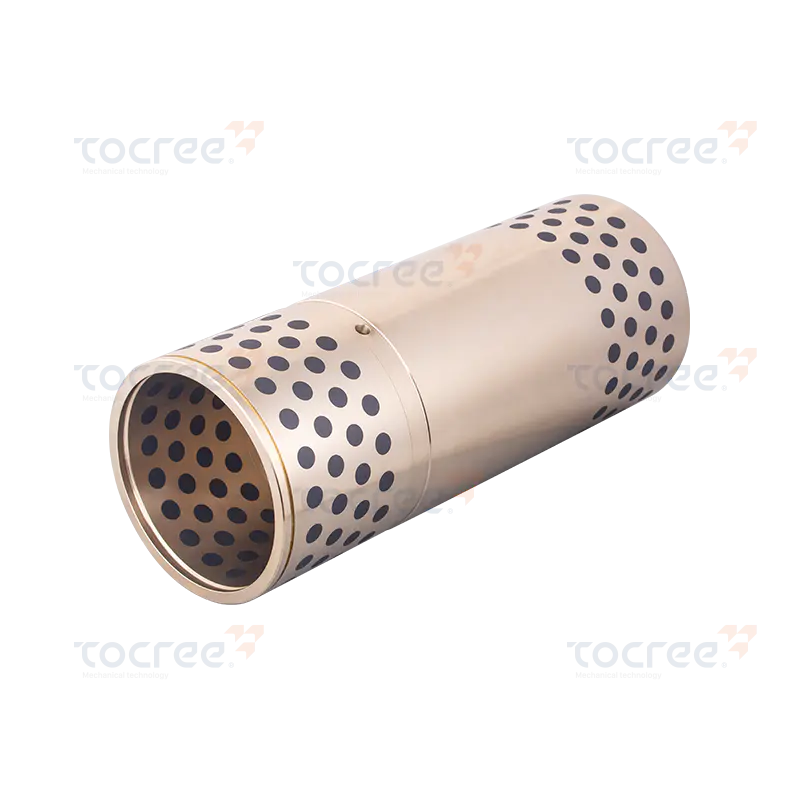 Solid Self-Lubricating Brass Bushing with Embedded GraphiteCast aluminum brass sleeve with graphite inserts for low-speed, high-load duty; useful when application details need matching to alloy and graphite pattern.View Product →
We work from drawings, samples or a plain description of the duty, and non-standard shapes, flanges, grooves and large sizes are routine. If graphite bronze is not the right answer for a particular joint, we will say so — sometimes a grease groove or a PTFE-embedded bushing fits better, and it is cheaper to learn that before the parts are cast.
Material structure: Cast aluminum brass CuZn25Al6Fe3Mn3, with graphite insert. Application features:...
Single-flange self-lubricating bearing (with graphite embedding) is a high-performance solid self-lu...
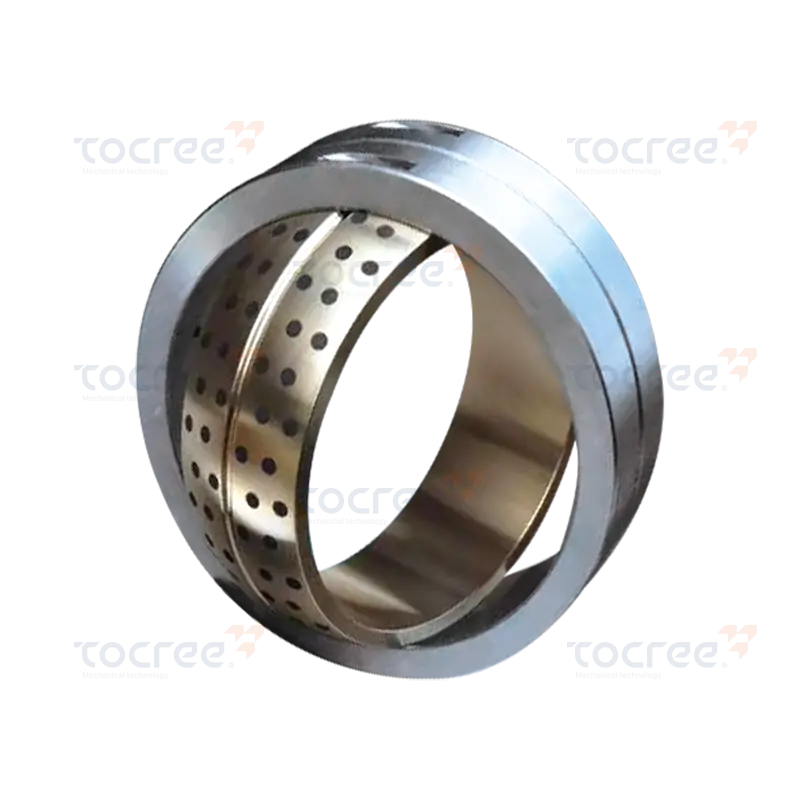
This Bimetal Self-Lubricating Spherical Bearing is engineered for high performance and durability, f...
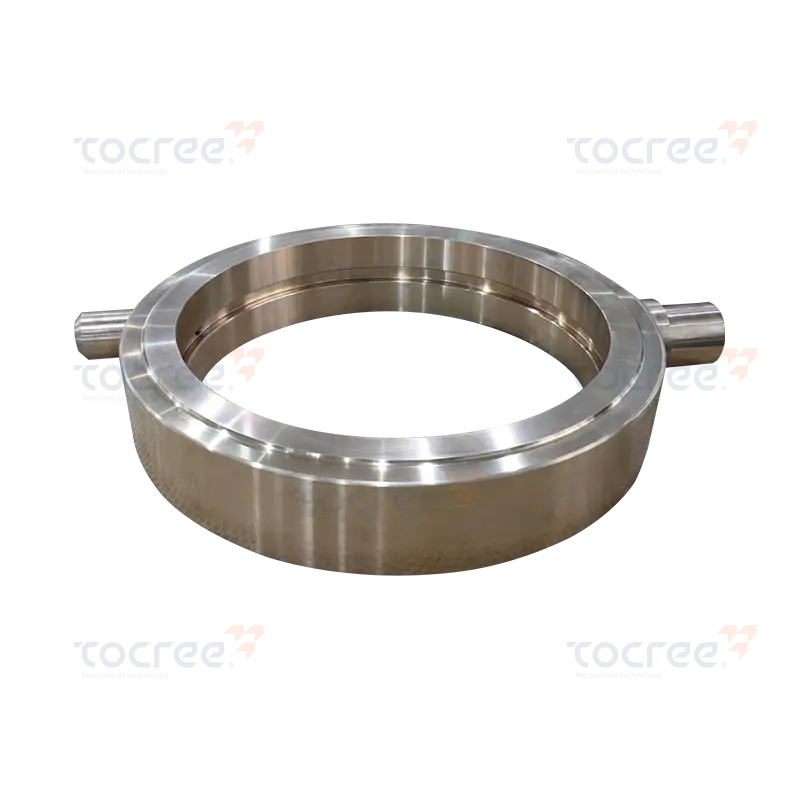
This copper-based oil drain ring is made from high-quality tin bronze through precise processing. It...
The copper-based graphite gasket is made of high-quality copper-zinc alloy as the base material. Its...
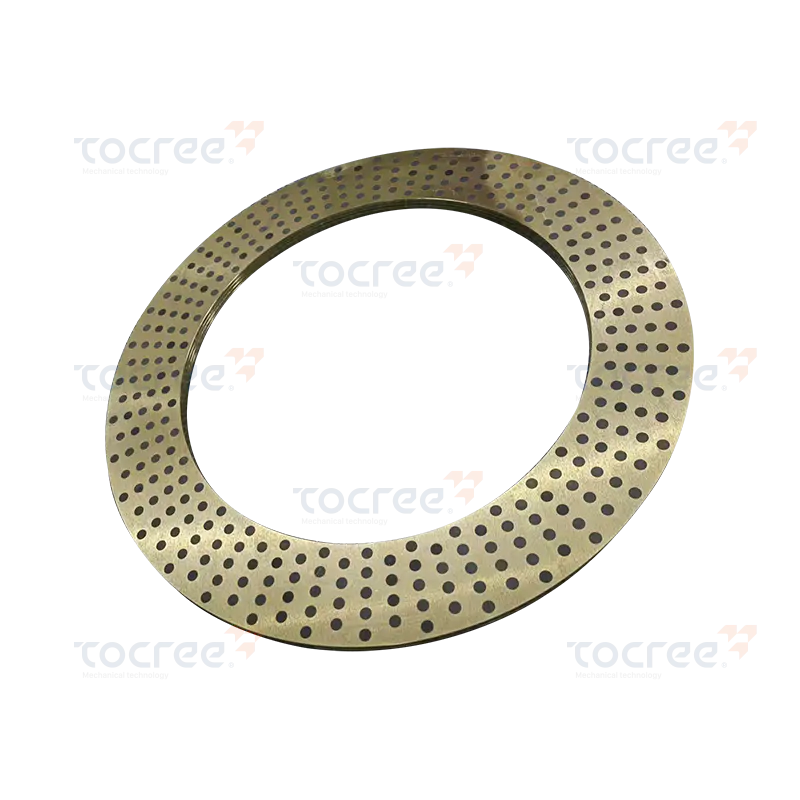
Solid self-lubricating copper rings are high-performance components, made by precision machining wit...
Copyright © 2025 Jiashan Tocree Machinery Co., Ltd. All Rights Reserved.
Customized Copper Alloys Machinery Parts
