

 English
 中文简体
中文简体 Deutsch
 عربى
عربىFor any questions and feedback from customers, we will reply patiently and meticulously.
Material structure: Cast aluminum brass CuZn25Al6Fe3Mn3, with graphite insert. Application features:...
Most sliding bearings do not fail because the load was too high. They fail because the lubricant stopped arriving. A missed grease interval, a plugged line, a machine that stood idle for six months and then started under full load: that is usually where the scoring begins. A copper alloy self-lubricating sliding bearing removes that single point of failure by carrying its lubricant inside the bearing itself, where no one has to remember it.
We are a copper alloy foundry and machining shop, so this question sits in front of us every working day: which alloy, which solid lubricant, which geometry, for which set of working conditions. This article walks through what these bearings are, how the inlay behaves, how to match the material to the duty, and where they earn their keep.
A copper alloy self-lubricating sliding bearing is a plain bearing with two jobs built into one part. The copper alloy, whether tin bronze, aluminum bronze or brass, carries the load, absorbs shock and draws heat away from the sliding face. The solid lubricant, held in pockets or dispersed through the matrix, keeps a low-friction film between the bearing and the shaft. Nothing has to be pumped, topped up or remembered.
Oil-lubricated bearings depend on a hydrodynamic film that only forms once the shaft turns fast enough to drag oil into the wedge. Below that speed the surfaces come into contact. In real equipment that happens far more often than the textbook suggests: at every start-up, every shutdown, every slow indexing stroke, every reversing movement, and every long idle period followed by a sudden full load. Copper alloy self-lubricating sliding bearings are aimed squarely at those moments. Graphite or PTFE transfers onto the counterface within the first few revolutions and holds friction and temperature within bounds until normal running conditions take over.
Graphite-embedded brass bushings are the workhorse of the family. They suit general machine building, and they are forgiving when the fit is a little tight, the shaft is not perfect or the lubrication history is unknown.
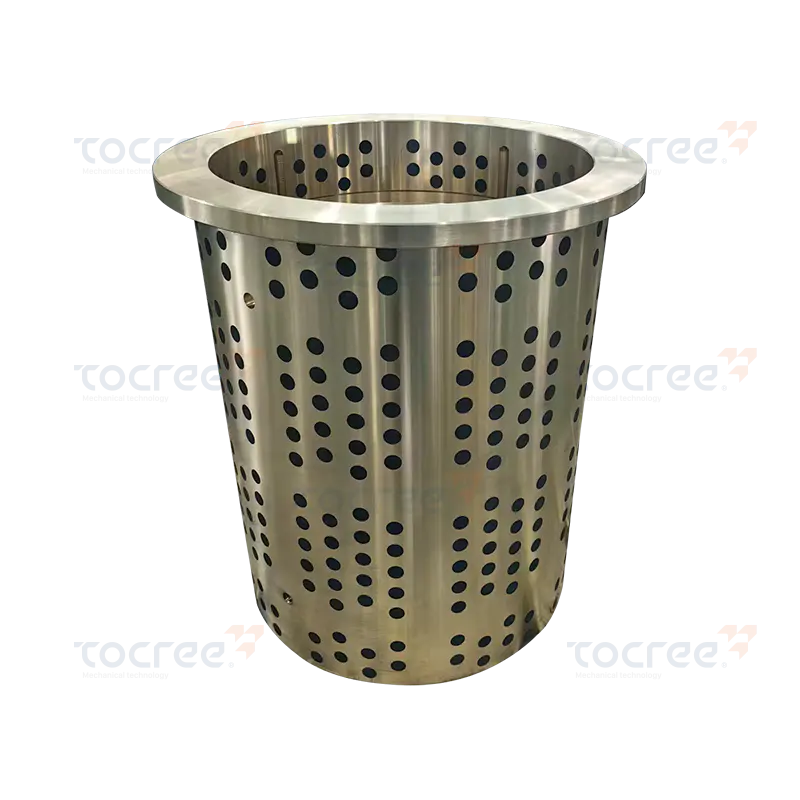 Graphite-Embedded Self-Lubricating Brass BushingSingle-flange self-lubricating bearing (with graphite embedding) is a high-performance solid self-lubricating brass sleeve. It is made of a high-strength copper-zinc a...View Product →
The inlay is not a single material. Graphite, PTFE, graphene and molybdenum disulfide behave very differently, and choosing the wrong one for a hot, wet or dusty environment is one of the most common ways a good bearing decision goes wrong.
| Solid lubricant | Working temperature | Main strengths | Points to watch |
|---|---|---|---|
| Graphite | Up to about 350 °C in air | High temperature tolerance, good under heavy load at low speed, economical | Performs best with some ambient moisture, so it is not the first choice in very dry or vacuum service |
| PTFE | Roughly -200 °C to 260 °C | Very low friction, excellent chemical resistance, clean in medical and food areas | Softer than graphite, with limited load capacity at elevated temperature |
| Graphene | Wide range, still being mapped in long field service | Thin, stable transfer film and good heat spreading | A newer option, so long-term data is thinner and cost is higher |
| Molybdenum disulfide | Up to about 350 °C, best in dry atmospheres | Strong under high load and low speed, effective in vacuum | Humidity and free water work against it |
A useful rule of thumb: graphite for heat and load, PTFE for low friction and chemical exposure, graphene when surface finish and thermal load are demanding, and molybdenum disulfide when the surrounding air is dry or the atmosphere is controlled.
Many projects end up combining options rather than picking one. A PTFE-embedded brass bushing with a single flange, for example, can cover a radial load and an axial shoulder in one part, which saves assembly time and simplifies the housing design.
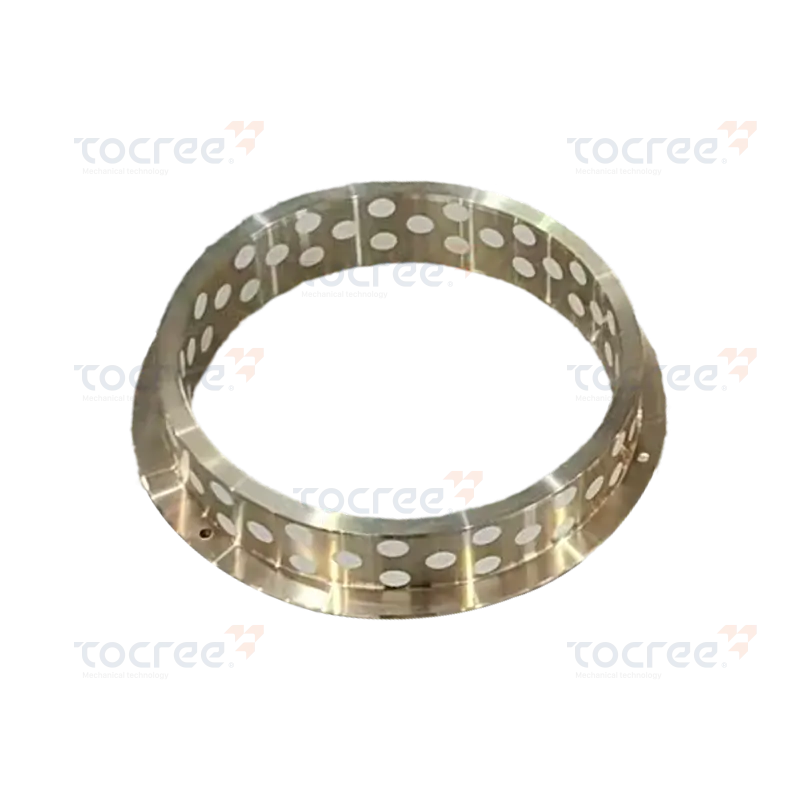 PTFE-Embedded Self-Lubricating Brass Bushing with Single FlangeHigh tensile strength: The tensile strength of this product reaches up to 750N/mm², ensuring excellent mechanical strength and stability even under high load conditions.View Product →
Where the load is cyclic and heavy, lubricant pockets can also be paired with a light grease fill as a belt-and-braces measure. The solid lubricant then covers start-up, shutdown and any period when the grease has been pushed aside, while the grease carries the steady-state duty.
The matrix is not just a carrier for the inlay. It sets the load capacity, the thermal conductivity, the corrosion behaviour and how easily the part can be machined into the shape your drawing needs.
| Matrix | Typical grades | Character | Where it fits |
|---|---|---|---|
| Tin bronze | CuSn8, CuSn12Ni2 | Good conformability, corrosion resistance and moderate strength | General bushings, pump and valve parts, marine and process machinery |
| Aluminum bronze | CuAl9Fe4 | High strength and hardness, strong wear and seawater resistance | Heavy-load bushings, sliders and nuts in mining, marine and metallurgical equipment |
| Tin or leaded brass | HB210 to HB270 range | Excellent machinability and good thermal conductivity | Complex machined shapes, sliders, flanged and threaded bushings at moderate load |
| Steel-backed bimetal | Steel backing with a bronze layer | High load capacity in a thin wall, strong and dimensionally stable | Large diameters, tight installation envelopes, spherical and flanged designs |
For large diameters or thin radial walls, bimetal construction is often the practical answer. The steel backing carries the hoop stress and the bronze layer provides the running surface, so a thin-walled part can still handle a serious load.
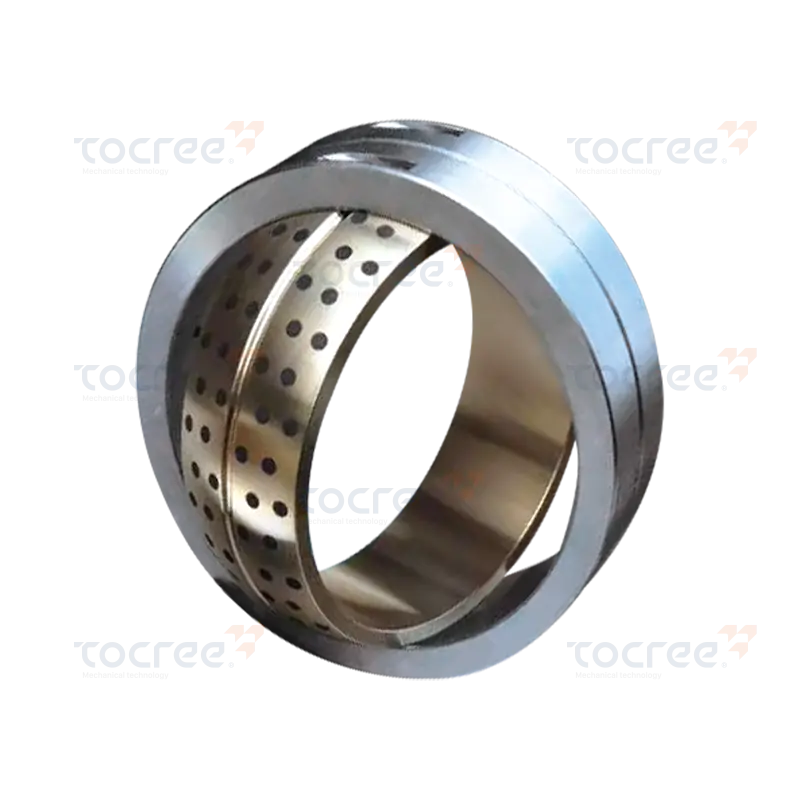 Bimetal Self-Lubricating Spherical BearingThis Bimetal Self-Lubricating Spherical Bearing is engineered for high performance and durability, featuring a unique combination of materials and advanced manufacturi...View Product →
Bimetal self-lubricating spherical bearings take that idea one step further by adding a spherical seat. The bearing absorbs a degree of shaft misalignment and deflection that a rigid cylindrical bushing would simply transfer into edge loading, which is a common cause of premature wear in long shafts and welded frames.
When a customer sends a drawing, the questions below usually settle the material and the inlay within a few minutes of conversation.
If the answers come back as slow, hot, dusty and hard to reach, a graphite-embedded bronze bushing is normally the starting point. If they come back as fast, clean and lightly loaded, a thin PTFE-lined brass bushing will be cheaper, thinner and entirely sufficient. If they come back as very large, heavily loaded and short of space, bimetal construction earns its place.
The industries we supply share one trait: their bearings sit inside structures, are awkward to reach, and are expensive to stop a plant for.
Heavy machinery is a good illustration. Cranes, excavators, press frames and transfer equipment use large bushings and slide plates buried inside the structure, and nobody inspects them weekly. A self-lubricating copper alloy part keeps those joints working between planned shutdowns, and manufacturing capability matters here as much as material choice, because a worn bushing of one and a half metres is not a part anyone wants to wait three months for.
Medical and packaging equipment is the other end of the scale. There the bearing is small, the motion is quiet, and the requirement is usually cleanliness rather than load. A PTFE inlay that needs no oil film is often the deciding factor when contamination is unacceptable.
Because we melt and cast our own copper alloys rather than buying billets, the matrix is not limited to whatever a distributor happens to stock. That flexibility helps when a drawing calls for a grade that sits outside the common catalogue.
The size range is worth stating plainly, because it decides who can actually quote a job. Copper sleeves can be produced up to roughly one and a half to two metres in diameter, and copper slide plates up to four metres long, four hundred millimetres wide and one hundred millimetres thick, with an annual copper material output in the region of two thousand three hundred tonnes. Non-standard shapes, including sliders, nuts, worm wheels and rings, are part of the same daily work.
Even a well-chosen bearing can be ruined in the first ten minutes of fitting, so a few habits are worth repeating.
If you would like to go deeper before choosing, our guide to copper alloy self-lubricating sliding bearing types, selection and applications covers the material families, inlay options and application notes in more detail.
Copper alloy self-lubricating sliding bearings are not a universal answer, and we would not present them as one. They are the right answer when the joint is slow, heavy, hot, dirty, or simply too hard to reach with a grease gun, and where the cost of an unplanned stop is far higher than the cost of the part. Where a fully hydrodynamic oil-lubricated bearing can be serviced properly and cheaply, that remains a sound choice.
The practical next step is small: send us the drawing along with the load, the sliding speed, the working temperature and a description of the environment. From those few numbers we can usually suggest an alloy, a lubricant and a geometry that will hold up, and quote the part in the same conversation.
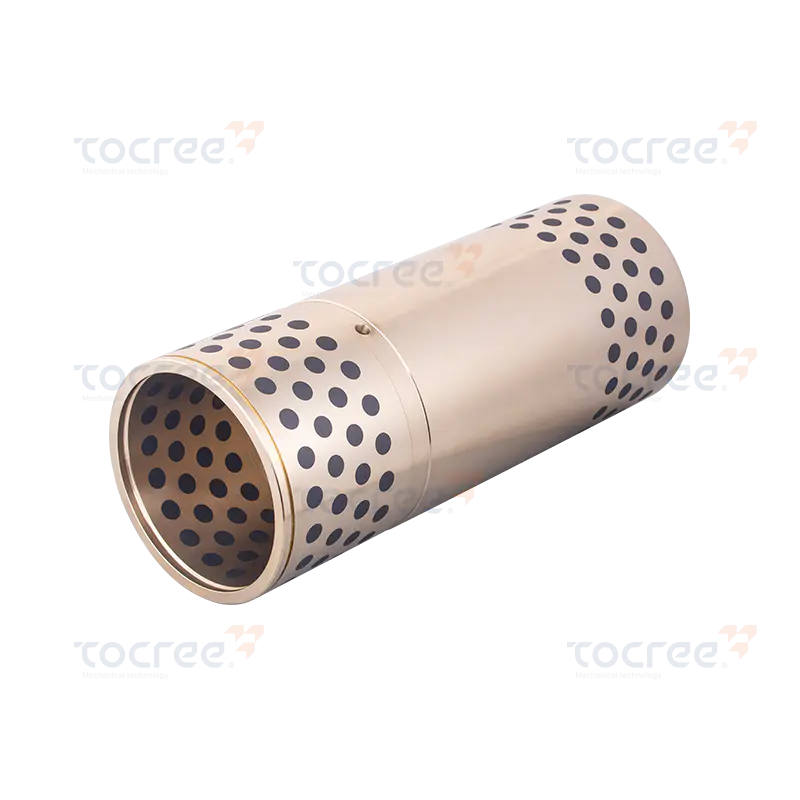
Material structure: Cast aluminum brass CuZn25Al6Fe3Mn3, with graphite insert. Application features:...
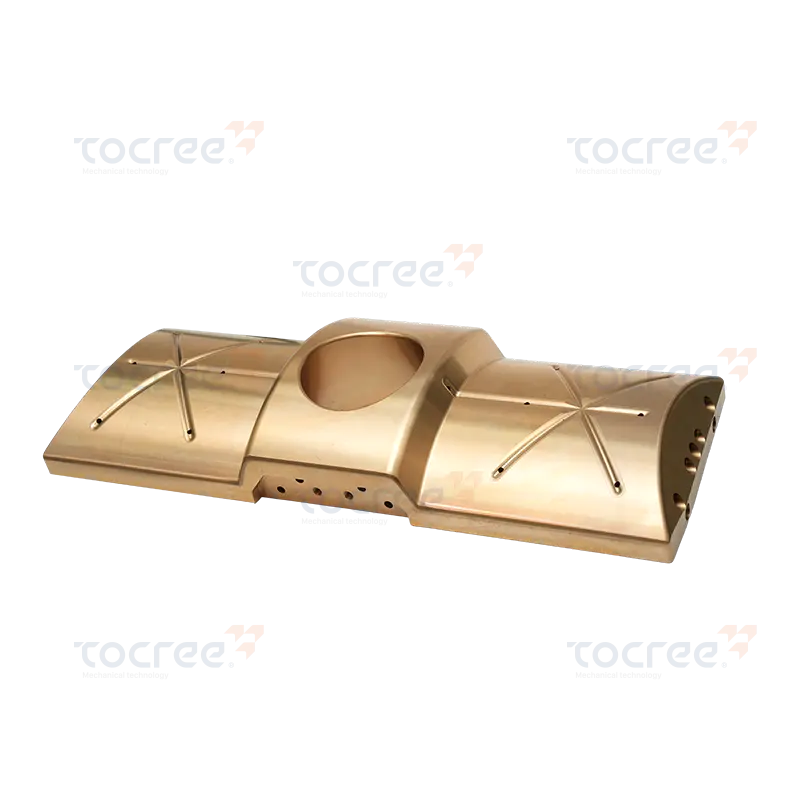
The Copper alloy curved slider is made of high-performance tin bronze as the base material and is ca...
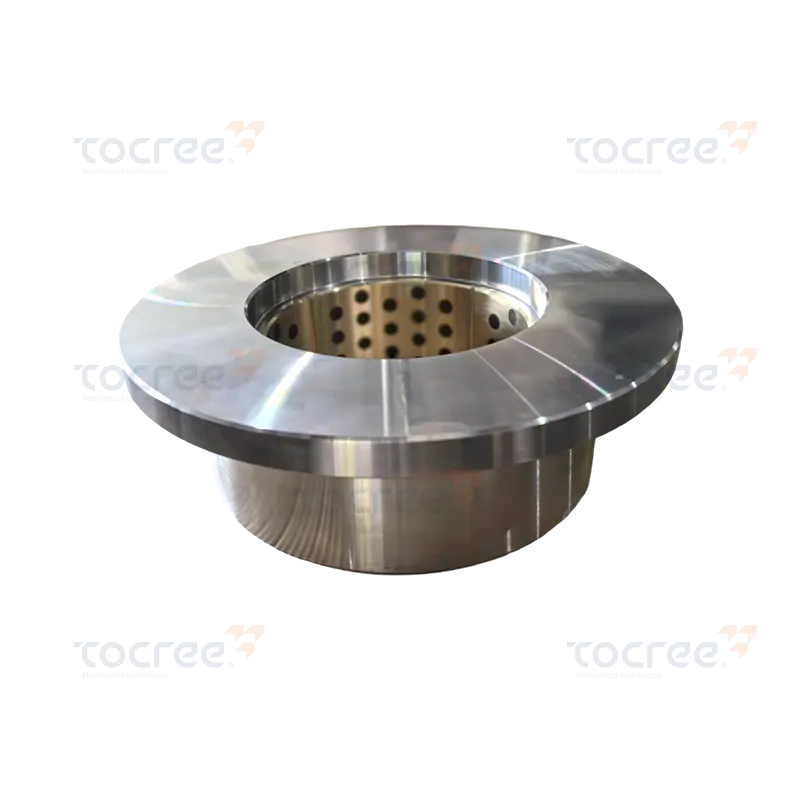
The Bronze-Steel Flanged Bushing combines the benefits of SCM435 alloy steel and high-strength brass...
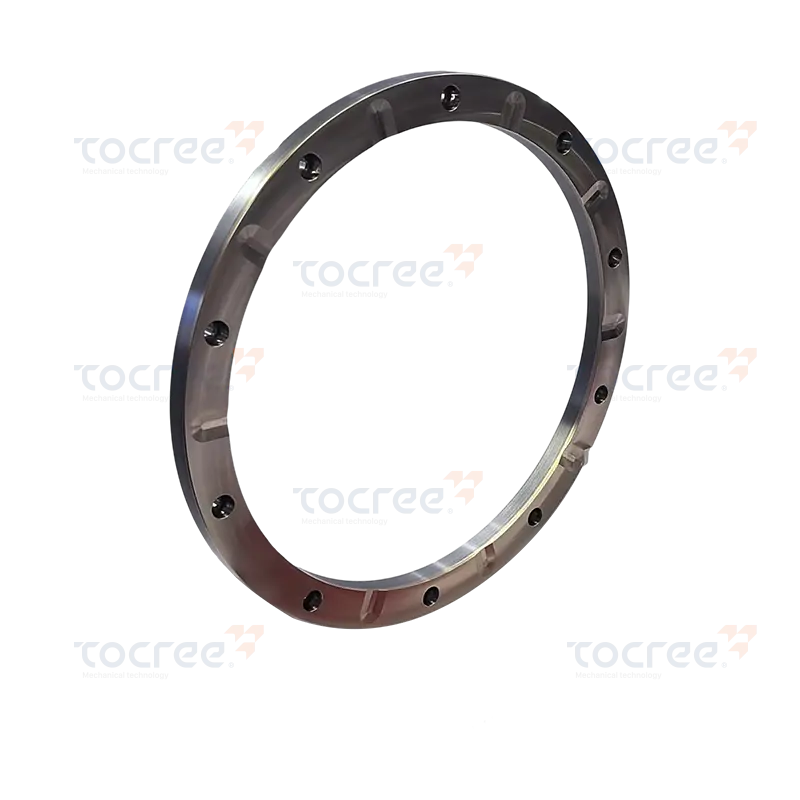
The Copper-Steel Bimetal Thrust Plate is a high-performance component designed for demanding mechani...
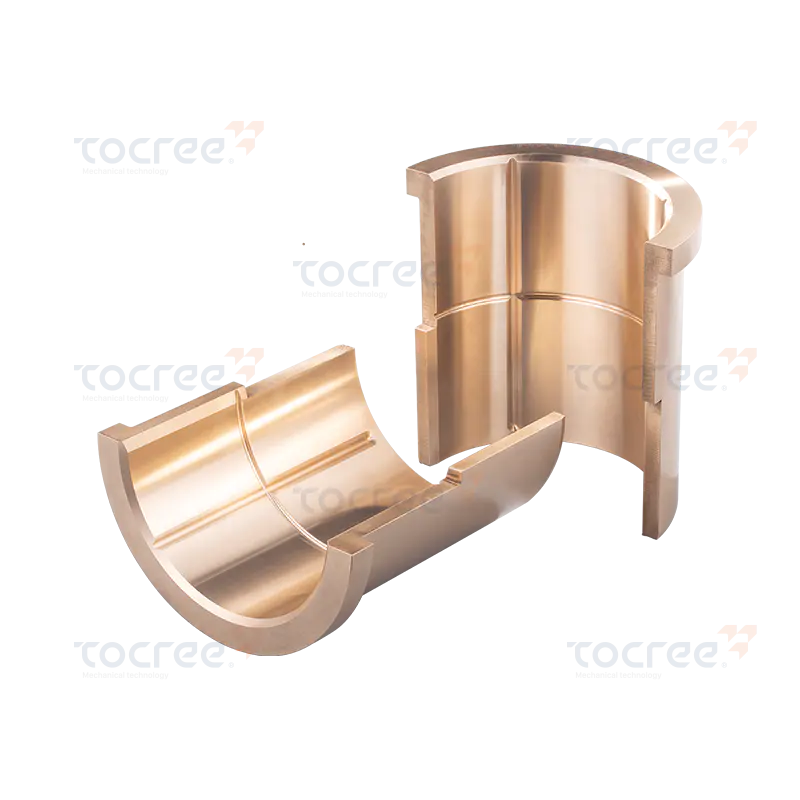
This copper bushing is precisely manufactured from high-quality tin bronze as the base material. It ...
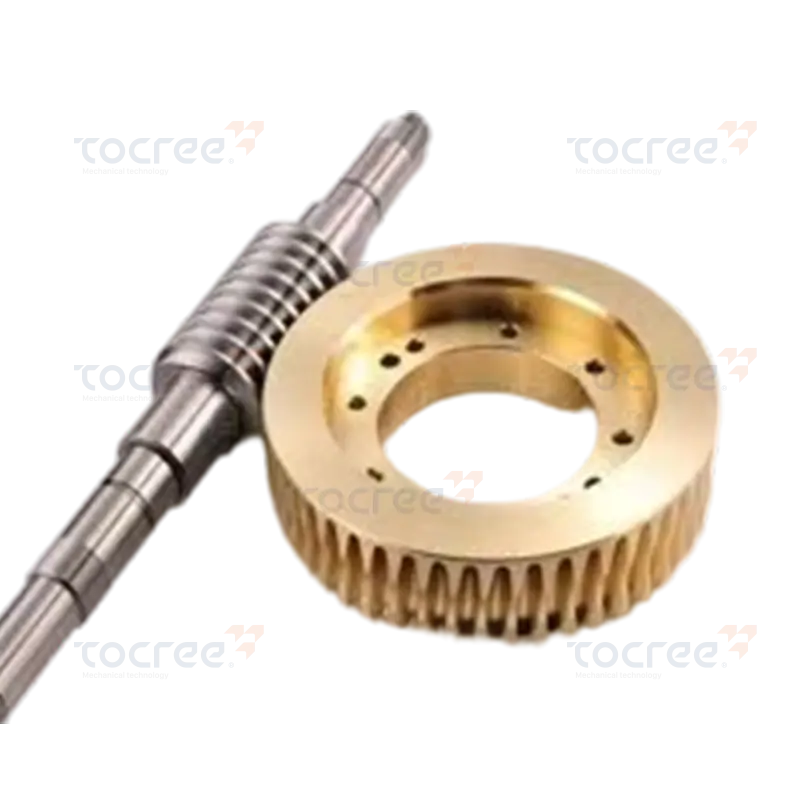
Copper alloy turbines are indispensable components in modern mechanical and energy systems. The matc...
Copyright © 2025 Jiashan Tocree Machinery Co., Ltd. All Rights Reserved.
Customized Copper Alloys Machinery Parts
