

 English
 中文简体
中文简体 Deutsch
 عربى
عربىFor any questions and feedback from customers, we will reply patiently and meticulously.
Material structure: Cast aluminum brass CuZn25Al6Fe3Mn3, with graphite insert. Application features:...
A copper alloy self-lubricating sliding bearing is a plain bearing manufactured from a copper-based alloy — most commonly bronze or brass — that is embedded with solid lubricant plugs, graphite inserts, or oil-impregnated porous structures that supply lubrication continuously during operation without any external grease or oil input. Unlike conventional plain bearings that depend on a pressurized oil film or periodic manual greasing to prevent metal-to-metal contact between the bearing bore and the shaft, a self-lubricating copper alloy bearing releases its built-in lubricant onto the sliding interface as the shaft rotates, forming a thin, persistent lubricating film that reduces friction, controls wear, and prevents seizure throughout the bearing's service life.
The copper alloy matrix provides the structural strength, thermal conductivity, and load-carrying capacity needed to support the shaft under static and dynamic loads, while the embedded lubricant — typically graphite, PTFE, molybdenum disulfide (MoS₂), or oil — handles the tribological function of reducing friction at the contact interface. This combination gives copper alloy self-lubricating plain bearings a performance envelope that conventional oil-lubricated bronze bushings cannot match in applications where external lubrication is impossible, impractical, or undesirable.
These bearings are widely used in construction equipment, agricultural machinery, steel plant equipment, injection molding machines, hydraulic systems, food processing machinery, and marine hardware — anywhere that maintenance access is difficult, contamination of external lubricants is a concern, or operating conditions such as high temperature, heavy load, slow speed, or oscillating motion make hydrodynamic oil film lubrication unreliable. Understanding the materials, construction types, performance characteristics, and selection criteria of copper alloy self-lubricating bushings is essential for engineers specifying bearings for demanding applications.
The choice of copper alloy for the bearing matrix significantly affects load capacity, hardness, corrosion resistance, machinability, and compatibility with the lubricant system. Several copper-based alloys are used in self-lubricating sliding bearing manufacture, each with distinct characteristics suited to specific operating conditions.
Tin bronze — typically containing 8–12% tin with small additions of phosphorus (0.1–0.4%) as a deoxidizer and strength enhancer — is the most widely used copper alloy for self-lubricating bearing manufacture. Alloys such as CuSn10 (C90700), CuSn12 (C90900), and CuSn8P provide excellent compressive strength (250–350 MPa), good hardness (75–90 HB), high corrosion resistance in water and mild chemical environments, and outstanding compatibility with graphite and PTFE lubricant inserts. Phosphor bronze self-lubricating bushings are the standard choice for construction machinery pin joints, hydraulic cylinder trunnions, and general industrial pivots operating under moderate-to-heavy loads at low-to-medium sliding speeds.
Aluminum bronze alloys (CuAl10Fe3, CuAl10Ni5Fe4 — C95400, C95500) contain 8–11% aluminum with iron and nickel additions that refine the microstructure and improve mechanical properties. Aluminum bronze self-lubricating bearings deliver significantly higher strength (450–700 MPa tensile strength) and hardness (150–200 HB) than tin bronze, along with excellent corrosion resistance in seawater, acidic environments, and high-temperature service up to 300°C. These properties make aluminum bronze self-lubricating sliding bearings the preferred choice for heavy-duty applications such as steel mill equipment, large excavator pin joints, ship rudder bearings, and high-load press tooling where phosphor bronze would deform under the applied contact pressure.
Lead bronze alloys (CuPb10Sn10, CuPb15Sn8) incorporate lead as a distributed soft phase within the bronze matrix. The lead phase acts as an in-situ solid lubricant at the sliding surface, improving the bearing's conformability and embeddability — its ability to accommodate small shaft misalignments and embed hard contaminant particles without scoring the shaft. Lead bronze self-lubricating bearings have historically been used in automotive engine main bearings, connecting rod bearings, and gearbox bushings. However, environmental regulations restricting lead content in machinery components have driven a gradual transition toward lead-free alternatives in new designs, with bismuth bronze and tin-zinc bronze emerging as lead-free substitutes with comparable tribological performance.
Manganese bronze (CuZn38Mn1Al) and nickel aluminum bronze (CuAl10Ni5Fe4) are used in demanding marine and offshore applications where extreme corrosion resistance combined with high load capacity is needed — ship propeller shaft bearings, offshore drilling equipment, and subsea valve actuators. These alloys offer tensile strengths above 600 MPa and resist both seawater corrosion and cavitation erosion. When combined with graphite plug lubrication, they form highly durable self-lubricating sliding bearings capable of extended service in immersed or splash-zone environments where external lubrication is completely impractical.
The self-lubricating function in copper alloy plain bearings is delivered through several distinct lubricant integration methods. Each approach has different performance characteristics, temperature limits, and suitability for specific operating environments.
The most common construction for heavy-duty copper alloy self-lubricating bearings involves drilling a pattern of holes — typically 6–30 mm diameter depending on bearing size — into the bore surface of a cast or machined bronze bushing, then pressing solid graphite plugs into these holes. As the shaft rotates against the bearing bore, the graphite plugs smear a thin film of graphite onto both the bearing bore and the shaft surface, creating a persistent solid lubricant layer. Graphite has a layered crystal structure that shears easily under sliding contact, providing friction coefficients of 0.05–0.15 under dry conditions. Graphite-plug bronze bearings operate reliably at temperatures up to 400°C in oxidizing atmospheres (and higher in inert or reducing atmospheres), making them suitable for high-temperature applications such as furnace conveyor systems, hot press platens, and steel plant equipment that would destroy oil or grease lubricants.
Polytetrafluoroethylene (PTFE) plugs or PTFE-graphite composite inserts pressed into drilled bronze matrices combine PTFE's extremely low coefficient of friction (as low as 0.04 under sliding conditions) with the structural strength of the bronze matrix. PTFE transfer film formation on the counterface shaft creates a durable, chemically inert lubricating layer. PTFE-filled copper alloy self-lubricating bushings are preferred in food processing, pharmaceutical, and clean-room applications where contamination from oil or graphite is unacceptable, and in applications with oscillating or slow continuous motion where PTFE's transfer film performance is most effective. The temperature limit for PTFE-based lubricants is approximately 260°C continuous service.
Sintered porous bronze bearings — manufactured by compacting and sintering bronze powder to produce a controlled porosity of 20–30% by volume — are vacuum-impregnated with lubricating oil after sintering. The oil is retained within the porous structure and released to the sliding surface by thermal expansion and capillary action as the bearing warms up during operation, then reabsorbed when the bearing cools. Oil-impregnated sintered bronze self-lubricating bearings are suitable for moderate load and speed applications where the operating conditions allow the oil to cycle effectively — electric motors, small appliances, office equipment, and agricultural machinery bearings. Their load capacity is lower than solid cast bronze bearings with plug inserts, but they provide genuinely maintenance-free lubrication across their service life in appropriate applications.
Molybdenum disulfide (MoS₂) is incorporated into copper alloy self-lubricating bearings either as plugs, as a constituent of composite insert materials, or as a surface coating applied to the bearing bore. MoS₂ has excellent lubricating properties in vacuum and inert atmosphere environments where graphite's effectiveness (which depends partly on adsorbed water vapor) is reduced — making MoS₂-containing bronze self-lubricating bearings a preferred choice for aerospace mechanisms, vacuum furnace equipment, and space applications. High-performance composite insert materials combining graphite, MoS₂, PTFE, and metallic binders are used in the most demanding applications, offering low friction across a wide temperature range and under boundary lubrication conditions that would challenge any single-component lubricant system.
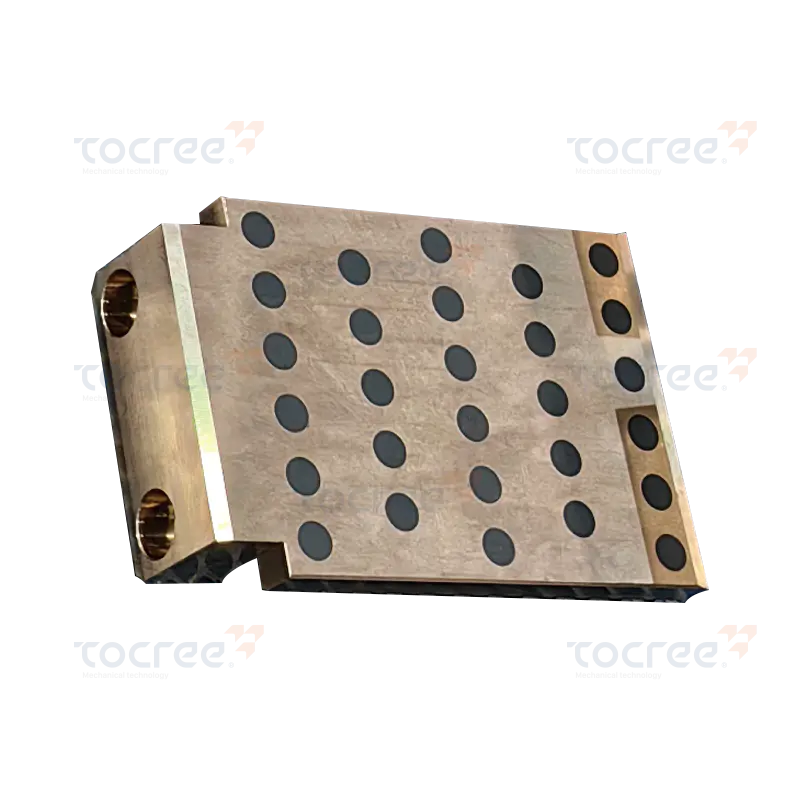
Selecting the right combination of bronze alloy and lubricant system requires matching the bearing's performance characteristics to the application's demands. The table below provides a comparative overview of the most common copper alloy self-lubricating plain bearing types:
| Bearing Type | Max Load (MPa) | Max Temp (°C) | Friction Coeff. | Best Application |
| Tin Bronze + Graphite Plugs | 60–80 | 400 | 0.05–0.15 | General industrial, construction equipment |
| Aluminum Bronze + Graphite Plugs | 100–150 | 300 | 0.06–0.18 | Heavy machinery, steel plants, marine |
| Tin Bronze + PTFE Inserts | 40–60 | 260 | 0.03–0.10 | Food processing, pharma, clean environments |
| Sintered Bronze + Oil Impregnated | 15–25 | 120 | 0.05–0.12 | Electric motors, small appliances, light duty |
| Aluminum Bronze + MoS₂ Composite | 80–120 | 350 | 0.04–0.12 | Aerospace, vacuum, inert atmosphere applications |
| Manganese Bronze + Graphite Plugs | 80–100 | 250 | 0.06–0.15 | Marine, offshore, seawater-immersed applications |
The adoption of copper alloy self-lubricating plain bearings over conventional grease-lubricated or oil-lubricated bronze bushings is driven by specific operational and economic advantages that accumulate over the service life of the equipment.
Specifying the correct copper alloy self-lubricating sliding bearing for an application requires evaluating a set of interrelated parameters. Working through these selection criteria systematically ensures the chosen bearing meets both the mechanical and tribological demands of the application.
The most fundamental parameter in self-lubricating plain bearing selection is the PV value — the product of the bearing contact pressure P (in MPa) and the sliding velocity V (in m/s). PV is a measure of the heat generation rate at the sliding interface; exceeding the bearing's rated PV limit causes the lubricant system to overheat, the transfer film to break down, and the bearing to fail by seizure or accelerated wear. Every copper alloy self-lubricating bearing type has a maximum PV rating — graphite-plug tin bronze bearings typically handle PV up to 0.5–1.0 MPa·m/s under dry conditions, while aluminum bronze with graphite composite inserts may tolerate PV values above 2.0 MPa·m/s. Calculate P from the applied load divided by the projected bearing area (bore diameter × length), and V from the shaft surface velocity. Verify that the operating PV is below 60–70% of the rated maximum to provide a safety margin for load spikes and startup conditions.
Confirm that both the copper alloy matrix and the solid lubricant system are rated for the full temperature range in the application — including peak temperatures during startup, high-load transients, and any cleaning or sterilization cycles (in food or pharma equipment). Graphite-plug bronze bearings are the right choice above 200°C; PTFE-insert designs are preferred below 200°C where the lowest friction coefficient is needed. At sub-zero temperatures, confirm that the lubricant material remains functional — graphite and PTFE both perform well at low temperatures, while some oil-impregnated sintered bronze bearings can experience oil viscosity changes that affect lubrication delivery in cold environments.
The counterface shaft material and surface finish directly affect the performance and longevity of a copper alloy self-lubricating bearing. The optimal shaft surface roughness for graphite-plug and PTFE-insert bronze bearings is Ra 0.4–0.8 µm — smooth enough to avoid abrading the solid lubricant plugs but not so smooth that the transfer film cannot adhere. Shaft hardness should be at least 35 HRC for heavily loaded applications to prevent the shaft from being scored by the harder bronze matrix if the lubricant film is temporarily insufficient. Induction-hardened, hard chrome-plated, or nitrided steel shafts are commonly paired with copper alloy self-lubricating bushings in demanding applications. Stainless steel shafts are compatible with graphite-plug bronze bearings but should be assessed carefully with PTFE-insert designs, as PTFE transfer film adhesion can be lower on stainless steel than on carbon steel.
Copper alloy self-lubricating bushings are typically installed in housings with an interference fit — H7/p6 or H7/r6 depending on bearing wall thickness and housing material — to prevent rotation of the bushing in the housing during operation. The interference fit also ensures good thermal contact between the bearing OD and the housing, which is important for heat dissipation in high-PV applications. Bushings must be pressed in squarely and to the correct depth using a press tool that loads the OD uniformly — never drive the bushing in with a hammer on the bore end, as this can deform the bore and damage the solid lubricant inserts. After installation, verify the bore diameter with a calibrated bore gauge; the bore may close slightly due to the installation interference, and the final bore diameter must be within the specified tolerance for the shaft running clearance.
Copper alloy self-lubricating sliding bearings serve a remarkably wide range of industries, precisely because their maintenance-free, contamination-resistant, and high-temperature-capable performance solves real problems that conventional lubricated bearings cannot address. Here are the primary application sectors and what makes self-lubricating bronze bearings the right choice in each:
One of the primary selling points of copper alloy self-lubricating plain bearings is extended, low-maintenance service life compared to conventionally lubricated bronze bushings. However, "maintenance-free" does not mean "inspection-free," and understanding realistic service life expectations and the factors that affect them helps maintenance engineers plan bearing replacement programs effectively.
In well-specified applications operating within the bearing's rated PV envelope, graphite-plug bronze self-lubricating bearings routinely achieve service lives of 5,000–20,000 operating hours before bore wear reaches the maximum permissible clearance. In high-temperature applications such as furnace equipment, where conventional bearings would fail within days, graphite-plug aluminum bronze bearings can deliver years of continuous service. The service life of oil-impregnated sintered bronze bearings is typically shorter — 2,000–8,000 hours depending on load and speed — because the oil reservoir is finite and cannot be replenished once exhausted.
Regular inspection at planned maintenance intervals should include measuring the shaft-to-bearing running clearance (typically checked by measuring the shaft diameter and the bearing bore diameter separately with calibrated gauges), inspecting the bore surface for scoring, checking the solid lubricant plugs for depletion or cracking, and examining the housing bore for fretting or damage. Replace the bearing when the running clearance exceeds 0.5–1.0% of the nominal bore diameter for most applications, or when visible plug depletion leaves more than 20% of the plug area below the bore surface level. Replacing bearings on a condition-based rather than time-based schedule maximizes bearing utilization while preventing unexpected failures from worn-out bearings.
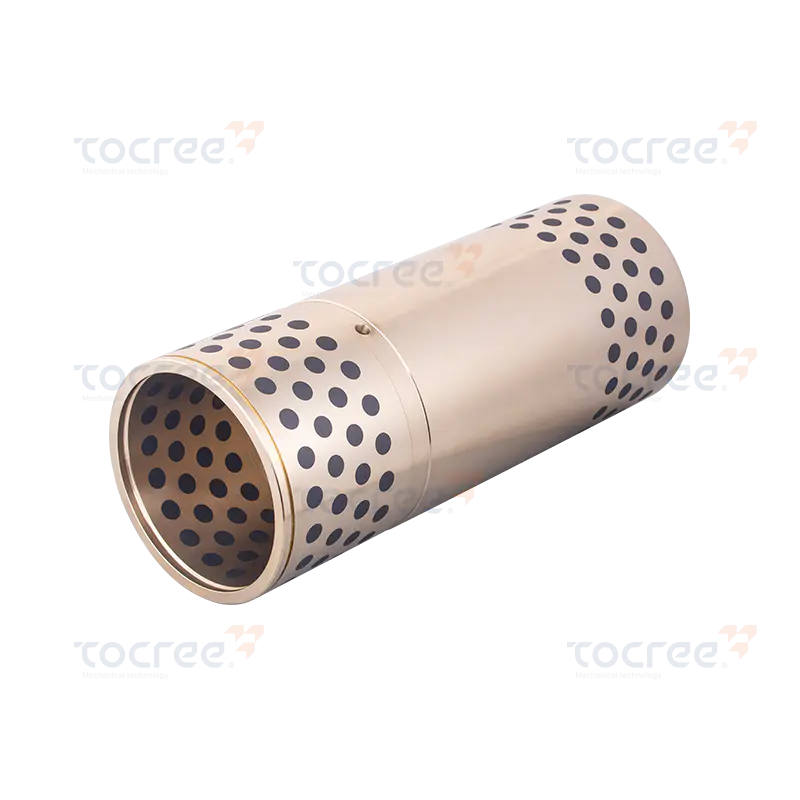
Material structure: Cast aluminum brass CuZn25Al6Fe3Mn3, with graphite insert. Application features:...
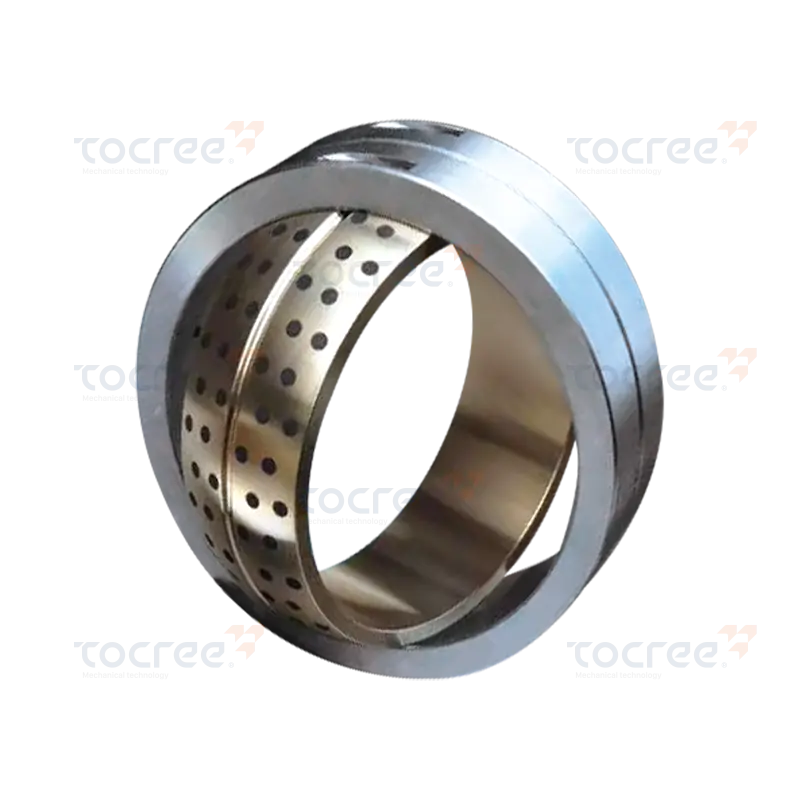
This Bimetal Self-Lubricating Spherical Bearing is engineered for high performance and durability, f...
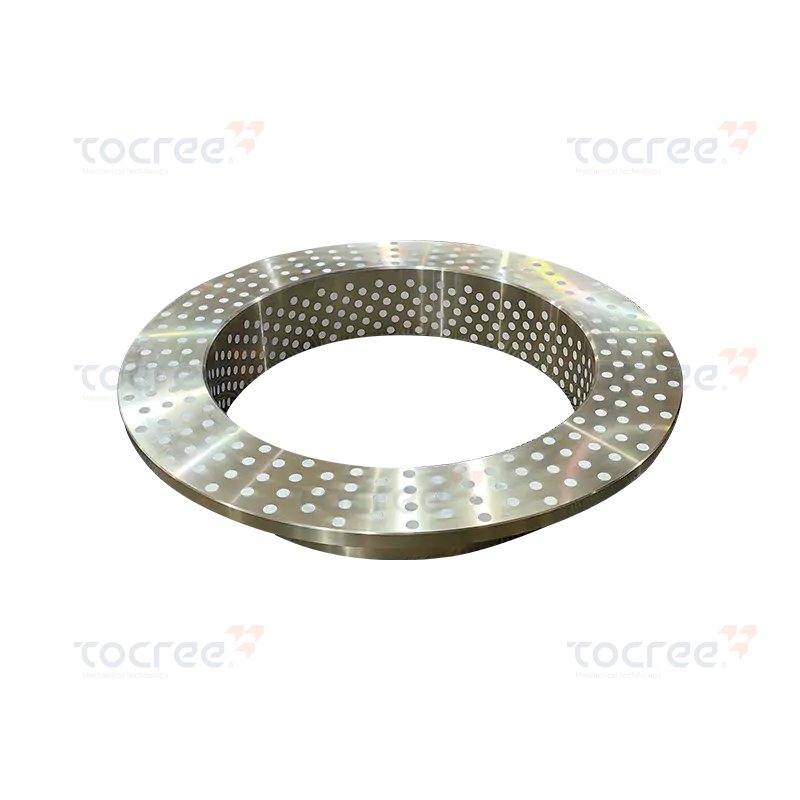
The PTFE single-flange solid self-lubricating copper sleeve is a high-performance mechanical compone...

The L-shaped solid self-lubricating slider is made by embedding high-purity graphite solid lubricant...
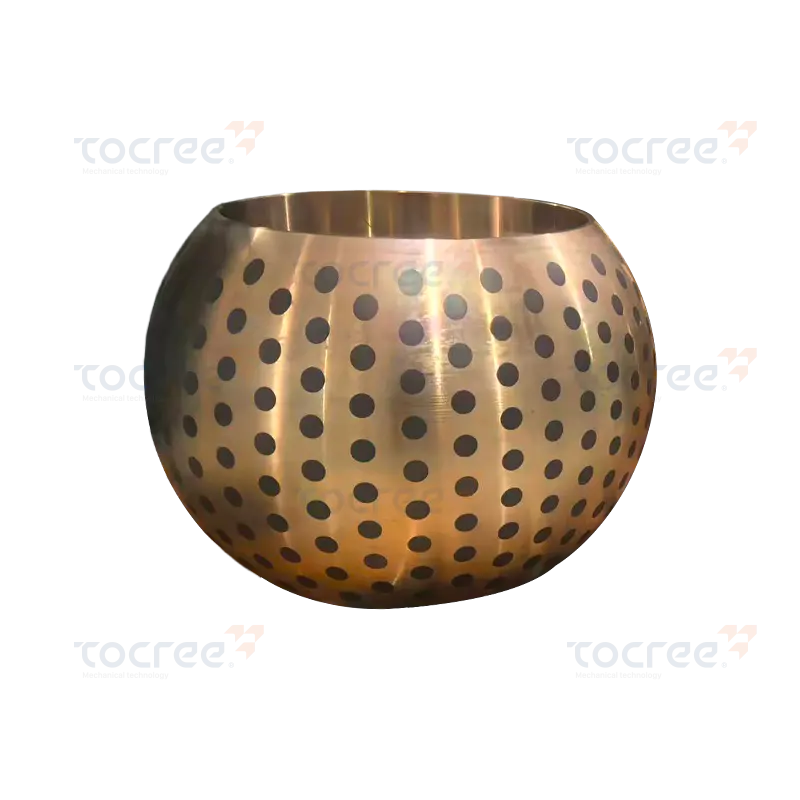
This spherical self-lubricating copper sleeve is made from high-strength high-strength brass as the ...
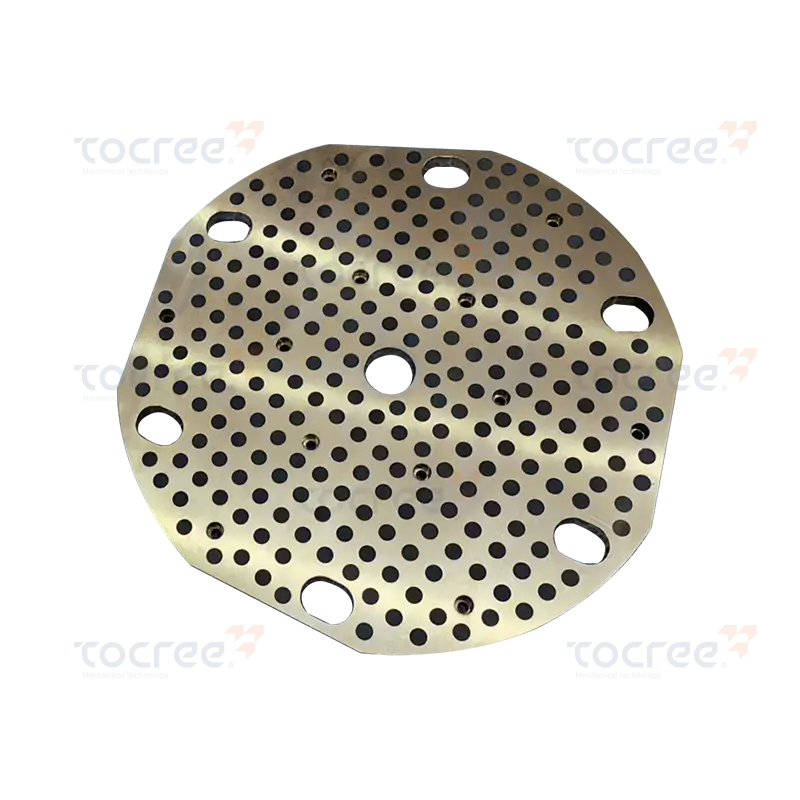
The copper-based graphite gasket is made of high-quality copper-zinc alloy as the base material. Its...
Copyright © 2025 Jiashan Tocree Machinery Co., Ltd. All Rights Reserved.
Customized Copper Alloys Machinery Parts
