

 English
 中文简体
中文简体 Deutsch
 عربى
عربىFor any questions and feedback from customers, we will reply patiently and meticulously.
What Is a Tin Bronze Slider, and Why Does It Last So Long Under Heavy Loads?
What Is a Tin Bronze Slider and Why It's So Widely Used
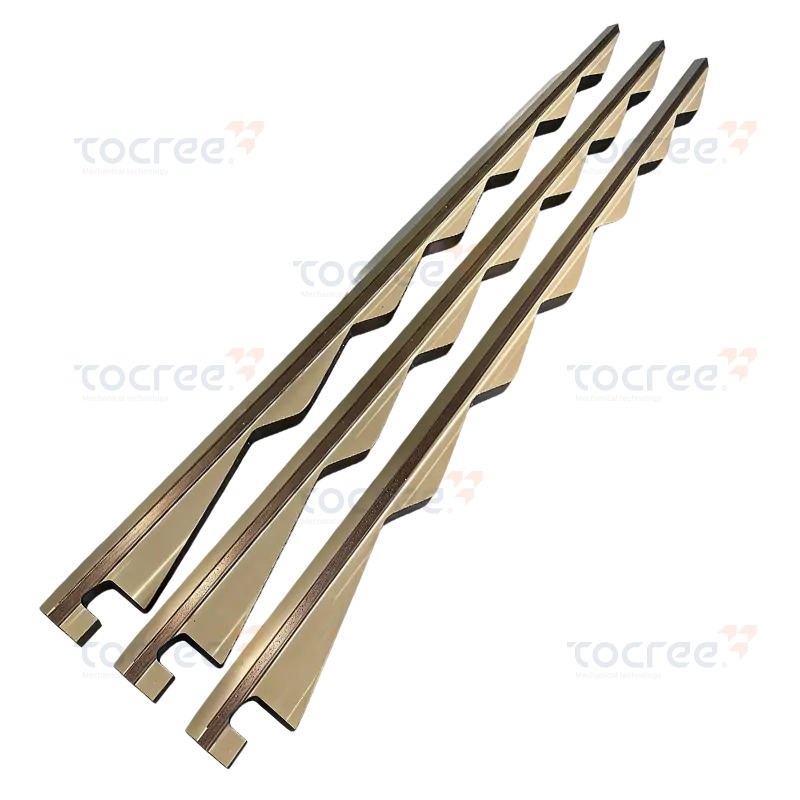
A tin bronze slider is a sliding wear component — often a slide plate, guide, or sliding bushing — machined or cast from a copper-tin alloy chosen specifically for its ability to handle friction, load, and repeated motion without seizing or wearing out quickly. Sliders like this show up wherever two metal surfaces need to move against each other under load, from heavy industrial machinery to construction and mining equipment.
Tin bronze earns its place in these applications through a straightforward metallurgical balance: tin strengthens the copper matrix and improves wear resistance, while additional elements like lead or phosphorus, depending on the specific alloy, improve machinability and reduce the risk of galling. The result is a material that can slide against steel for extended periods with minimal wear and a low risk of the two surfaces bonding together under friction and heat.
The Alloy Chemistry Behind Slider Performance
Not all tin bronze is formulated the same way, and the specific composition of a slider directly determines how it performs under real operating conditions.
Tin's Role in Strength and Wear Resistance
Tin is the primary strengthening element in these alloys, forming a hard, wear-resistant matrix that holds up under continuous sliding contact. Higher tin content generally means greater strength and better resistance to surface wear, which is why tin bronze remains the go-to choice for medium to heavy-load sliding applications.
Lead and Phosphorus for Anti-Seizure Properties
Many tin bronze slider alloys include a modest amount of lead, which disperses as small particles throughout the copper matrix and acts as a built-in solid lubricant. This significantly lowers the risk of galling or seizure during sliding motion. Phosphorus serves a similar purpose in some alloy families, further improving wear resistance and hardness while also enhancing machinability during manufacturing.
Zinc as a Cost-Effective Strengthener
Some tin bronze formulations incorporate zinc as a partial substitute for the more expensive tin, adding strength at a lower material cost. It's worth noting that zinc content above roughly 4% can start to reduce the alloy's antifrictional properties, so formulations need to strike the right balance rather than maximizing strength alone.
Common Tin Bronze Alloy Grades Used in Sliders
Several standardized tin bronze alloys are commonly specified for sliding components, each with a slightly different balance of strength, lubricity, and cost. The table below summarizes the most frequently used grades:
| Alloy Grade | Key Characteristics |
| CuSn10Pb1 | High tin content for strength, moderate lead for anti-seizure performance; suited to heavy loads |
| CuSn8P | Phosphorus-enhanced wear resistance and hardness, strong seizure resistance |
| C93200 (High-Leaded Tin Bronze) | Highest lubricity in the tin bronze family, widely specified for general-purpose bearing use |
| CuSn7Zn4Pb7 (Gunmetal) | Balanced strength, corrosion resistance, and self-lubrication for medium load applications |
Choosing between these grades usually comes down to matching load, speed, and cost requirements rather than picking the alloy with the highest strength rating available.
Where Tin Bronze Sliders Are Typically Used
Because tin bronze sliders handle medium to heavy loads at relatively low sliding speeds so well, they show up across a wide range of industrial equipment:
- Construction and mining machinery, where components face constant heavy loading and abrasive conditions
- Marine systems, where corrosion resistance is just as important as wear performance
- Industrial transmissions and gearboxes, where sliding contact under load is a constant operating condition
- Hydropower and hydraulic equipment, particularly where self-lubricating properties reduce maintenance needs
- Automation and metallurgy equipment, where low-speed, high-load sliding motion is common
Self-Lubricating vs. Standard Tin Bronze Sliders
One important distinction to understand when sourcing a slider is whether it's a standard solid bronze component or a self-lubricating design.
Standard Solid Bronze Sliders
These rely purely on the alloy's inherent properties — tin for strength, lead or phosphorus for anti-seizure performance — and typically require external lubrication to maintain long-term performance under continuous use.
Self-Lubricating Tin Bronze Sliders
Some sliders embed solid lubricants like graphite or molybdenum disulfide directly into the bronze base, or are manufactured with oil grooves and reservoirs built into the sliding surface. This creates a maintenance-free or low-maintenance sliding component, which is particularly valuable in equipment that's difficult or costly to service regularly.
What to Check Before Ordering a Tin Bronze Slider
A few practical checks help ensure the slider you order actually matches your application's real operating conditions:
- Confirm the expected load and sliding speed match the alloy's rated capacity, since higher loads generally call for higher tin content
- Check whether self-lubrication is needed, or whether your system already provides external lubrication
- Verify dimensional tolerances against your mating component, since even small variances in a sliding fit can accelerate wear
- Ask about the mating material — tin bronze against hardened steel behaves differently than tin bronze against a softer counter-surface
- Request custom sizing if your application doesn't match standard stock dimensions, since many suppliers can machine sliders to specific drawings
Getting these details right upfront helps ensure the slider delivers the long service life tin bronze is known for, rather than wearing prematurely due to a mismatch between the alloy and the actual operating conditions.
OUR PRODUCTS
Recommended Products
-
-
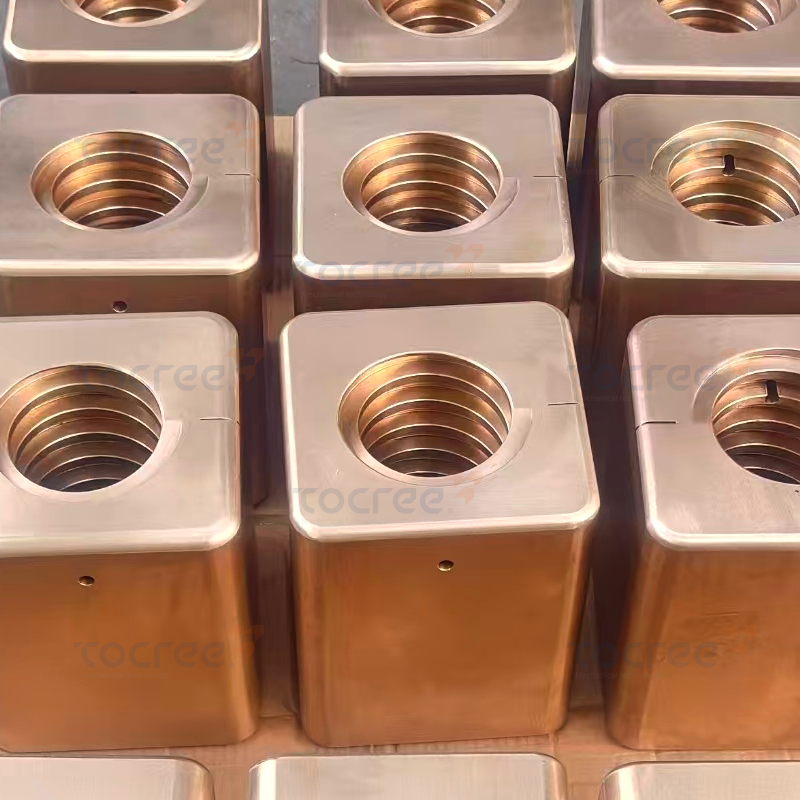 Square Tin-Bronze Nut for Heavy-duty Equipment
Product Overview The Square Tin-Bronze Nut is a critical wear-resistant component engineered for hea...
-
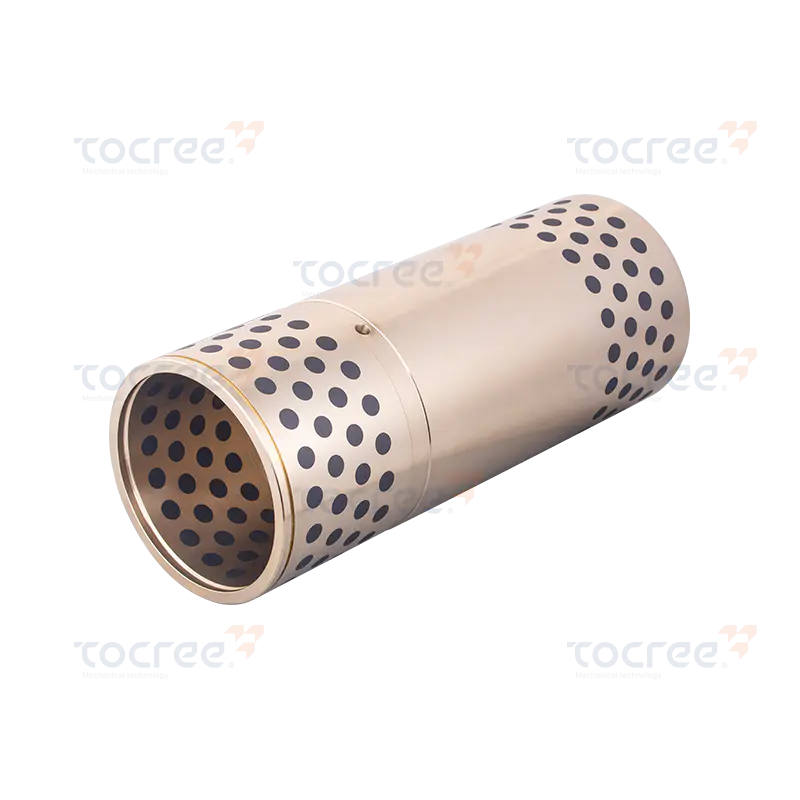 Solid Self-Lubricating Bearing (Brass Copper Sleeve + Graphite)
Material structure: Cast aluminum brass CuZn25Al6Fe3Mn3, with graphite insert. Application features:...
-
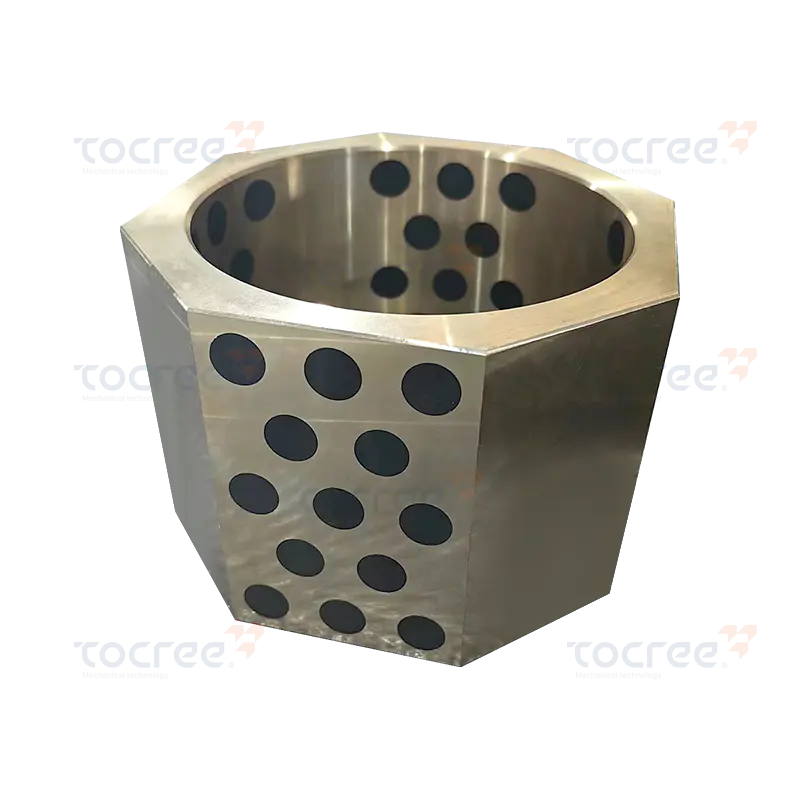 Bronze Octagonal Bushing
The octagonal bushing made of CuSn6Zn6Pb3 (tin bronze) and graphite precision machining is a self-lu...
-
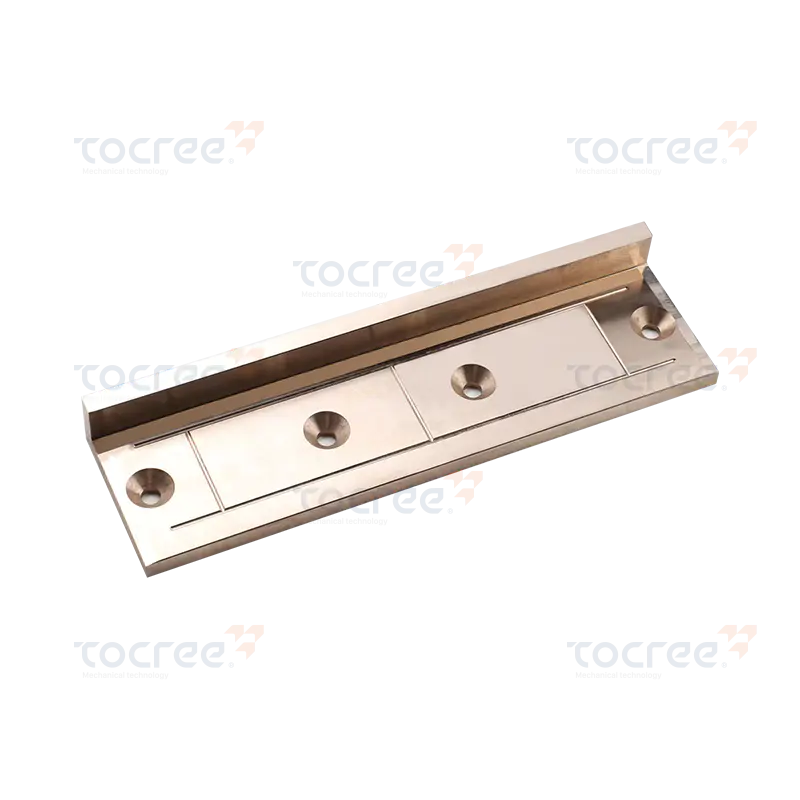
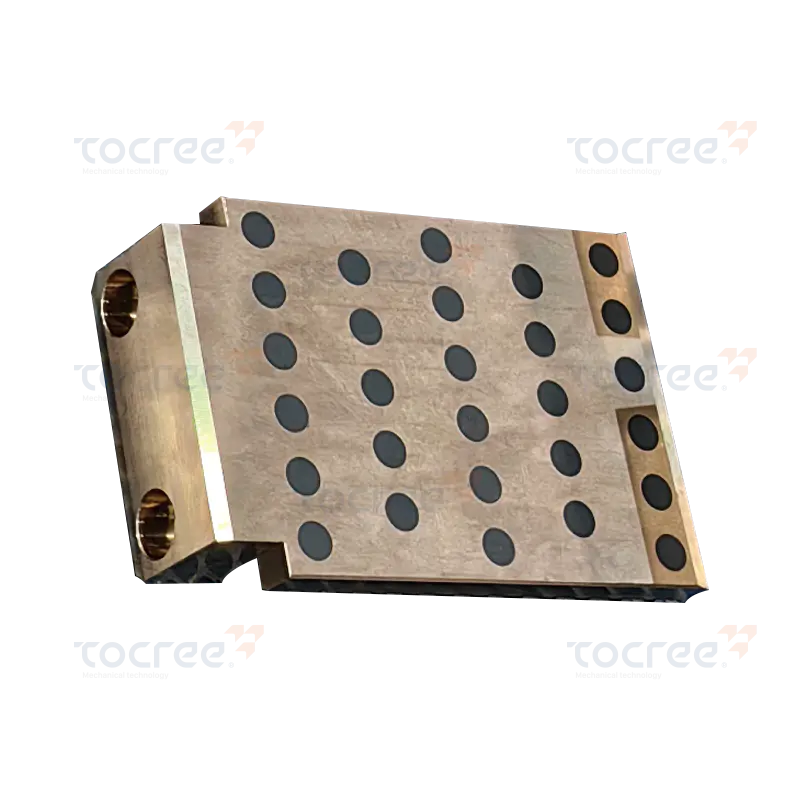 L-Type Solid Self-Lubricating Slider
The L-shaped solid self-lubricating slider is made by embedding high-purity graphite solid lubricant...
-
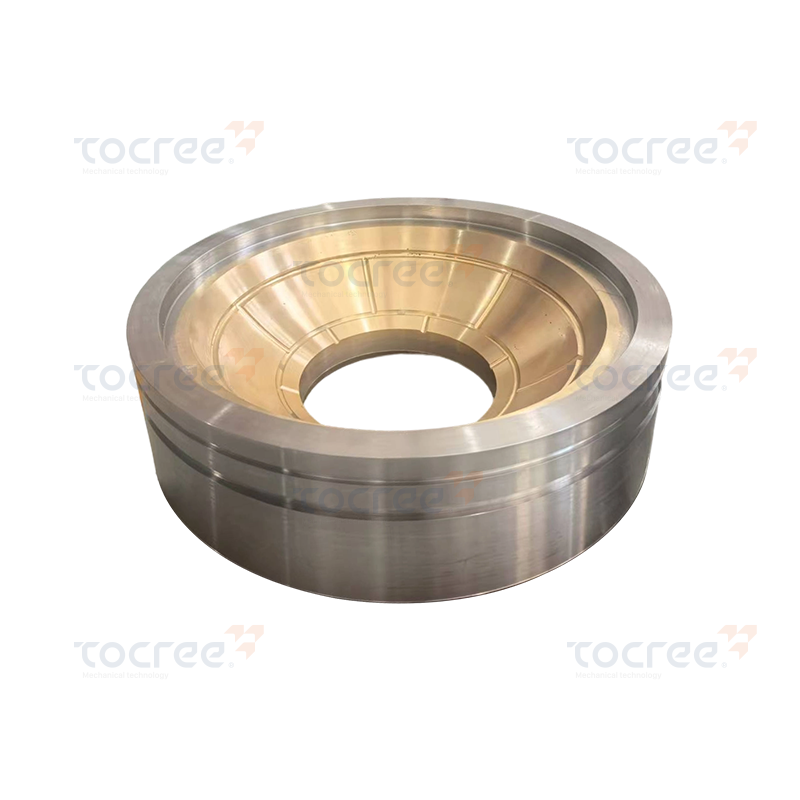 Bronze-Steel Spherical Bushing
The Bronze-Steel Spherical Bushing is made of 42CrM04 alloy steel and high-strength brass, offering ...
Copyright © 2025 Jiashan Tocree Machinery Co., Ltd. All Rights Reserved.
Customized Copper Alloys Machinery Parts
