

 English
 中文简体
中文简体 Deutsch
 عربى
عربىFor any questions and feedback from customers, we will reply patiently and meticulously.
This copper-based oil drain ring is made from high-quality tin bronze through precise processing. It...
If you've ever had a machine component wear out ahead of schedule — or worse, seize up mid-operation — the bearing or sliding element is usually the first place to look. Tin bronze sliders are one of the most reliable solutions to this problem, and they've been used in industrial machinery, hydraulic systems, and heavy equipment for decades. This guide explains what tin bronze sliders actually are, what makes them perform the way they do, and how to match the right specification to your application.
A tin bronze slider — also referred to as a tin bronze slide bearing, bronze wear pad, or bronze sliding element — is a low-friction contact component machined or cast from a copper-tin alloy. Its job is to provide a controlled sliding interface between two moving surfaces, absorbing load and wear so that the more expensive structural components around it are protected.
The base alloy is typically composed of 88–92% copper and 8–12% tin, sometimes with small additions of phosphorus, zinc, or lead depending on the performance requirements. The most widely used standard alloy in this family is C90700 (Gun Metal) and C91100, though designations vary by regional standard (DIN, BS, JIS, ASTM). The tin content is what gives this alloy its characteristic combination of hardness, corrosion resistance, and load-bearing capacity — properties that softer copper alloys and most aluminum bronzes can't match across the same range of operating conditions.
Physically, tin bronze sliders are produced in a wide range of forms: flat wear plates, cylindrical bushings, flanged sleeves, guide strips, and custom profiled pads. The common thread is that they're all designed to slide against a mating surface — typically hardened steel — under load, and to do so for extended service intervals without significant degradation.
Understanding why tin bronze performs well as a slider material starts with the alloy's physical characteristics. These properties directly determine how the component behaves under real operating conditions.
Tin bronze typically achieves a Brinell hardness of 70–100 HB depending on tin content and processing method (cast vs. wrought). This is soft enough to act as the sacrificial wear element in a steel-bronze pairing — the bronze wears preferentially, protecting the steel shaft or guideway — but hard enough to resist deformation under substantial compressive load. Typical static load capacities for tin bronze slide bearings range from 60 to 100 N/mm², making them suitable for heavy-duty presses, injection molding machines, and construction equipment.
The coefficient of friction for tin bronze against steel, under lubricated conditions, is typically in the range of 0.05 to 0.15. Under dry or boundary-lubricated conditions this rises, which is why many tin bronze slider designs incorporate graphite plugs or oil grooves to maintain a lubricant film at the contact surface. The alloy's natural tendency to form a stable oxide layer also contributes to its wear resistance — the surface work-hardens gradually in service rather than deteriorating rapidly.
Tin bronze offers good resistance to atmospheric corrosion, fresh water, and many industrial fluids. It is particularly well suited to applications involving water-based lubricants, hydraulic fluids, and moderate chemical exposure. It is not recommended for strongly acidic or ammonia-rich environments, where dezincification or stress corrosion can become a concern.
With a thermal conductivity of approximately 50–70 W/(m·K), tin bronze dissipates frictional heat more effectively than most polymer or composite bearing materials. This makes it the preferred choice in high-load, moderate-speed applications where heat buildup at the sliding interface would degrade a plastic bearing but falls within the thermal tolerance of the bronze.
Choosing a sliding element material is always a tradeoff. The table below compares tin bronze against the most common alternatives across the criteria that matter most for industrial slider applications.
| Material | Load Capacity | Speed Range | Lubrication | Corrosion Resistance | Relative Cost |
| Tin Bronze | High | Low–Medium | Required / self-lube options | Good | Medium |
| Aluminium Bronze | Very High | Low–Medium | Required | Excellent | Medium–High |
| Cast Iron | High | Low | Required | Poor | Low |
| PTFE / Polymer | Low–Medium | Medium–High | Self-lubricating | Excellent | Low–Medium |
| Bimetal (Steel-Bronze) | Very High | Low–Medium | Required / self-lube options | Good | Medium |
Tin bronze sits in a practical middle ground: higher load capacity than polymer bearings, better corrosion resistance than cast iron, and lower cost than aluminum bronze — which is why it remains the default choice for a wide range of general industrial sliding applications.
The application range for tin bronze sliding elements is broad. The format changes — pad, bushing, strip, guide — but the underlying function is the same across all of them.
Tin bronze guide rings and wear bands are standard components inside hydraulic cylinders, where they center the piston rod, prevent metal-to-metal contact between the rod and barrel, and absorb side loads. This is one of the most demanding slider applications in terms of combined pressure and lateral load — and one where the dimensional stability and hardness of tin bronze consistently outperforms softer alternatives.
Lathes, milling machines, and grinding equipment use tin bronze slide pads and gibs on their linear guideways. The low friction coefficient under lubricated conditions allows smooth carriage travel, while the wear characteristics ensure that the bronze pad — not the precision-ground steel guideway — absorbs the operational wear. Replacement of the bronze wear element is straightforward and inexpensive compared to regrinding a machine bed.
In progressive die sets and stamping tools, tin bronze bushings and slide plates guide punch holders and strippers. The combination of shock load resistance and dimensional precision makes tin bronze the standard material for this application across the tooling industry. Graphite-plugged versions are commonly used here to maintain boundary lubrication during high-cycle press operations.
Bridge expansion bearings, crane slewing rings, and excavator pivot pins all use tin bronze sliding elements in configurations designed to handle very high static loads and slow oscillating movement. In bridge bearings particularly, the long service life expectation — often 50+ years — and the consequences of failure make tin bronze a well-established material specification rather than a cost-driven selection.
Tie bar bushings, clamping unit slides, and ejector guide elements in injection molding equipment are frequently specified in tin bronze. The combination of high clamping forces, cyclic loading, and elevated operating temperatures eliminates polymer bearing options and makes tin bronze — sometimes in bimetal construction for higher load ratings — the practical standard.
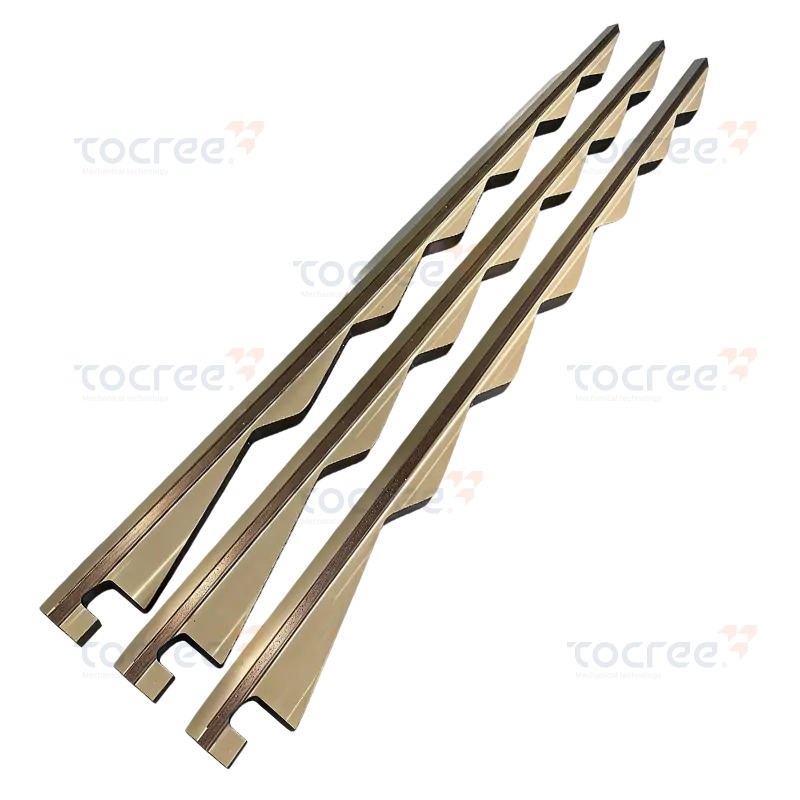
Lubrication strategy has a significant effect on the service life of any tin bronze slider. The three main approaches each have appropriate use cases.
When sourcing tin bronze sliders — whether standard catalogue items or custom-machined components — the following parameters need to be clearly defined to ensure the right product for the application.
Even a correctly specified tin bronze slider will fail prematurely if installation or operating conditions fall outside the design envelope. These are the most common failure modes and what typically causes them.
| Failure Mode | Likely Cause | Corrective Action |
| Accelerated wear on sliding face | Insufficient lubrication or contaminated lubricant | Review lubrication interval; switch to graphite-plugged version |
| Scoring or galling on mating steel | Mating surface too soft or insufficiently finished | Harden and regrind mating surface to specification |
| Cracking or fracture of bronze | Impact or shock loads exceeding alloy capacity | Upgrade to higher-tin alloy or bimetal construction |
| Uneven wear pattern | Misalignment during installation | Check mounting parallelism and housing tolerances |
| Seizure under load | Thermal expansion closing running clearance | Recalculate clearance for operating temperature range |
In practice, "tin bronze slider" and "tin bronze bushing" are often used interchangeably, but they refer to slightly different component geometries. A bushing is a cylindrical sleeve designed to support a rotating or reciprocating shaft, while a slider or slide pad is a flat or profiled element designed for linear sliding contact. Both are made from the same alloy family and share the same material performance characteristics — the distinction is purely geometric.
Other terms used in the market for effectively the same category of component include tin bronze plain bearing, bronze wear strip, bronze guide pad, and copper alloy sliding plate. When sourcing, it's worth using multiple search terms and confirming the alloy composition rather than relying on the product label alone — "bronze" is used loosely in the market and not all bronze alloys have equivalent sliding performance.
Correct material selection is only part of the equation. Installation quality and operating practice have an equally large influence on how long a tin bronze sliding element actually lasts in service.
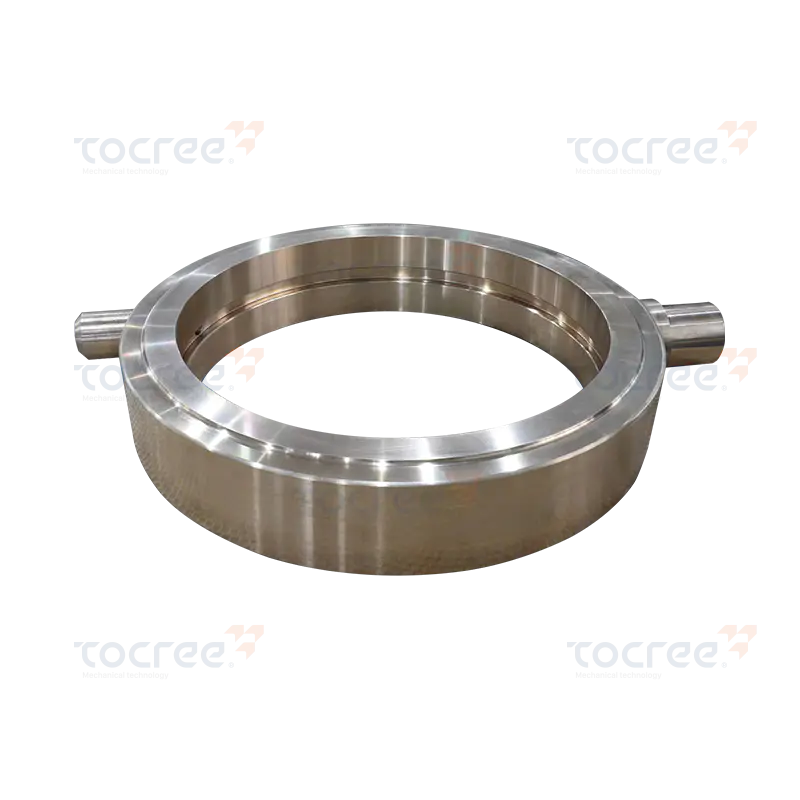
This copper-based oil drain ring is made from high-quality tin bronze through precise processing. It...
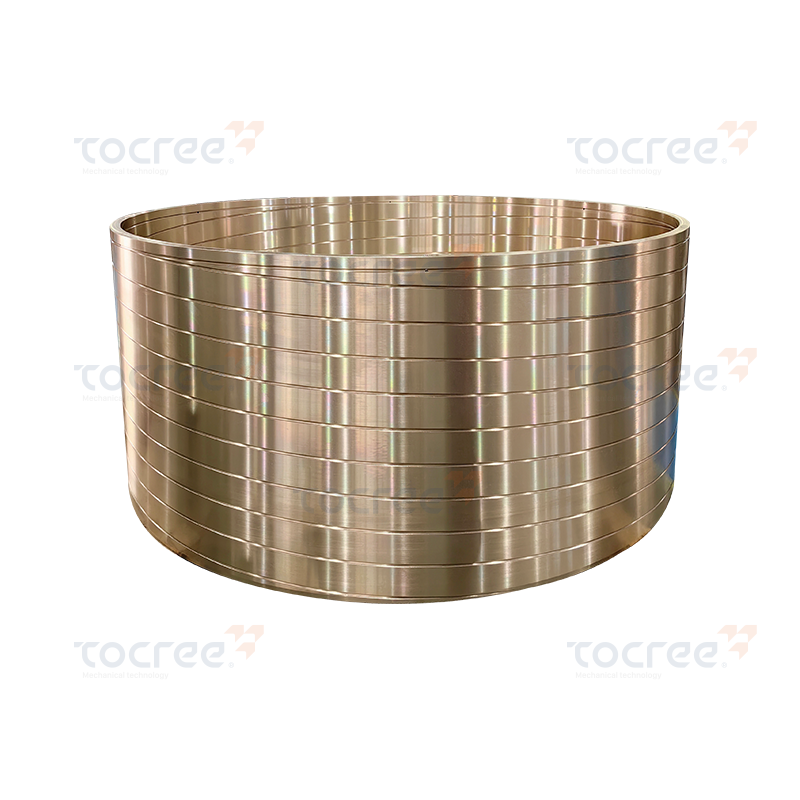
This bronze sleeve is made of tin bronze as the base material. The blank piece is produced through c...
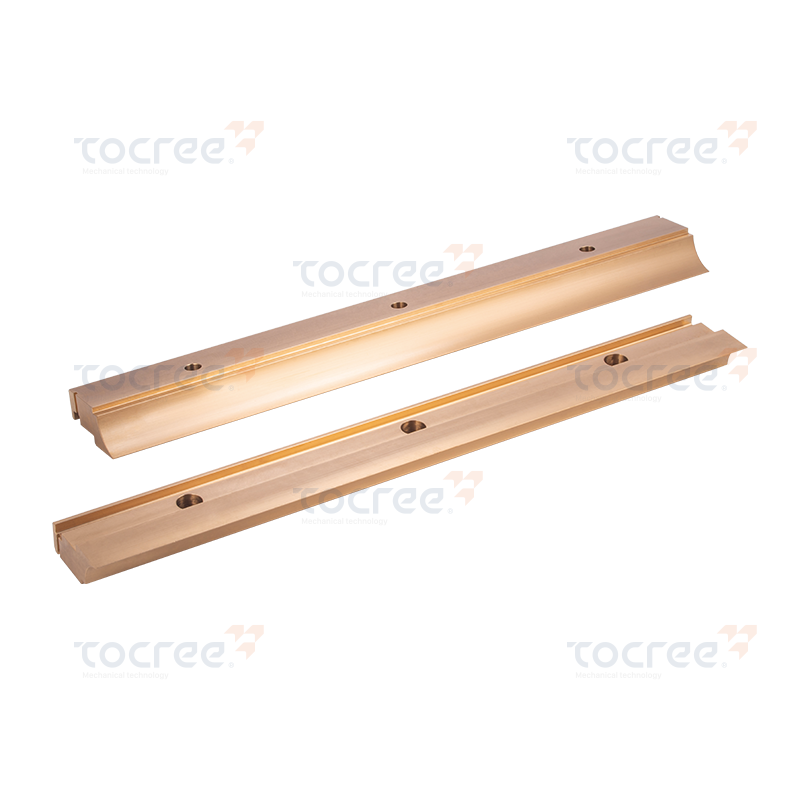
This linear slide board is a high-performance sliding component, made of excellent tin bronze alloy ...
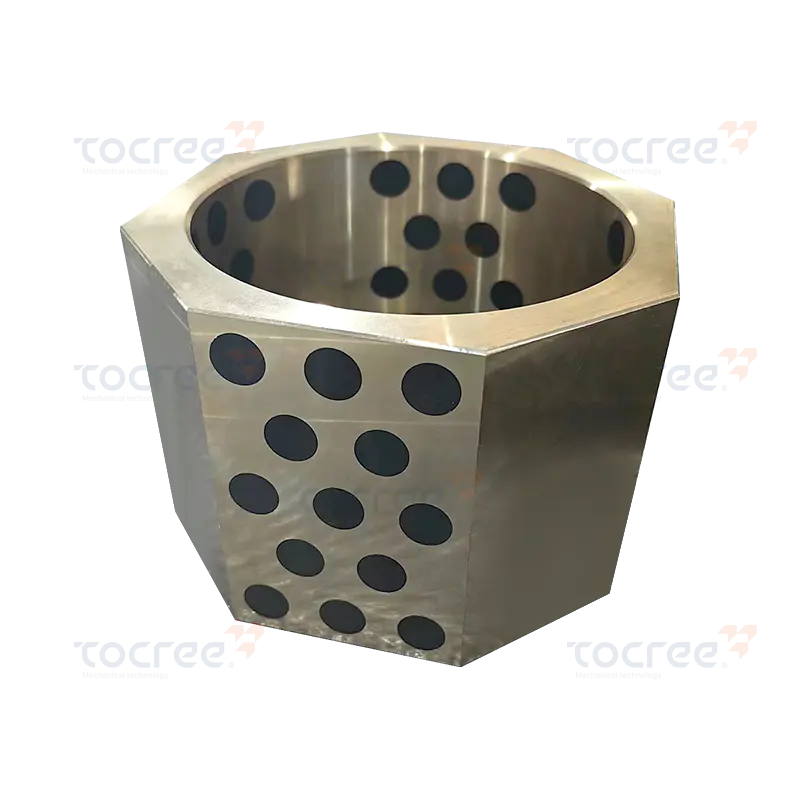
The octagonal bushing made of CuSn6Zn6Pb3 (tin bronze) and graphite precision machining is a self-lu...
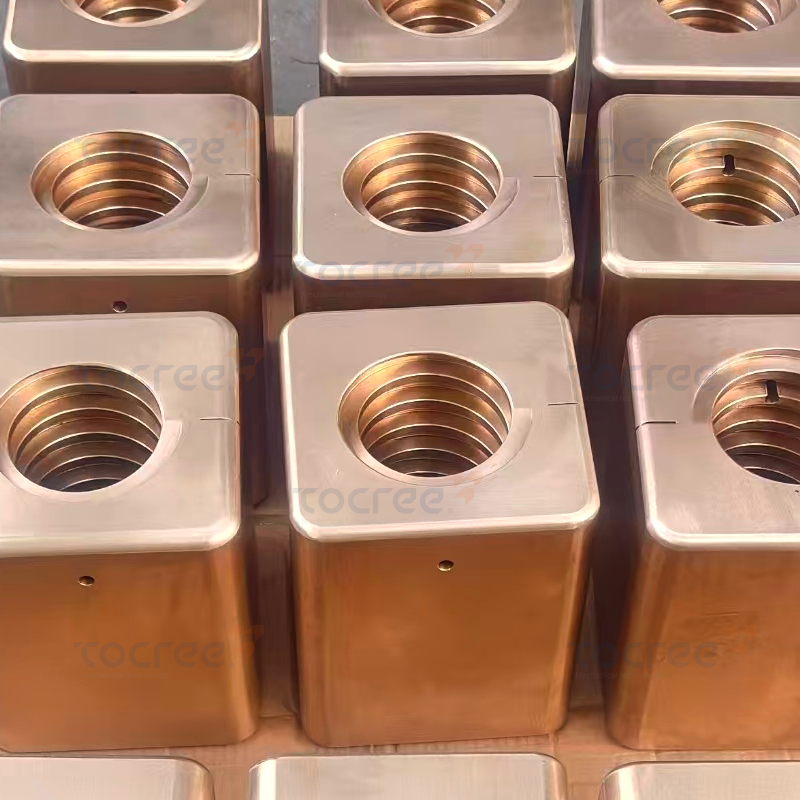
Product Overview The Square Tin-Bronze Nut is a critical wear-resistant component engineered for hea...
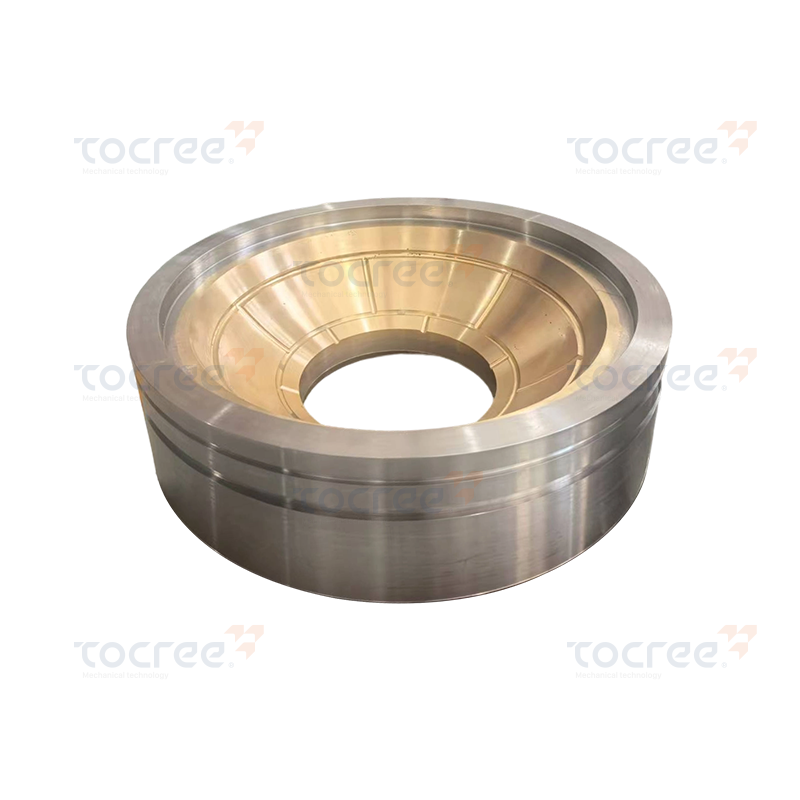
The Bronze-Steel Spherical Bushing is made of 42CrM04 alloy steel and high-strength brass, offering ...
Copyright © 2025 Jiashan Tocree Machinery Co., Ltd. All Rights Reserved.
Customized Copper Alloys Machinery Parts
