

 English
 中文简体
中文简体 Deutsch
 عربى
عربىFor any questions and feedback from customers, we will reply patiently and meticulously.
Material structure: Cast aluminum brass CuZn25Al6Fe3Mn3, with graphite insert. Application features:...
A self-lubricating sleeve — also called a self-lubricating bushing sleeve, oil-free sleeve bearing, or maintenance-free sleeve bearing — is a cylindrical bearing component that provides a low-friction sliding interface between a rotating or reciprocating shaft and its housing, without requiring external grease or oil lubrication during operation. The lubrication function is built into the sleeve itself, either through a solid lubricant embedded in the base material, a lubricant-impregnated porous structure, or a composite layer that releases a controlled amount of lubricant at the bearing surface as the shaft moves against it.
The significance of this self-contained lubrication capability becomes clear when you consider the limitations of conventional lubricated bearings. Standard sleeve bearings require periodic grease or oil replenishment — a maintenance task that is straightforward in accessible locations but difficult, costly, or simply impractical in remote, confined, sealed, or continuously operating equipment. In food processing machinery where oil contamination of the product is unacceptable, in medical equipment where lubricant outgassing would compromise sterile environments, in agricultural equipment operating far from maintenance facilities, or in automated production lines where scheduled downtime for lubrication represents a real cost, the ability to eliminate external lubrication entirely is a significant operational advantage.
Self-lubricating dry sleeve bearings are not a niche product — they are used across virtually every industry that involves mechanical motion. From automotive suspension components and agricultural implement pivots to injection molding machine tie bar bushings, hydroelectric turbine guide bearings, and precision medical device actuators, the self-lubricating sleeve is one of the most widely applied bearing solutions in modern engineering. Understanding the different material types, their performance characteristics, and the application parameters that determine suitability is essential for anyone selecting or specifying these components.
Despite the variety of materials used in self-lubricating sleeve bearings, the underlying lubrication mechanisms fall into a small number of categories. Understanding these mechanisms helps predict how a given sleeve will behave under different operating conditions and why different material types are suited to different applications.
The most common self-lubrication mechanism in engineered sleeve bearings involves solid lubricants — most commonly PTFE (polytetrafluoroethylene), graphite, molybdenum disulfide (MoS₂), or combinations of these — embedded in or coating the bearing surface. As the shaft rotates or reciprocates against the bearing surface, small amounts of the solid lubricant transfer from the sleeve onto the shaft, building up a thin, adherent transfer film. This transfer film is what actually provides the low-friction interface: after the first few operating cycles, the shaft is effectively running against its own transferred lubricant layer rather than directly against the bearing material. The sleeve then continues to replenish this film as it wears, maintaining low friction for the operational life of the bearing. The quality and stability of this transfer film — its thickness, uniformity, and adhesion to the shaft — is the primary determinant of friction coefficient and wear rate in solid-lubricant sleeve bearings.
Sintered metal sleeve bearings — typically made from sintered bronze or sintered iron — use a different mechanism. The sintering process produces a porous metal structure with interconnected void spaces accounting for 20–30% of the material volume, and these voids are impregnated with lubricating oil under vacuum. During operation, the heat generated at the bearing surface causes the oil to expand and migrate to the surface, forming a thin hydrodynamic oil film between the shaft and bearing. When the bearing cools and stops, the oil is drawn back into the porous structure by capillary action. This pumping action is entirely self-regulating and requires no external intervention — the bearing effectively lubricates itself from its internal oil reservoir for its entire service life, which in clean, moderate-temperature applications can exceed 20,000 hours.
Some self-lubricating bronze sleeve bearing designs use a third approach: cylindrical plugs or inserts of solid lubricant — typically graphite, PTFE compound, or MoS₂ — pressed into holes drilled or cast into a metal (usually bronze or cast iron) sleeve body. The metal matrix provides structural strength and heat dissipation, while the lubricant plugs are positioned to contact the shaft at regular intervals around the bearing surface. As the shaft rotates, it periodically contacts and slightly abrades the plug surfaces, picking up lubricant and distributing it around the bearing bore. This hybrid approach combines the load capacity and thermal conductivity of metal with reliable solid lubrication, making it particularly effective for heavy-load, low-to-moderate-speed applications such as construction equipment pin joints, crane hooks, and press machine guides.
The material composition of a self-lubricating sleeve determines its load capacity, operating temperature range, chemical resistance, friction coefficient, and suitability for different shaft materials and surface finishes. The main material families in current commercial use are:
PTFE composite self-lubricating sleeves are the most widely used type in precision engineering applications. The most common construction uses a three-layer structure: a steel backing for structural strength, a sintered bronze interlayer for bonding and thermal conductivity, and a PTFE-based sliding layer on the inner bore surface. The PTFE layer typically contains fillers — bronze powder, carbon fiber, glass fiber, or graphite — that improve wear resistance and load capacity beyond what pure PTFE alone can achieve. This construction is produced to very tight dimensional tolerances and provides an extremely low and consistent friction coefficient (typically 0.04–0.12 dry), making it ideal for precision sliding applications including automotive control arms, hydraulic cylinder rod guides, construction equipment linkages, and agricultural machinery pivots. Operating temperature range is typically -200°C to +280°C, and these sleeves perform well in conditions where external lubrication is not possible or desirable.
Sintered bronze self-lubricating sleeves — commonly sold under the trade name Oilite and equivalent generic products — are the traditional workhorse of the maintenance-free bearing category, with a history of use stretching back nearly a century. Made by compacting and sintering bronze powder into a porous structure and then vacuum-impregnating with oil, these sleeves offer an excellent balance of load capacity, shaft compatibility, machinability, and cost. They are particularly well-suited to moderate-speed, moderate-load applications such as electric motor bushings, small appliance bearings, office equipment pivot points, and light industrial machinery. Their limitation is operating temperature — the oil impregnation limits continuous service temperature to approximately 80–100°C, above which the oil degrades or migrates out of the structure faster than the pumping action can return it.
Graphite-plugged self-lubricating bronze sleeves and cast iron equivalents are designed for heavy-load, high-temperature, or chemically aggressive environments where oil-based lubrication is impractical and PTFE composites lack sufficient load capacity. Graphite remains an effective solid lubricant at temperatures well above 400°C (in non-oxidizing environments) and is chemically inert to most industrial fluids and gases. These sleeves are the standard choice for steel mill equipment, glass manufacturing machinery, high-temperature furnace components, steam turbine guide bearings, and marine deck equipment where water washing would remove any conventional lubricant. The metal matrix (bronze or cast iron) provides high compressive strength and good heat dissipation, while the graphite plugs ensure continuous lubrication even under severe operating conditions.
High-performance engineering polymer self-lubricating sleeves — typically based on PEEK (polyether ether ketone), POM (acetal), UHMWPE (ultra-high molecular weight polyethylene), or PA (nylon) with PTFE, graphite, or MoS₂ fillers — offer the advantage of complete non-metallic construction combined with useful load and temperature capability. These sleeves are particularly valued in food processing, pharmaceutical, and medical equipment where metal particle contamination is unacceptable, and in corrosive chemical environments where metal bearings would degrade rapidly. PEEK-based sleeves can operate continuously at up to 250°C with good chemical resistance to most acids, bases, and solvents, making them a premium option for demanding environments. POM and UHMWPE sleeves are lower-cost alternatives for less demanding conditions, widely used in conveyor systems, packaging machinery, and general light industrial applications.
Wrapped self-lubricating sleeves are produced by rolling a strip of composite material — typically a steel-backed bronze-PTFE laminate — into a cylindrical form. The rolling process creates a sleeve with a controlled gap (split) that allows press-fit installation into a housing bore, where the sleeve spring-loads itself against the housing wall for secure retention. Wrapped sleeves are thinner-walled than solid-drawn sleeves, allowing them to be used in space-constrained applications and installed without specialized equipment. They are widely used in automotive applications — door hinge bushings, seat adjustment mechanisms, steering column components — as well as in general machinery where space and weight are at a premium.
| Material Type | Max Load (MPa) | Max Temp (°C) | Friction Coefficient | Best Application |
| PTFE Composite (3-layer) | 140–250 | -200 to +280 | 0.04–0.12 | Precision sliding, automotive linkages, hydraulics |
| Sintered Bronze (Oilite) | 60–120 | -20 to +100 | 0.05–0.15 | Motors, appliances, light industrial machinery |
| Graphite-Plugged Bronze | 80–200 | -200 to +450 | 0.10–0.20 | Steel mills, furnaces, marine, high-temperature |
| Graphite-Plugged Cast Iron | 100–300 | -200 to +500 | 0.12–0.25 | Heavy industry, high load, extreme temperature |
| Filled PEEK | 60–150 | -60 to +250 | 0.08–0.20 | Food, pharma, medical, chemical environments |
| POM / UHMWPE | 20–60 | -50 to +100 | 0.10–0.30 | Conveyors, packaging, light general machinery |
| Wrapped Bronze-PTFE | 100–200 | -200 to +280 | 0.04–0.12 | Automotive, thin-wall, space-constrained apps |
Selecting a self-lubricating bearing sleeve requires evaluating several interdependent performance parameters against your specific operating conditions. Getting these right ensures the sleeve operates within its design limits and achieves its rated service life:
The PV value — the product of bearing pressure (P, in MPa) and sliding velocity (V, in m/s) — is the fundamental performance parameter for any sliding bearing, including self-lubricating sleeves. It represents the rate of frictional energy generation per unit area of bearing surface, which directly determines the temperature rise at the bearing interface and therefore the wear rate. Every self-lubricating sleeve material has a maximum allowable PV value, above which the bearing will overheat, the lubricating layer will degrade, and wear will accelerate rapidly. For PTFE composite sleeves, maximum PV is typically 0.10–0.16 MPa·m/s; for graphite-plugged bronze, it may reach 0.5 MPa·m/s or higher. Always calculate the actual PV for your application and confirm it falls within the material's rated limit — with a safety margin of at least 50% for reliable service life.
Temperature affects both the lubricant and the structural material of a self-lubricating sleeve. For PTFE-based sleeves, continuous temperatures above 280°C degrade the PTFE and cause rapid wear. For sintered bronze oil-impregnated sleeves, temperatures above 100°C drive the oil out of the porous structure faster than it can return. For polymer sleeves, elevated temperatures cause creep under load — the sleeve deforms permanently under the shaft contact pressure, increasing clearance and reducing accuracy. Always identify both the steady-state operating temperature and any transient peak temperatures in your application, and select a sleeve material rated for at least 20–30°C above the maximum anticipated temperature.
The shaft running against a self-lubricating sleeve is as important as the sleeve itself. For PTFE composite sleeves and sintered bronze sleeves, the shaft should ideally be hardened steel (45 HRC or above) with a ground surface finish of Ra 0.4–0.8 µm. A rough shaft surface abrades the lubricating layer faster than it can replenish, drastically reducing sleeve life. Soft shafts (unhardened mild steel) can be embedded with particles transferred from the sleeve, also accelerating wear. For graphite-plugged bronze sleeves operating in wet or corrosive environments, stainless steel shafts are often specified. Some polymer sleeves are more tolerant of softer or less well-finished shaft surfaces, but consistent, appropriate shaft specification always improves sleeve performance and life.
The diametrical clearance between the shaft and the sleeve bore is critical for self-lubricating sleeve performance. Too little clearance causes excessive friction and heat generation as the sleeve grips the shaft; too much allows shaft movement that produces impact loading and edge loading on the sleeve ends. For PTFE composite and sintered bronze sleeves, typical recommended running clearances are 0.010–0.030 mm for small diameters (up to 20 mm) and 0.020–0.060 mm for larger diameters (50–100 mm), though exact recommendations vary by material and application. Note that polymer sleeves require larger clearances to accommodate thermal expansion — polymer materials expand significantly more than metal under temperature rise, and insufficient clearance allowance can cause a polymer sleeve to seize on its shaft as operating temperature increases.
Self-lubricating sleeves respond differently to different load types. Static loads (constant direction, constant magnitude) are generally the least demanding — the sleeve supports the load consistently and the transfer film builds up uniformly. Oscillating loads (reversing direction periodically, as in a pivot application) are moderate in severity — the contact zone changes with each reversal, which can interrupt transfer film development but also prevents localized wear. Impact or shock loads are the most demanding — sudden high-force events can punch through the lubricating film before it can replenish, causing metal-to-metal contact and accelerated wear. For impact-loaded applications, select a sleeve material with a higher static load rating than the calculated peak dynamic load, use generous safety factors, and consider graphite-plugged metal sleeves rather than PTFE composites, as the metal matrix handles shock loads better.
Self-lubricating sleeve bearings appear across a remarkably broad range of industries, with the specific material type and design varying considerably by application requirements:
Even the best self-lubricating sleeve will underperform or fail prematurely if installed incorrectly. These installation practices apply across most sleeve bearing types and are worth following carefully:
Most self-lubricating sleeves are installed into the housing bore with a light interference fit — the sleeve's outer diameter is slightly larger than the housing bore, so the sleeve is pressed in and retained by the interference. The interference fit both prevents the sleeve from rotating in the housing and ensures good thermal contact between sleeve and housing for heat dissipation. The interference values recommended by the sleeve manufacturer must be followed precisely: too little interference and the sleeve can spin in the housing under torque; too much and the housing bore compresses the sleeve, reducing the running clearance and potentially causing the sleeve to grip the shaft. Always use a proper press tool that applies force evenly around the sleeve end face — never hammer directly on the sleeve end or use a punch, as this can crack or distort the sleeve, particularly for thin-walled wrapped types.
After press-fit installation, the inner bore of a self-lubricating sleeve will typically have contracted slightly due to the interference fit stress. The bore diameter after installation will be smaller than the nominal bore size — this reduction must be accounted for in the running clearance calculation. For precision applications, the sleeve bore should be finish-bored or reamed to the final diameter after installation to ensure correct running clearance. Never assume the as-installed bore matches the sleeve's nominal bore specification without measurement.
Self-lubricating sleeves are sensitive to misalignment between the shaft centerline and the housing bore centerline. Angular misalignment causes the shaft to load the sleeve unevenly, concentrating stress at the sleeve ends rather than distributing it across the full bearing length. This edge loading significantly accelerates wear at the loaded end and can cause premature sleeve failure even when the average bearing pressure is well within the material's rated limit. Maintain housing bore alignment to within the sleeve manufacturer's specified tolerance — typically 0.1–0.5 mm/m of shaft length depending on sleeve length-to-diameter ratio. For applications where some misalignment is unavoidable, consider spherical plain bearing inserts or self-aligning sleeve configurations designed to accommodate angular offset.
The self-lubricating sleeve market includes a wide range of quality tiers, and the performance gap between a properly manufactured sleeve from a reputable supplier and a low-cost alternative can be dramatic — particularly in demanding applications where sleeve failure has significant consequences. Here's what to verify before committing to a supplier:
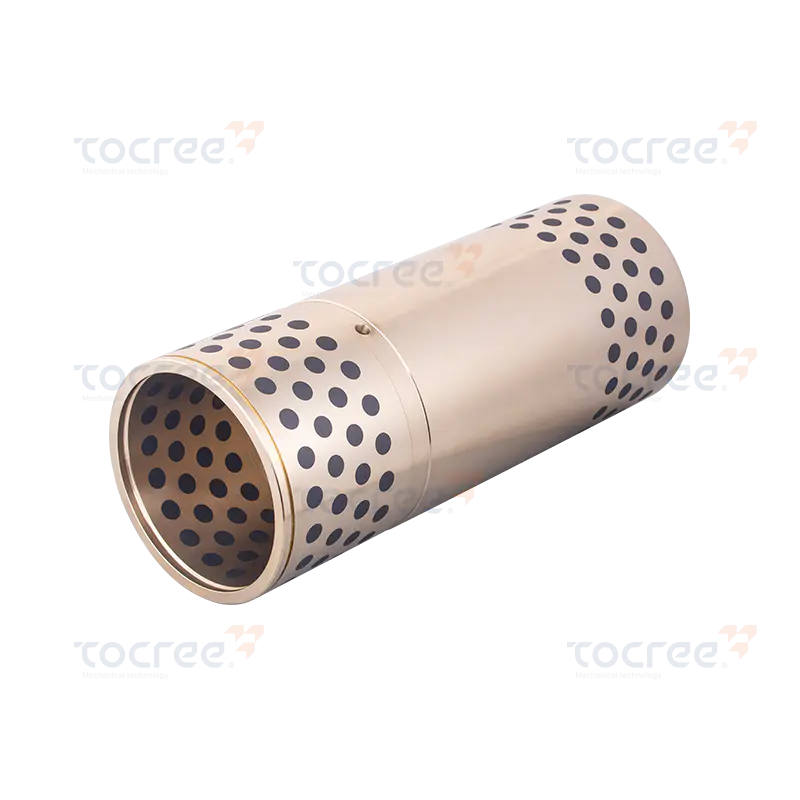
Material structure: Cast aluminum brass CuZn25Al6Fe3Mn3, with graphite insert. Application features:...
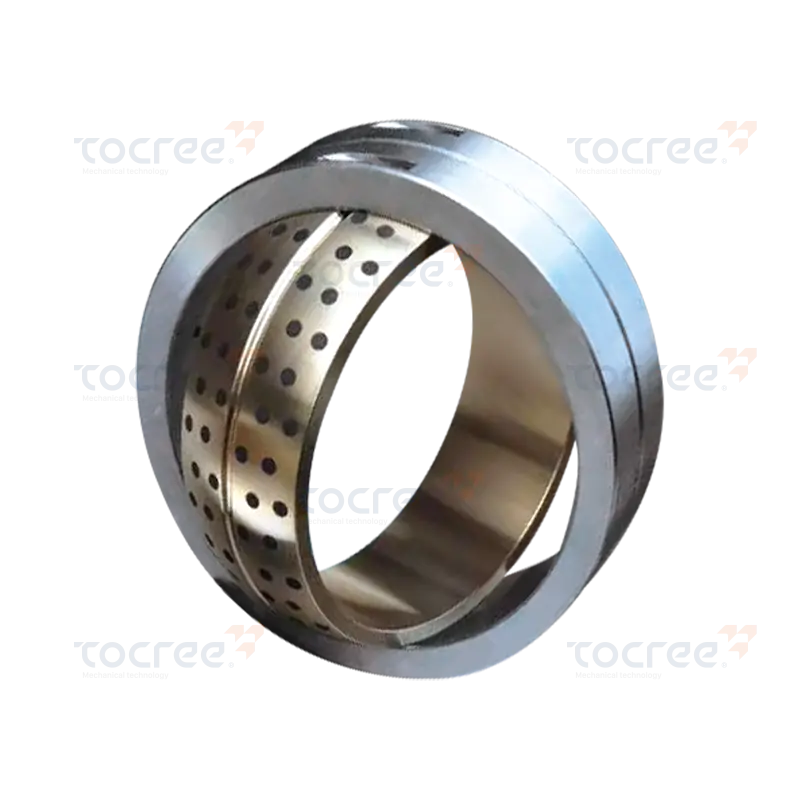
This Bimetal Self-Lubricating Spherical Bearing is engineered for high performance and durability, f...
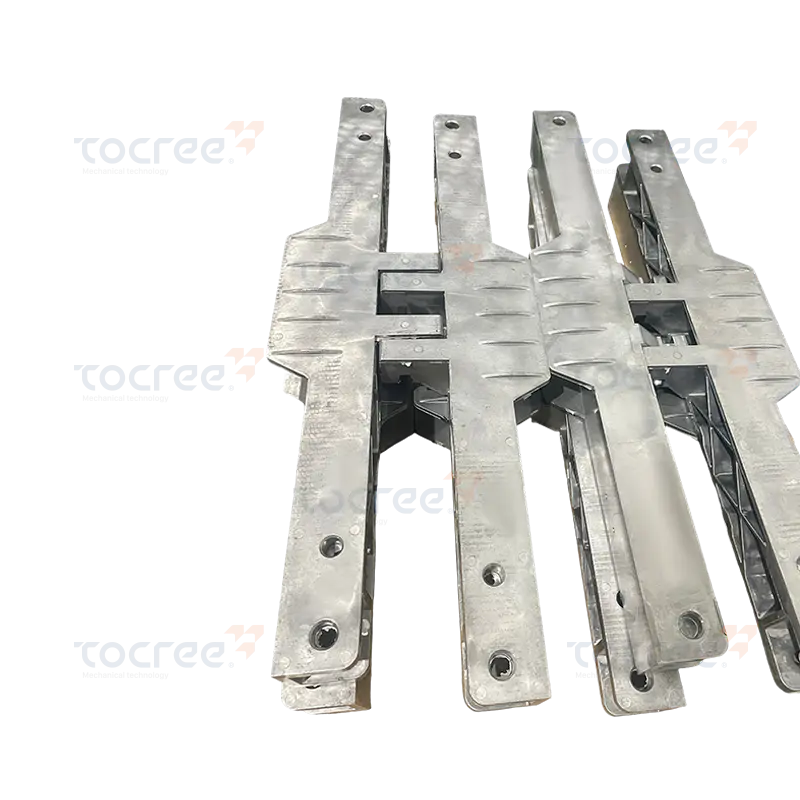
This aluminum alloy frame is specially designed to meet the application requirements of the vehicle....
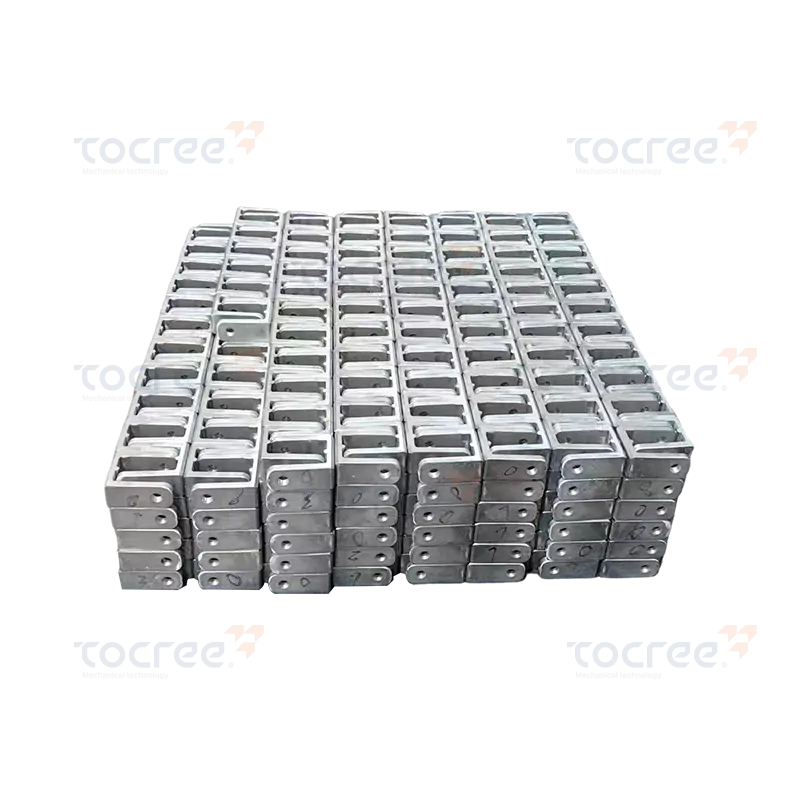
This aluminum alloy fixing block is made from 6063 aluminum alloy as the base material. After T5 hea...

The PTFE single-flange solid self-lubricating copper sleeve is a high-performance mechanical compone...
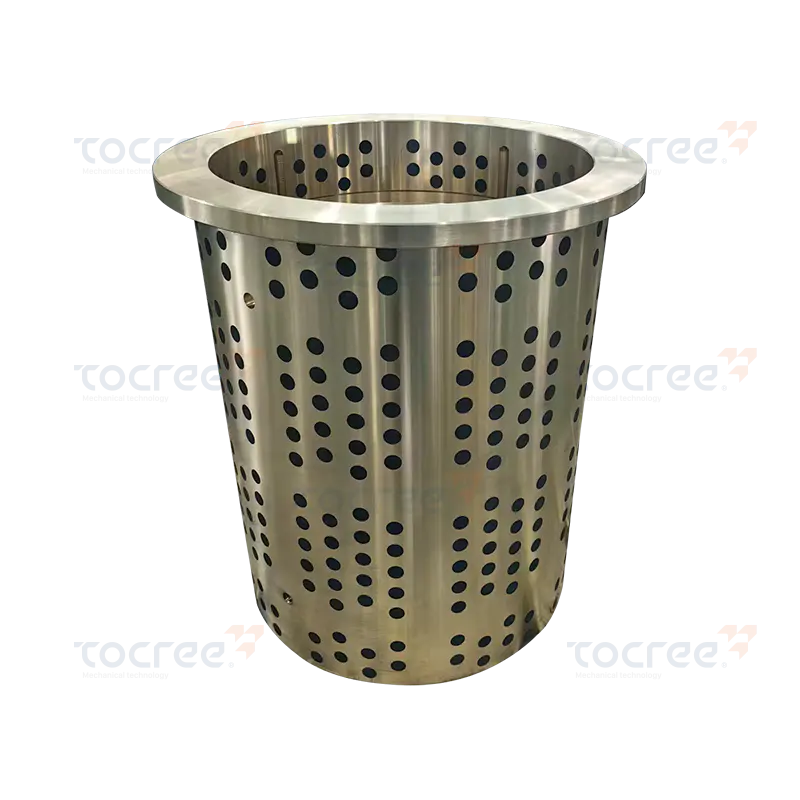
Single-flange self-lubricating bearing (with graphite embedding) is a high-performance solid self-lu...
Copyright © 2025 Jiashan Tocree Machinery Co., Ltd. All Rights Reserved.
Customized Copper Alloys Machinery Parts
