

 English
 中文简体
中文简体 Deutsch
 عربى
عربىFor any questions and feedback from customers, we will reply patiently and meticulously.
This copper slider is precisely machined from high-performance copper alloy tin bronze as the base ...
Copper alloy slide plates are flat or profiled bearing components manufactured from bronze, brass, or other copper-based alloys, designed to provide a low-friction sliding interface between two structural or mechanical elements. They allow controlled relative movement — translational, rotational, or a combination of both — while supporting compressive loads that range from a few kilonewtons in light industrial machinery to tens of thousands of kilonewtons in bridge bearings and heavy civil structures.
The term "slide plate" is used interchangeably with sliding bearing pad, wear plate, bronze bearing plate, and copper alloy bearing pad depending on the industry. What unites all of these applications is the same fundamental requirement: a material that combines adequate compressive strength to carry the load with a surface that resists adhesive wear and maintains acceptably low friction over a long service life — sometimes measured in decades without replacement.
In structural engineering, copper alloy slide plates are a core component of bridge expansion bearings, where they allow the bridge deck to expand and contract thermally while carrying traffic loads of hundreds of tonnes. In industrial machinery, bronze slide plates serve as wear-resistant guides in hydraulic presses, injection molding machines, heavy stamping dies, and steel mill equipment. In civil construction, they appear in base isolation systems, pipeline expansion joints, and large industrial building foundations subject to seismic or thermal movement. The common thread across all of these applications is that no polymer or ceramic material offers the combination of mechanical strength, thermal stability, machinability, and wear resistance that copper alloys deliver reliably in demanding sliding contact environments.
Not all copper alloys perform equally as slide plate materials. The choice of alloy determines load capacity, friction coefficient, corrosion resistance, machinability, and cost. The following alloy families are the ones most widely used in slide plate production:
Tin bronze — standardized under grades such as CuSn8, CuSn10, C90500, and C91700 — is the most widely specified copper alloy for structural slide plates. The addition of tin (typically 8–12% by weight) hardens the copper matrix and improves corrosion resistance significantly compared to pure copper. Phosphorus additions (0.05–0.35%) further improve strength and act as a deoxidizer during casting, producing a finer grain structure. Tin bronze slide plates offer compressive strengths of 240–380 MPa, hardness in the range of 70–100 HB, and excellent resistance to seizure when the mating surface is steel. Their corrosion resistance in freshwater, seawater, and mildly acidic environments makes them particularly suitable for bridge bearings and marine structural applications.
Lead bronze alloys — such as CuSn5Pb5Zn5 (gunmetal), CuPb10Sn10, and C93200 — incorporate lead (5–25%) as a solid-phase lubricant distributed throughout the copper-tin matrix. Lead does not dissolve in the bronze matrix but instead exists as discrete globules that smear across the sliding surface during operation, providing a thin lubricating film that reduces the friction coefficient and dramatically reduces the risk of adhesive wear and seizure. Lead bronze slide plates are the traditional choice for heavily loaded sliding applications in steel mills, forming presses, and die casting machines, where loads can exceed 500–700 MPa contact pressure. However, environmental and health regulations in many regions are now restricting lead content in new manufacturing specifications, driving adoption of alternative alloys.
Aluminum bronze (CuAl10Fe3, CuAl10Ni5Fe4, C95400, C95500) replaces lead with aluminum (8–12%) and iron or nickel additions to achieve high strength and excellent corrosion resistance. Aluminum bronze slide plates have compressive strengths reaching 500–700 MPa and hardness up to 200 HB, making them suitable for the highest load applications. Their outstanding resistance to corrosion in seawater, acidic soils, and industrial chemicals makes them the alloy of choice for offshore structure bearings, chemical plant expansion joints, and coastal bridge bearings. Aluminum bronze is harder to machine than tin or lead bronze, requiring carbide tooling and careful cutting parameters, but its performance envelope justifies the additional machining cost in demanding environments.
Self-lubricating copper alloy slide plates combine a bronze matrix (typically CuSn8 or aluminum bronze) with solid lubricant inserts — most commonly graphite plugs pressed into machined holes across the bearing face, but also PTFE, molybdenum disulfide (MoS₂), or combinations thereof. As the slide plate moves against the mating surface, the solid lubricant transfers to the contact zone and forms a continuously replenished dry lubricant film. This eliminates the need for grease or oil lubrication in service — which is critical for applications where re-lubrication is impractical, such as bridge bearings buried in the structure, pipeline expansion joints, and the guideways of large vertical hydraulic presses. Graphite-plug bronze slide plates are the most widely specified type in modern structural bridge bearing standards (including EN 1337-2 and AASHTO LRFD) because of their maintenance-free service life, which can exceed 50 years in appropriate conditions.
Brass (copper-zinc alloys, typically CuZn25Al5, CuZn37, or C36000) is less common as a primary slide plate material compared to bronze because it has lower load capacity and is more susceptible to dezincification corrosion in certain environments. However, brass slide plates are used in lighter industrial applications — such as machine tool guideways, furniture hardware, and elevator guide shoes — where cost is a primary driver and loads are moderate (below 150 MPa). Leaded free-cutting brass (C36000) is particularly easy to machine, allowing complex slide plate geometries to be produced efficiently on CNC turning and milling centers.
Selecting the right copper alloy slide plate requires understanding the material's performance across several distinct property categories. The table below summarizes the typical values for the most common alloys:
| Alloy Type | Compressive Strength (MPa) | Hardness (HB) | Friction Coefficient (dry vs steel) | Max Operating Temp (°C) |
| Tin Bronze (CuSn10) | 240–380 | 70–100 | 0.15–0.25 | 250 |
| Lead Bronze (CuPb10Sn10) | 300–500 | 60–90 | 0.08–0.15 | 180 |
| Aluminum Bronze (CuAl10Ni5) | 500–700 | 150–200 | 0.20–0.35 | 400 |
| Graphite-Plug Bronze (CuSn8 + C) | 200–350 | 65–95 | 0.05–0.12 | 300 |
| Brass (CuZn37) | 120–200 | 60–80 | 0.20–0.30 | 150 |
It is important to note that friction coefficients in real installations depend heavily on surface finish of the mating steel plate, contact pressure, sliding velocity, and whether any external lubrication is present. The values above represent typical dry sliding conditions against ground steel. Stainless steel mating plates (typically 316L or duplex grades) are often specified for bridge and structural bearings to reduce corrosion at the sliding interface and maintain consistent friction over the service life.
The manufacturing route for a copper alloy slide plate depends on its size, alloy type, required tolerances, and whether it incorporates solid lubricant inserts. The major production methods are as follows:
Large bronze slide plates — particularly those used in bridge bearings, heavy press guideways, and structural expansion joints — are most economically produced by sand casting or permanent mold casting. Sand casting allows virtually unlimited size flexibility, making it practical for slide plates exceeding 500 mm in length or width. Continuous casting (also called concast or centrifugal casting for cylindrical billets) produces a denser, more homogeneous microstructure than static sand casting because solidification occurs progressively under controlled conditions, minimizing porosity and segregation. Continuously cast bronze bar and plate stock is the standard starting material for precision-machined slide plates in most industrial and structural bearing applications.
After casting or cutting from billet stock, copper alloy slide plates are finish-machined on CNC milling centers, surface grinders, or lathes (for circular plates) to achieve the specified flatness, parallelism, and surface finish on the sliding face. Flatness tolerances for precision slide plates are typically in the range of 0.05–0.1 mm per 300 mm of length. The sliding surface finish is critical: too rough (Ra above 3.2 µm) increases abrasive wear on the mating surface; too smooth (Ra below 0.4 µm) can reduce the retention of lubricant films. A surface finish of Ra 0.8–1.6 µm is typical for bronze slide plates intended for structural applications. Chamfers and radii on edges are machined to prevent stress concentration and to prevent the edge of the plate from gouging the mating surface during movement.
For self-lubricating copper alloy slide plates, the installation of solid lubricant plugs is a controlled manufacturing step performed after the plate is machined to near-final dimensions. Holes are drilled in a defined pattern across the sliding face — typically arranged in a regular grid with center-to-center spacing of 15–30 mm — and graphite or PTFE plugs are pressed in with an interference fit to ensure they remain flush with the bearing surface under load. The plug diameter and depth (typically 8–15 mm diameter, 10–20 mm deep) and the area coverage ratio (the percentage of the bearing face occupied by lubricant plugs, typically 20–35%) are specified by the bearing designer based on load and sliding distance requirements. After plug installation, the face is lightly re-machined or lapped to ensure the plugs are perfectly flush and the overall flatness is maintained.
In many structural bearing applications, the copper alloy slide plate is not used as a freestanding component but is bonded or mechanically anchored to a steel backing plate. The steel backing provides the structural rigidity needed to distribute load evenly across the bronze face and to anchor the slide plate within the bearing assembly. Bonding methods include epoxy adhesive bonding (suitable for moderate loads and temperatures below 80°C), bronze-to-steel brazing (for higher-temperature applications in industrial machinery), and mechanical fastening with countersunk bolts (for heavy-duty applications where adhesive bond reliability cannot be guaranteed over decades). The interface between the steel backing and the bronze face must be free of gaps or disbonds, as local separation creates stress concentrations that can crack the relatively brittle bronze.
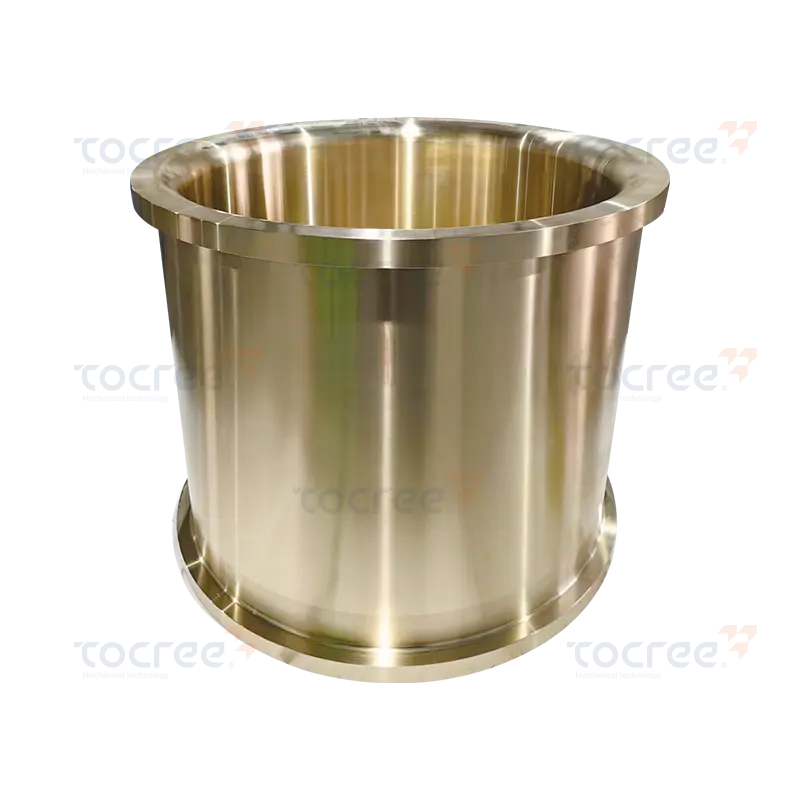
Bridge bearings represent the most demanding and technically regulated application for copper alloy slide plates. The performance requirements, testing protocols, and material specifications for bridge bearing slide plates are defined in national and international standards, and understanding these standards is essential for engineers and procurement specialists working in civil infrastructure.
In Europe, the governing standard is EN 1337-2 (Structural Bearings — Sliding Elements), which specifies material requirements, dimensional tolerances, testing protocols, and installation requirements for copper alloy sliding elements used in structural bridge bearings. The standard permits tin bronze (CuSn) and aluminum bronze (CuAl) as base materials and requires that graphite-lubricated plates demonstrate a friction coefficient below 0.06 under the defined test conditions (contact pressure of 30 MPa, sliding velocity of 2 mm/s, temperature range -35°C to +48°C) after completing a prescribed wear test cycle.
In North America, the AASHTO LRFD Bridge Design Specifications and AASHTO M 251 govern bearing plate materials and performance. The requirements are broadly similar to the European standard in terms of contact stress limits and friction coefficient targets, but differ in some test methodology details and dimensional tolerance conventions. Engineers specifying copper alloy slide plates for bridge projects must confirm which standard governs their project and ensure the plate supplier can provide test documentation and material certificates that comply.
A critical design consideration for bridge bearing slide plates is the maximum allowable contact stress. EN 1337-2 limits the design contact pressure on copper alloy sliding elements to approximately 90–120 MPa for tin bronze and up to 150 MPa for aluminum bronze, with these limits reduced for cyclic loading conditions. Exceeding these limits does not necessarily cause immediate failure but significantly accelerates wear and reduces service life below the 50-year design target common in modern bridge specifications.
Outside of structural engineering, copper alloy slide plates are indispensable in heavy industrial machinery where linear or oscillating sliding motion occurs under high load. The performance requirements in these applications differ from structural bearings in several important ways: sliding velocities are higher (up to 1,000 mm/min in some press applications), load cycles are frequent (millions of cycles over the machine's life), and contamination from lubricants, metalworking fluids, and debris is a constant challenge.
The gib plates that guide the ram of a stamping or forming press are classic copper alloy slide plate applications. The ram must move vertically with minimal lateral play — typically less than 0.05–0.1 mm clearance — to maintain die alignment, while the guide faces carry substantial side loads generated by off-center tooling. Lead bronze (CuPb10Sn10 or similar) has traditionally been the preferred alloy for press gibs because its self-lubricating properties reduce maintenance frequency and its moderate hardness (compared to aluminum bronze) means it acts as a sacrificial wear surface that protects the hardened steel press frame rather than wearing it. Gibs are designed to be replaceable wearing components, and their geometry — typically T-shaped or flat bar sections with oil grooves or lubricant plug patterns — is standardized within each press manufacturer's design.
The platens of large injection molding machines slide on tie bars through bronze guide bushings or flat slide pads during each open-close cycle. Cycle rates of 20–60 cycles per minute over millions of cycles over the machine's life demand a bronze alloy with excellent wear resistance and the ability to operate without frequent re-lubrication. Self-lubricating tin bronze or graphite-plug bronze slide plates are standard in this application, with graphite plug coverage optimized for the specific contact pressure and cycle rate. The mating tie bar surfaces are typically hard chrome plated or induction hardened to minimize their wear rate.
In steel rolling mills, copper alloy bearing plates and chock liners support the roll chocks (the housings that carry the roll necks) as they move in the mill housing windows during rolling and roll changes. The combination of very high loads (roll separating forces can reach tens of MN in heavy plate mills), elevated temperatures from the hot rolling process, and contamination by scale and water creates one of the most severe tribological environments in industrial machinery. Aluminum bronze slide plates with hardness above 150 HB are specified for this application, often with additional surface treatments such as phosphating to improve initial break-in wear behavior. Plate dimensions are large — widths and lengths of 300–800 mm are common — and tight parallelism is required to ensure even load distribution across the full bearing area.
Choosing the correct copper alloy slide plate requires systematically working through the key application parameters. Rushing this selection and defaulting to a generic "bronze plate" without matching the alloy to the specific conditions is the most common cause of premature wear, seizure, or structural failure in sliding bearing applications.
Even the best copper alloy slide plate will underperform or fail prematurely if incorrectly installed or maintained. The following practices are essential for achieving the expected service life.
The steel or stainless steel surface that slides against the copper alloy plate must be adequately hard (minimum 250 HB for steel, or polished stainless steel 316L with hardness above 200 HB) and finished to the specified surface roughness. A mating surface that is too rough will abrade the bronze face and generate debris that accelerates wear exponentially. A mating surface that has corrosion, burrs, or weld spatter will cause localized high-pressure contact that leads to bronze pickup and galling within the first few cycles. Before installation, the mating surface should be inspected, any high spots stoned flat, and the surface cleaned of all grease, scale, and contamination.
Copper alloy slide plates must be seated on a flat, rigid backing surface. Any gap or non-planarity beneath the plate creates a bending moment when load is applied, and bronze — while strong in compression — has limited tensile strength and will crack if subjected to repeated bending. In structural bearing applications, this means the steel sole plate or masonry plate must be leveled and grouted to a flatness of 0.5 mm or better before the bronze slide plate is installed. In machinery, the mounting recess for the gib or wear plate should be precision-machined to the slide plate's thickness tolerance to ensure full-face contact.
For structural bridge bearings, inspection of copper alloy slide plate condition is typically part of a bridge's routine inspection program. Signs that replacement is necessary include visible scoring of the sliding face, wear depth exceeding 1–2 mm (reducing the graphite plug depth to ineffective levels), cracking at plate edges or mounting holes, and corrosion of the plate edges that suggests the sliding face may also be compromised. For industrial machinery, wear can be tracked by monitoring the clearance between sliding components — an increase in gib clearance above the design tolerance is the primary replacement trigger. Replacing a worn copper alloy slide plate at the first maintenance window after the tolerance is exceeded prevents the accelerated wear that occurs as clearance grows and the contact pressure distribution becomes non-uniform.
Copper alloy slide plates compete with several alternative bearing and wear plate materials. Understanding where bronze outperforms alternatives — and where it does not — ensures that engineers make material selections on performance merit rather than habit.
| Material | Max Load Capacity | Temperature Limit | Corrosion Resistance | Typical Application |
| Copper Alloy (Bronze) | High (up to 700 MPa) | Up to 400°C | Very good | Bridge bearings, press gibs, mills |
| PTFE / Filled PTFE | Low–Medium (≤ 30 MPa) | Up to 260°C | Excellent | Low-load bridge pads, seismic isolators |
| Cast Iron | Medium (200–400 MPa) | Up to 300°C | Poor | Machine tool guides (older equipment) |
| Engineering Polymer (UHMWPE / PA) | Low (≤ 50 MPa) | Up to 100°C | Good | Light machinery, conveyors |
| Hardened Steel Plate | Very High (>1,000 MPa) | Up to 500°C | Poor (without coating) | High-load impact wear, no sliding |
The table above confirms that copper alloy slide plates occupy a uniquely advantageous position in the materials landscape: they offer significantly higher load capacity than polymers and PTFE-based sliding elements, far superior corrosion resistance compared to cast iron and uncoated steel, and meaningful temperature resistance that eliminates the concerns associated with polymer degradation in hot environments. For applications where contact pressure exceeds 30–50 MPa and operating temperatures fluctuate or elevate beyond the range that polymers can tolerate, copper alloy slide plates remain the technically correct choice and, when total service life cost is considered, often the most economical one as well.
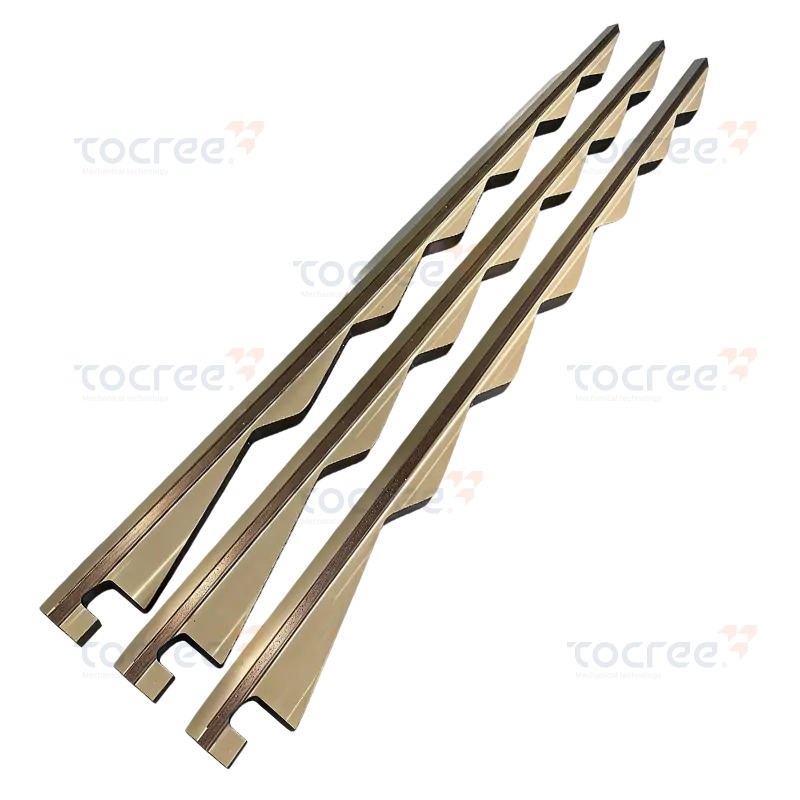
This copper slider is precisely machined from high-performance copper alloy tin bronze as the base ...
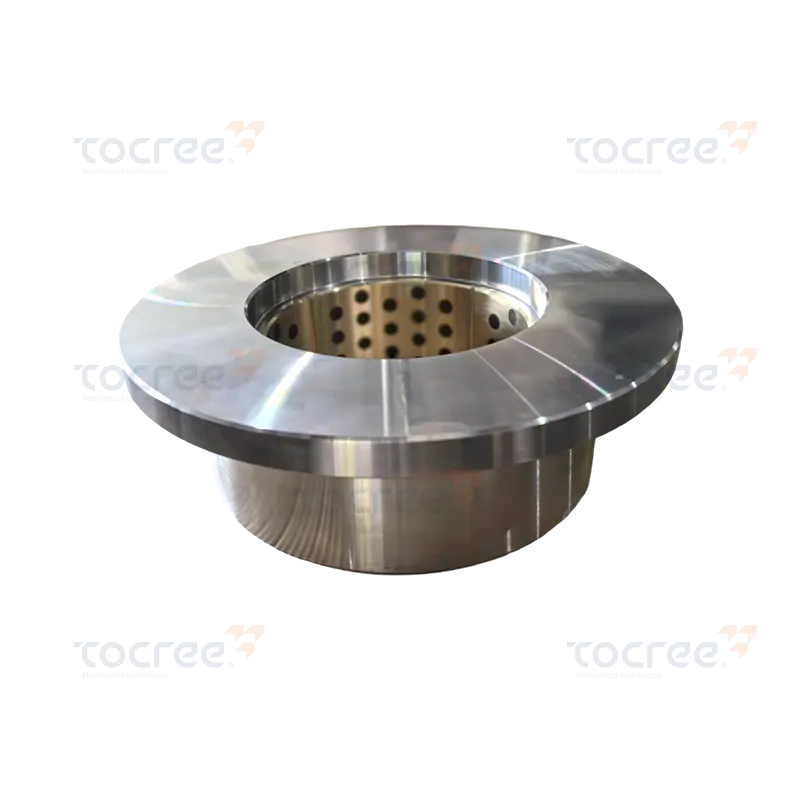
The Bronze-Steel Flanged Bushing combines the benefits of SCM435 alloy steel and high-strength brass...
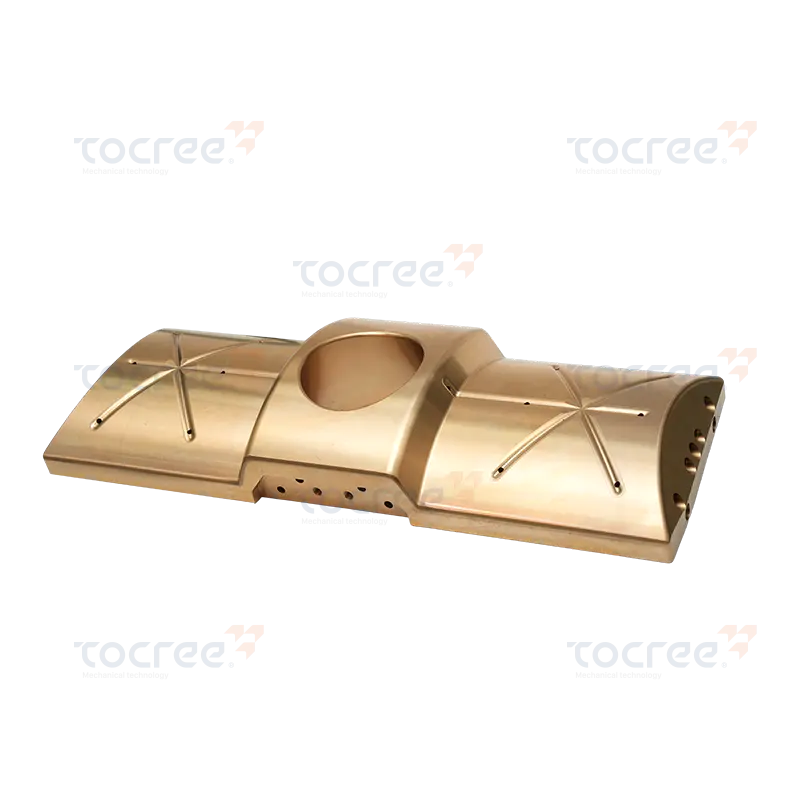
The Copper alloy curved slider is made of high-performance tin bronze as the base material and is ca...
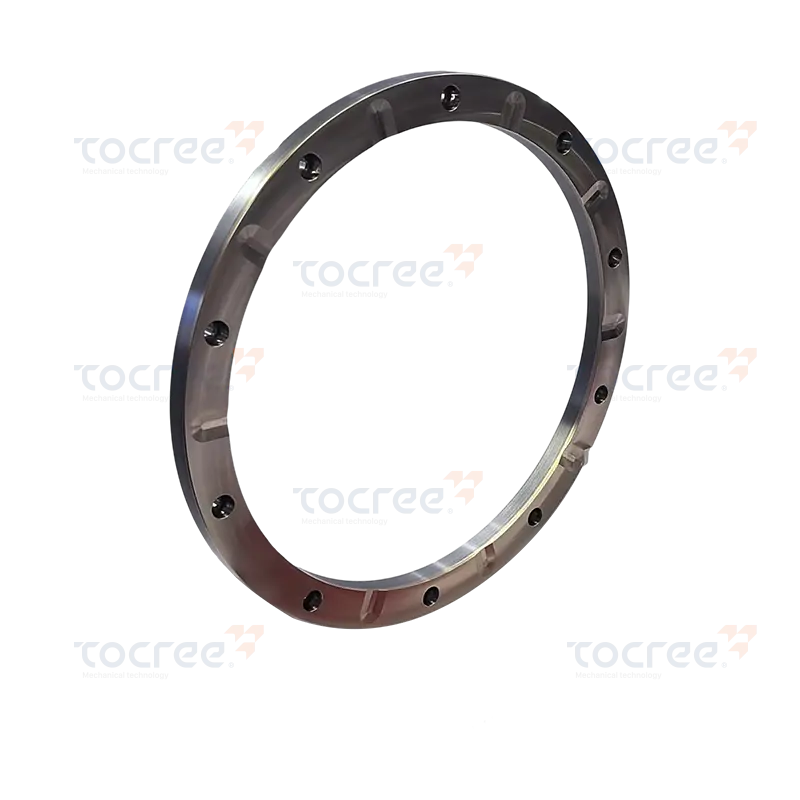
The Copper-Steel Bimetal Thrust Plate is a high-performance component designed for demanding mechani...
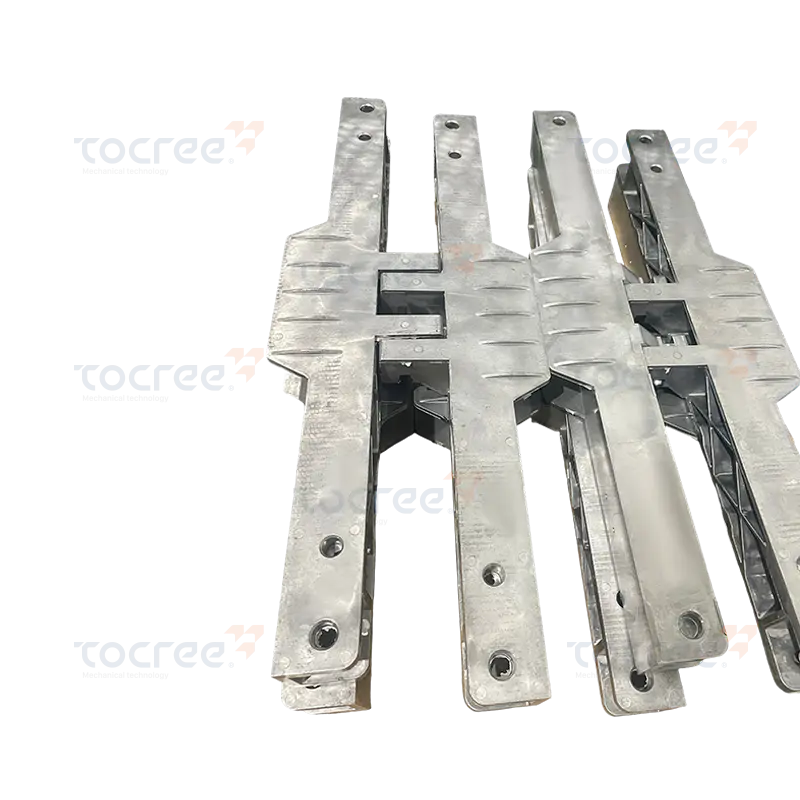
This aluminum alloy frame is specially designed to meet the application requirements of the vehicle....
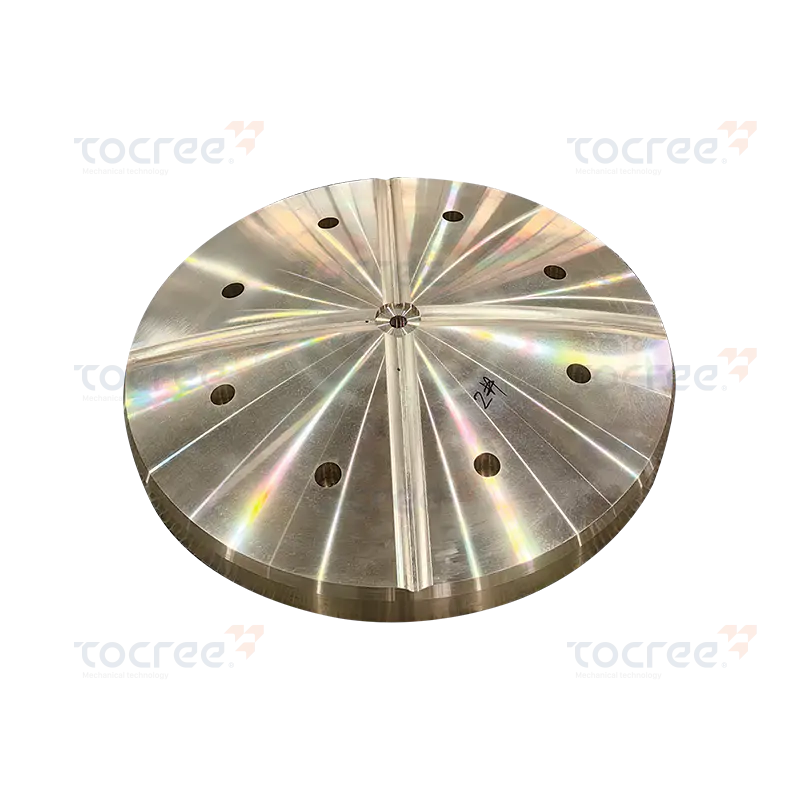
The copper-based spherical thrust plate is a high-performance copper alloy component, made from tin ...
Copyright © 2025 Jiashan Tocree Machinery Co., Ltd. All Rights Reserved.
Customized Copper Alloys Machinery Parts
