

 English
 中文简体
中文简体 Deutsch
 عربى
عربىFor any questions and feedback from customers, we will reply patiently and meticulously.
The Copper-Steel Bimetal Thrust Plate is a high-performance component designed for demanding mechani...
A copper alloy wear-resistant plate is one of those components that tends to go unnoticed until it fails — and when it does, the consequences ripple through the entire machine or structure it supports. Copper-based wear plates have been trusted in heavy sliding, high-load, and corrosion-prone applications for over a century because they offer something that steel wear plates cannot: a combination of load-carrying capacity, inherently low friction against steel counterfaces, corrosion resistance, and in the self-lubricating versions, the ability to operate without continuous external oil or grease. This guide covers the major copper alloy families used in wear plate applications, their mechanical and tribological properties, the role of solid lubricant inlays, specific industries and applications where they are used, and what to specify when sourcing them.
The tribological case for copper alloys in sliding wear applications starts with friction. Frictional coefficients for bronze alloys running against steel range from 0.08 to 0.14 under lubricated conditions — compared to 0.32 for aluminum on steel and 1.00 for steel on steel. In dry or boundary lubrication conditions, bronze alloys still achieve frictional coefficients of only 0.12 to 0.30, maintaining meaningful anti-seizure performance even when lubrication is interrupted. This behavior comes from the physical and chemical properties of copper-based alloys at the sliding interface: they are softer than steel counterfaces, allowing them to conform to surface irregularities and embed small contaminant particles rather than allowing those particles to score both surfaces. This conformability also means that as a copper alloy wear plate wears, it does so gradually and predictably — not catastrophically.
Beyond friction, copper alloys offer thermal conductivity three to ten times higher than steel, which means frictional heat generated at the sliding interface dissipates rapidly into the plate body rather than concentrating at the contact zone to accelerate thermal wear, film breakdown, or seizure. Copper alloys also resist galling — the adhesive welding of sliding metal surfaces — far better than steel-on-steel contact, particularly the aluminum bronzes and high-tensile brasses, which form stable surface oxide films that act as thin, hard sacrificial layers protecting the bulk material beneath.
The practical result is a wear plate material that allows longer service intervals, more predictable replacement schedules, lower replacement frequency than hardened steel wear plates in the same sliding applications, and the ability to operate in environments where reliable external lubrication cannot be maintained — conditions under which steel wear plates seize and fail rapidly.
Several distinct copper alloy families are used in wear plate applications, each with a different balance of strength, friction, corrosion resistance, and machinability. Understanding the differences guides correct alloy selection for specific operating conditions.
Aluminum bronze is the highest-strength copper alloy family commonly available in wear plate form, with tensile strengths ranging from 550 MPa for standard cast grades up to 900 MPa or more for wrought or heat-treated alloys. The aluminum content (typically 8–12% by weight) promotes the formation of a stable, dense aluminum oxide surface film that provides both corrosion protection and wear resistance. C95400 (CuAl10Fe5 / GB: QAl10-3-1.5) is the standard industrial aluminum bronze wear plate alloy — it combines good strength, excellent corrosion resistance, and strong wear resistance. C95500 and C63000 (CuAl10Fe5Ni5) add nickel for additional strength and corrosion resistance, making them the standard choice for marine, offshore, and chemical process wear plates where both mechanical load and aggressive media are present simultaneously.
Aluminum bronze wear plates are the preferred choice where high compressive loads (above 300 MPa contact pressure), moderate-to-high sliding speeds, and corrosive environments coincide. Typical applications include gear wear pads, hydraulic cylinder guide rings, bridge bearing plates, marine propeller shaft liners, and pump wear rings in seawater service. The one limitation of aluminum bronze is its tendency to cause more wear on steel counterfaces than softer bronze alloys — where counterface wear is a concern, the alloy selection should balance wear plate life against the cost of the mating steel component.
Tin bronze alloys (typically 8–12% tin) have been the classic bearing and wear plate material for over two thousand years, and they remain standard in many moderate-load sliding applications because of their exceptional combination of wear resistance, conformability, embeddability, and anti-seizure properties. The leading industrial tin bronze wear plate grades include C90700 (CuSn12), C91100 (CuSn16), and C93200 (CuSn7Pb7Zn3 / SAE 660 / GB: ZCuSn5Pb5Zn5). SAE 660 / C93200 is one of the most widely used general-purpose bearing bronze alloys globally — its tin-lead-zinc composition provides good load capacity, excellent oil retention in the porous cast structure, anti-seizure properties derived from the lead phase, and broad corrosion resistance.
Tin bronze wear plates operate effectively at loads up to 275 MPa contact pressure (some grades to 700 bar oil film capacity in journal configurations) and temperatures up to 260°C. They are the standard material for machine tool slide guides, hydraulic and pneumatic actuator wear rings, bridge expansion joint sliding plates, and general-purpose sliding components in chemical and food processing equipment. Phosphor bronze (with phosphorus additions of 0.03–0.35%) enhances spring properties, stiffness, and wear resistance further and is used for higher-precision wear plates in instrumentation and light engineering.
High-tensile brasses — known in different markets as manganese bronze, Golik brass, or high-strength brass — are modifications of the 60/40 brass (Muntz metal) base with additions of manganese, iron, aluminum, and sometimes nickel and lead. The Chinese grade ZCuZn24Al6Fe4Mn3 (approximately 62% copper) and the US/European equivalents C86300 and C86200 are the most widely used. These alloys achieve tensile strengths of 600–700 MPa — competitive with lower-strength aluminum bronzes — combined with good machinability, moderate corrosion resistance, and excellent wear resistance under lubricated conditions.
High-tensile brass wear plates are heavily used in die casting machines (die base slide plates, ejector plate guides), injection mold wear strips, press brake tooling slide wear pads, and construction equipment pivot wear liners. Their combination of strength, machinability, and lower alloy cost relative to aluminum bronze makes them the cost-effective choice when extreme corrosion resistance is not required. For high-load press tooling applications, C86300 high-tensile brass with graphite plugs is one of the most common die wear plate materials worldwide.
Lead bronze alloys use lead as the primary friction-reducing element. Lead does not form an alloy with copper — instead, it exists as discrete globules distributed throughout the copper-tin matrix. Under sliding conditions, lead smears across the contact surface, providing a thin, self-renewing lubricious film that prevents seizure even under marginal lubrication conditions. Lead bronze wear plates are soft, highly conformable, and tolerate shaft misalignment and dirty lubricants better than harder alloy plates. C93200 (already noted above) is a hybrid alloy; higher-lead grades such as C93700 (CuSn10Pb10) and C94300 are used where seizure resistance in poorly lubricated conditions is the primary requirement, at the cost of reduced load capacity relative to tin bronze. Lead bronze wear plates are standard in automotive engine bearings, industrial engine main bearings, and general sliding guide applications where operating conditions are moderate and anti-seizure reliability is the priority.
The table below summarizes the key mechanical and tribological properties of the major copper alloy wear plate grades to support rapid material selection.
| Alloy Grade | Typical Composition | Tensile Strength | Hardness (HB) | Max Load Capacity | Best For |
|---|---|---|---|---|---|
| C95400 Aluminum Bronze | Cu-10Al-4Fe | 550–620 MPa | 150–180 | High (300+ MPa contact) | Heavy-load industrial, marine, bridges |
| C95500 / C63000 Ni-Al Bronze | Cu-10Al-5Fe-5Ni | 690–800 MPa | 180–210 | Very High | Offshore, chemical, extreme-duty applications |
| C90700 Tin Bronze | Cu-12Sn | 310–380 MPa | 80–100 | Medium | Machine tool guides, actuator wear rings |
| C93200 SAE 660 | Cu-7Sn-7Pb-3Zn | 240–280 MPa | 60–80 | Medium | General-purpose sliding, journal bearings |
| C86300 High-Tensile Brass | Cu-26Zn-3Fe-6Al-3Mn | 620–700 MPa | 170–220 | High | Die plates, mold wear strips, press tooling |
| C93700 Lead Bronze | Cu-10Sn-10Pb | 210–260 MPa | 50–70 | Low–Medium | Anti-seizure applications, engine bearings |
The standard copper alloy wear plate relies on an external lubricant — oil or grease delivered to the sliding interface — to maintain the low-friction film that prevents direct metal-to-metal contact and controls wear rate. When external lubrication cannot be reliably maintained — because of the operating environment, access restrictions, temperature extremes, or contamination concerns — self-lubricating copper alloy wear plates with solid lubricant inlays solve the problem at the component level.
The most widely used self-lubricating copper wear plate combines a high-strength copper alloy base (typically aluminum bronze C95400, high-tensile brass C86300, or tin bronze C90700) with cylindrical plugs or bars of solid graphite pressed or cast into machined holes in the sliding surface. Graphite covers approximately 20–30% of the sliding face area, distributing evenly across the contact zone. During operation, as the plate slides against its counterface, graphite transfers continuously from the plugs to both the wear plate surface and the mating surface, forming a solid lubricant film that persists independently of any external lubrication system.
The operating envelope of graphite-embedded copper alloy wear plates covers a wide range: load-bearing capacity up to 250 MPa static contact pressure, dry-friction coefficients of 0.10–0.16 (compared to 0.20–0.35 for an unlubricated solid copper plate), and service temperatures from cryogenic (-200°C) to elevated-temperature service up to 300–400°C where most oil-based lubricants degrade. This temperature range makes graphite-embedded bronze wear plates the standard solution in glass manufacturing equipment, furnace door slide assemblies, hot forging press guides, and steel mill auxiliary equipment where ambient temperatures exclude oil lubrication entirely.
Molybdenum disulfide (MoS₂) is a layered crystalline solid lubricant with a friction coefficient of 0.03–0.06 at moderate temperatures — lower than graphite — and excellent performance in dry or vacuum environments where graphite's lubricity degrades (graphite requires some humidity to achieve its lowest friction). MoS₂ plugs or coatings are used in copper alloy wear plates for aerospace mechanisms, vacuum equipment, and precision instruments where extremely low friction is needed without any risk of lubricant contamination. The temperature ceiling for MoS₂ effectiveness is approximately 350°C in air (higher in inert atmosphere or vacuum), narrower than graphite's upper range but fully adequate for most non-furnace sliding applications.
Grease-groove wear plates are a middle-ground solution between externally lubricated and fully self-lubricating plates. The sliding surface is machined with a pattern of grooves — straight parallel channels, cross-hatch patterns, or spiral configurations — that serve as reservoirs for grease packed in during installation. The grease is released gradually as the plate operates, providing lubrication over extended service intervals without requiring continuous external delivery. This approach is standard on construction equipment pivot joints, excavator boom pins, crane slewing ring slides, and bridge bearing plates where periodic re-greasing access exists but continuous automated lubrication systems are not practical.
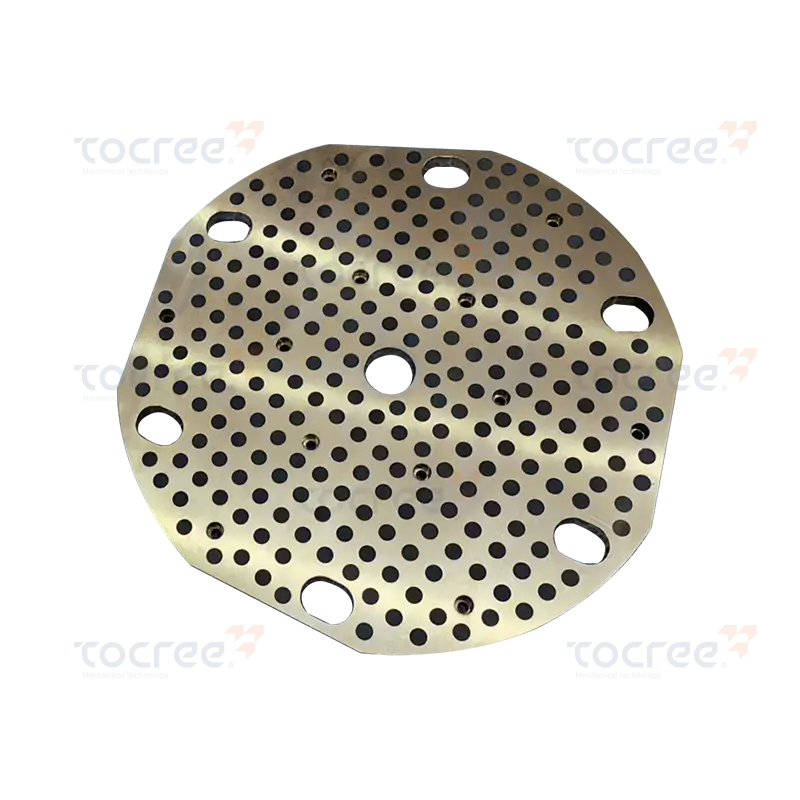
The combination of load capacity, anti-friction properties, corrosion resistance, and thermal conductivity makes copper alloy wear-resistant plates irreplaceable across a wide range of industrial applications. Each application emphasizes a different subset of these properties.
Copper alloy wear-resistant plates are available in several manufacturing forms, each suited to different size ranges, tolerances, and production economics.
Continuous casting produces copper alloy plate and bar stock by solidifying molten alloy in a water-cooled graphite mold, withdrawing the solidifying casting continuously as a rod, bar, or rectangular section. The continuous casting process produces a fine, uniform grain structure with higher density and more consistent mechanical properties than static sand casting, making it the preferred production method for bearing-grade tin bronze and aluminum bronze wear plate stock. Continuous cast bronze plates are available in thicknesses from approximately 6 mm to 100 mm, widths up to 500 mm, and lengths up to 3,000 mm or more, depending on alloy and producer. This form is used for direct machining to final wear plate dimensions.
Centrifugal casting pours molten alloy into a rotating cylindrical mold, where centrifugal force distributes the liquid metal outward against the mold wall. This produces hollow cylinders with exceptional microstructural density (the centrifugal force expels gas and impurities to the bore surface), making centrifugally cast copper alloy the preferred feedstock for large-diameter wear rings, journal bearing shells, and cylindrical wear bushings that are subsequently slit or machined into flat wear plate form.
Sand casting and investment casting are used for wear plates with complex geometries — integrated flanges, bosses, or internal features — that are uneconomical to machine from solid stock. Cast wear plates typically have slightly lower mechanical properties than continuous cast equivalents due to the coarser grain structure and potential for casting porosity, but they allow near-net-shape production of complex components at lower material waste than machining from solid. Sand cast aluminum bronze (C95400 per ASTM B271 or B505) is standard for large bridge bearing plates and heavy industrial sliding components.
Sintered copper alloy wear plates are produced by compacting and sintering blended copper, tin, and lubricant powders, then calibrating the sintered form to final dimensions. The inherently porous sintered structure acts as an oil reservoir — when the plate warms during operation, thermal expansion pumps oil to the surface; when it cools, oil is drawn back in. This self-oiling behavior makes sintered copper alloy plates standard for low-speed, lightly loaded applications such as domestic appliance bearings, light machinery guides, and instrument pivots where continuous or manual lubrication is not practical.
Choosing the correct copper alloy wear-resistant plate for a specific application involves systematically working through the operating conditions and matching them to alloy and configuration options.
Even the best-specified copper alloy wear-resistant plate will underperform or fail prematurely if installed incorrectly, run-in improperly, or maintained without attention to the specific requirements of copper-alloy sliding contact.
During installation, ensure that the wear plate seating surface is flat, clean, and free of burrs or high spots that would cause rocking or uneven contact pressure. Uneven support concentrates load on small areas of the plate, raising local contact pressure far above the design average and accelerating localized wear. Fasten the plate securely to prevent fretting or micro-movement at the back face interface — for press-fit or bolted applications, verify that the fastening system maintains adequate clamping force throughout the expected operating temperature range.
New copper alloy wear plates benefit from a running-in period — a period of operation at reduced loads and speeds to allow the sliding surfaces to conform and to establish the solid lubricant transfer film (in graphite-embedded plates) or the full oil film (in oil-lubricated plates). For graphite-embedded self-lubricating wear plates, the initial transfer film typically establishes within the first few hours of operation; during this period, higher friction and temperatures are normal. For oil-lubricated copper alloy plates, apply a light film of compatible grease or oil to both the plate surface and the counterface before first operation, even if external lubrication will be supplied automatically during running.
Inspection intervals should be established based on the duty cycle and operating environment. Measure plate thickness at regular intervals and compare to the designed minimum serviceable thickness — the point at which replacement is required before the graphite plugs (if present) or the base plate material are exhausted. Keep records of measured thickness over time; a sudden acceleration in wear rate is an early indicator of a lubrication failure, contamination problem, or counterface surface deterioration that should be investigated before the plate reaches its minimum thickness.
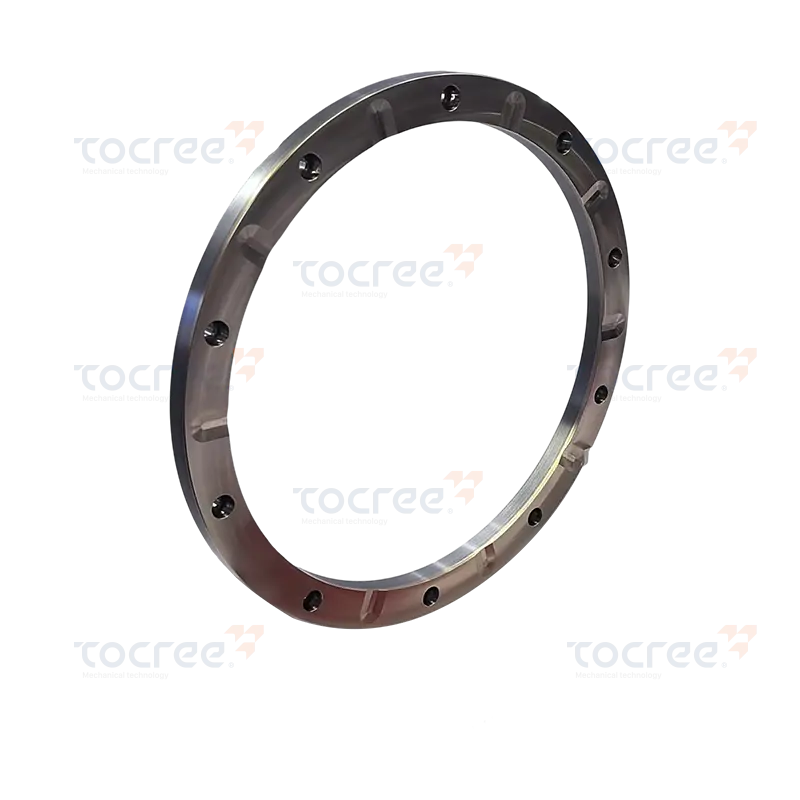
The Copper-Steel Bimetal Thrust Plate is a high-performance component designed for demanding mechani...

The copper-based graphite gasket is made of high-quality copper-zinc alloy as the base material. Its...
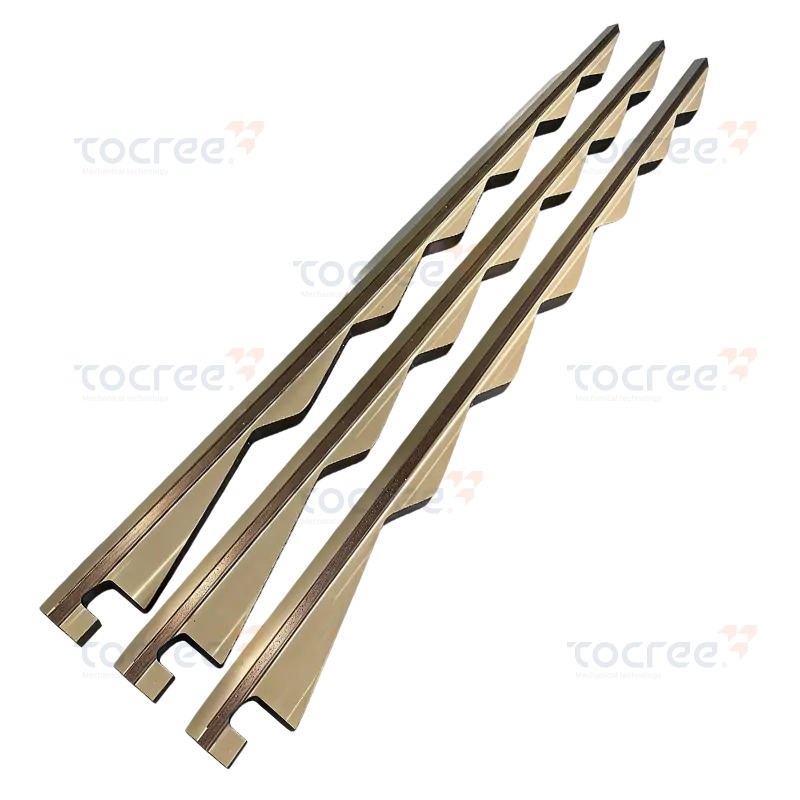
This copper slider is precisely machined from high-performance copper alloy tin bronze as the base ...
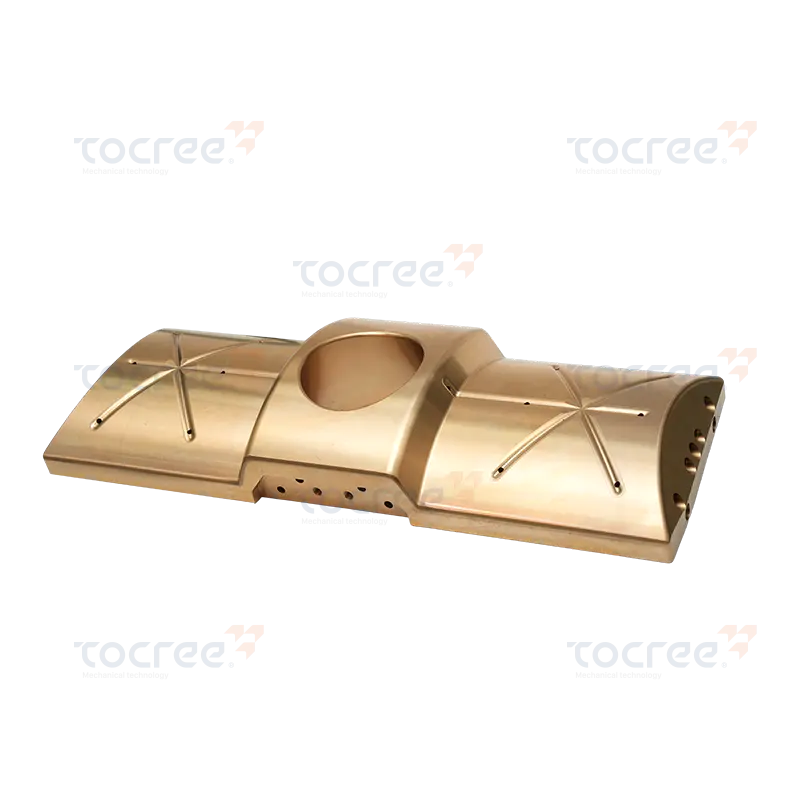
The Copper alloy curved slider is made of high-performance tin bronze as the base material and is ca...
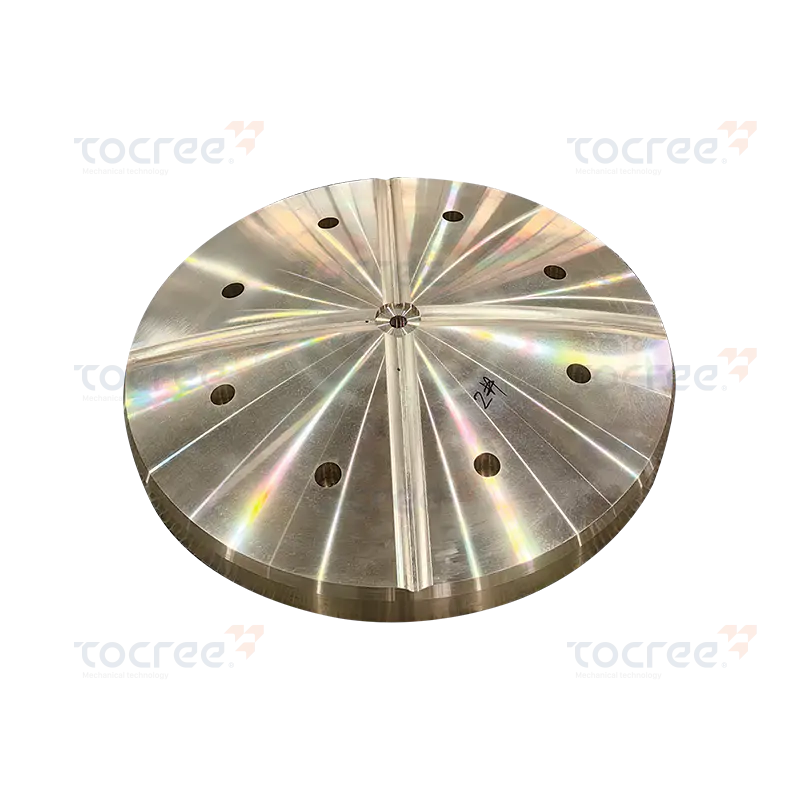
The copper-based spherical thrust plate is a high-performance copper alloy component, made from tin ...
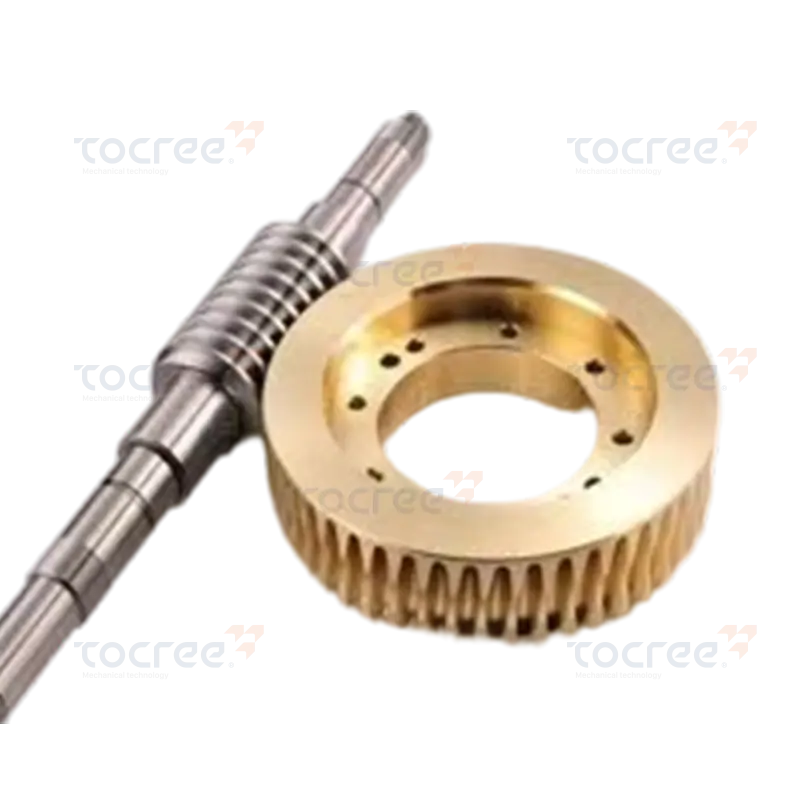
Copper alloy turbines are indispensable components in modern mechanical and energy systems. The matc...
Copyright © 2025 Jiashan Tocree Machinery Co., Ltd. All Rights Reserved.
Customized Copper Alloys Machinery Parts
