

 English
 中文简体
中文简体 Deutsch
 عربى
عربىFor any questions and feedback from customers, we will reply patiently and meticulously.
This copper-based special-shaped slider is specially designed for high-performance industrial applic...
A Brass Special-Shaped Slider is a precision-machined component made from brass that doesn't follow a standard round, square, or off-the-shelf slider profile. Instead, it's designed with a custom geometry — curves, steps, grooves, angled cuts, or asymmetric shapes — to fit a very specific mechanical requirement. Unlike a generic slider you might pull from a catalog, a special-shaped version is usually engineered around the exact space, load, and motion constraints of a particular assembly, such as a zipper puller, a switch mechanism, a connector housing, or a decorative hardware fitting.
The word "slider" here refers to a part designed to move smoothly along a track, rail, or guide, often sliding back and forth or rotating slightly while staying constrained. Because brass has excellent machinability and a naturally low friction coefficient against many metals, it's a go-to choice whenever engineers need a slider that both moves smoothly and looks good doing it.
Not every metal is suited to sliding applications, and brass earns its popularity for a few concrete reasons rather than just tradition. It combines workability, corrosion resistance, and a pleasant surface finish in one alloy, which is why so many special-shaped slider designs default to it.
Not all brass is the same. The alloy chosen for a special-shaped slider affects hardness, color, and how well it holds up under repeated motion. Below is a quick comparison of the most commonly used grades in slider manufacturing.
| Alloy | Copper Content | Typical Use | Notable Trait |
| C26000 (Cartridge Brass) | 70% | Deep-drawn slider bodies | High ductility |
| C36000 (Free-Cutting Brass) | 62% | CNC-machined special shapes | Easiest to machine precisely |
| C46400 (Naval Brass) | 60% | Marine and outdoor sliders | Superior corrosion resistance |
| C28000 (Muntz Metal) | 60% | Larger structural sliders | Higher strength, lower cost |
Because these parts rarely follow standard dimensions, production usually blends several techniques rather than relying on a single stamping die. Understanding the process helps buyers ask the right questions when sourcing a supplier.
Small-batch or prototype orders typically rely more heavily on CNC machining since it avoids expensive tooling, while larger production runs may shift toward precision casting or metal injection molding to lower per-unit cost once the design is finalized.
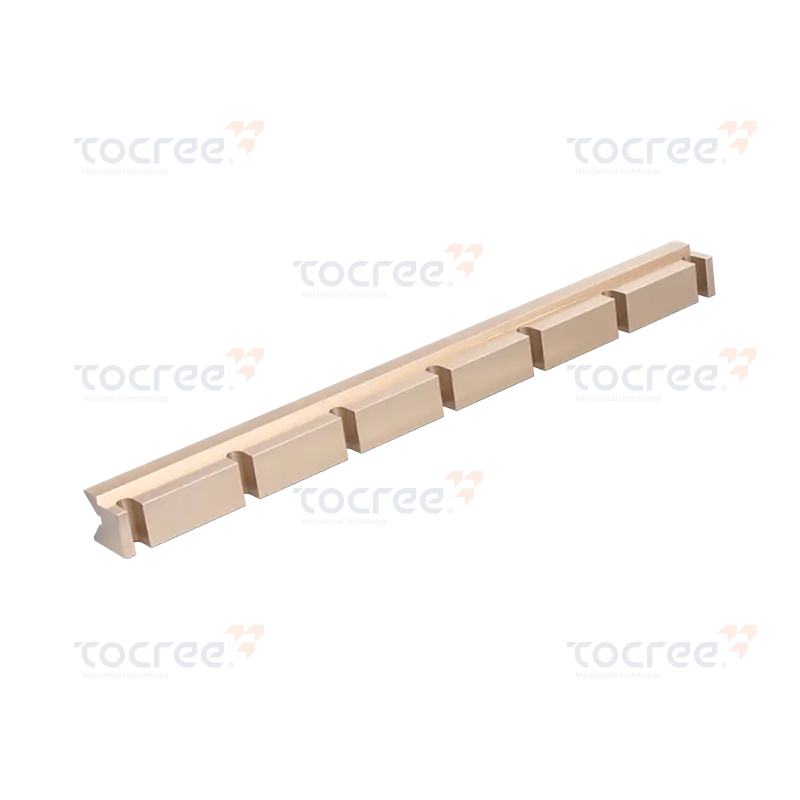
The "special-shaped" part of the name exists because standard sliders simply can't do the job in certain products. Here are the industries where custom brass sliders show up most often.
Ordering a non-standard part means the usual "pick from a catalog" shortcut isn't available, so a bit more diligence pays off. Start by confirming the supplier can actually machine or cast irregular geometries, not just round or square stock shapes — ask for photos of past special-shaped work rather than just standard slider samples.
Next, nail down the tolerance requirements early. A slider that's even a few hundredths of a millimeter off can bind inside its track or feel gritty when moved. If the part will see repeated motion over years of use, ask about wear testing or cycle testing data, and request the specific brass alloy and hardness rating in writing rather than a vague "brass" spec.
Even a well-made brass special-shaped slider will wear faster than necessary if it's neglected. A light film of silicone-based lubricant, rather than oil-based products, tends to work best because it won't attract dust and grime the way heavier oils do. Wiping down the slider periodically to remove debris from its track prevents the fine grit that causes premature scratching and binding.
In humid or coastal environments, choosing a naval brass alloy from the start avoids most tarnishing issues, but if a standard alloy was used, an occasional wipe with a brass-safe polish keeps the surface bright and prevents the slow buildup of patina that can eventually roughen the sliding surface.

This copper-based special-shaped slider is specially designed for high-performance industrial applic...
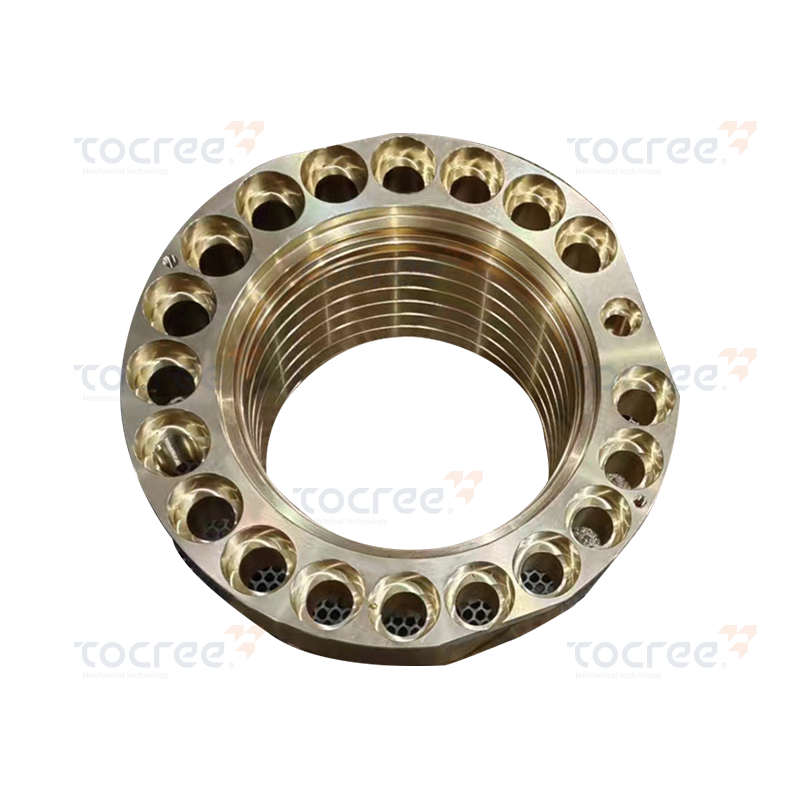
This special-shaped copper nut is precisely manufactured from high-quality aluminum bronze as the ba...
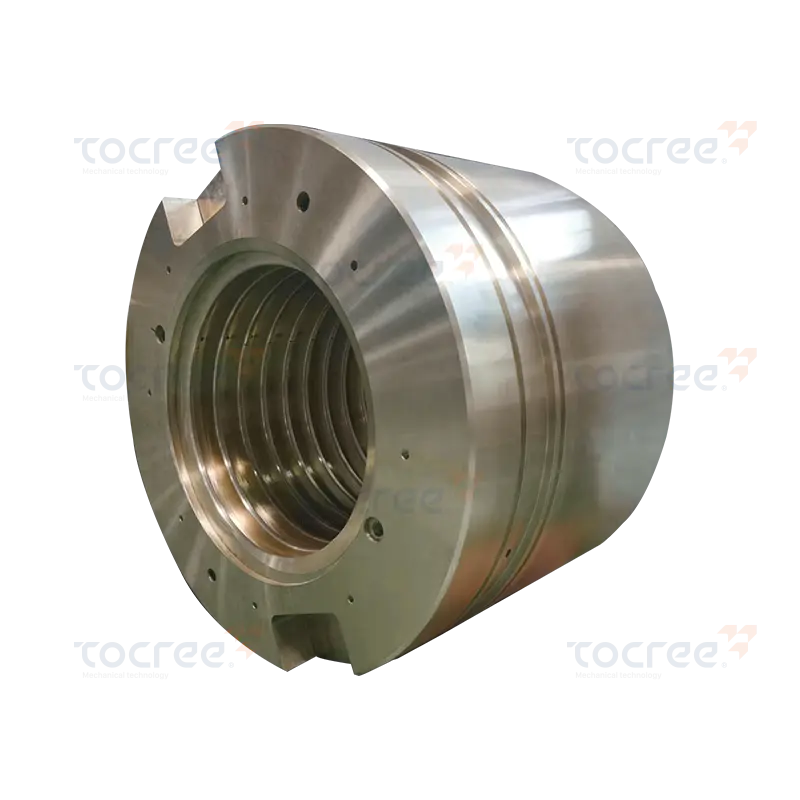
This product is a high-quality copper nut, made from tin bronze as the base material through tapping...
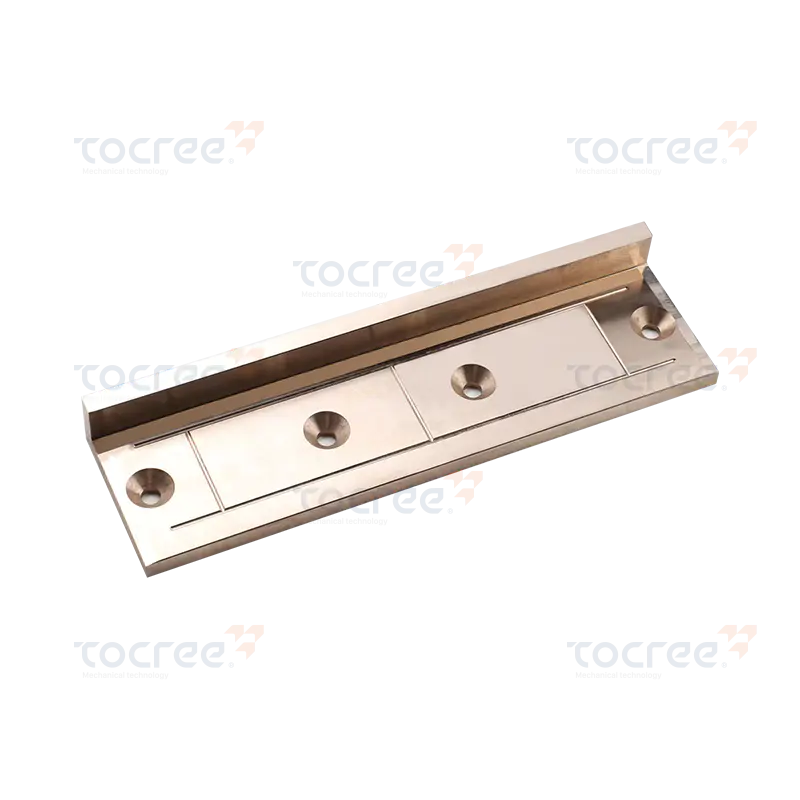
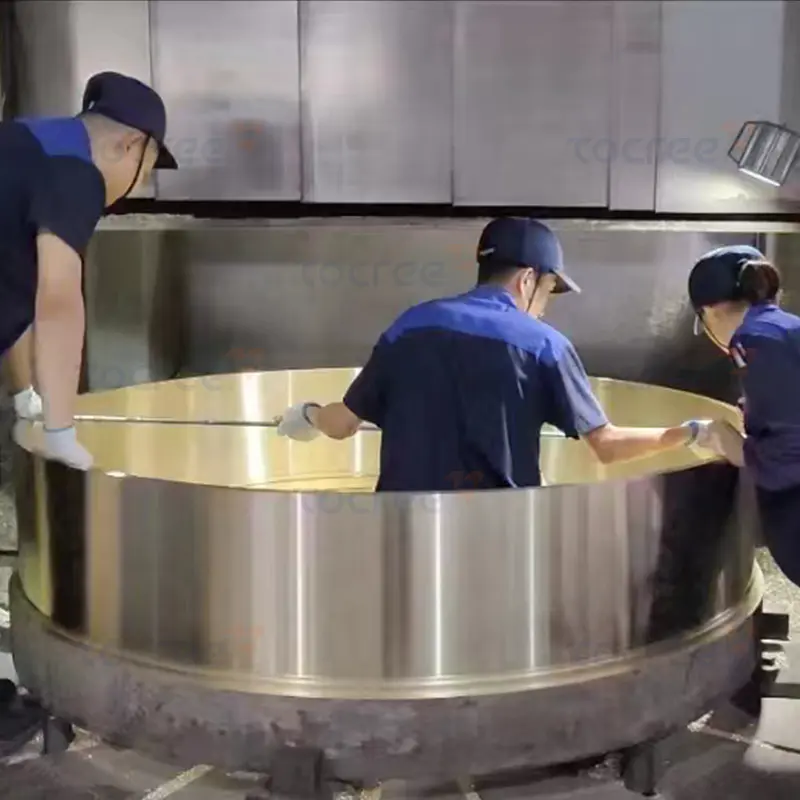
This high-performance brass single flange sleeve is specially designed for large industrial bearings...
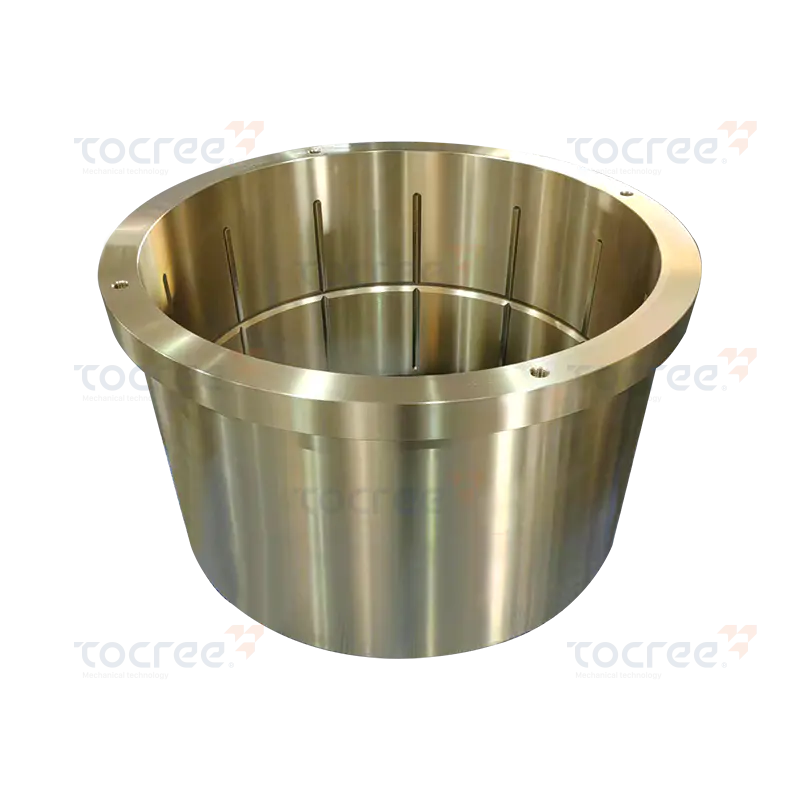
This brass sleeve is made by centrifugal casting with a copper-zinc alloy as the base material and t...
Copyright © 2025 Jiashan Tocree Machinery Co., Ltd. All Rights Reserved.
Customized Copper Alloys Machinery Parts
